


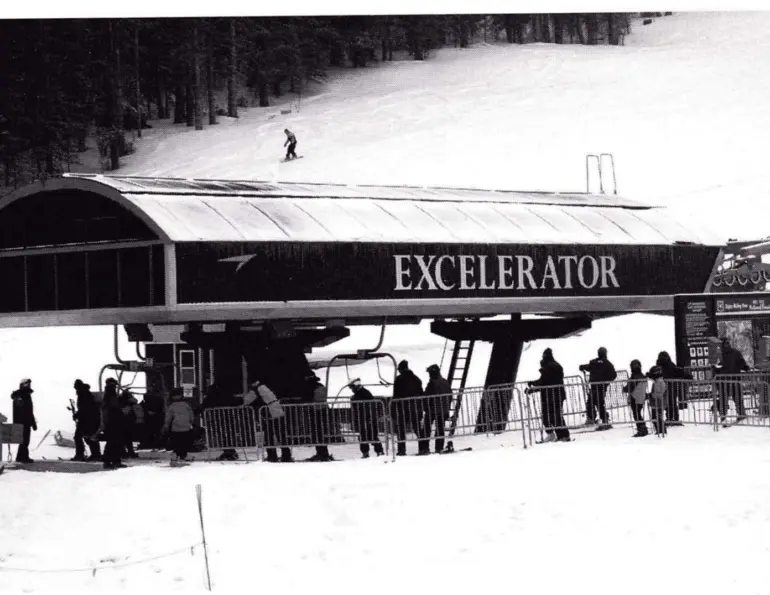
Contour loading on high-speed lifts, while used in gondola loading for a long time, is gaining popularity for chairlifts. Though European ski areas began the practice several years ago, in 1999, Copper Mountain, Colo., was the first to implement the practice in North America. They used the loading configuration with a new high-speed quad because a wetlands area at the base prevented a normal loading maze, which would have required costly excavating to move the loading terminal farther uphill.
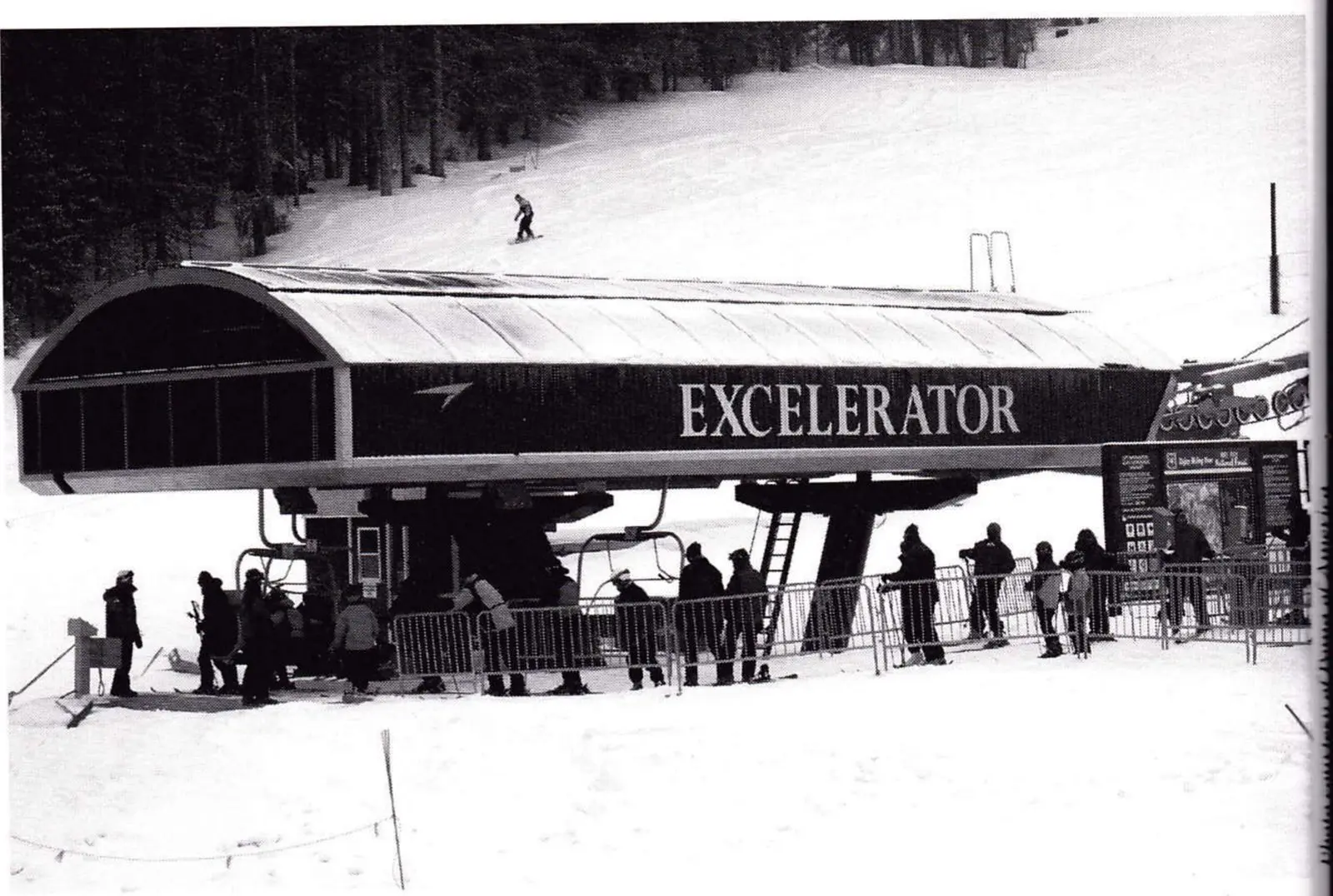
Contour loading is loading chairs on the contour of the bottom terminal and differs from normal or classic rear-entry loading in that guests approach the chairlift from the side—at an angle perpendicular to the liftline—not from directly behind it. Skiers and snowboarders sit on the chair when it is 90 degrees to the line and then, as the chair turns, ride around the remainder of the contour at a constant slow speed before accelerating normally to full rope speed.
There are a some immediate advantages to rearranging the loading corral and the guest’s approach to the bottom lift terminal:
- It solves space concerns when there’s insufficient room behind the terminal.
- It gives guests more time to get settled in the chairs before accelerating onto the haul rope.
- It gives lift attendants more time to assist guests and help seat children and handicapped customers.
- It avoids the many slows and stops caused by people dropping items or falling in the load area.
Jim Spenst, vice president of operations at Copper Mountain, says that during planning for the quad installation it seemed that there were two choices: either a major excavation to provide for chair clearance or an expensive wetlands-relocation project. But a trip to France showed Spenst the logic behind contour loading and he felt it could make sense for Copper’s Excelerator Express.
“The configuration allows significant additional flexibility with station placement because there is no queue behind the station,” says Spenst.
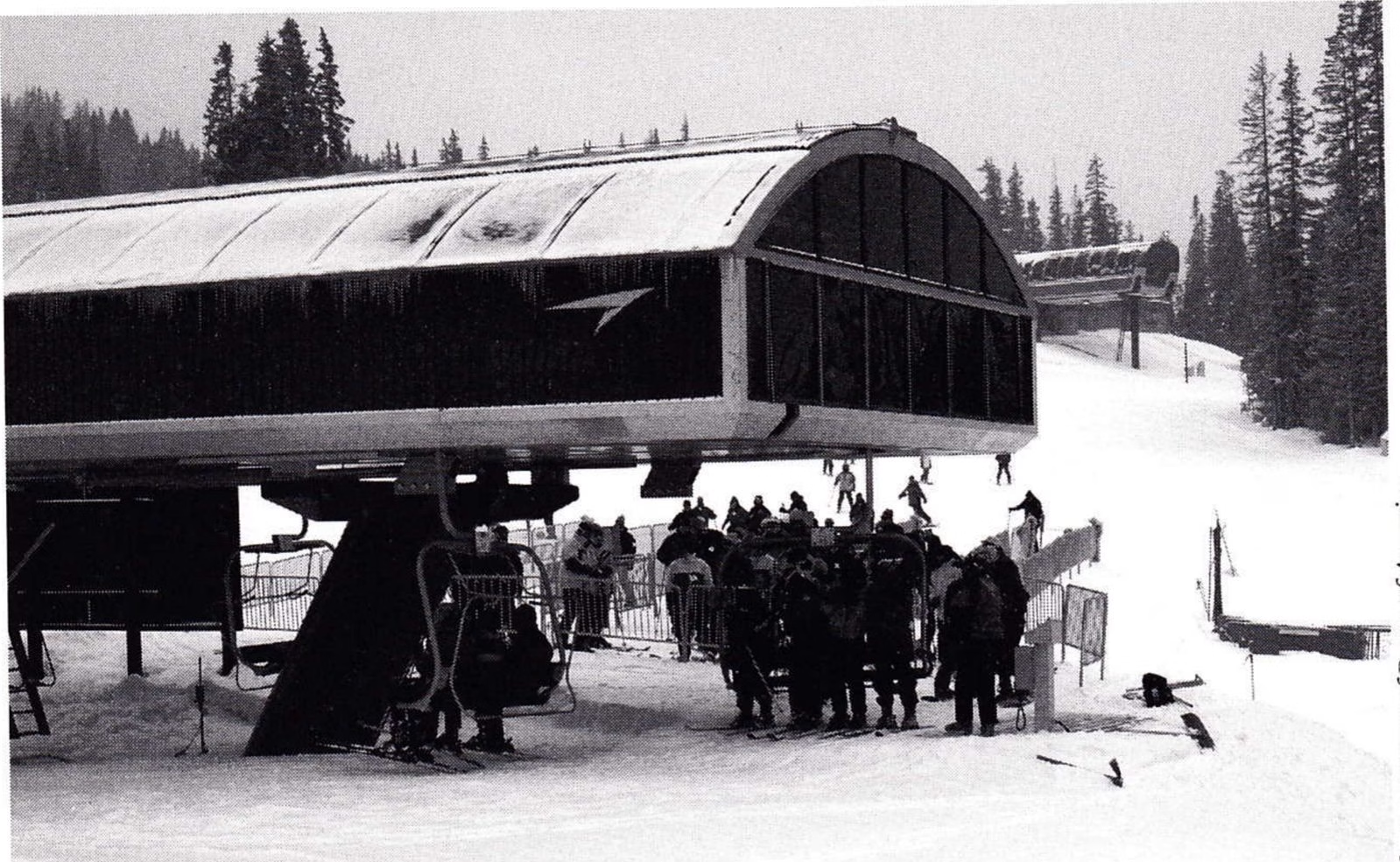
Photo courtesy of Poma of America
Spenst notes, however, that a few guests became anxious when they noticed the incoming chairs approaching at high speed. But an adjustment to the deceleration rate seems to have alleviated that fear. “Contour loading on high-speed lifts is a great way to maximize base-area real estate and improve the guest experience,” adds Spenst.
The DLS (dual-loading six-pack) chairlift at Breckenridge, Colo., is also a contour-loading design that uses two separate contours at the load station. And Mount Snow, Vt., changed the loading configuration on two existing Poma high-speed quads from the typical approach from the rear to the perpendicular contour design.

According to Scott Pierpont, Mount Snow’s managing director, he was looking for a way to decrease loading incidents and increase efficiency when he visited Copper Mountain last year and took a look at the contour design of the new quad.
“This looked like the answer,” says Pierpont. “In March, we changed the loading on our Lift #9, a four-year-old Poma called the Canyon Express. We made no changes to the lift mechanics, instead we only moved the Load Here board to the contour, changed the ramp and reorganized the maze.” Because the design worked well on #9, Mount Snow did the same thing with its other high-speed quad, the Nitro Express. The result, says Pierpont, has been a marked reduction in slows and stops.
“I think that every high-speed chairlift should have contour loading. If the skiers approach from both sides, then more real estate is needed for the maze, but it is worth it for guest comfort and lift efficiency,” he says. “People immediately started putting the foot rest down before getting to the point that was previously the load area. It buys us more time in loading where we didn’t have that ability before.”
Although the changes can be made on snow, in many cases it is easier to make them once the snow has melted. Pierpont points out that ski areas that use wood decks and ramps will have an easier time making modifications in the off season. Other than that, changes are basic, involving the maze and repositioning the lift operator’s remote control pedestal. The only downside would be some added chain wear to older-type high-speed lifts that use chain conveyors to move hangers around the contour.
With constant pressure to improve the guest experience and the bottom line by maximizing real lift capacity, contour loading is a vehicle to realize both.

