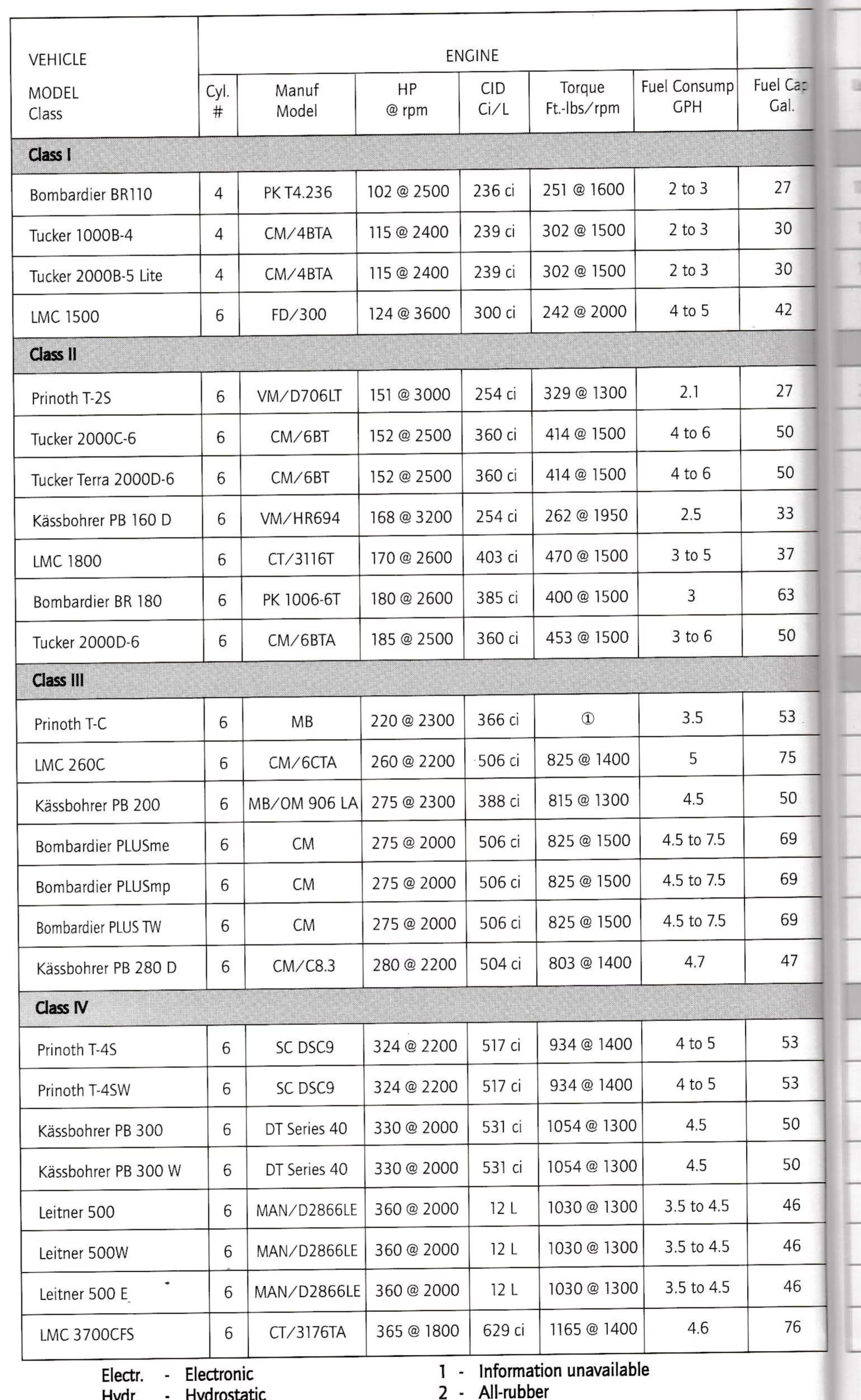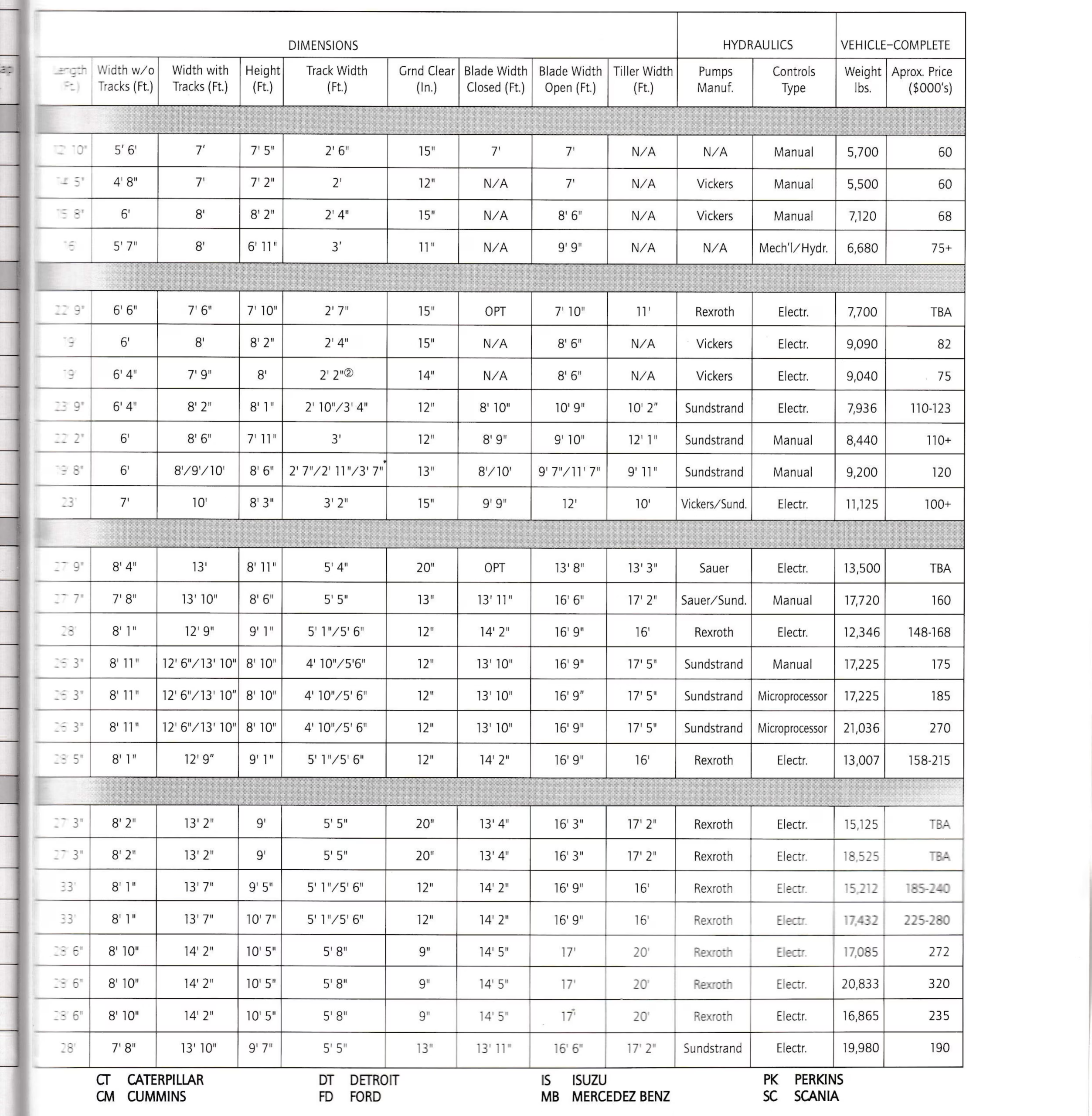
Reported horsepower continues to inch up and drag prices along. The Bombardier 160 is now the BR180 while the Pisten Bully 330 has become the 300 (same hp). Tucker unveils their all-new Terra while Prinoth standardizes a fixed-tooth tiller. From the smallest 236-cubic-inch, 5,700-pound trail conditioner to the largest 12-liter (that’s 730 cubes) two-tracked, 20,000-pound winch cat, SAM lists them all.
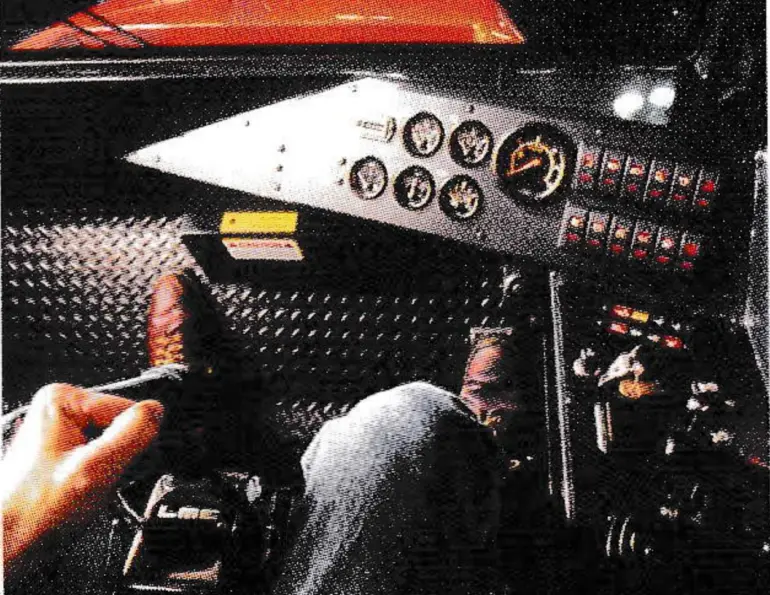
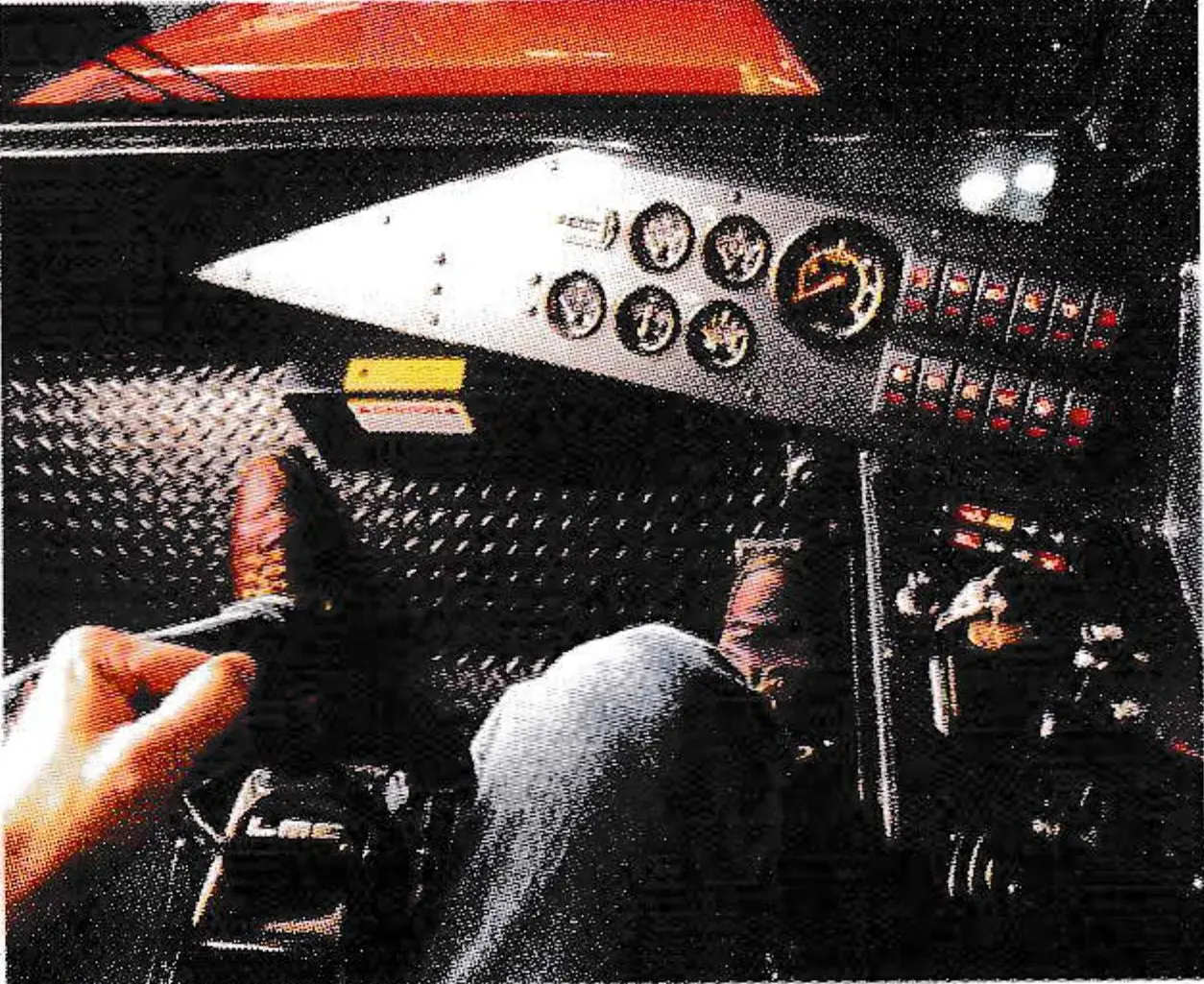
After completely reworking the model 260C for this past season, LMC has continued tweaking and fine-tuning. Vibration problems have been resolved with the introduction of an isolation mount system that literally suspends the cab on four separate air bags. And a problem with cabin humidity is now controlled by new electric elements incorporated into the windows. In addition, two new hydraulic systems can be controlled from the cab: the first is a quick-hitch tiller assembly utilizing two hydraulic pins in the rear receiver. Track tension is also hydraulic, activating to a preset psi when the engine is started, and able to be detensioned with the flick of a switch inside the cab.
LMC’s three-segment tiller, the Tri-Flex, is being promoted for terrain park construction and maintenance because it can be lifted and turned to a 90-degree angle. The up/down pressure on the outer wings is controlled via a potentiometer—also adjustable from inside the cab—that keeps the wings from drooping or curving when the tiller is raised or lowered. Also, the manufacturers say that a new tiller tooth designed with center relief saves weight, processes the snow better and provides an extra cutting edge as well.
It might be called the Bombardier “Plush.” Interior details in the cab of the improved Bombardier Plus include a Pioneer Super Tuner 3 stereo (with CD option) mounted in the ceiling, with dual speakers on the driver’s side and optional speakers on the passenger side. The ceiling, covered in a fuzzy-plush material, has been installed in three panels for easier maintenance. The lighting switches are now overhead, a sun visor has been introduced and improved ducting has increased side-window ventilation. More high-tech stuff: new microprocessor software is available that shows the actual time the vehicle is moving, the time it is idle, the time the tiller works, the surface area covered, distance traveled and actual speed while in motion. The removable blade now sports a quick-mount assembly with tapered pins for easier installation, mechanically activated from the outside. The blade also has a reinforced, heavier grill and a self-sharpening cutting edge set at a steeper angle.
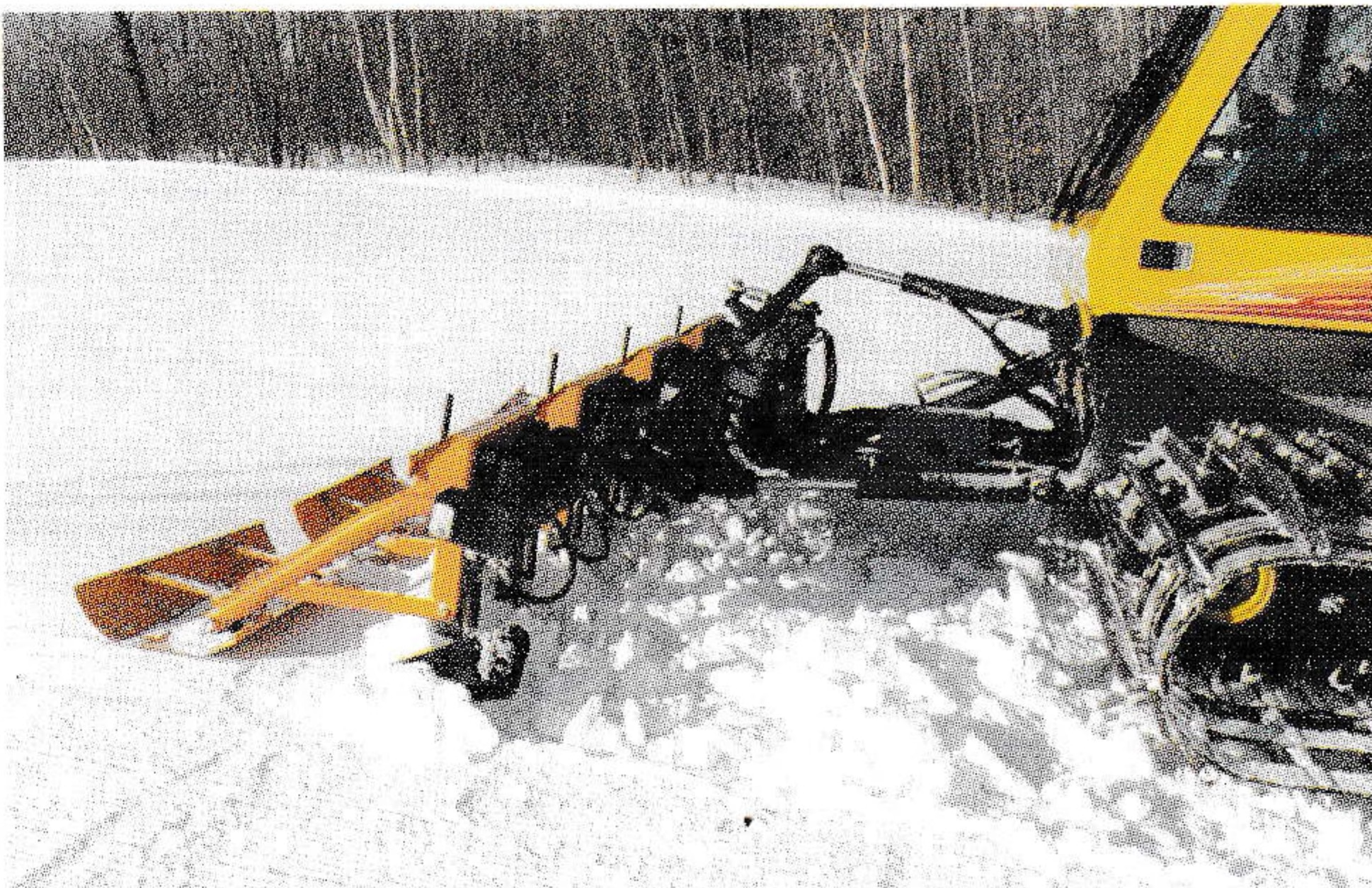
Track improvements include tire guides that have been beveled to reduce sprocket wear. Also, in the interests of longer track wear, the plastic coating around the sides of the sprockets has been widened and extended.
An earlier problem of hinges on the rear deck cracking from fatigue has been resolved with an improved lifting system. Some of the tiller improvements include the addition of plastic side ears, a wider fiberglass bar and a longer comb under the bar. In addition, the gear box now uses grease instead of 90-weight gear oil.
Coming soon: Bombardier is testing a terrain feature builder and maintainer currently in the development stage.
Prinoth engineers have been tinkering with the T4S. Systems have been updated and upgraded, increasing horsepower from 302 to 324, torque from 852 to 941 ft-lbs. and ground speed from a maximum of 11 to 14 mph—all without an increase in fuel consumption, which remains 4.5 gph. The frame of the T4S has been lengthened, increasing the vehicle’s climbing capacity.
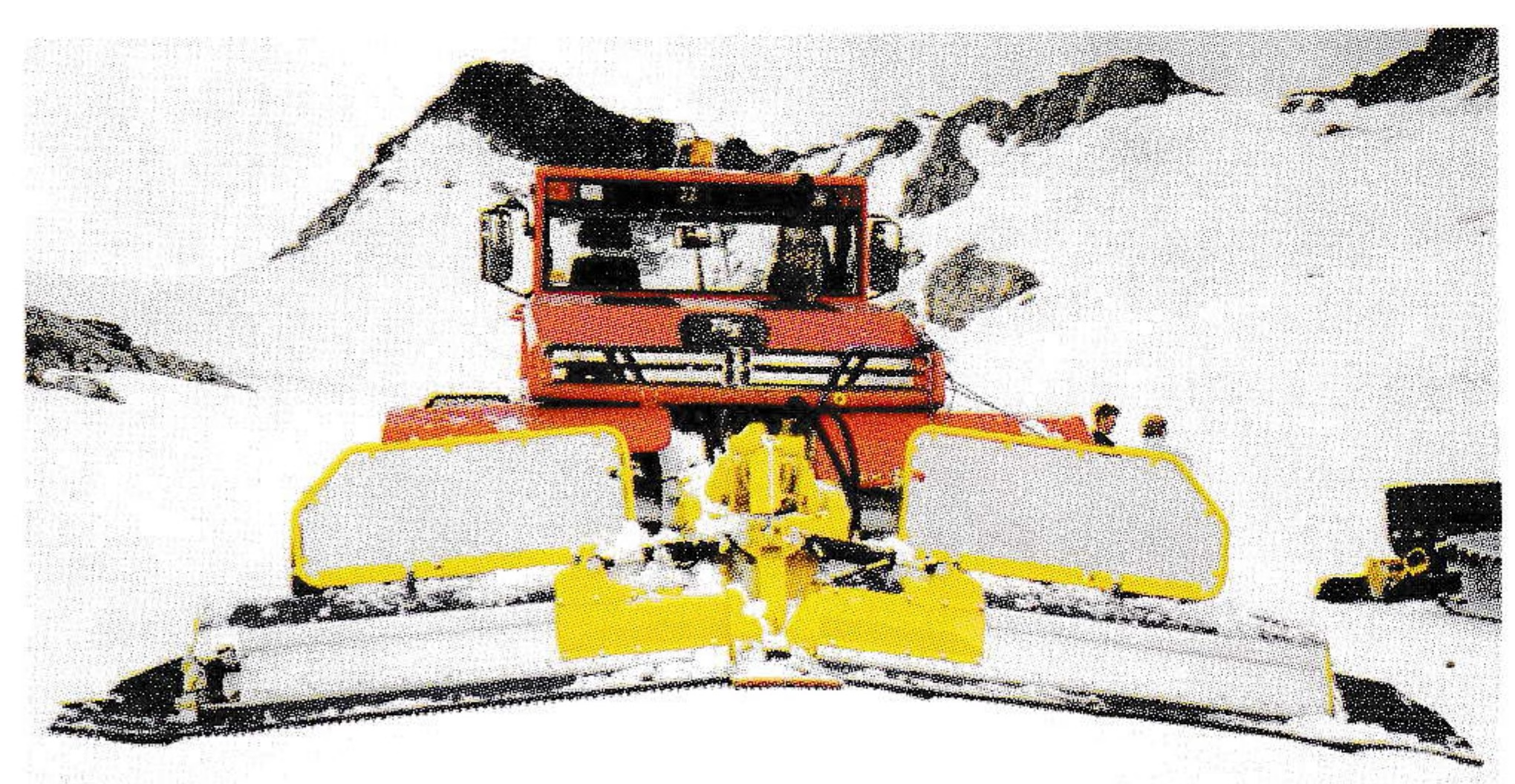
In another improvement, the steel tire guides are now bolted directly to the aluminum crosslinks instead of the rubber inside stud to reduce wear and tear.
Not to be outdone by the other manufacturers in the quick-mount assembly arena, Prinoth makes its own contribution to the mix with a locking mechanism that allows both easy attachment and removal of the front blade—no tools necessary.
A new accessory with interesting possibilities is the T4S Inspection Basket, a boom mounted to the back of the vehicle that can extend almost 40 feet. With a holding capacity of two people (up to 440 pounds), the basket might be used for lift evacuations, routine lift maintenance or changing trail lights for night skiing. In other accessory news, the Prinoth Flex Tiller—a bi-flex—now offers a fixed-tooth cutter bar as standard, with a flail cutter bar as an option.

Kässbohrer is introducing two new models for the 1997-98 season: the Pisten Bully 300W and the Pisten Bully 200. The 300W has all the features of a Pisten Bully 300, but also comes equipped with an improved Plumettaz winch. Winch improvements include a hydraulically driven take-up drum (eliminating several mechanical components), a redesigned boom (tiltable to reduce overall height when garaging) and 3,280 feet of wire rope. In addition, large removable access panels on either side of the winch increase the ease of service from earlier versions.
The 200 is a new mid-range vehicle, also sharing many features of the 300.
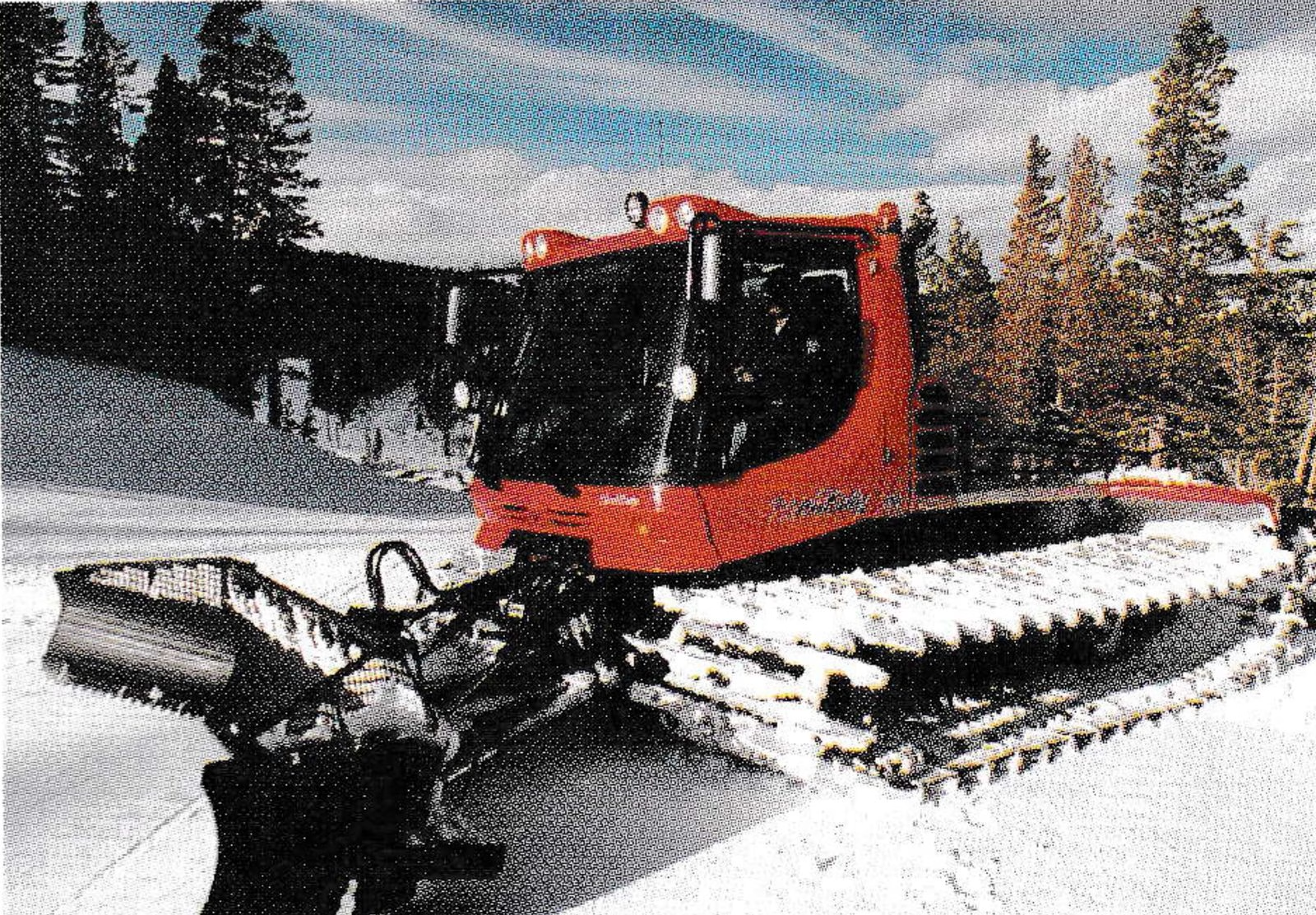
However, the 200 utilizes the Mercedes Benz OM 906 LA engine, a new turbocharged and intercooled diesel with full electronic engine management. It produces 275 hp at 2,300 rpm and 815 ft.-lbs. of torque at 1,300 rpm.
The 300, new last season, boasts several improvements as well. Significant gains were made in the area of noise reduction, which was cut to less than 75 dB at normal engine operating speed. The cabin has improved air flow with increased heating capacity and better duct positioning for improved heat distribution. It also incorporates hydraulic track tension and a new, longer travel suspension, and is available with either steering wheel or electronic joystick control.
The rear implement carrier has been re-engineered to provide a parallelogram action, enhancing relative movement between the vehicle and rear attachments. The Multi-flex Tiller has also been upgraded with improvements in the tiller snow chamber and a new snow finisher.
Tucker’s new entry to the field this year is the Terra, which puts the cab and chassis of the 2000-D-6 on all-rubber tracks, transforming it into a four-season utility vehicle that can slog through mud, snow, dirt, slurry pits, sand and even rice fields. Though the all-rubber tracks lose 30 percent efficiency on snow, the Terra reportedly handles winter chores such as snowmobile or cross-country trail grooming with ease.
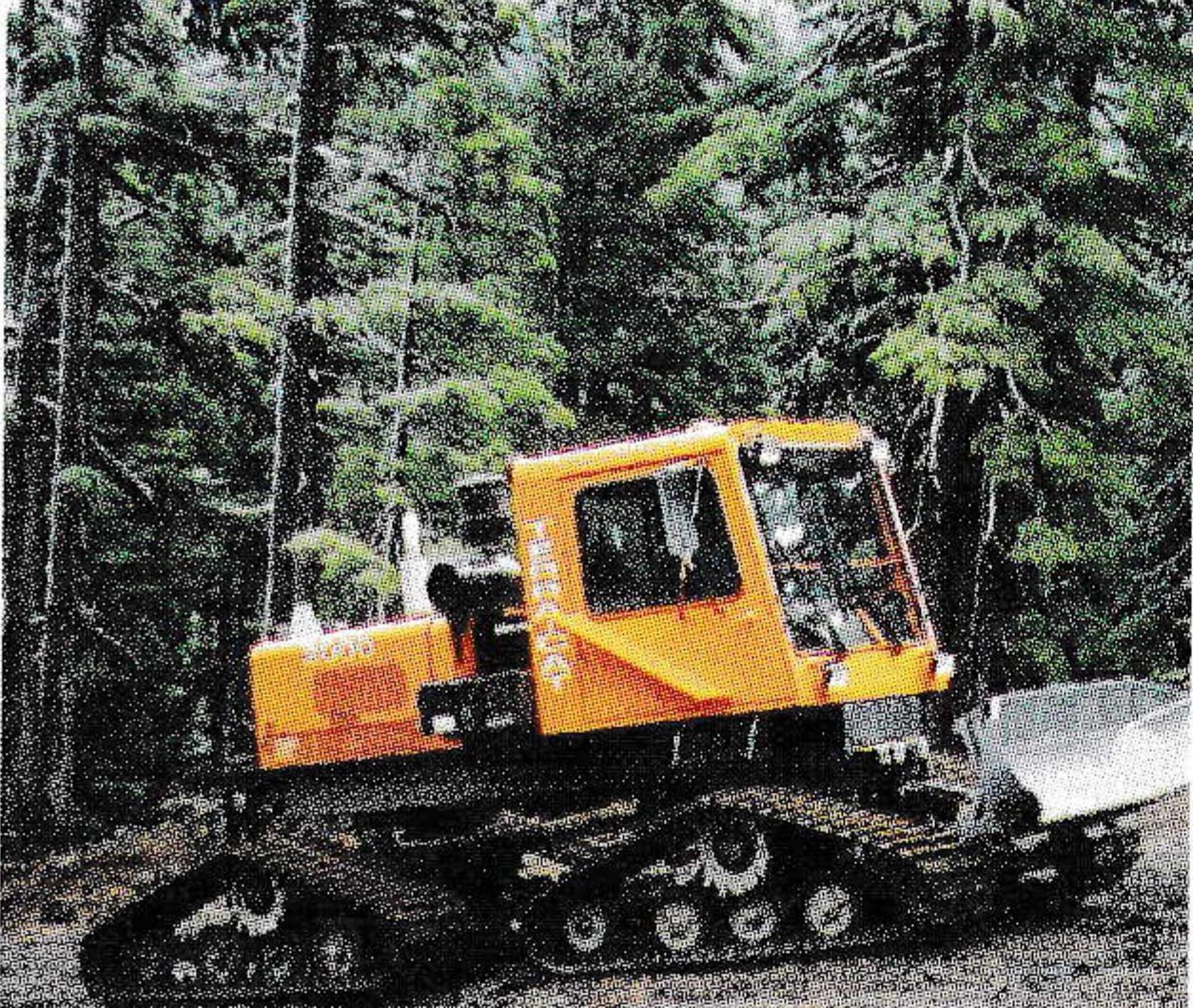
The standard Terra is a two-man model, though it is also available with a larger cab for a five- or eight-man version. It can accommodate a 2,000-pound crane, another Tucker accessory. Load a water tank on the 6×6 cargo deck in back and it becomes a firefighting vehicle. Or just haul it down to the Bahamas to clear beaches when the snow melts and the lifts shut down for the season.
Table Headings
Here’s a rundown on what the column headings mean. Cylinder # is the number of cylinders in the engine. Manufacturer/Model is from the engine manufacturer, and corresponds to the abbreviations listed under the table. The Horsepower listed is supposed to be SAE (Society of Automotive Engineers) flywheel horsepower (without accessories). CID—engine displacement—is in either cubic inches or liters. Torque is in foot-pounds and is a direct indication of usable power that is less dependent upon engine rpm than horsepower is. Fuel Consumption is in gallons per hour and represents manufacturer claims for a working vehicle. Fuel Capacity is the size of the fuel tank. Length is the full vehicle length including both blade and tiller. Width of the vehicle is given both with tracks and without tracks. Track Width is the outside dimension of the tracks normally supplied with the vehicle. Ground Clearance is the least dimension between the undercarriage and the snow surface with track belting resting on the snow. Blade Width is given in feet: one figure reflects wings fully open and the other is wings fully closed. Tiller Width is not the groomed width but the combined length of the rotating cylinder(s) including finishers. Pump Manufacturer is self-explanatory. Controls Type shows whether the hydraulic system is controlled by electronics or by mechanical means. The Weight of the vehicle is listed in pounds, and reflects the total weight of the standard unit including tiller, blade and fluids. The Approximate Price in the last column is the price supplied by the manufacturer for a fully-equipped vehicle, including attachments, unless noted otherwise.