


To give the end of the story, the point ticket program available as an option to Mt. Bachelor’s guests for the past two years, has been an unqualified success, both from their perspective and also from management’s. What better proof of a product’s desirability can there be than your customer’s willingness to pay a premium for it?
Guests have the choice of buying from the conventional menu of time-sensitive day and half-day tickets; or they can buy point tickets. The point ticket (in Bachelor’s case, using the SkiData system) gives the skier the option to pay for skiing on the basis of actual lift usage: they can pay by the run. The point lift pass is like a debit card from which points are deducted for each lift ride taken. Any unused points at the end of a ski day are good for three years.
Which type of ticket is mathematically the best value? The answer depends on the number of rides the skier makes in one day. With our pricing structure, those skiing more than 10 runs would generally be better off with the traditional all-day ticket. The point ticket is usually the better choice for low-lift-use skiers. We have found these skiers prefer to pay by the ride and are willing to pay a premium price for this option—to pay $33 for a point ticket rather than $31 for a full-day, $25 for a half-day or $20 for a midway ticket. (The midway ticket is good only for beginner and intermediate lifts; significantly, its share of our ticket mix dropped 50 percent the first year the point ticket was available.)
Our experience has been that our yield increased 200 basis points with no other significant changes in ticket procedures or policies.
Value Defined
Returns like these represent good value for the operator, but let’s take a look at the point ticket’s value from the perspective of our guests. I define the value the guests receive for their dollar as the inverse of the cost of a lift ticket divided by the number of lift rides. In plain terms, the more runs, the lower the cost-per-run and the greater the value for the skiing dollar.
Better skiing conditions, short lift lines, great grooming, sunny weather, uncrowded slopes and efficient trail layout increase the likelihood of more runs. (Naturally, the reverse with poor conditions.) Although this methodology is simplistic, it is anecdotally appealing. At the margins it is difficult to say skiers who make 15 runs in a day get a significantly different value for their money than those who make 14 or 16 runs. However, the skiers who can make 20 or more runs are getting a relatively better value than those who ski fewer than 10 runs. (See Graph #1.)
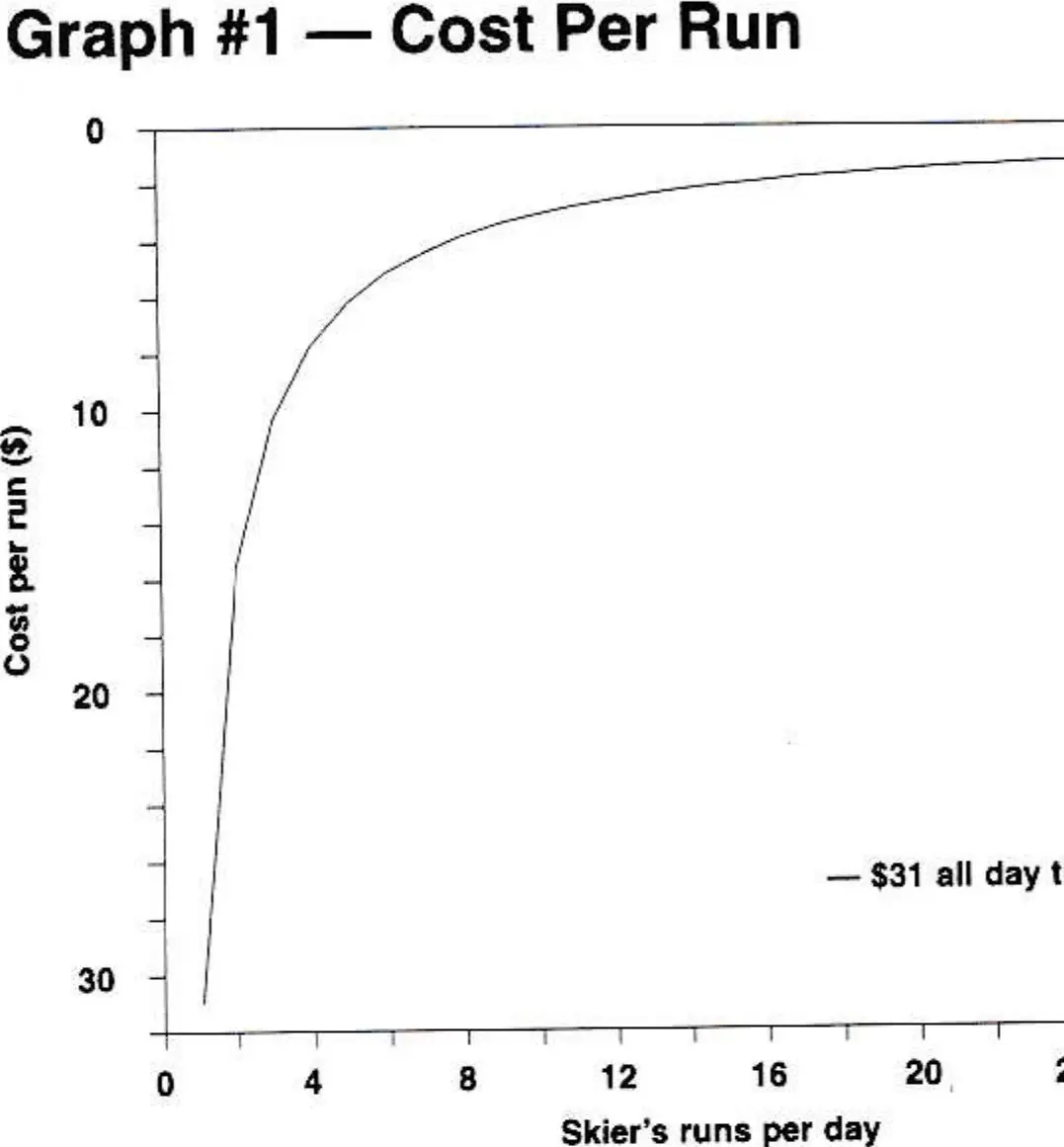
The lower the cost-per-run, the greater the relative value received for the ski dollar—”relatively,” because we are dealing with perceptions rather than mathematics, just as people perceive temperatures as “warm” or “hot.” A skier making 30 runs pays only $1.03 per run. The skier making only five runs in a day pays $6.20 per run. I can’t say the first skier’s value received is six times better than that of the second, but there is definitely more value there, both real and perceived.
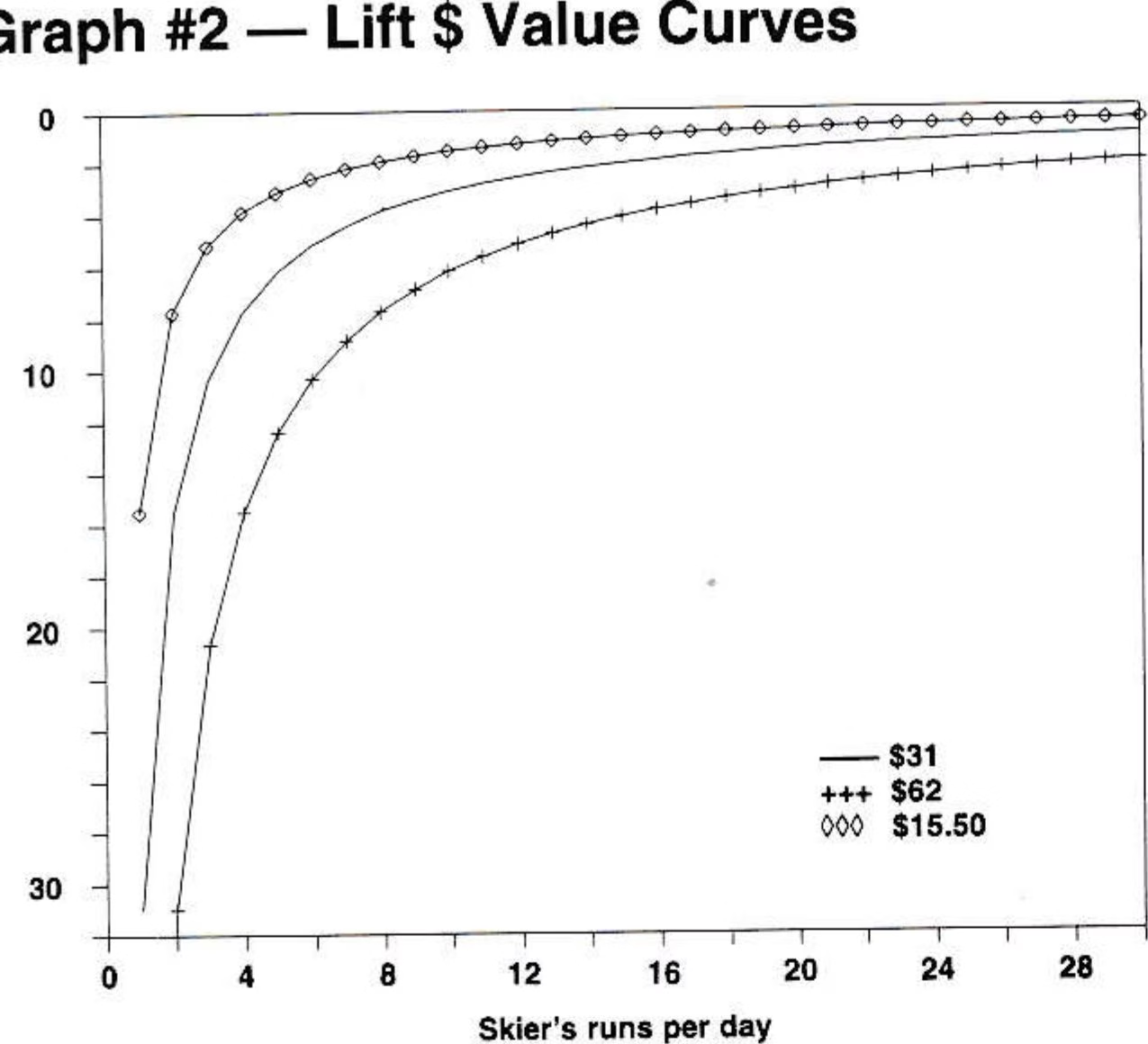
The skier’s sense of value often closely tracks that of the operator’s (See Graph #2). Note that with the conventional pay-for-time ticket menu and discount incentive marketing strategies, you can shift the value curve, but you cannot change the shape or the basic nature of the curve! Whether you double your prices, cut them in half, offer “twofers,”…whatever; the experienced, stronger and faster skiers who ski more runs will get a better value for their ski lift dollar than those who have knees like the author’s. The advanced beginner and beginner/intermediate skiers who are still in the five-to-ten runs-a-day category will always pay a substantially higher cost per run.
Discounting and the Point Ticket
When we focus on the marketing influences on ticket pricing, the point ticket has yet another value for both the operator and the guest. When ski areas discount their lift tickets enough to stimulate the low-lift-use skiers, it is not just they who benefit; the high-use skiers get to take advantage of the same discount and they maintain their relatively better position on the cost-per-run value curve.
It is very difficult to offer the low-use skiers a deal that the high-use skiers do not readily exploit. This leads to the potentially high hidden cost of any discount program. Can the increase in the number of skier visits of both these groups overcome the incremental cost of discounting the ticket prices to the high-use skier?
Some areas, including Mt. Bachelor, offer a less expensive ticket for a limited number of lifts which enables the low-use skiers to have a curve of their own. In some respects, the first-time beginner package is also an effort to reduce the relative value differential between the low- and the high-use skiers. These packages, which at times are free, discriminate against high-use skiers simply because no expert would want the package. As an industry, we want to attract the new skier, restart the semi-retired skier and motivate the infrequent. Yet, in relative terms, we charge these groups far more per run than we charge the high-use skier.
Why waste time, energy and money selling the 20 runs-per-day frequent skiers on the value and fun of skiing when they are already sold? Does anyone really know the hidden cost of a discount program in foregone revenue? Worse yet, in many cases, ski areas just end up stealing these high-use skiers away from each other with the “deal of the day.” The challenge is to find a way to split these two groups apart, so the high-use skiers don’t benefit from our efforts to stimulate the skiing frequency of the low-use skiers.

The issue of discount and special pricing policies will be debated until the end of time. I will sidestep the issue by saying the point ticket does not preclude a discount pricing strategy; however, it can replace the need for one. By using the point ticket to differentiate between the low- and high-lift-use skiers, a ski area can get increased lift sales and ancillary revenues from low-use skiers, while retaining the 95 percent profit margin lift revenue from the high-use skiers. As good or bad as discounting may be, it can be enhanced by giving customers options based on their lift usage.
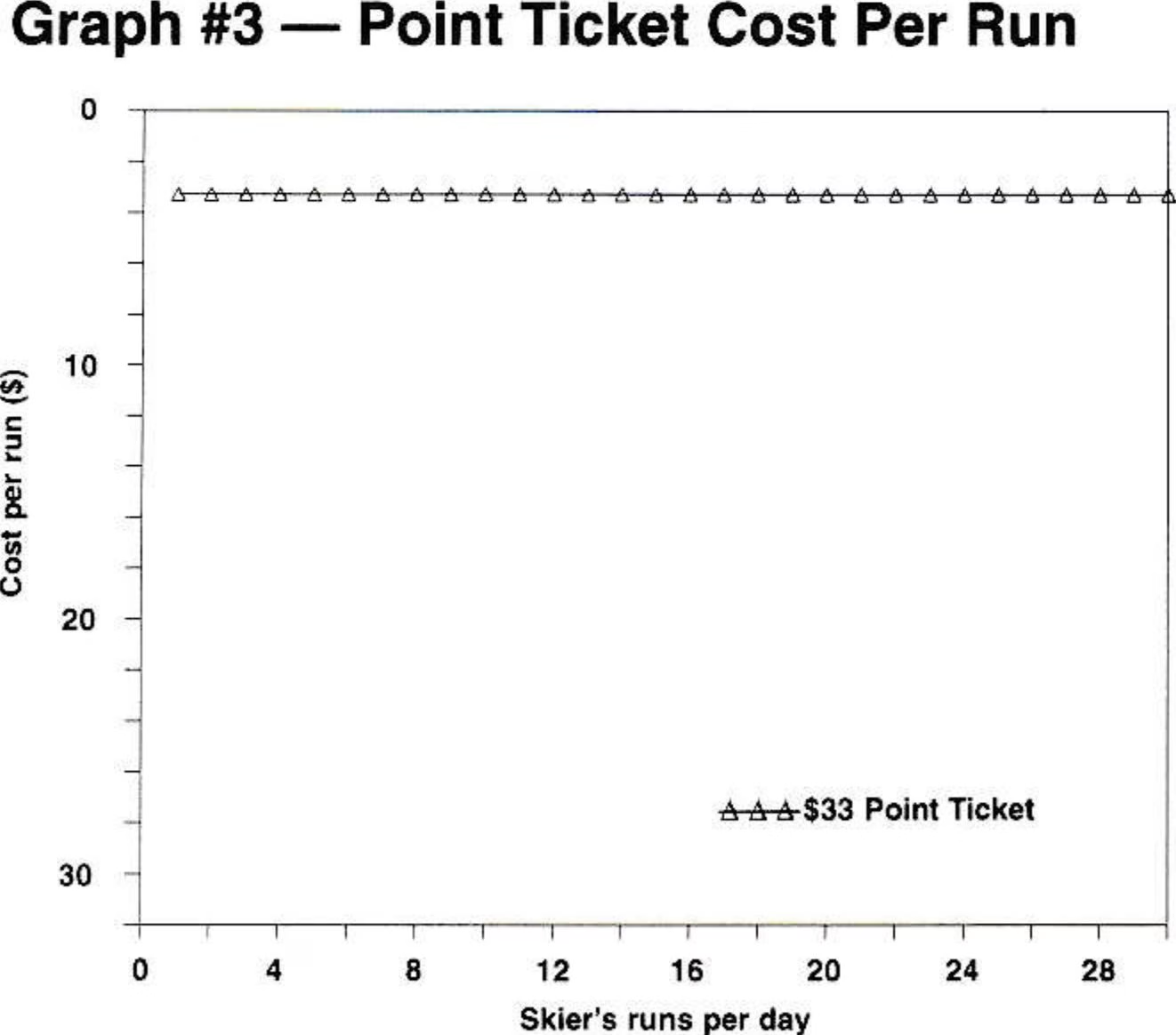
When low-use skiers don’t have the options of a point ticket, the ticket office resembles an all-you-can-eat restaurant that sells dinners for $31. But what are the curve dynamics of cost-per-run point ticket sold for $33? (Graph #3) Assuming a 200-point ticket with each ride costing 20 points, a visitor willing to ski more than one day over the three-year life of the ticket is guaranteed a cost-per-run of $3.30 no matter how many runs are made in a day, be it two, five or ten.
Graph #4 shows the value frontier between the traditional and point tickets.
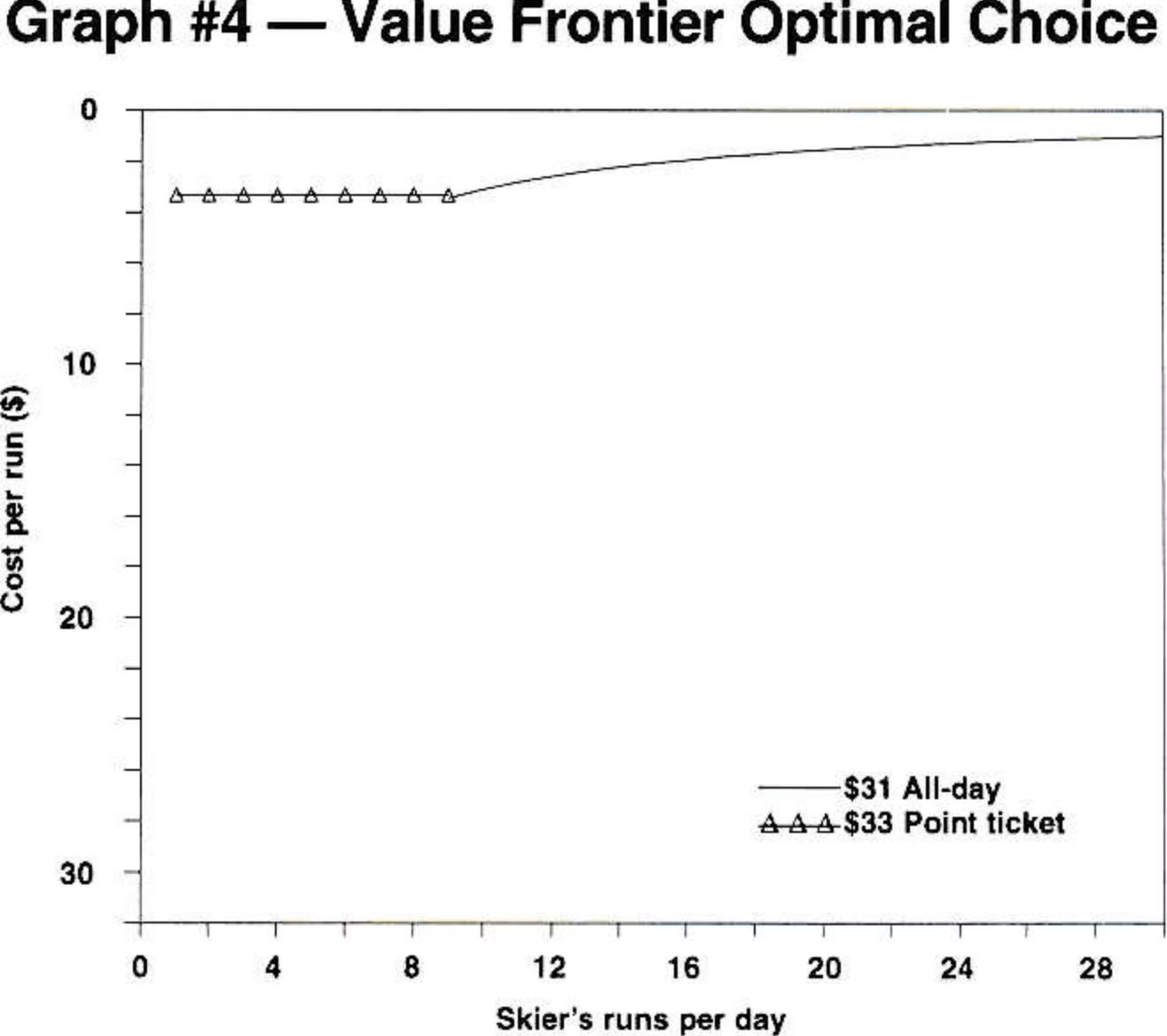
The ski area creates a price differentiation between those who get exceptional value for their ski dollars based on usage (point ticket) and those whose value is based on time (the full market rate of an all-day lift ticket). The high-use skiers pay full market rate for a time-sensitive all-day lift ticket, while the low-use skiers pay based on usage.
In conclusion, all of the skiers at the resort can obtain relatively the same cost-per-run for their skiing, regardless of their skiing ability. (The examples on Graphs #3 and #4 showing a constant cost-per-run of $3.30 assume the low-use skiers ride only on high-speed quads at 20 points per ride. At Mt. Bachelor, if the low-use skiers ride only on fixed-grip chairs costing 15 points per ride, they can drive their average cost-per-run down to less than $2.50.)
Deferred Use
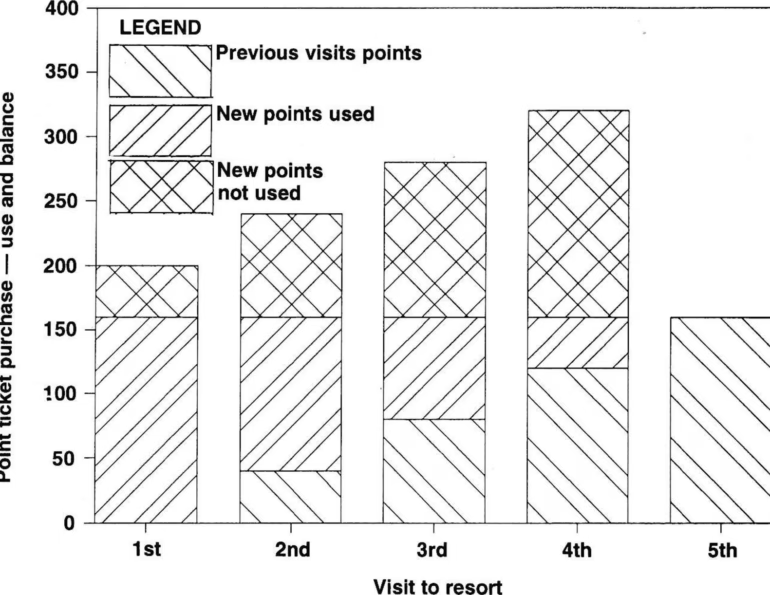
From a marketing and accounting viewpoint, there is one more significant reason why point tickets have a higher ticket yield. Over the last two seasons, we have found the average point ticket purchasers use 80 percent of their available points during any given day (Graph #5). In order to get the value of the remaining 20 percent of the points, the low-use skiers must return to Mt. Bachelor. On the second day they will use the points remaining from their first visit and then buy a second point ticket to continue skiing. At the end of the second day, our average low-use skiers will have 40 percent of a point ticket remaining. It is not until the fifth visit that the low-use skiers ski for “free.” Thus, the point ticket is an automatic frequent-skier program, giving the low-use skiers a free day of skiing after purchasing four premium-priced tickets—all the time spending additional funds on ancillary services.
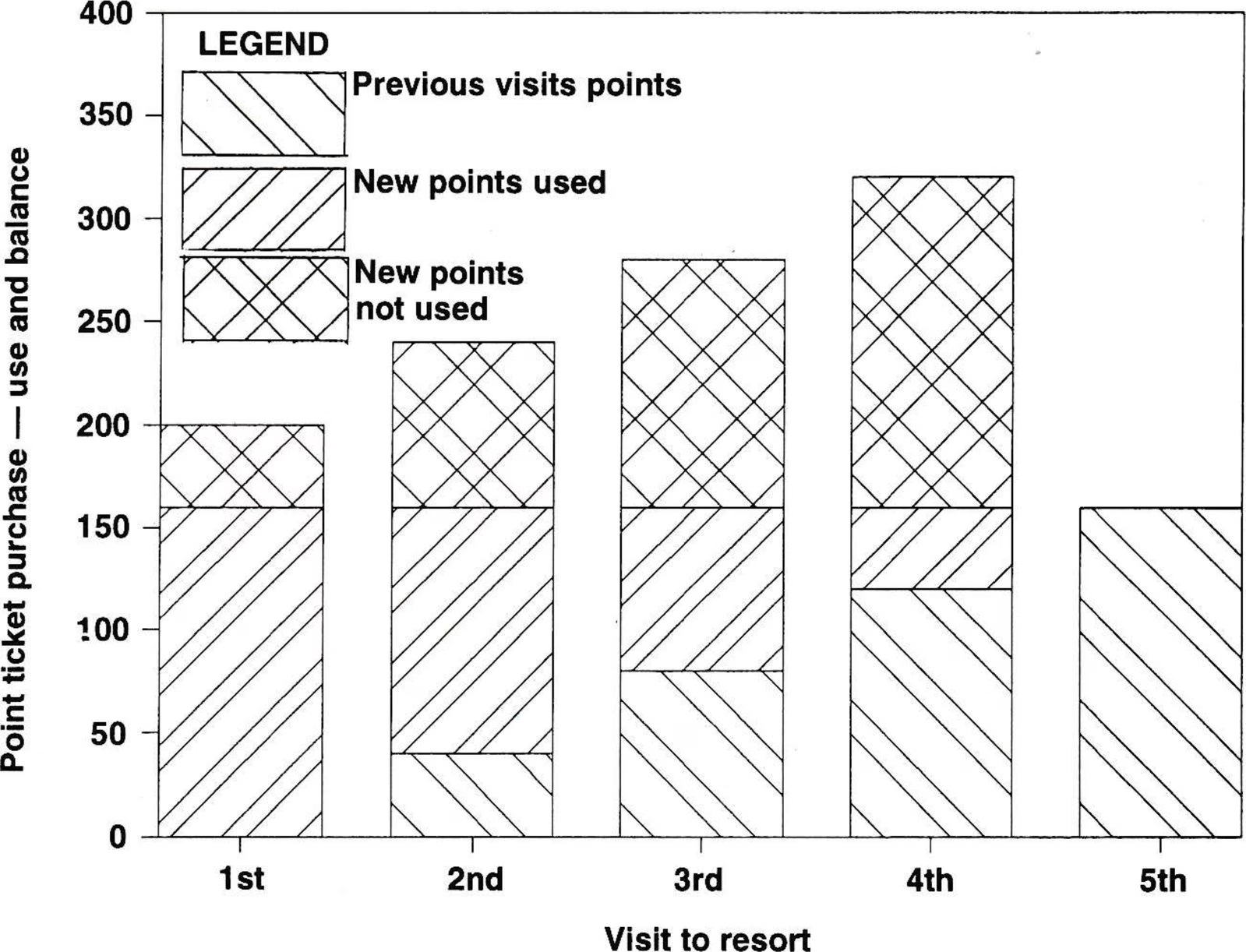
In summary, the higher ticket yield stems from low-use skiers shifting from low-priced tickets to the premium-priced point ticket. Our low-lift-use visitors have been quite willing to pay this premium because the point ticket meets their desire for flexibility.
What better proof of a product’s desirability than your customer’s willingness to pay a premium to get it? At least, it works for Mt. Bachelor.

