


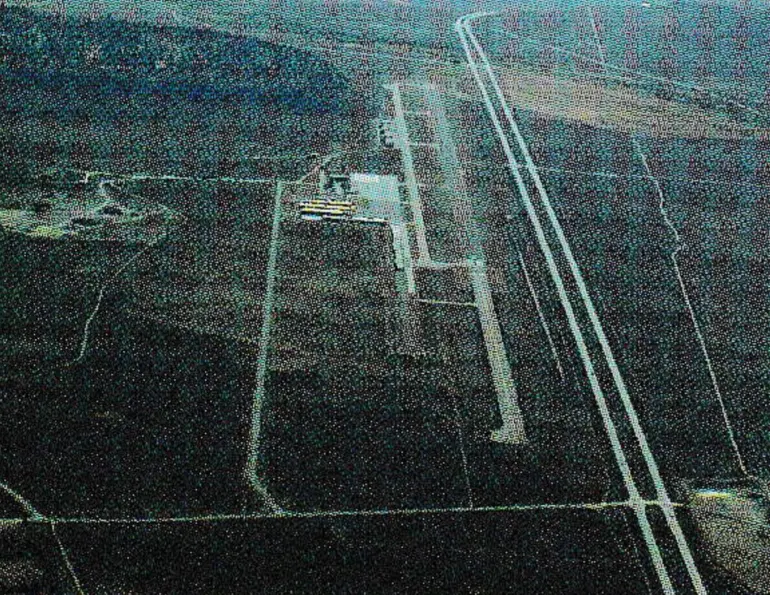
It sits alongside one of the state’s busiest highways, well removed from the pristine wilderness areas of the eastern Sierra Nevada. It has been certified to receive commercial airliners, such as Boeing 727s, for nearly 25 years. It has plenty of land, including an operating airstrip and an abandoned stretch of paved runway. Its only “endangered” species is the sage grouse, which is more accustomed to dodging hunters’ bullets than incoming planes. Finally, the modest plan calls for merely widening and repaving the existing runway and constructing a new terminal building to replace the current cramped facility.
Yet for all of the logic in remodeling the airport so that it can accept larger aircraft—a vital component of plans to generate midweek destination traffic from out of state—the town and resort are embroiled in a legal battle that pits Mammoth and the Federal Aviation Administration (FAA) against a coalition of environmental groups and the California attorney general.
Complex Issues
The real issue: the environmental impact of growth in the Town of Mammoth Lakes, as well as the potential impacts on the Sierra generally and on Yosemite National Park and Mono Lake in particular, from an increase in tourists who would arrive by air.
The technical issue: the FAA wants to protect its right to require in-depth Environmental Impact Statements (EIS) only for major airport expansions; the environmentalists want to require an EIS in every case. The FAA fears that subjecting every modest airport improvement to exhaustive environmental studies would burden or defeat projects across the country. “They see Mammoth as a potentially precedent-setting case, and they’re going to draw on their top legal experts from the Justice Department to address this challenge,” says Mammoth CEO Rusty Gregory. In addition, an environmental coalition is challenging a state-mandated environmental report on the airport as inadequate.
If the FAA and Mammoth lose, the repercussions will be felt not only by other mountain communities that hope to expand their fields, but also by metropolitan airports such as Chicago’s O’Hare, which has seen its growth plans stalled for years. If the FAA and Mammoth win, it could be the economic shot in the arm that the town needs to create a sustainable economy by boosting midweek retail and lodging business.
The somewhat quirky scenario has both FAA and Mammoth on the same side, but with somewhat different motivations and their no-growth opponents prepared to use any and all tactics to win.
Mammoth could use the boost a win would bestow. The completion of the new Intrawest village in the next few years could siphon midweek market share from existing restaurant, retail and lodging properties if the town and resort are unable to increase their tourism base. And that’s a big if. The resort drew 1.5 million skier-visits a year in 1982, mostly drive-to skiers from Southern California. In 1989, skier-visits plummeted to around 900,000; they totaled nearly 1.2 million last year. Mammoth blames the drops on defections to destination competitors, many of which offer superior air service. The resort is a six hours’ drive from Los Angeles, an hour longer from San Francisco.
All these issues make the fight a big one, both locally and nationally.
The Biggest Little Airport
The battle began when the FAA issued a Finding of No Significant Impact (“FONSI”) for the airport expansion in December of 2000. It approved the airport expansion without additional environmental study and authorized grants of $28.6 million to help finance it. The Sierra Club and other allied organizations sued to compel the agency to conduct a much more exhaustive EIS. In August of 2001, the FAA agreed to reexamine the matter, and the environmental groups put the lawsuit on ice. But when the FAA opted last summer to proceed without a full EIS, the lawsuit was reinstated.
Why all the fuss? The expanded airport could bring waves of new visitors on 757s from Chicago and Dallas, and on 737s from L.A. and other regional markets. By 2022, according to FAA projections, the expanded airport could see 5,000 commercial flights and 333,800 passengers per year.
Although winter traffic could increase without the expansion—the town (which bought the airport from Mono County in 1992), Mammoth Mountain and Intrawest have collectively negotiated a five-year agreement with American Airlines for seasonal winter flights—the expanded facility could also draw increased summer traffic. As the closest major airport to Yosemite National Park, it might become the preferred eastern gateway for arrivals from the U.S. and overseas.
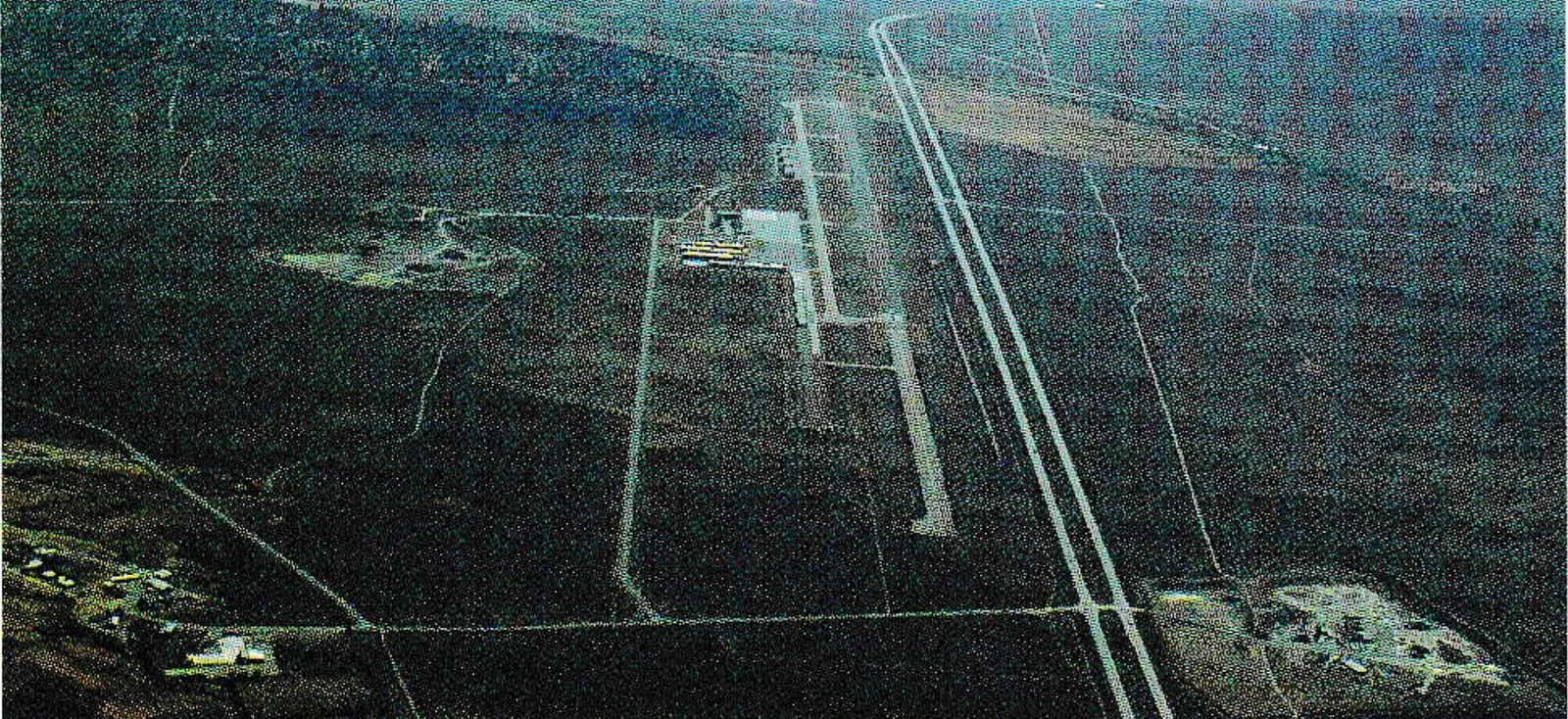
The airport itself is a modest facility. It sits eight miles southeast of town, at an altitude of 7,100 feet. It is literally a stone’s throw from busy Highway 395, the major four-lane artery that brings skiers from Los Angeles in the south and from Reno, Nevada in the north. Although it is rated to serve commercial aircraft, the airport has been used mainly by private planes, including executive jets, and by a handful of occasional commuter craft. The facilities include a single runway, a parallel taxiway system, a general aviation hangar, tie-downs and a tiny passenger terminal.
The expansion plan entails lengthening the runway to 8,200 feet; widening it by 50 feet, to 150 feet (the current FAA design standard for Boeing 757s and 737s); widening the parallel taxiway system; adding an air carrier apron; constructing a 25,000-square-foot passenger terminal, and expanding parking facilities. The extension involves the repaving of 1,200 feet of a 3,000-foot section of abandoned runway. The airport will rip up the balance of the old pavement and rededicate it to open space and sage grouse.
The expansion is not a new idea. Since 1978, the airport has been the subject of five state environmental impact reports. In its FONSI, the FAA concluded that noise levels and air pollutant emissions would be well below minimum federal thresholds, that no federally-listed threatened or endangered wildlife species would be affected, that mechanisms exist to protect local water quality from fuel spills or runoff, and that no wetlands, historic buildings or wilderness areas would be harmed. Finally, the FAA decided that the project does not meet the definition of “major runway extension” as described in federal guidelines.
The Real Issue: Growth
But, says airport manager Bill Manning, the escalating legal dustup “is not really about construction at the airport; it’s about perceived growth in Mammoth Lakes.”
Indeed. “With this project, Mammoth will be subjected to urban sprawl in a pristine scenic area close to wilderness and threatened wildlife,” said local resident and outspoken Sierra Club member Owen Maloy. “People still don’t have enough information about how this will change our area. There is a risk of destroying the very scenic values that attract visitors.”
An Earthjustice press release contended that the new air service “would vastly increase the need for facilities—hotels, condominiums, cabins, restaurants, shopping centers, rental car agencies, road upgrades, parking lots, traffic signals, etc.—to support a large influx of visitors.” It also claimed that the resulting growth could “adversely affect several protected species in the area, including the Sierra Nevada bighorn sheep, sage grouse, Owens tui chub, and bald eagle.” In short, Mammoth Mountain’s owners (Intrawest controls 58 percent of the resort) “seek to remake Mammoth in the image of Aspen and Sun Valley by attracting more out-of-state skiers to justify more real estate development.”
While Mammoth (the town and the mountain) hopes to attract more out-of-state visitors, the impact on the town and its environs might not be as extensive as all that. Consider:
- The developed Town of Mammoth Lakes consists of four square miles of mostly private land that is enclosed by federal lands, thus making it difficult or impossible for the town to physically expand its urban limits. Growth will be limited to a relatively small area.
- The sage grouse is so prolific that California has a hunting season for it.
- Flights will routinely land from the east and depart in the same direction, thus avoiding flyovers at Yosemite National Park, some 20 miles northwest, or over coveted Mono Lake, about 15 miles north.
Wanted: A Sustainable Economy
A majority of Mammoth residents has supported the expansion over the past decade. Through a ballot initiative, an overwhelming majority supported the project from its inception, including the acquisition of the airport in 1992. In 2001, the five-member Town Council voted unanimously to approve the expansion.

Why the solid public support? Simple economics. Rick Wood, Mammoth’s mayor and a local attorney, says that the town has suffered in the past “because we did not have a sustainable economy.” The revenue from new airport arrivals, especially during the normally slack midweek period, would help fund street improvements, allow the town to operate a more extensive public bus system, and give rise to more dynamic aprés-ski offerings, which right now are largely limited to a movie theater, a sprinkling of shops, and a few bars. Until the first elements of the Intrawest village opened this winter, the town had no central core; it was an amalgam of aging strip malls and widely scattered tourism services.
The huge visitor gap between weekends and weekdays has consistently dogged the local economy. “In the peak periods we can have 35,000 people in town with skier days of 20,000 on the mountain,” says Wood. But after Sunday, the number drops to a small fraction of those figures, with restaurants begging for business and lodging occupancy levels hovering at 30 percent or lower. “On weekends, Mammoth’s 55 restaurants are turning people away, but on the other days they are mostly empty,” he adds.
And just how much would the airport contribute to that? With the first year of air service estimated to yield 22,000 visitors, the additional revenue for Mammoth Lakes is expected to be on the order of $32 million for a 16-week ski season. The airport’s business plan assumes that 90 percent of arrivals would be new visitors, that they would spend an average of $200 per day per person, and that they would stay an average of four days. Out of the daily expenditures, one-third would go for lodging, one-third for meals and retail purchases, and one-third for lift tickets, according to town finance director Brad Koehn.
For its part, Intrawest, which believes that its novelty as the town’s newest and most upscale development will allow it to sell condos with or without an expanded airport, is looking at a phased, full buildout of 2,400 units. “I think the village will survive midweek no matter what happens,” says Douglas Ogilvy, Intrawest’s regional vice-president for the western States. “We’ll have better shopping, dining and nightlife experiences than what is offered today. Obviously, air service would be a major benefit, but it’s not essential.”
But much of the town is clearly worried about what could happen to existing businesses if the airport expansion is derailed. “With so many additional beds, if we don’t find another way to bring people here, the overall town occupancy levels will go down,” says mayor Wood. “That’s the simple math.” And, he wonders, would the Intrawest village become a weekday ghost town? The condos may be a sellout, but the first wave of 32 retail and restaurant tenants will need midweek customers just as much as the rest of Mammoth Lakes, he says.
Court Time
So the town, the resort and the airport wait to see what the courts will decide. In addition to the lawsuits brought against the FAA in Federal District Court, three environmental groups have filed a legal challenge against the Town of Mammoth Lakes, claiming that its state-mandated environmental report on the impacts of the airport expansion is inadequate. Hearings are tentatively scheduled for April 16 in federal court in San Francisco and May 22 in superior court. Gregory hopes that neither court will grant a temporary restraining order; then, preliminary construction and grading could begin as early as May. If work proceeds as scheduled, the long-haul flights could commence by the 2004-2005 season.
Even if the expansion were delayed or halted, the airport could still receive commercial flights, says airport manager Manning. “If they don’t allow us to bring in larger, quieter and fewer aircraft, we could bring in a greater number of smaller and noisier aircraft, such as regional jets and turboprops,” he says.
But that’s not the tidy solution sought by Mammoth, which believes the airport expansion is the environmentally correct step to take. Townspeople are rankled by what they consider to be an inaccurate and unfair characterization of their community as one that is hell-bent for rapid development. Trouble is, nobody’s listening to them. The outside environmental groups don’t seem inclined to have direct dialogue with the town, and even the august Los Angeles Times, in an editorial last April, weighed in against the project without making so much as one phone call to town officials for their perspective.
“We all came here from somewhere else,” says mayor Wood. “Why would we want to destroy the very treasures that brought us here?”
Other Airport Projects
Cranbrook Airport: Expansion of this facility in British Columbia is the single largest alpine-related airport project on the boards. The airport seeks to become the preferred gateway for three growing resorts—Kimberley, Fernie, and Panorama are within an hour’s drive. The runway would be extended from 6,000 to 9,000 feet, suitable for long-haul 250-passenger Boeing 767s and 280-passenger Airbus 330 jets, even overseas flights from burgeoning markets such as England. The terminal would be enlarged by 20,000 square feet.
Telluride Regional Airport: North America’s highest commercial airport, located on Deep Creek Mesa at 9,078 feet, is embarking on a five- to seven-year expansion aimed at handling the new 30- to 50-passenger regional jets. Right now the airport can handle only 19-passenger turbo-prop aircraft.
Jackson Hole Airport: Local environmental groups have fiercely opposed runway expansions over the years for this airport, located in Teton National Park. Still, the airport is planning this June to expand its terminal by one-third, to 46,000 square feet, enough to handle simultaneous arrivals of six Boeing 757s because of increased traffic this past year. Jackson, however, like other mountain airports, is running out of tarmac space for aircraft parking.
Aspen-Pitkin County Airport: The airport is launching a five-year, $24 million agenda of improvements. Because air traffic jumped 18 percent this winter, Aspen is concentrating on 80- to 100-passenger regional jets, the largest it can handle, to increase carrying capacity. But there’s no possibility of lengthening the 7,000-foot runway. Another problem is parking for aircraft.
Friedman Memorial Airport (Hailey/Sun Valley): Since this airport can accommodate only turbo-props for commercial air service, Sun Valley is counting on 70-passenger Dash-8 400Q aircraft—newer, quieter turbo-props—to keep things going.
Vail/Eagle County Regional Airport: With nearly half of the skier days at Vail and Beaver Creek arriving through this airport, any blip can have a ripple effect here. United Airlines’ bankruptcy put at risk its five daily winter flights from Denver, but Air Wisconsin stepped in to fill the gap. And the airport is campaigning to get a federal Customs agent to serve international flights. —KC

