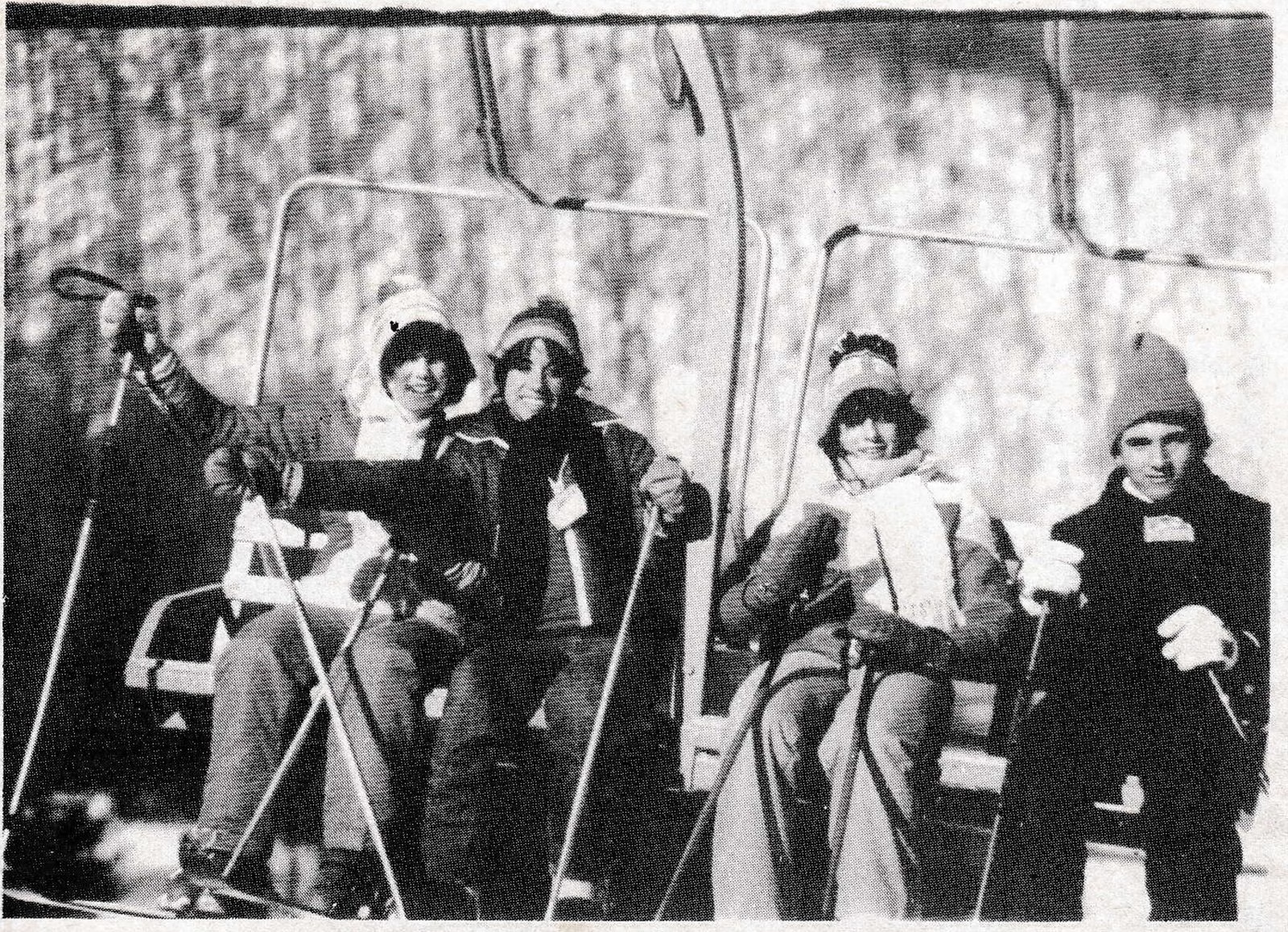
A couple of seasons ago, in the winter of ’78-’79, Robin Smith, VP and general manager of Swain Ski Center in upstate New York, decided he had a problem. Swain’s newly completed steep, wide-open, expert slope, Robinson’s Run, was so successful that lift lines were forming for the two T-bars serving it and two adjacent runs.
Nine-minute lines may not sound long, but, says Smith, “Our tolerance is very low. We don’t like lift lines—not now, not in the future.” And the future also posed a problem: Scheduled for completion in 1981 is a new highway connecting Rochester with the Corning/Elmira market, with an exit just 12 miles from Swain, that Smith could see doubling Swain’s number of skier visits per season, which stood at about 125,000 in ’78-’79.
Smith, had anticipated even before Robinson’s Run opened that his T-bars would prove inadequate and he considered building a new double chair lift or maybe a triple. Watching the lines form, however, he quickly decided to think bigger and go for a quad and a four-passenger chair lift that easily could be expanded into a dual quad (eight passengers, four on each side of the towers,) A dual quad, he figured, would not only take care of the immediate lift lines but also would meet future expansion head-on.
The challenge of building a dual quad on Robinson’s Run, however, was no small matter. The slope drops some 650 feet vertically, is about 3,000 feet long, and the upper part is especially steep. Furthermore, the lift would have to accommodate an unloading station at mid-point to serve the top of the adjacent novice run. Then there was the time factor: Smith wanted it designed, manufactured, installed, and ready to go for the next season, winter ’79-’80.
Meeting the Challenge
To get such a monster lift ready fast, Smith posed the challenge to an experienced and well-known team, Borvig Corp. and Dolomite Construction Co.
Borvig has been designing and manufacturing ski lifts in the U.S. for 20 years. It is headed by Boris Vilhar, an engineer who has a reputation for his meticulous approach, innovative designs, and reasonable prices.
Dolomite was formed in 1970 by Bob Blenis, who by then had already chalked up 10 years experience in ski center management as well as in lift, lighting, and snowmaking installations. With headquarters in McAffee, N.J., Dolomite now averages between four and seven lifts a year, in addition to snowmaking and mountain lighting jobs, representing Borvig lifts, Paulsen wire rope cable, and Kissling gears. The company also handles inspection servicing, and repair work. Blenis’ wife, Mary, has been in the business with him since the start, and in recent years their son, Randy, has also become a member of the team.
Working with Smith, Vilhar and Blenis came up with what turned out to be New York State’s first quad and the world’s largest, both in vertical drop (600 ft.) and length (2400 ft.)
Building the Monster
Construction started in late July 1979 and final load testing was completed in October. In between, the tough terrain and the magnitude of the job posed a lot of problems.
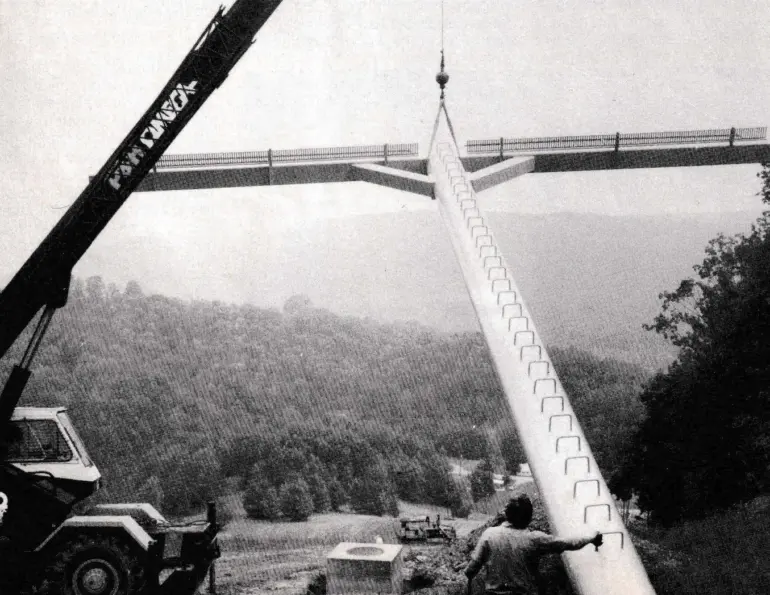
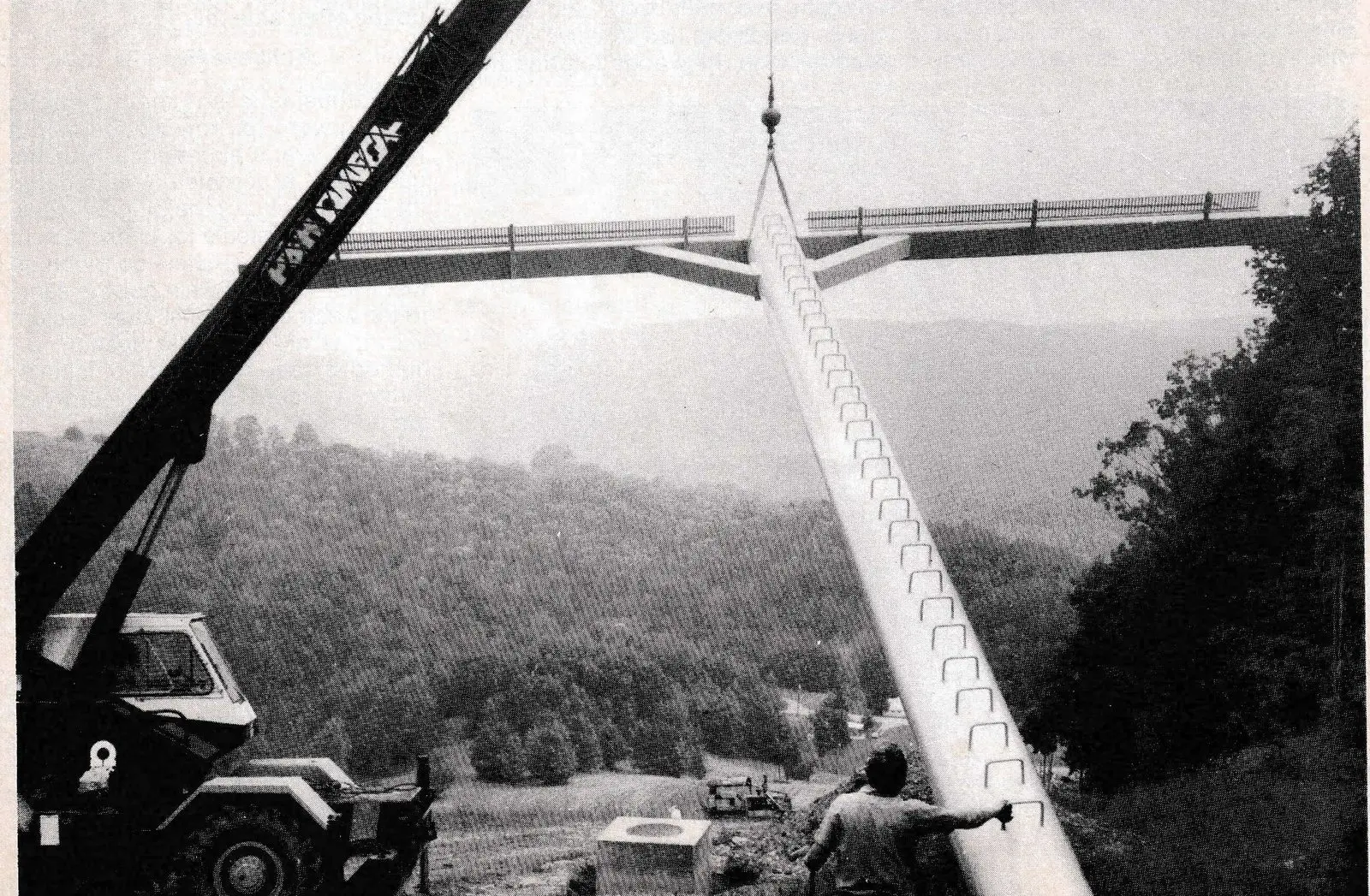
For instance, the quad’s towers, each weighing about six tons, were too heavy for the usual placement by helicopter. The solution was to bring in two bulldozers and a big crane. The dozers had to carve a new road through the woods to bring the crane in and haul it into position to set the towers. Securing the crane on the steep slope was very tricky, especially for the largest tower, 50 feet high, on the upper part of Robinson’s Run. No secure footing could be found, so Bob Blenis came up with the idea of using the two 25-ton dozers chained to the uphill stabilizer of the crane.

“The installation,” Smith said, somewhat understating the matter, “was not without its dramatic moments, including the moment when three of the crane’s four wheels were off the ground!”
The finished “monster” (as it was affectionately called from the beginning) has 15 T-shaped towers with 40-ft. wide cross bars, each side of which can support 120 four-passenger chairs suspended from loops of 1-3/8 inch cable. A DC motor is used so that the lift can run at speeds slower than its designed speed for extended periods and so that starts and stops are very smooth.
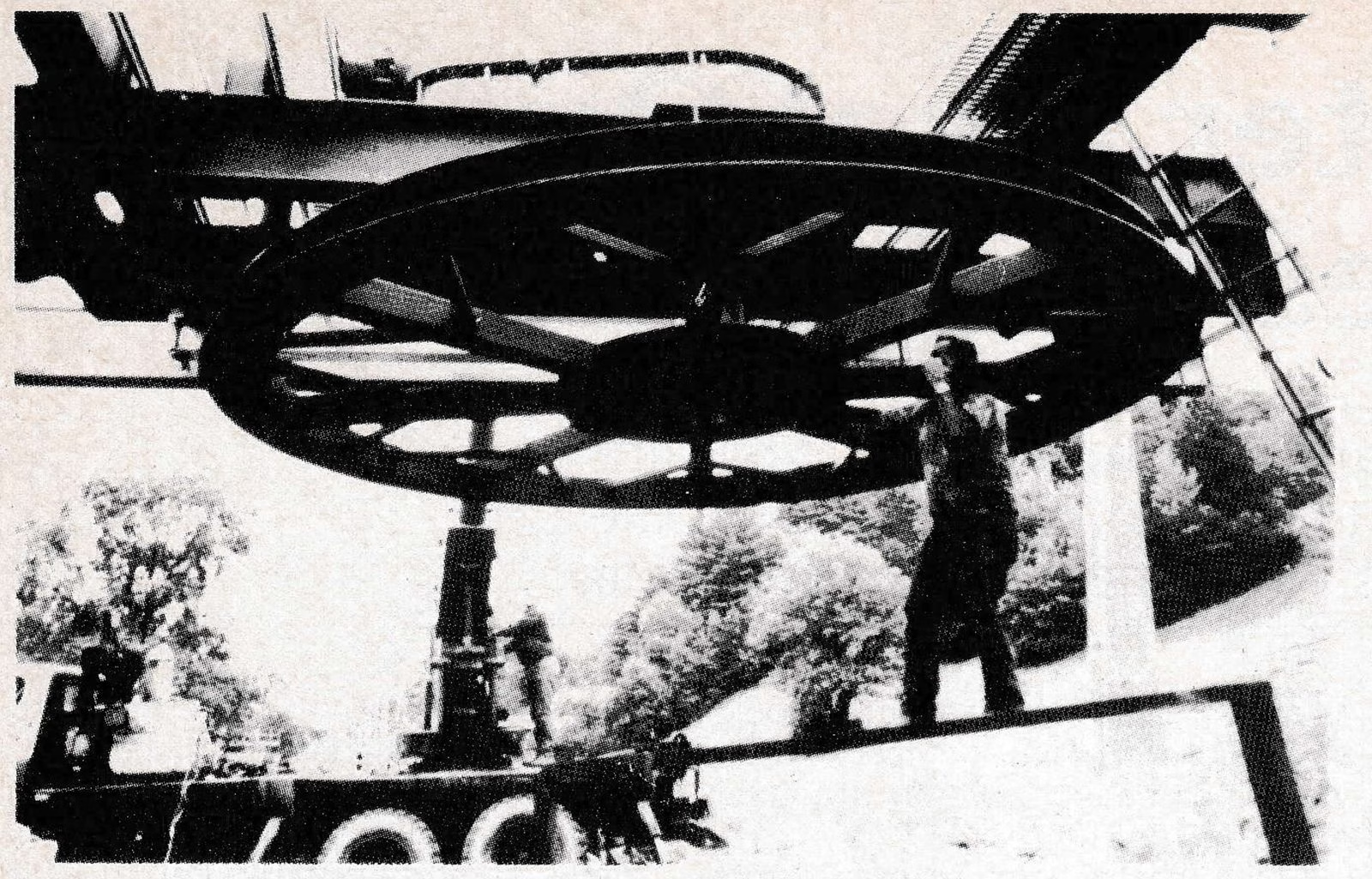
Bullwheel loading is used so that skiers enter in a straight line directly from the back of the lift. The chairs pivot around the big bullwheel to pick up each batch of up to four skiers, unlike conventional loading in which skiers have to enter from the side and then, at the last moment, must hustle forward and execute a turn to position themselves into the path of the approaching chair.
For the first season, cable and chairs were attached to only one side of the lift, giving it a capacity of 2,400 skiers per hour. But plans are to set up the other side this year.
Bullseye Results
“Enthusiastic isn’t really a strong enough word for how we feel about the first year’s experience with the quad lift.” It completely eliminated lift lines on all but the biggest weekend, and it created a lot of excitement with the skiing public—so much so that even though Swain got the same rotten weather that most other Eastern ski areas did this past season, we hosted a record number of skiers, turned a record gross, and returned record profits.
“In spite of a 10 per cent increase in minimum wage in New York State,” he continues, “and in spite of operating the longest season in the history of our ski area, payroll in the lift department dropped $11,000 because the new quad replaced two T-bars that were operated by a staff of 15 to 20 people. The self-loading quad operates with a staff of three.”
“When we get the second side of the quad done,” he notes, “we’ll be transporting 4,800 skiers per hour using a staff of four people—a labor saving in excess of $20,000 a season.”