Local papers covering 27-year-old Mason Dwinell’s purchase of Bolton Valley, Vt., last summer couldn’t seem to avoid the “Y” word, running headlines such as: “Young Vermonter Purchases Ailing Bolton Valley Resort” and “Young Stowe Man to Buy Ski Resort.” In an interview with SAM, Dwinell patiently answered the inevitable question about his age. In his opinion, his age is an advantage, particularly in attracting young skiers to the mountain. But, he added, “Persistence can come at any age.”
Dwinell is tall and lanky, with blond hair that continually falls forward onto his forehead. There’s no avoiding the fact that he looks. . . well, young. But when he talks about his plans for Bolton Valley, his intensity rivals that of any older, more experienced businessman.
Bolton Valley needed the infusion of energy and optimism Dwinell provided, and he admits it will certainly require persistence for him to make a go of it. One of the last family-owned resorts in Vermont, the area had been struggling for a number of years prior to the sale. In 1994, owner Ralph DesLauriers filed under Chapter 11 in a last-ditch effort to reorganize the resort’s finances, but the attempt was unsuccessful and the bank holding most of the notes foreclosed the day after the 1996-97 ski season ended.
“My grandmother read the article in the paper about the foreclosure and told my dad about it,” said Dwinell. “He told me to go take a look at it, so I drove up to Bolton and thought it looked like an attractive opportunity.” With his father’s support and help, the younger Dwinell began putting numbers together.
“There were times when there were no answers because a lot of stuff didn’t get written down in the last few years. I was definitely hesitant to go into something so blind,” said Dwinell. “But my dad said, ‘Hey, you’ll never have an opportunity like this again. This is everything you’ve ever wanted and, in addition, it’s in Vermont. Go for it!”
Two and a half million dollars later, within days of graduating from the University of Vermont, Mason Dwinell owned a ski area. According to the bank, up to 15 other parties had expressed interest in the area, four seriously enough to put in an offer. The bank financed part of Dwinell’s purchase, with family investors covering the rest. Though he refused to discuss specific terms of the purchase, Dwinell said he did not outbid the others. “I’d done more of my homework,” he said confidently.
Dwinell’s previous experience in the ski industry was on the national nordic combined ski team—a career that was cut short in the ’94 Olympic trials when he fell and blew out both knees. After recovering from his injuries, drawn by the new ski jumping facility, he went to Park City, Utah. He stayed for a couple of years and even owned a housecleaning service for a while. But, he said, “I was looking for where I wanted to be in the world.”
Eventually Dwinell came home to Vermont, settling the geographic question. As he finished up his college degree, the opportunity at Bolton Valley came along and took care of his career path. “The Dwinell spirit has always been entrepreneurial and this puts it all together.”
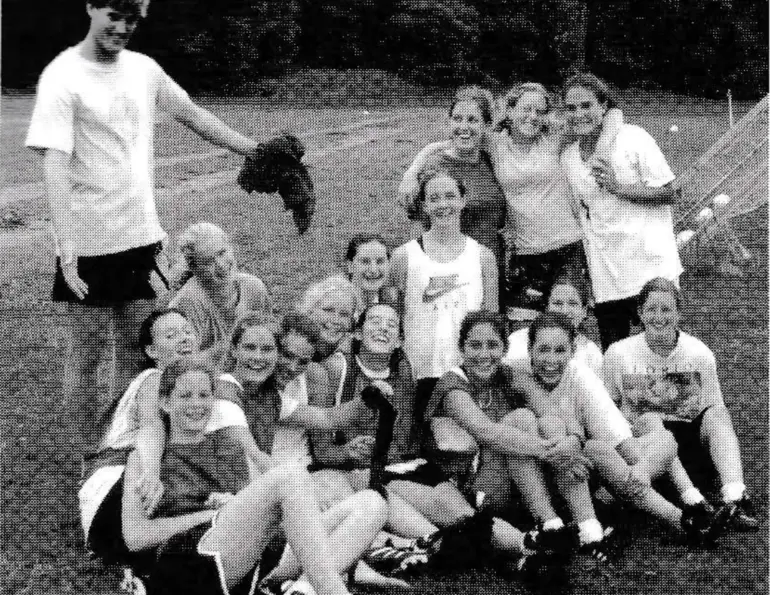
Before he had any idea that he would be a ski area owner, Dwinell had accepted a job as Stowe varsity girls’ soccer coach. Despite the sudden increase in demands on his time after the purchase of Bolton Valley, he didn’t give up the coaching job. “I just couldn’t bail on them,” he explained. “It’s a new program.” Besides, he said, “I stick with things.”
He says he has the same commitment to Bolton Valley. “I’ve always been relatively intense on what I was doing, whether it’s working or having fun, but it’s never been something so long term,” he said. “This is what I’ll be doing for a while, so I’d better make it work.”
One of Dwinell’s first moves was to hire industry veteran Lonnie Sawyer, former general manager at Mount Tom, Mass., to ready the area for the 1997-98 season. The time pressure to get ready for opening was enormous because of the late summer date of the sale, but all parties involved were anxious to have it open, realizing how difficult it would have been for the resort to come back from a closed season.
“It’s hard to do too much when you come in so late,” said Sawyer, “But we put in more firepower and we’re going to work on the product, making good snow and grooming it up.” To that end, Dwinell bought two Pisten Bullys and four new Areco snow guns, increasing the area’s snowmaking coverage to 60 percent. As for Bolton Valley’s six lifts, Sawyer said that they had a good record last year, and though they sat idle all summer, only routine maintenance was needed to ready them for opening.

According to Sawyer, snowmaking will be the key for success at Bolton Valley, though he described the water situation as “fair to poor.” The area could draw from the Winooski River, but the river is five miles away and downhill—an expensive proposition for installing snowmaking. Besides, said Sawyer, “There are a bunch of streams begging to be diverted into a nice lake.”
That’s all in the future, however. For now, both Sawyer nor Dwinell are concentrating on the current season. “We’re a couple of wily Vermonters,” said Sawyer. “We take our time and look things over before doing anything.”
According to Bill Scheer, VSAA’s director of public affairs, Dwinell has made a good start and has had a good reception. “He’s running a tight, bare-bones operation with a nucleus of dedicated, hardworking, mostly young people,” Scheer said. “It’s not gonna happen in the first year, but hopefully he’ll have solid revenues so he can look solvent for the bank in the five-year range.”
Dwinell has many ideas for the future of the 5,000-acre ski area, but real-estate development is not one of them. “There’s plenty of potential to do other stuff as far as outdoor activities,” he said. “We want to focus on the skiing aspect rather than make money from selling condos. I don’t want to develop it, but to be able to survive financially simply as a ski area.”
Before improving facilities or building new ones at Bolton Valley, Dwinell will have to sort out entanglements remaining with the current facilities. Over the last few years, DesLauriers had spun off one asset after another—including the sports center and the main base lodge—in an effort to reduce expenses and generate some capital. As a result, the resort was divided up piecemeal and parts are still tied up in the courts.
“A very important aspect of the whole ski area is to have control,” said Dwinell, who has negotiated to lease some of the facilities for the current season. “It would be crazy not to. The base lodge, sports center, rental shop—that’s a lot of the gravy financially that comes out of the ski area.”
The marketing focus is going to be on—surprise—young people. “Targeting will be mostly kids,” said Dwinell, “But adults with a fun outlook—the marketing goes to them as well. Being young is also a state of mind. When you incorporate the sense of fun back into the mountain, people will line up and start skiing.”
A new bus service has been introduced that will make the one-hour trip from Burlington to Bolton with seven stops along the route. The buses—especially attractive to kids without licenses—will run five times a day all winter long. In addition, Bolton is participating in several after-school programs with about 20 schools.
With a first year skier-visit target of 115,000, Dwinell has his work cut out for him. But he’s planning on sticking around and, he says, “It’s going to be good.”