Grand Targhee Employs New Wastewater Science
A leak discovered in Grand Targhee’s old wastewater treatment lagoon in 1990 led the resort to use an innovative micro-filtration technology so new that there are currently only three sewage treatment plants using the process in North America. The new system uses strands of filament tubes perforated with microscopic holes that allow water to pass through while blocking bacteria.
Despite the fact that downstream water quality never suffered, the Wyoming Department of Environmental Quality (DEQ) required Grand Targhee, a U.S. Forest Service Special Use Permit holder, to repair the old lagoon or build a new system. Because the only available site for another lagoon was near existing wetlands, the Forest Service favored a mechanical plant. At the same time, the resort was drafting a new Master Development Plan that would demand a system with more treatment capacity than the old one, so the resort shopped around and eventually decided to use the new technology.
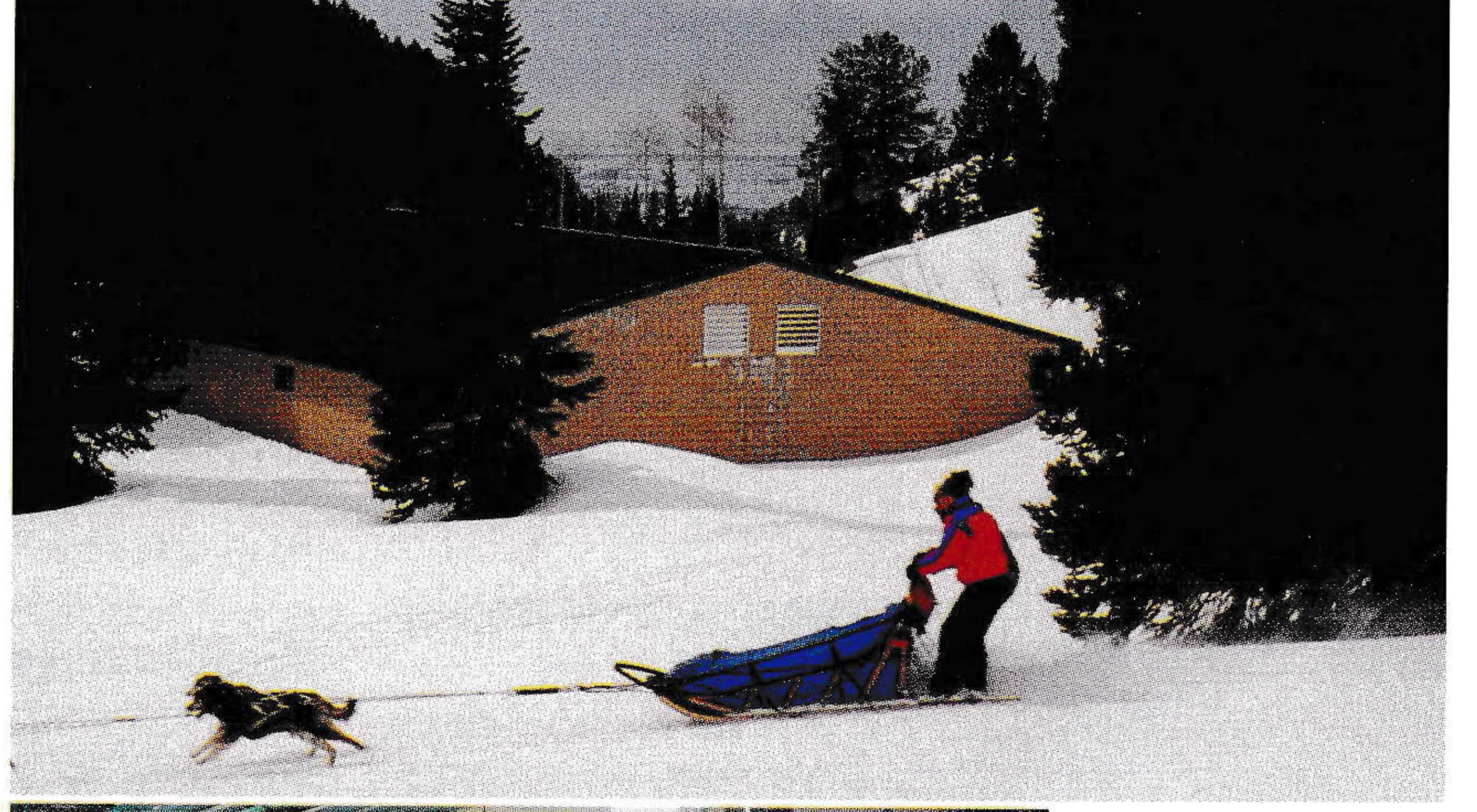
At a cost of $1.2 million, construction of the new treatment facility was cheaper than building a new lagoon, but more expensive with regard to maintenance, monitoring and power use. The beauty, says Grand Targhee General Manager Larry Williamson, is in the virtually foolproof computer control of the plant operations and that the new plant, operating since mid-December 1998, is designed to handle all the future wastewater treatment needs of the resort. The 2,600-square-foot facility, which is tucked away just below the Little Beaver traverse at the bottom of the mountain, was designed by John Millar of Forsgren Associates in Rexburg, Idaho, with equipment provided by Zenon Municipal Systems, Inc. of Ann Arbor, Mich.
The Treatment Process
Wastewater from the resort’s buildings is first treated conventionally by passing it through the system’s anoxic zone, a closed tank where low levels of oxygen exist to prevent the formation of methane and sulphides. Because of the low oxygen level, bacteria consume nitrates to begin decomposing the waste. Then the wastewater passes through another tank, the aeration zone, where oxygen is introduced by bubbling air into the wastewater to further decompose pollutants. Eventually the wastewater enters another tank containing the micro-filters.
Each of 12 filter modules contain several hundred of the miniature tubes, which are about eight feet long and are hung vertically in a rack submerged in the partially treated wastewater. Each of the flexible tubes (they look like sections of fly-casting line) is covered with a thin plastic membrane perforated with openings of 0.2 microns—one half the size of bacteria. A mild suction draws water through the tube’s membrane openings, leaving the bacteria behind to feed off of more sewage.
Water then travels through the tubes and on to the final step where it is passed through an 8-inch diameter pipe. Inside the pipe, ultraviolet light treats the micro-filtered water, killing any organisms that may have escaped through a damaged filter. This final step is a backup measure and helps cut down the need for using chemicals such as chlorine. After the ultraviolet light sanitizes the water, it is discharged into a seasonal creek below Grand Targhee. Constant testing has shown the discharged effluent to meet Wyoming drinking water quality standards.
The process also produces a small amount of inorganic solids—mostly minerals. These are periodically flushed out of the filter compartments and held in a sludge tank. Once enough has collected, the sludge is run through a machine where water is removed under pressure and sent back into the filtration tank. The semi-dry solids are then stored for later removal to a landfill.
According to Williamson, the plant is so efficient that the solids from one year of continual operation can be removed with a half-ton pickup. And although it is currently treating about 30,000 gallons of wastewater a day, the plant can handle about 90,000 gallons per day. With some minor expansion, the plant’s capacity can be increased, if needed, to 145,000 gallons per day, a figure Williamson says is far beyond what Grand Targhee is ever likely to require.
The old lagoon will be kept in place and maintained for emergencies.
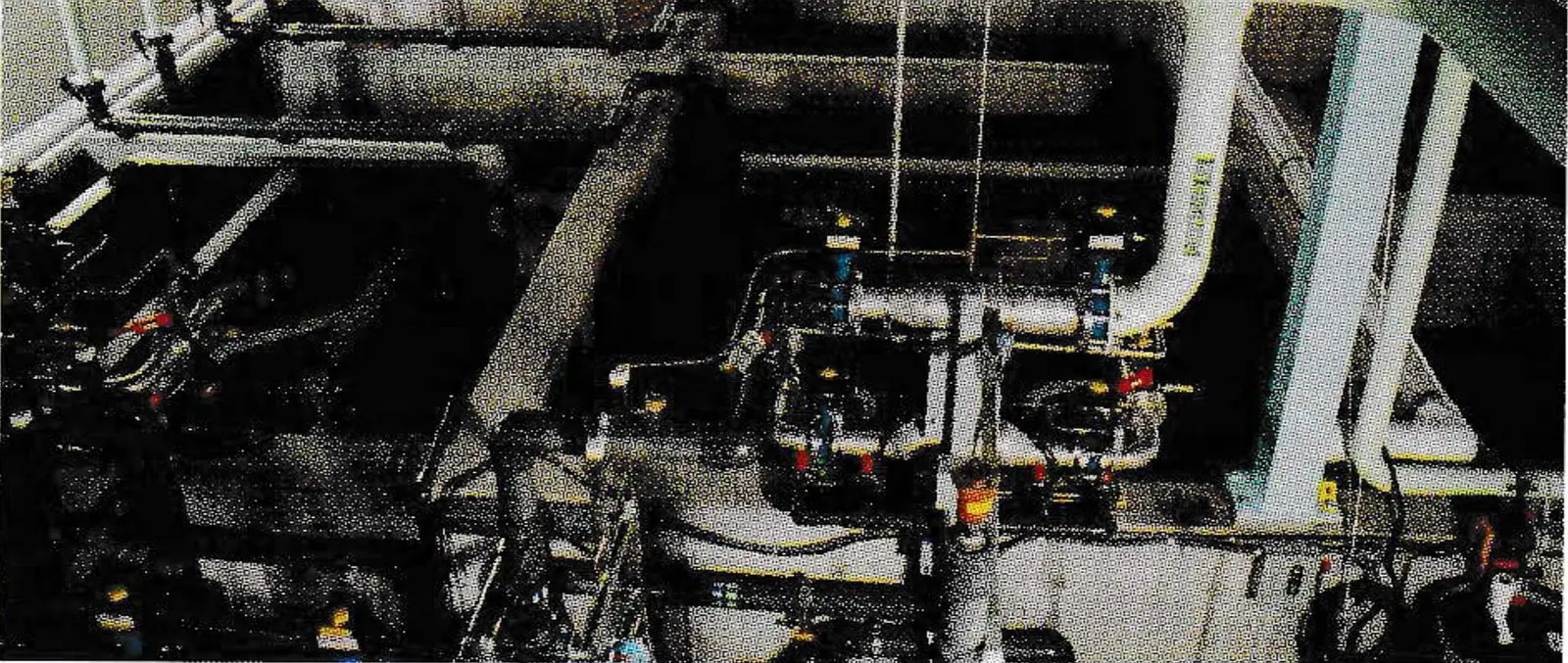
The micro-filtration system is fully automated so that a single operator can maintain the operation by checking on the plant in person just an hour at a time, twice a week. The control room’s computer can be accessed by phone from other resort offices to check flow levels and learn about potential problems.
Plant Plays to Rave Reviews
“This technology is an option for other Wyoming plants that will need to be upgraded in the future,” says Jeff Hermansky, supervisor of the DEQ’s Northwest District. “Sites in Teton and Yellowstone National Parks come to mind.” He adds that the Grand Targhee operation is the first treatment plant in Wyoming to use the new micro-filters.
“This plant is state of the art,” says Jack Bogle, permit administrator for Targhee National Forest. “To have that kind of facility at that elevation, and with the typical snowpack there, is unique. … It’s a high-tech facility and much more acceptable to the public than a lagoon. It’s something Grand Targhee deserves to be proud of.”
Jack Troyer, deputy regional forester for the Intermountain Region of the U.S. Forest Service headquarters in Ogden, Utah, toured the plant in March 1999 and was similarly impressed. Troyer says he was intrigued with the plant’s operation and the associated facts and figures.
Of the other two plants in North America using micro-filters, one is located at Mt. Washington Ski Resort on Vancouver Island, B.C., and the other serves the Arapahoe County Water and Wastewater Authority in Englewood, Colo.
Living Machine to Purify Smugglers’ Notch Sewage
By Jonathan Gourlay
A new wastewater treatment facility at Smugglers’ Notch, Vt., will use aquatic plants and animals to clean contaminants from resort sewage. This new “living machine” is expected to be up and running sometime in October and will accelerate the cleaning and filtering processes of nature so the resort can continue its planned residential expansion.
Smugglers’ needed to increase its wastewater treatment capacity to continue with its building plans, but shied away from improving its existing wastewater lagoon system and using a closed conventional system because of the related costs and its long-standing philosophy of operating in an ecologically responsible way. Instead, wastewater will run through a series of chambers populated with plants, zooplankton, snails and fish to clean it to the point where it can be returned to the environment without using any chemicals.

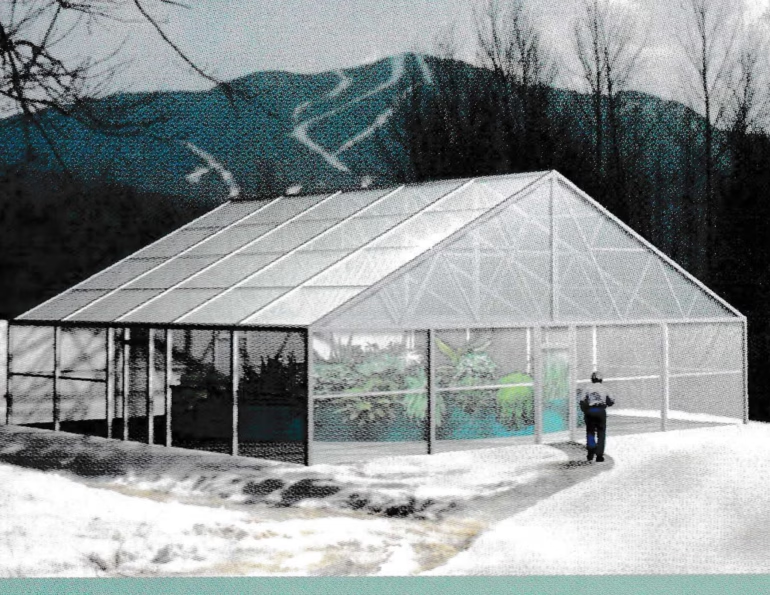
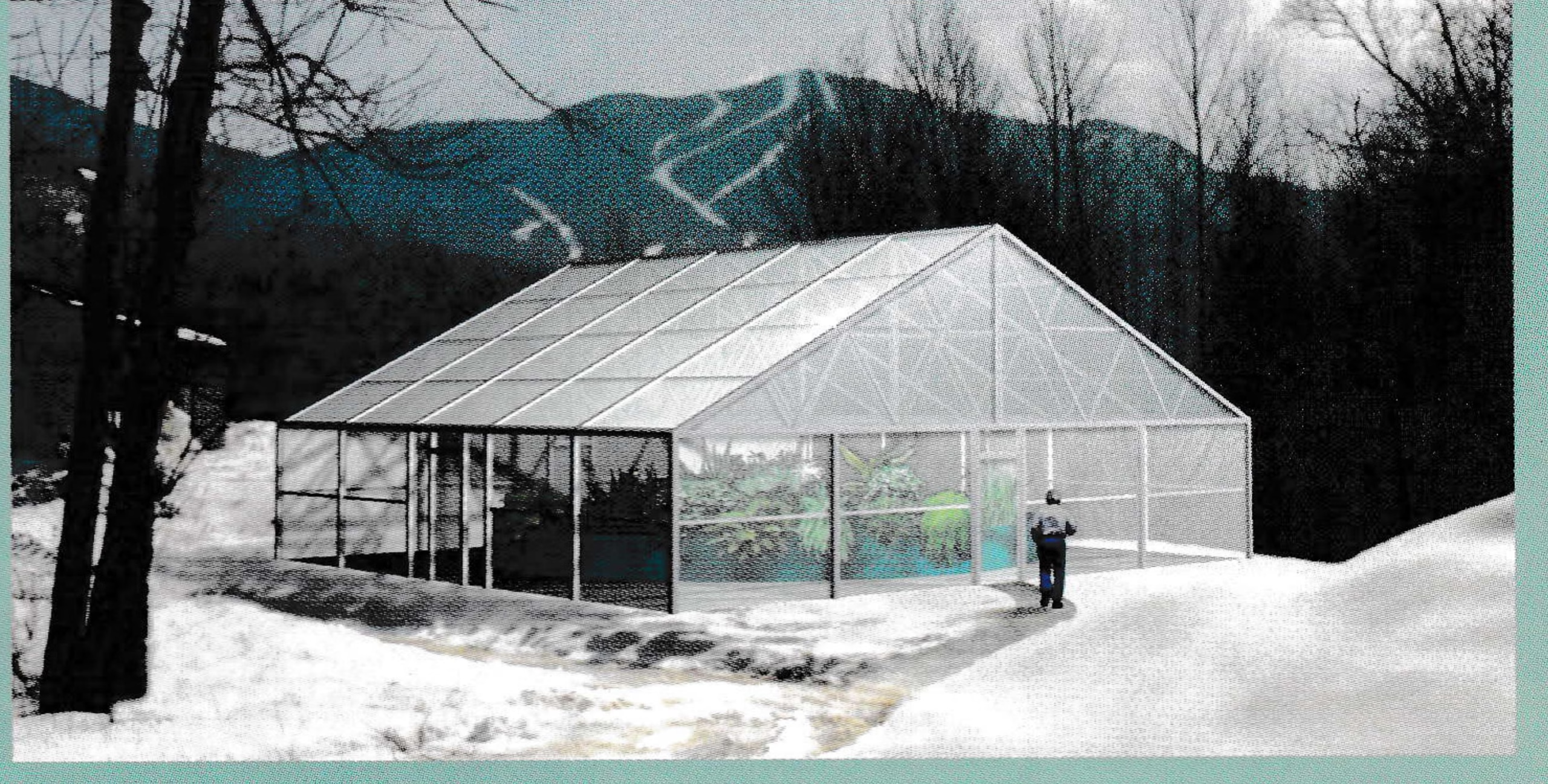
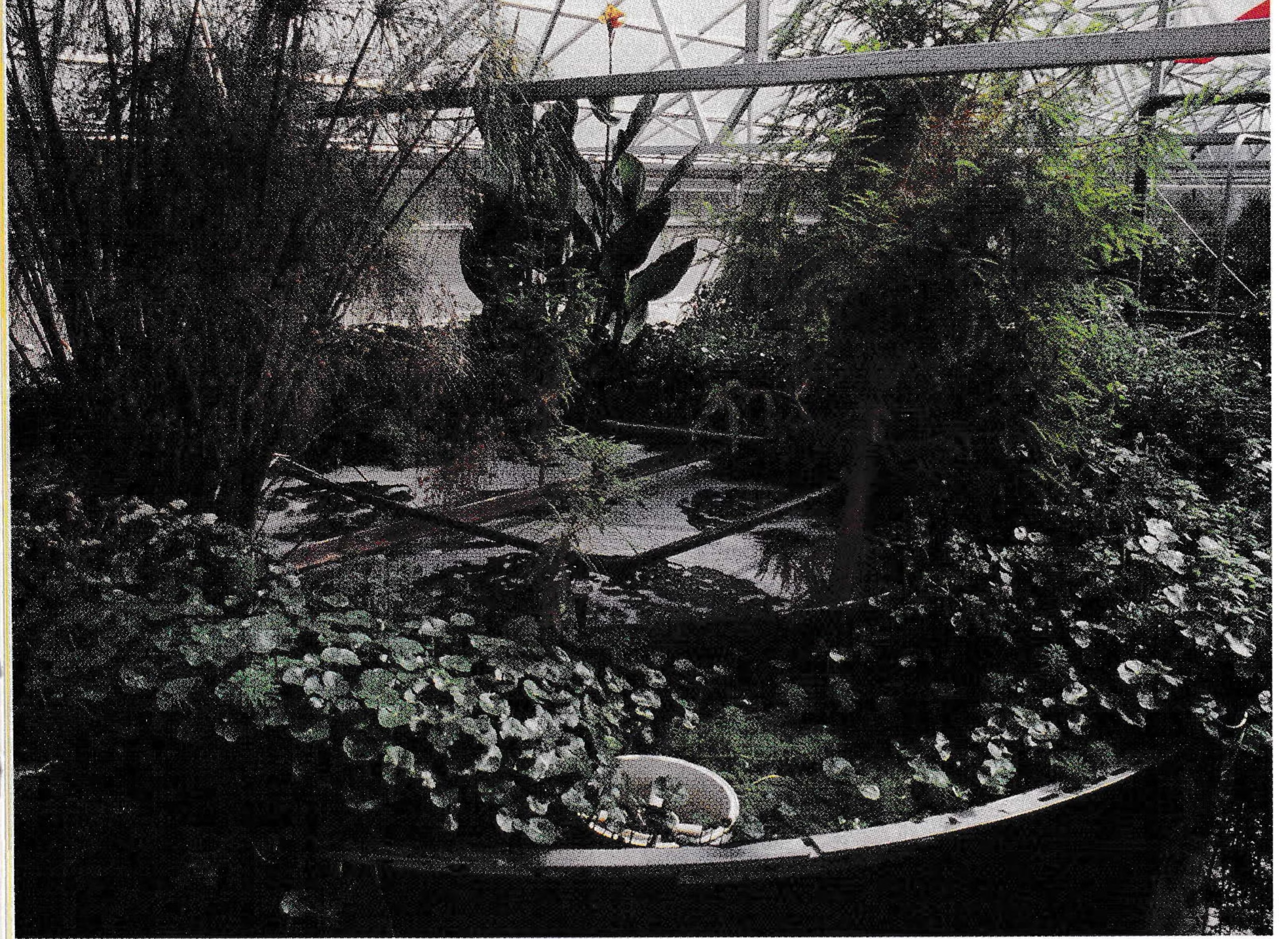
The resort picked Living Technologies of Burlington, Vt., to design a living machine around an abandoned existing package system that dates from about 1969 and has been sitting idle for years. It essentially amounts to a 34-foot-diameter tank with a second tank in its center surrounded by partitions. Living Technologies will adapt it to the living machine technology by adding a few more compartments and covering part of it. The entire tank will be enclosed in a greenhouse and a system of pumps and valves will direct wastewater from the resort’s main line into the facility. The whole thing will cost about $300,000 to build and will work together with the existing lagoon system to handle the resort’s current and short-term treatment needs.
Organic Chemistry at Work
Sewage will enter the first covered section of the main tank where solids settle out and grease and oils float to the top to be skimmed off and stored. Bacteria will begin to break down the waste and harmful methane and hydrogen sulfide will be absorbed by charcoal filters in a vent system. A second closed compartment continues the process, but introduces a little bit of air to prevent methane from forming while nitrates are converted to nitrogen. A third closed compartment introduces much more air so aerobic activity begins whereby other bacteria continue the decomposition, while odors and organic material is removed. At this point, phosphorus and nitrogen levels are quite high.
The wastewater then enters a series of three uncovered tank sections where aquatic plants and zooplankton start the process of soaking up nutrients like nitrogen and phosphorus. The water is aerated in each section to keep it oxygenated and properly mixed. As the water reaches a different tank section, it is cleaner and clearer than the last and comes into contact with different varieties of marsh plants and animals, like snails and, eventually, fish, which graze on the microbes in the water.
Finally, the treated water enters the center tank, a clarifier, where remaining solids settle to the bottom. Some of the solids are returned to the second closed compartment to provide microbes for the treatment process. What solids aren’t returned are eventually pumped into a sludge tank while clear water is pumped out. The 1,826-square-foot greenhouse is a necessary component because sunlight is needed to power the plants, some of which are tropical fauna that work best at warm temperatures.
After the clarifying tank, water is either further sanitized to drinking water standards to remove any harmful bacteria that might have been left behind, recycled for irrigation purposes or sprayed onto the ground where it is allowed to leach through sediment to purify it before reaching ground water. The Smugglers’ operation is choosing the latter course with an eye toward “polishing” the wastewater in the future so it can be recycled. But it all depends on what the state of Vermont allows the resort to do with its purified water. For now it will continue to spray its treated water out onto a forested section of Morse Mountain when conditions permit good ground absorption.
“We have looked long and hard at reusing this water… and it’s a lot of water,” says Jason Lisai, project manager for the resort’s development and planning office. “Whether it’s in snowmaking or landscaping, there’s got to be some opportunity there.”
Because of the process using plants and animals, solids are greatly reduced and what is left over is completely nontoxic sludge. Lisai estimates that the sludge will be removed once a month and will be composted by a Quebec company for reuse in agriculture.
Capacity Equals More Units
The new plant will give Smugglers’ Notch an immediate 30,000-gallons-per-day increase in wastewater treatment capacity and will reduce the work expected of the area’s primary treatment lagoon. As a result, the primary lagoon will work more efficiently during peak winter and summer months when wastewater flow is typically at 120,000 to 140,000 gallons per day and enjoy a rest during the spring and fall when the flows drop to 20,000 to 30,000 gallons per day.
The living machine will also give the resort enough additional capacity to develop its West Hill residential complex with 60-80 rooms. In addition, the greenhouse plant, though located in a daily operations area of the lower village, might become part of the Smugglers’ Notch educational program.
“We have a great relationship with the state and a long track record of upholding our environmental policies and felt this was a good mix with our environmental programs,” says Lisai. “It’s also aesthetically attractive and offers great educational opportunities. . . . We try to act as a model to show what you, as a business, can do to protect the environment.”
It was a similar sensitivity that got Living Technologies started in building its living machines and is what attracted Smugglers’ Notch to the company. The company, which has been building similar systems since 1994, built a plant in South Burlington, Vt., that treats 80,000 gallons a day.
David Maciolek, an engineer with Living Technologies who designed the retrofit for Smugglers’ abandoned package plant, says living machines are less expensive to build than conventional technology and cost about the same to operate. While the first two to three months of operating the Smugglers’ Notch plant will be labor intensive, eventually one person will be able to maintain it by spending an hour at the greenhouse five days a week.
“We find that operators actually enjoy working on the living machine,” says Maciolek. “It has enough natural beauty to keep operators interested.”