

Failure of a poured socket counterweight connection is obviously a concern of ski area lift maintenance personnel — as well as of lift inspectors — but there is not that much awareness of how to check and what to check. At the outset I should define “failure.” To the area operator it means a connection that has actually parted, and fortunately, this is extremely rare. But to the lift inspector, failure has to mean a socket that has had to be replaced for what-ever reason whatsoever, and for the purposes of this article we use that meaning.
Counterweight sockets of the poured type generally fail for one of two basic reasons: 1) improper original construction; and 2) breakage of the counterweight wire rope at the entrance to the socket.
The wire breakage at the entrance to the socket is the most common failure of poured socket connections. This breakage is caused by repeated bending of the counterweight rope at the point where it enters the socket, which in time tends to cause fatigue. Tests show (see International Aerial Tramway Review, Page 105) that failure is likely to be encountered after approximately 40 million bendings of the counterweight rope at the entrance to the socket. It must be remembered that the counterweight socket is in a stable position due to the stress and friction involved in the connection. If you place your hand on it during normal operation you will notice the counterweight rope receives many high frequency vibrations which, in essence, are bending stresses on the rope applied at the socket connection. The dampening of the counterweight rope is at the connection to the socket, and it is there that one finds most failures.
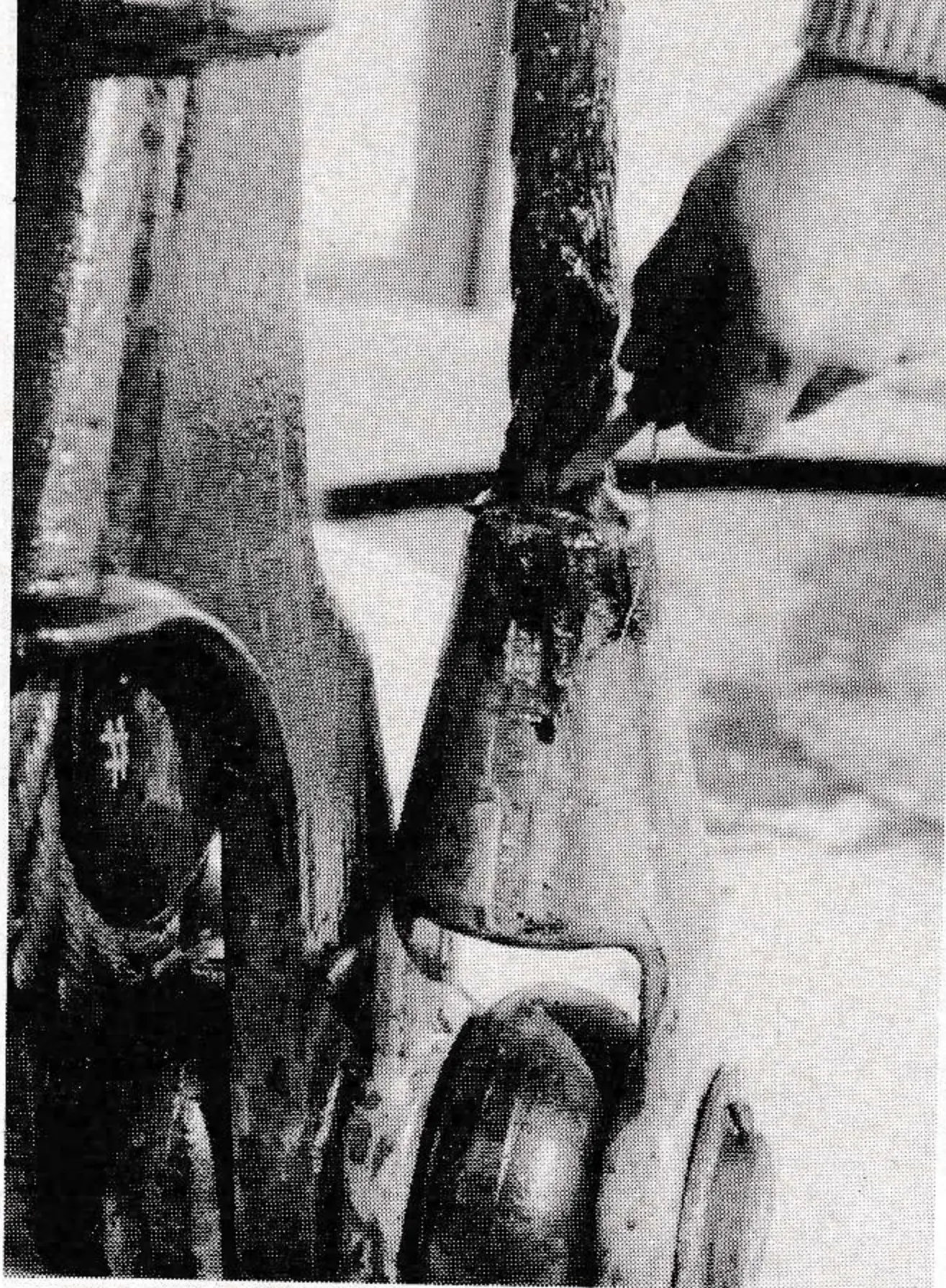
An effort has been made to determine if there are non-destructive tests — perhaps photographic — that lift maintenance people could perform as part of a periodic preventive maintenance program. To date, there is no known method of using photographic means. It is impossible to use the magniflux principle because the breakage is internal rather than external. We have tried to X-ray a socket. Some rope experts say this is a good procedure and can determine potential failures of the socket. Others indicate that X-ray will not locate broken counterweight wires internally within the socket. Further research into this area is required.
Though accurate tests for periodically checking a poured socket may not exist, there are several criteria that could be used in visually checking a poured socket to determine if problems are beginning to occur. With the expert assistance of West Coast Wire Rope and Rigging Inc. of Seattle and Portland, we were able to come up with four such visual checks.
1. Clean all grease and counterweight rope lubricating oils, and remove any seizings that may be tied around the counterweight rope immediately above the entrance to the socket basket. You will notice as the strands of the cable enter the socket that the strand wires have begun to open somewhat, allowing the inner strand wires to work their way out if broken. The counterweight rope must be cleaned thoroughly in this area to review these inner strands, if they can be seen. If you find broken wires you should immediately make plans to replace the socketed connection.
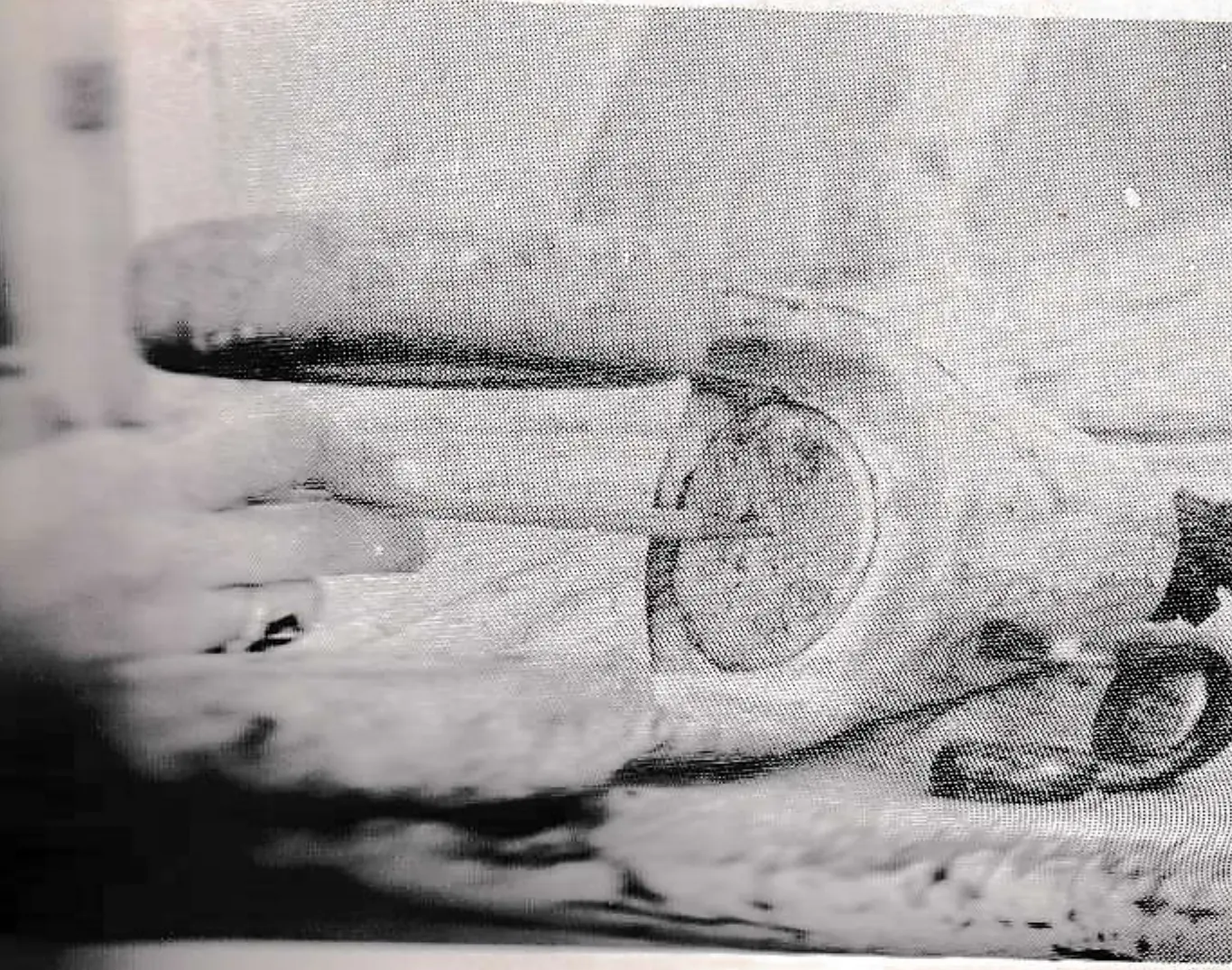
2. Check the cable entrance to the socket and the base of the socket for any slippage of the socket within the socket base. Also check for rotation of the poured socket that may have occurred inside the socket basket. Here again, if there is any evidence of slippage or rotation, the socket should be replaced immediately.

From time to time many lift inspectors have suggested to lift maintenance people that their lifts be painted. Paint at the base of the socket basket is a good indicator of any slippage that might occur in the future. Any slippage will break the paint seal and give a good indication of any rotation of the socket within the socket basket or slippage of the socket itself.
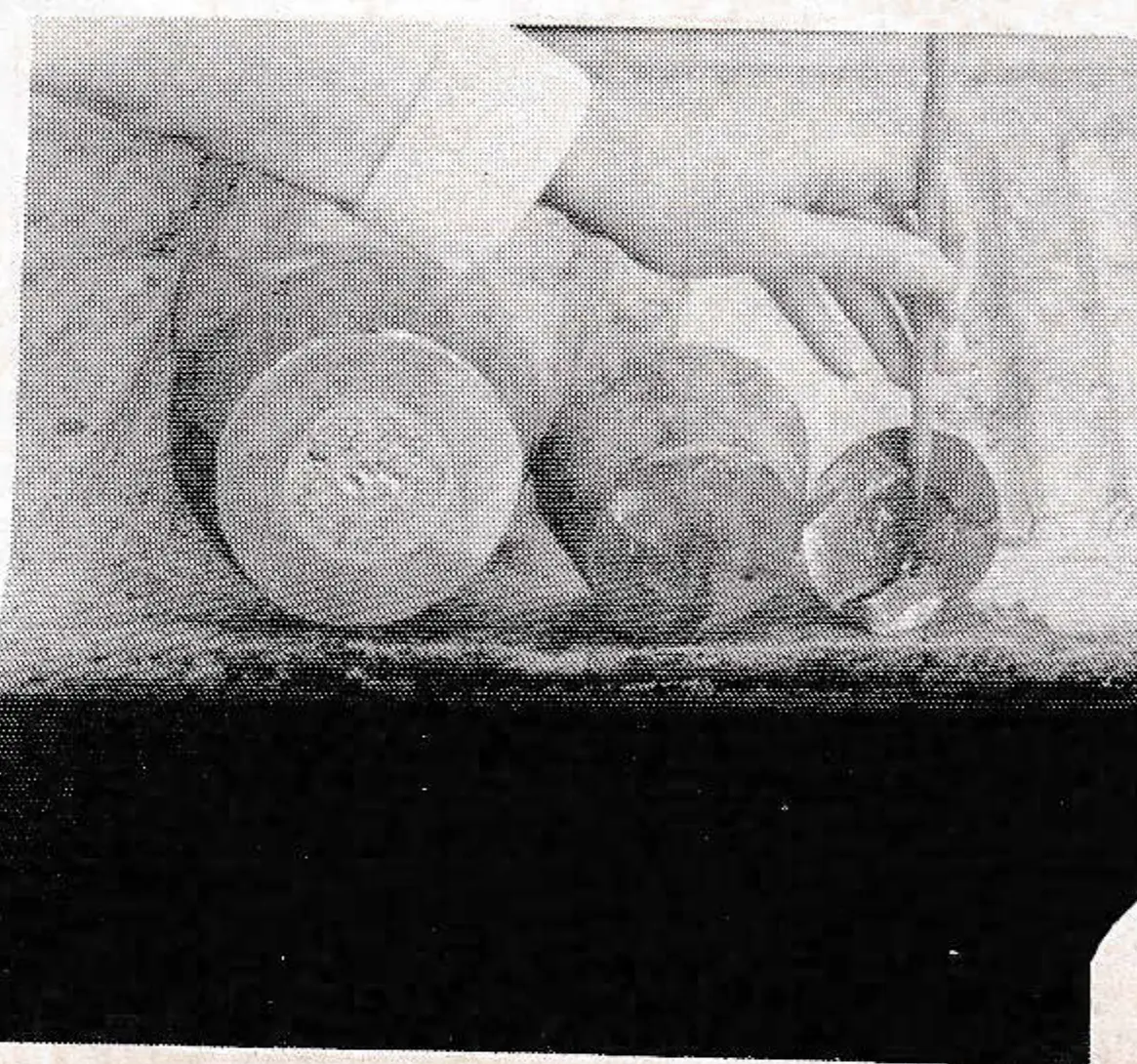
3. Check the base of the socket to see if there is a “dimple” in the socketed material. This is to determine if the socket was poured correctly in the first place, and H ere it should be remembered that if it was, a wire rope will break before it will pull from the socket when tested to destruction. In discussions with the West Cost Wire Rope experts they stated flatly that all sockets, if poured properly, would have a slight dimple on the base of the socket. After the socket basket is poured full of the socketed material at a temperature of 800 to 875 degrees F., the material will gradually shrink when cooling, causing the dimple to form.
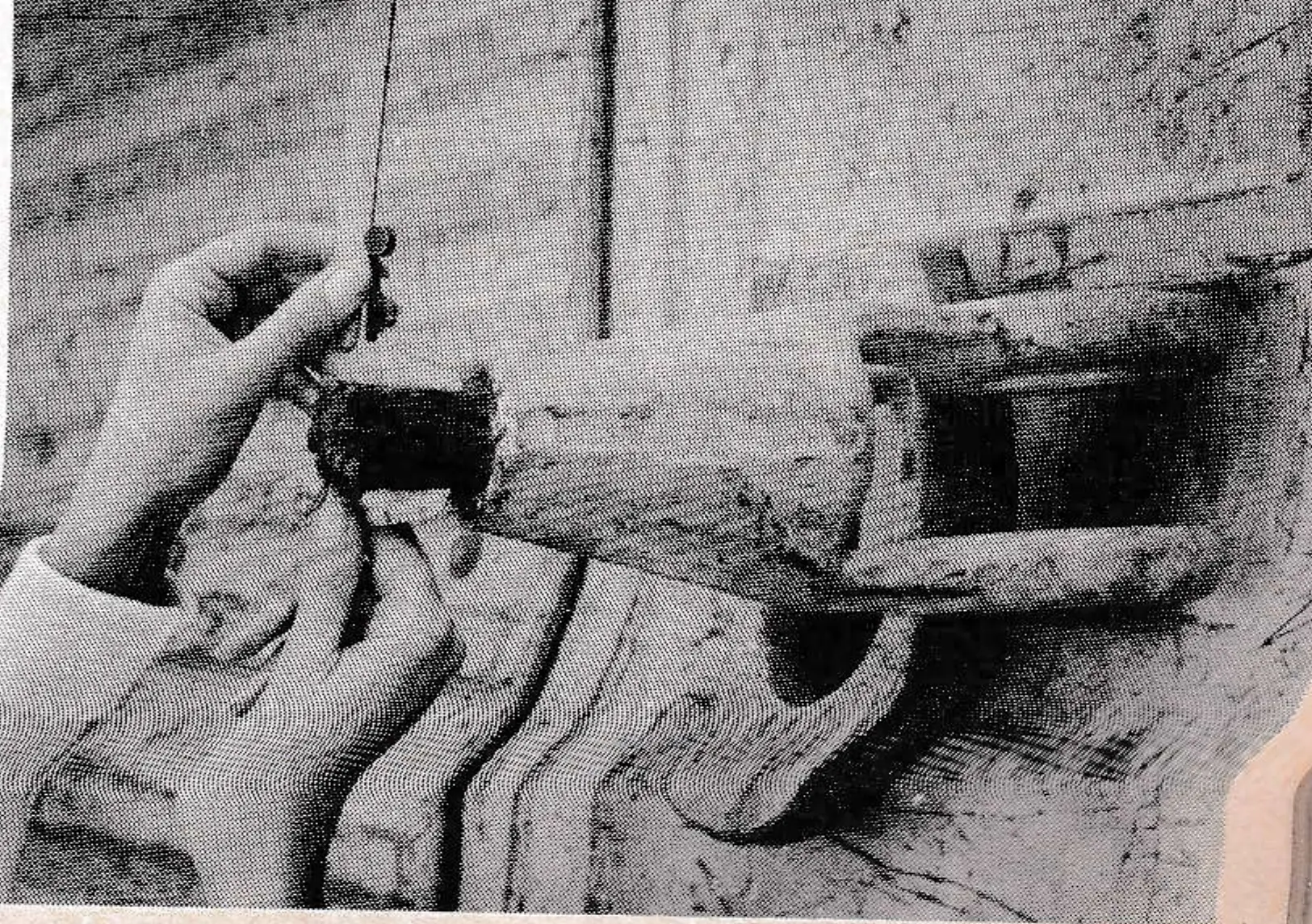
4. With a set of calipers, check the diameter of the counterweight rope approximately one inch above the entrance to the socket. If the counterweight rope has a fiber core, sometimes the heat of the socket material can crystallize or burn the core. If this does happen during the casting, the counterweight rope will collapse when loaded at this location in much the same way that a haul rope will begin to collapse if the fiber core begins to deteriorate. If the caliper test shows this is happening, the counterweight rope and connections should be replaced.
If, after making these four visual checks, you have any doubt about the conditions of any socketed connections, it would be wise to contact a wire rope specialist who has training in the field of socketed connections.
For further information on technical aspects of the counterweight problems, see: “Wire Rope Tail Cones and Alloys” by Charles F. Dwyer, Chief Cable Ways Engineer for the Forest Service, which appeared in the German publication, Wire. Also “Wire Breakages in Haul Ropes in the Neighborhood of Couplings,” page 105 of The International Aerial Tramway Review.