

A New Industry Image
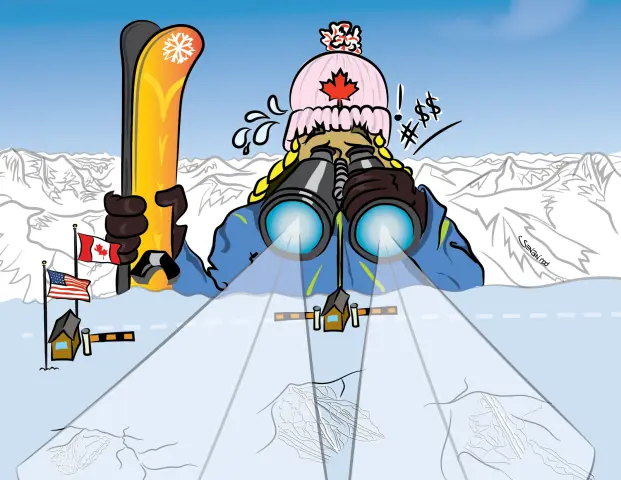
The giants of the ski industry are “fat cats,” monopolies operating on the public lands in a manner not unlike feudal lords, pricing the public out of the rightful use of those lands. Those giants, in addition to paying a minimal fee for using the public lands, are returning nothing to their base area communities to help subsidize the transportation, lodging, dining, sewage and other support facilities provided by those communities for the skiing public that comes from out of state to enrich the money coffers of that fat cat operator.
Such is the image of our industry shared by a vocal minority of Coloradans, who have dragged us, whether we like it or not, into the spotlight of full scale consumer inquiry into the ski business.
Public outcry, indicating that it’s time for a change, has led to hearings in the U.S. Senate, proposals by the State of Colorado Attorney General’s office to prevent Forest Service land use permit holders from operating two separate ski mountains within a 50-mile radius, investigations of price fixing, a proposal that would permit independent ski instructors to apply for special use permits to teach skiing on US Forest Service land without informing the resort operator on that same land, and other issues totally foreign to the ski industry as it has operated until now. Senate Bill 2125, recently drafted by U.S. Senator Floyd Haskell (Dem.-Colorado), proposes that lift rate increases be granted to area operators on a basis of “reasonable return,” which to any business person, smacks of regulation.
Area operators on public and private land may have trouble recognizing themselves as “fat cats.” Some of them in fact, knowing they aren’t fat cats, simply turn away from the issue, assume it will all die down eventually and the shouting will soon be over.
They haven’t recognized the moods and issues of the ’70’s.
How Did It All Happen?
Early in 1975, within a few days of each other, Aspen, Vail and Aspen Highlands filed requests with the US Forest Service for a 20 per cent rate increase. The areas all requested that the rate increase be effective in March of that year.
When this information became public, a number of letters and phone calls to Senator Floyd Haskell’s office indicated to him that some of his constituents felt they were being priced out of skiing, a sport very indigenous to the Colorado way of life. Wanting to make sure the rate increase was justified, Haskell contacted the Forest Service and requested the financial information the three ski areas supplied in support of their requests. The Forest Service refused to supply the information and Haskell reacted strongly:
“. . . any meaningful review . . . was frustrated by that agency. The Forest Service denied access to the information I requested claiming that, under terms of leases with ski areas operating in the national forest, such information is confidential . . . it is inconceivable that a Government agency can base a decision which so fundamentally affects the leisure lives of citizens on information which it refuses to make public. Not only is there no way for the public to adequately review a proposed rate hike, but any appeal process from a Forest Service decision to grant that increase would be a sham.” (Introductory Statement S.2125, Congressional Record — Senate, July 16, 1975).
Convinced that something should be done, and convinced there were “. . . inefficient, inequitable and financially or environmentally costly faults in the Forest Service’s system of issuing and administering ouudoor recreation permits . . .”, the Senator drafted the proposed legislation entitled Senate Bill 2125: “A bill to provide for the issuance of permits on public domain national forest lands for commercial outdoor recreation facilities and activities and for other purposes.” Its five key provisions:
a) lift the 80-acre permit limitation and to substitute 1,280 and 5,000 acre limits
b) Extend the life of the special use permit from 30 to 50 years
c) require that annual fees for permits be based on a standard of a reasonable return on equity investment
d) require public disclosure of all financial data pertinent to determination of permittee’s charges for public use of his facilities
e) require public hearings on any permittee’s request for an increase in those charges
After summarizing the provisions of the proposed bill, the Senator stated:
“. . . the holders of permits for commercial outdoor recreation facilities are granted the privilege of pursuing gain on public lands. But the ultimate purpose of such permits is to provide high quality service at a reasonable cost to the public which owns the land . . . At the same time, permittees are entitled to reasonable assurances as to the security of their investment, not only for their protection but to insure that services are provided to the public.” (Ibid).
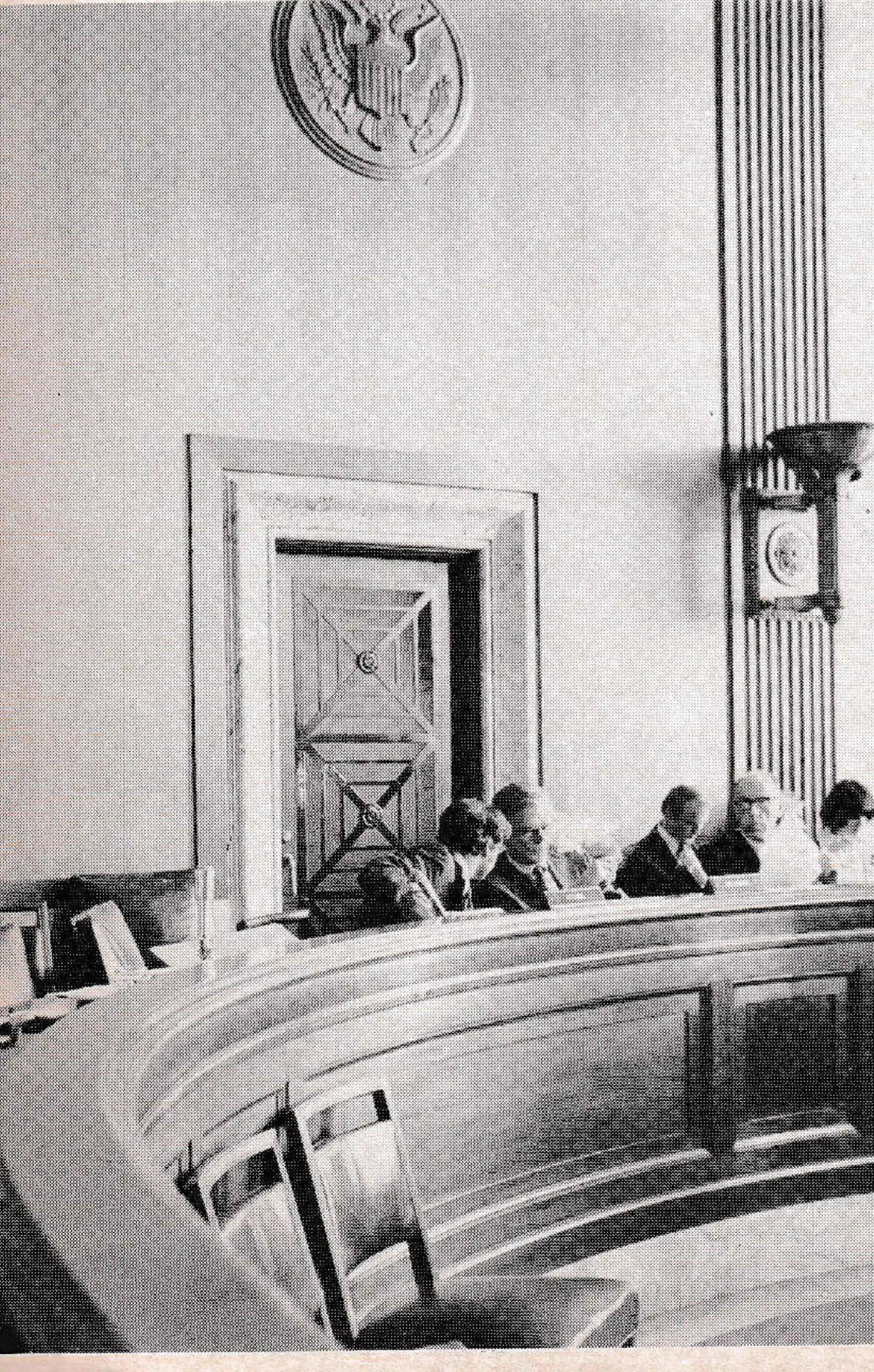
The Senator’s office subsequently announced that a series of hearings on the drafted bill would be held in Aspen, Colorado on October 4 and in Denver on October 6, 1975 before the Senate Interior Subcommittee on Environment and Land Resources which Haskell chairs. A final hearing was later scheduled for November 17 in Washington, D.C.
The Ski Industry responds
Most Western ski areas, including those in Colorado, are in part or entirely located on Forest Service land. Disturbed by some of the Haskell bill’s provisions and the implications of its language, the Colorado area operators, through their trade organization Colorado Ski Country USA (CSCUSA), and its Public Affairs committee began to meet to determine a strategy for the hearings. Subsequently approved at a CSCUSA Board of Trustees meeting part of the strategy called for the hiring of R. Garrett “Garry” Mitchell, former V.P. of Marketing for Copper Mountain, as a full-time consultant to advise and cousel the trustees and their committees on a range of political/legislative matters, beginning with the Haskell hearings; and also the assembling of a “Public Affairs Project Group” to be administered by Mitchell to help devise strategy.
In presenting his recommendations to the CSCUSA Board of Trustees, Mitchell stated:
“In the final analysis, our ‘discovery’ by the public means, in a very great sense, that we have emerged as a recognized, dynamic economic force in the economy of the state. But, with our success comes an inevitable set of responsibilities to ‘answer’ to the public. Virtually every other major industry group has been involved in this challenging, never-ending process for years, but, now it is our turn. I believe that we have an opportunity to take our case to the public in a manner and form which will create good-will. Ours is an attractive, healthy, environmentally-clean industry which brings financial well-being, excitement and fun to rural counties of the state. For the most part, we have been responsible area operators, developers, employers, and corporate citizens. Thus, we have nothing to hide. By the same token, we have every reason to ‘listen’ to our critics both because they might just have a good print or two, and because they are here to stay. But, then, so are we.”
Throughout August and September, Mitchell and the CSCUSA Public Affairs Project Group worked on strategies, testimony and contacting potential witnesses. CSCUSA decided to concentrate primarily on the Denver hearings, feeling that the Aspen hearings would revolve around local issues, and that therefore the Aspen Skiing Corporation and Aspen Highlands could handle the witnesses and testimony on a local basis.
Aspen
Aspen’s citizens did indeed take the Aspen Skiing Corporation and the US Forest Service to task, primarily regarding the Ski Corp’s pricing policies — specifically when it came to season passes. The ski areas and the USFS were accused of working “hand-in-glove” with each other in a rate setting process.
A series of witnesses who testified on behalf of the Ski Corporation and all the things it had done for the town of Aspen and its residents over the years largely went unheard; having had their say, most of the Aspen “locals” had left the hearings long before “the other side” had a chance to present its case.
The case for the “independent ski instructor,” personified by Don Lemos who has been fired by the Ski Corporation and “arrested” on Aspen Mountain, was eloquent, organized, and argued in Denver as well as in Aspen. It proved to be the surprise issue for the industry, which had assumed it would only involve Aspen. Lemos argued that because he had “philosophical differences” with the Aspen Ski School, he was prevented from earning his livelihood. He did not bring out the fact that he probably could have found a job teaching skiing in most ski schools in the country as a well-qualified ski instructor. Employers in any industry, used to determining job performance standards and having the right to fire anyone they feel does not fulfill those standards, will probably have problems understanding why “philosophical differences” is not reasonable grounds for dismissal.
Denver
At the Denver hearings, Dick Peterson, as chairman, presented the official position of CSCUSA to S. 2125. He announced a unanimous resolution of CSCUSA’s Board of Trustees to support public disclosure of all financial information given by the ski areas to USFS to support their request for rate increases. Stating: “It is impossible to determine a uniform return for an industry with such varied operating characteristics and which in addition is dependent upon external and uncontrollable factors such as weather and transportation costs,” Peterson supported the viewpoint of the Colorado industry that S. 2125 would lead to regulation of the ski industry in a form similar to government regulation of public utilities.
Witnesses from financial institutions supported this premise by testifying about the difficulties faced by area operators in obtaining long-term financing under the present terms of the USFS land use permits and how much more difficult it would become under the S. 2125 provision for “reasonable return” standards.
The data compiled over the previous two months was utilized in Tod Martin’s testimony on the working of the skiers marketplace, the competitiveness of the industry on a regional and a national basis, and a comparison of the costs of skiing vs. other forms of recreation.
Robert F. Hill, First Assistant Attorney General for the State of Colorado, criticized the US Forest Service for its lack of concern for the “anticompetitive consequences of its policies” and claimed that the “present leasing system for major ski areas is unlawful.” Representatives of the Wilderness Society and the Sierra Club in general supported S. 2125.
CSCUSA, when prodded by Haskell, promised to have spectific language for its suggested revisions of S. 2125 by the time of the Washington, D.C. hearings.
Asked later for a position on the independent ski instructor issue, CSCUSA determined that, within an area’s operating guidelines for customer service and the limitations imposed by possible area liability toward the customer of the independent instructor who is also the customer of the area as soon as he purchases a lift ticket, it should be up to the individual permittee to determine whether or not to allow ski instruction by non-affiliated professionals.
The National Scene
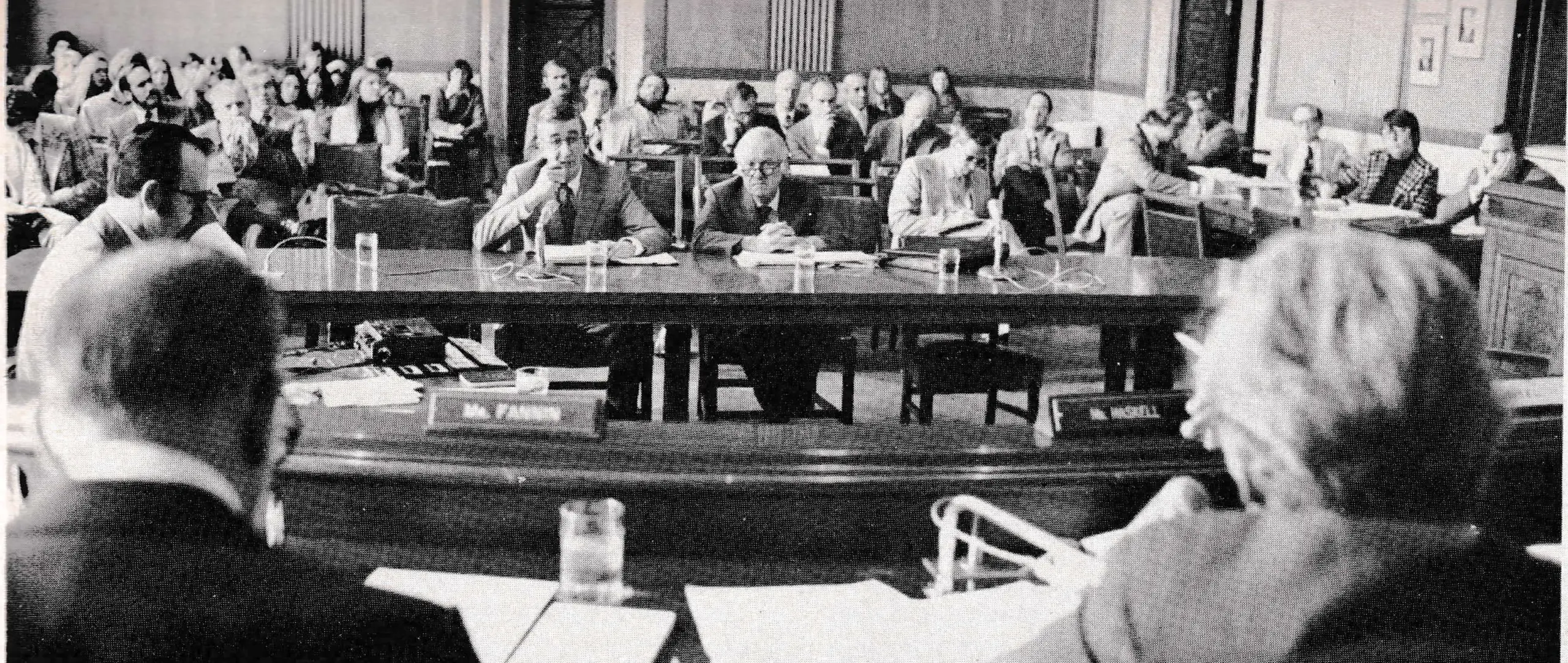
With the announcement that the final hearings on the bill would be held before the subcommittee on November 17, an NSAA task force gathered in Washington, D.C. and spent a long weekend preparing testimony.
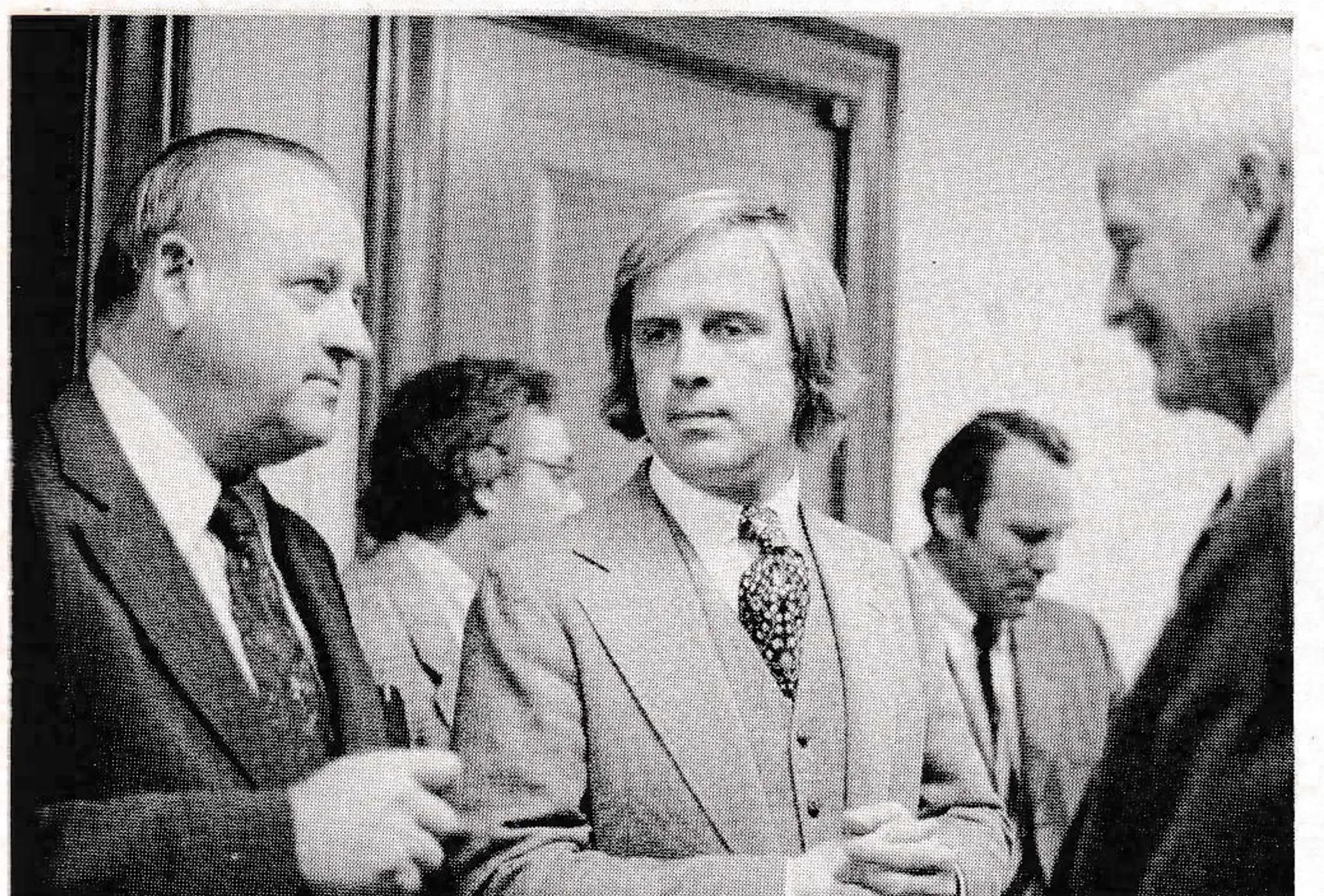
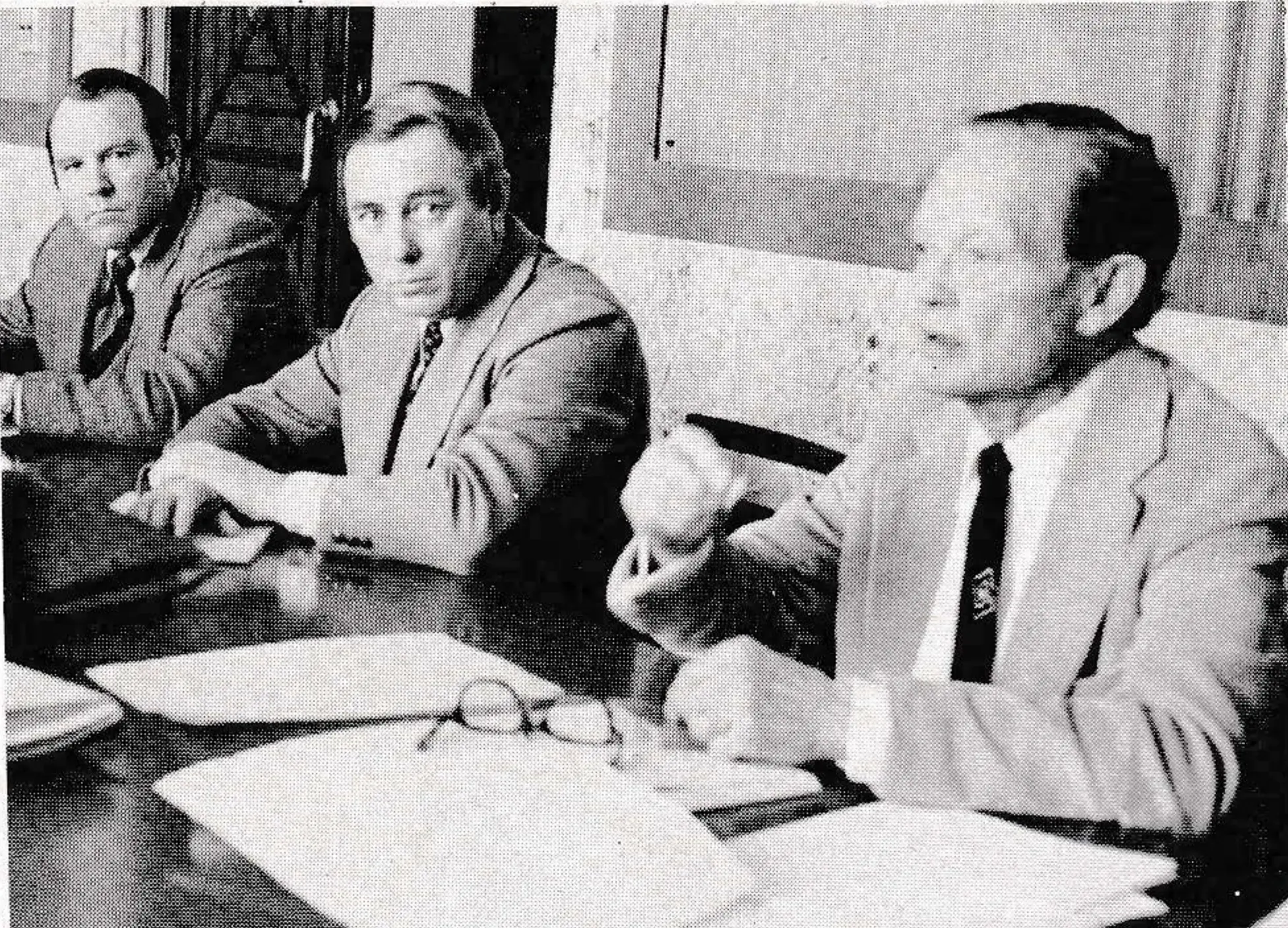
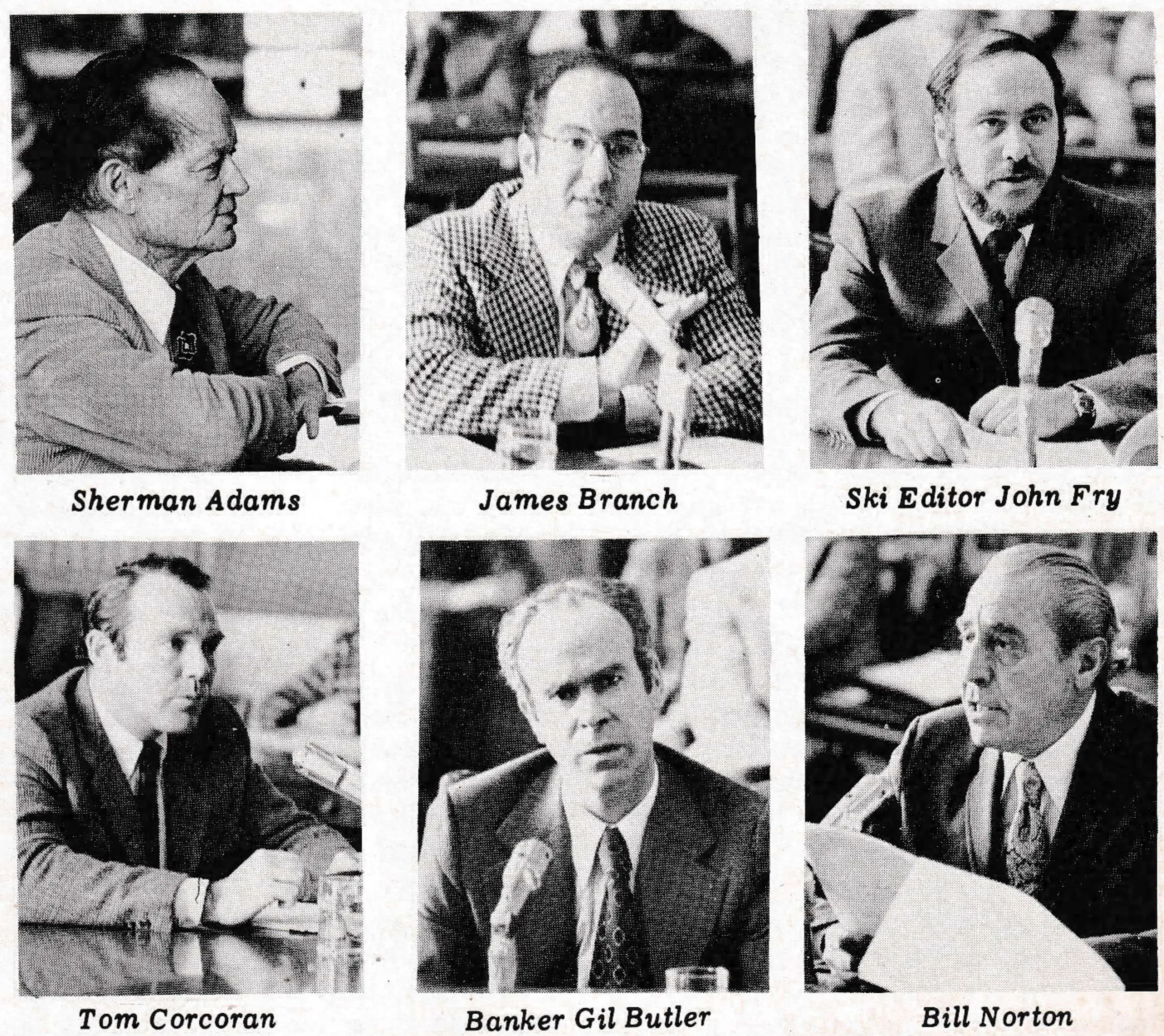
NSAA’s official position, delivered by its president, Bill Norton, offered specific language for S.2125. On financial disclosure, NSAA felt it would be appropriate if all interests doing business with the Forest Service through the permit process (mining, grazing, lumber, etc.) would be held to the same requirements. NSAA, in testimony delivered by board member Tom Corcoran of Waterville Valley, opposed the independent ski instructor on the grounds of customer service and possible liability.
In opening the hearings, Senator Haskell stated that he was shocked at the idea that his bill was intending “regulation” of the ski industry. He reiterated the concerns that had caused the bill to be drafted and some of the issues it addressed. He went on to express his concern reagarding the “monopolistic” nature of some ski areas where one company owned all the skiing facilities in a market area.
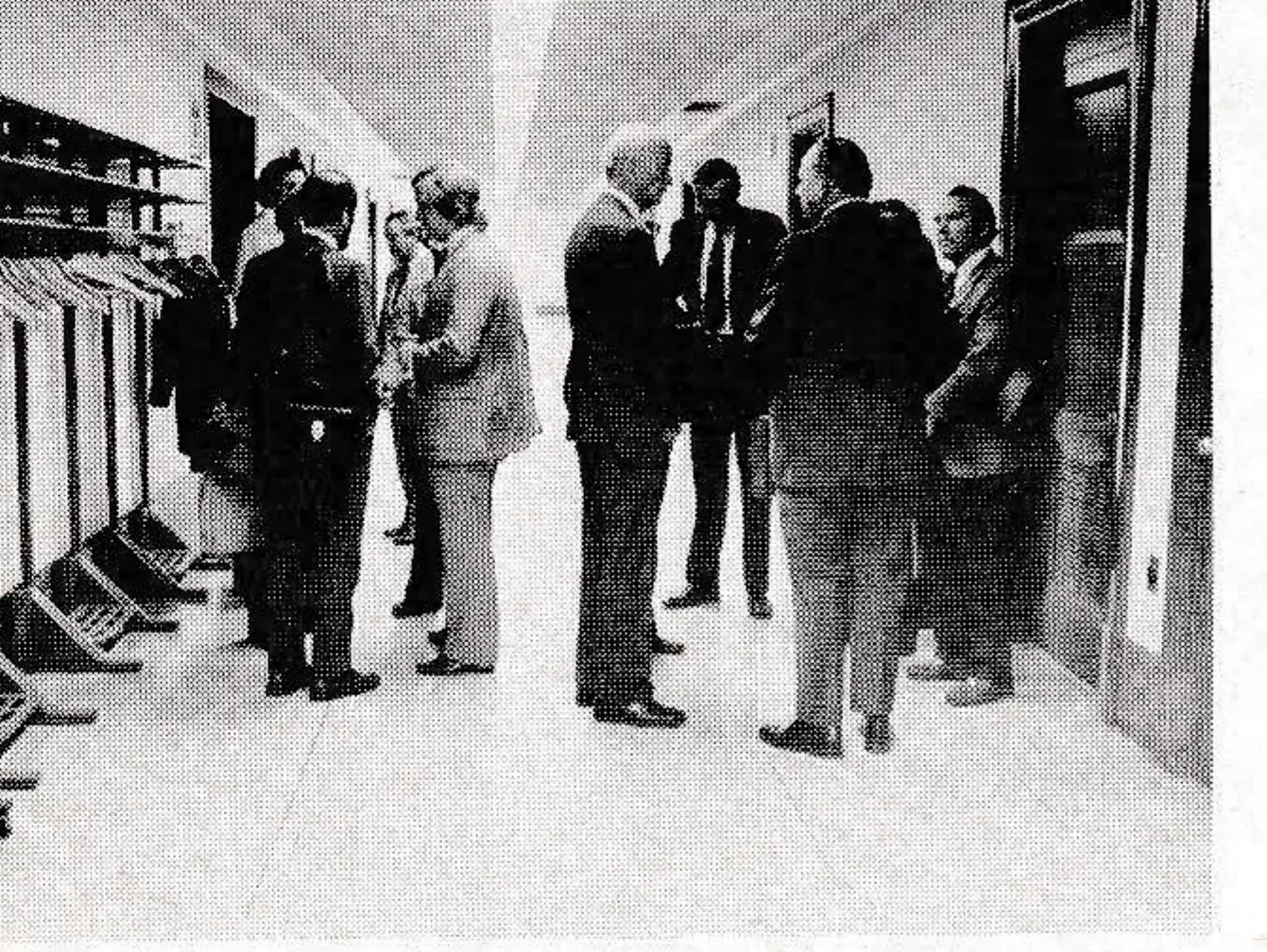
He seems to feel that meaningful competition, benefitting the consumer in terms of pricing, would be provided if a corporation would be prevented from owning all of an area’s facilities or, at least, would have to participate in “open bidding” for the right to do so. (Ski area developers point out, with a sense of irony, that there is not a long line of investors waiting for such an opportunity to get into the ski business by bidding against each other for a specific permit).
The Forest Service in its testimony opposed S. 2125, feeling that existing laws and regulations had enough clout to protect the public.
The Current Status of S. 2125
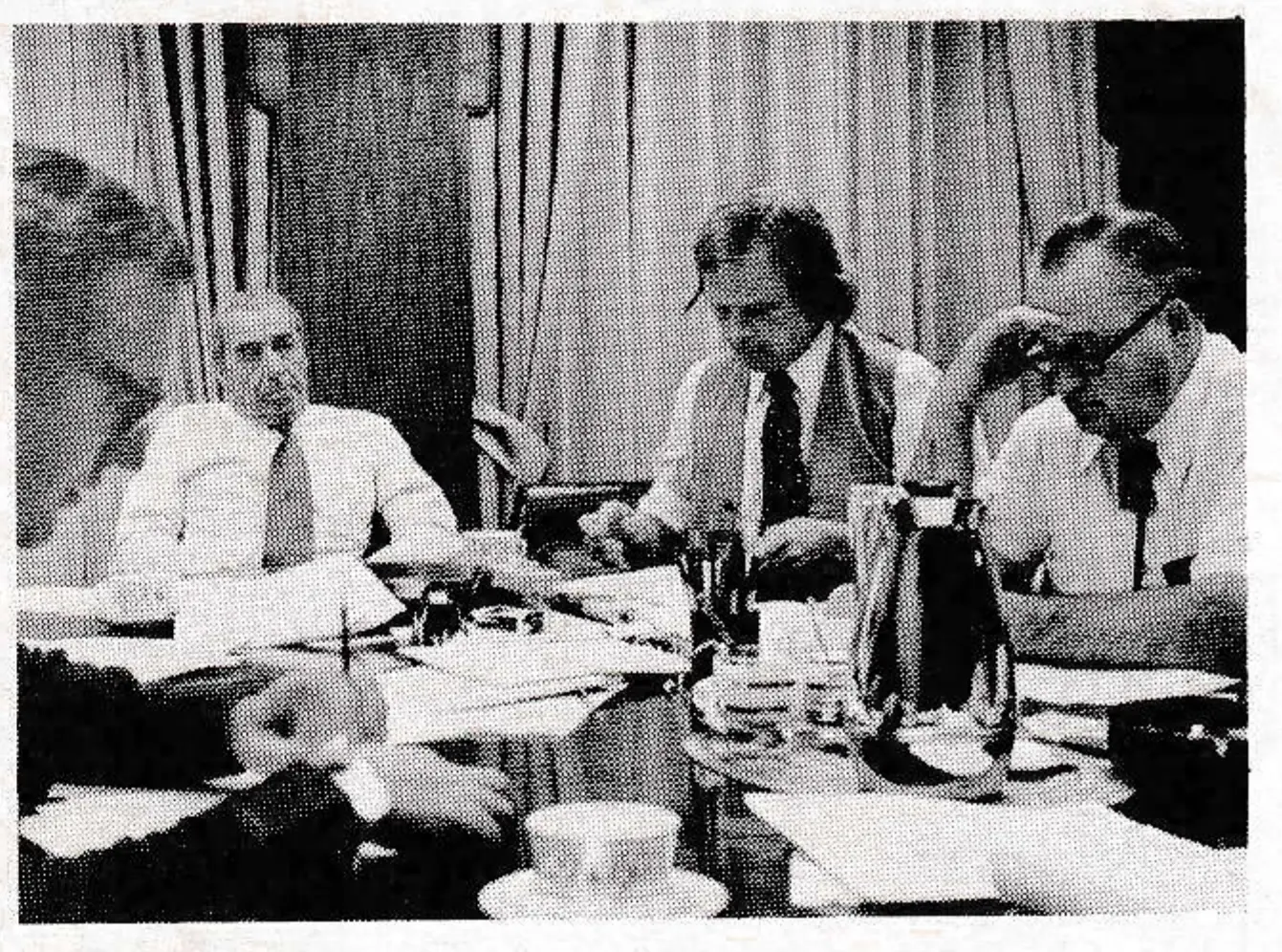
The hearings were over, and nobody knew whether S. 2125 would ever get out of subcommittee. But there was work to be done on it anyway, and this continues. In addition, Mitchell and the CSCUSA Public Information Committee plan to develop a concentrated public information program utilizing press releases, speakers bureaus, traveling seminars, etc., to continue to communicate the positive side of the ski industry on an on-going basis.
If issues such as those which created S. 2125 have arisen, it may be that they weren’t created by the ski industry’s lack of public consciousness, but by its failure to communicate this consciousness to its public.