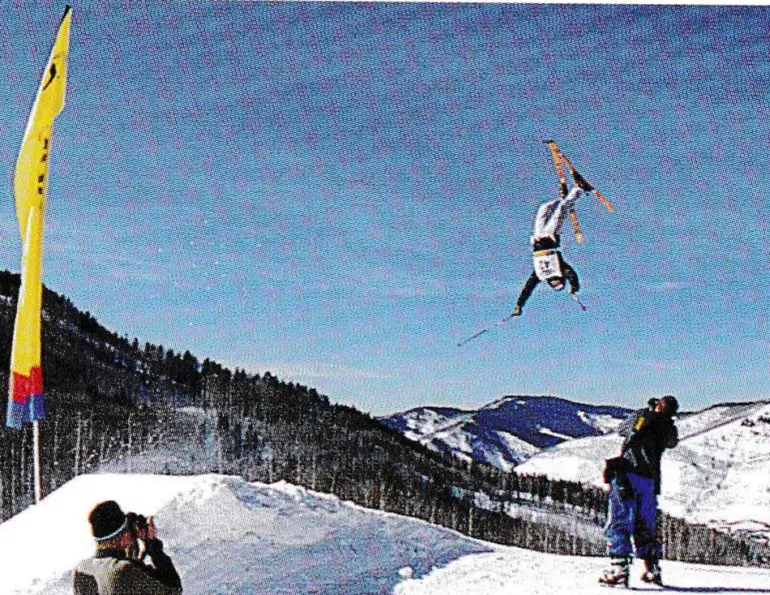
Today, Whistler virtually sells out during the Festival, according to Doug Perry, president of W1, the Whistler-based company which produces the event.
The Festival is arguably the most successful special event offered by any North American resort these days, but it’s only one of thousands of large and small events hosted by ski resorts each year. The reasons seem obvious enough. Media exposure, buzz, prestige, positioning, branding efforts, attracting and entertaining guests—any or all of these justifications are used to convince resort bean counters to loosen purse strings and pony up for a show. Resorts sometimes run events simply because management thinks it’s the right thing to do for the sport or for a favorite cause, but the goal of the vast majority of events is to drive additional business and profits.
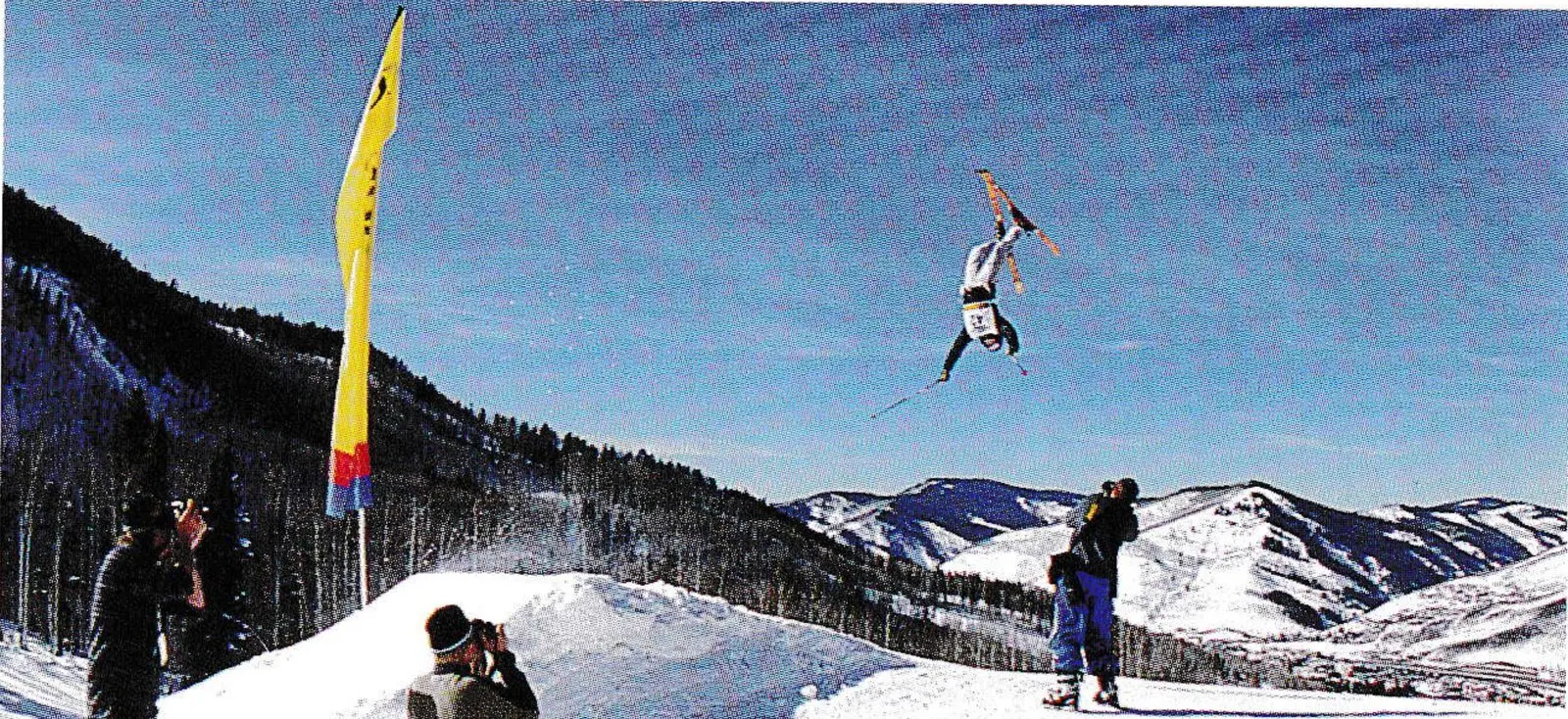
Doug Perry uses a suite of sophisticated tools to measure that business, including analysis of lodging figures, guest opinion surveys and detailed examination of other data, including ticket sales and retail figures. He proudly states that the Festival is responsible for “a conservative $10 million [CDN] in revenues each year, directly attributable to the event” and thinks the number may actually range as high as $18 million. Event operating and promotional costs are offset by $1.5 million in corporate sponsorships, $3 million in in-kind media and ad partnerships and an undisclosed amount in trade tickets and room comps. The resort itself spends no cash.
Most resort GMs would eat raccoon sushi for numbers like those. Even so, Perry’s numbers show a swing of as much as 80 percent when estimating the event’s true value, which shows the difficulty of calculating event return on investment (ROI). And Perry’s is an after-the-fact analysis. Almost every pre-event justification for holding an event is vague, intangible and nearly impossible to prove.
Many ski areas rather naively—even wistfully—assume that the real winnings will come in the future. It’s anyone’s guess, for example, whether the Olympics will really pay off for Utah’s resorts. True, Utah got worldwide exposure. But it’s also true that in the years leading up to the Games, Utah was an underperforming segment in U.S. skiing, in part because most its resort infrastructures lagged behind those in competing destination markets. Even assuming that Utah sees a pop in coming years—still anyone’s guess—the question will remain open: Did the state’s bazillion dollar investment in the Games bring home the bacon, or was it recent upgrades to resort facilities that really did the trick? We’ll never know for sure. Yes, the Games helped publicize those upgrades. But there may have been cheaper ways to accomplish the task.
Know the Risks
Sketchy benefits are joined at the hip with some very tangible risks. Events can easily produce a bottom-line loss. Ugly spectator incidents and high-visibility competitor accidents can lead to negative media exposure and litigation. Events that run counter to your brand identity can endanger your relationship with your best customers. Just to frost the pickle, you can anger your community and burn out your staff.
None of this means you should scrap your events schedule. But regardless of how passionately your marketing and events staff feels about an event concept, the risk/reward ratio of any given special event must be carefully evaluated before you give it the go-ahead.
Many resorts trust third parties to stage their events, essentially hoping for a turnkey operation that’s at least partially self-funding through sponsorships. But Mike Jaquet, former associate publisher at Freeze magazine and now director of sales and new business development for TransWorld Media, notes that “there’s no shortage of promoters and sponsorship people who claim to have the Next Great Event. As a manager, you need to be wary and make sure the idea is right for your resort. And you have to make sure they deliver.”
Jaquet also warns, “Make sure the company has ski event experience. Check references. The good news is that ours is a small industry, so word gets around pretty quickly if a promoter pees in the sandbox.”
Image is Everything
To determine whether an event is worth doing, you need to understand whom it will touch—and how. Start by asking: Does the proposed event support your resort’s brand image—either your current one, or the one you’d like to have?
That’s not as obvious a question as it seems. Due to miscalculation or oversight, ski areas often host events which alienate at least some of their core customers. Loud music, for example, is an important component of new-school and snowboard events. But as an art form, rock ‘n’ roll’s success has always been at least partially due to its ability to scare the hell out of your mom, and many of today’s stars have figured out how to accomplish that task with unprecedented skill.
The solution? Talk with the target audience of the event, find a middle ground on the music and insist that bands or deejays stick to an approved set list. If they can’t or won’t, find an alternative. That degree of management attention to detail is necessary in order for events to succeed. And if you’re willing to provide it, say Perry and Jaquet, events can be a terrific way to broaden brand identity.
Jaquet cites Freeze magazine’s U.S. Freeskiing Open at Vail as an example. “Vail’s image was firmly locked into old school, families, celebrities and racing,” he says. “When we started, there were no high-profile new-school skiing events anywhere. Freeze wanted Vail as the venue because it would instantly associate us with a world-class resort.”
He admits that Vail management was a tough sell. “Some people understood the need to broaden Vail’s brand image and got it right away,” he says. “Others were nervous as heck. It was an interesting dynamic for the first two years.”
Today, the Open is a top priority for the resort, and Jaquet gives the resort’s senior management team credit for ultimately recognizing how the Open enriches the Vail experience. “It’s very important for top management to experience what’s going on at an event,” he says. “You have to see it, touch it and get a sense of how the customers feel about it.” Vail’s managers, he says, did just that.
Map the Mechanics
If you decide that an event concept actually serves your current and desired customers, you must determine if you can really pull it off. To do that, you need to map the mechanics of staging the event and calculate how much staff time and financial commitment will be required for each operational area and stakeholder group.
It’s helpful to think of events in three categories—Type 1 the simplest and cheapest to run, Type 3 the most complex. Type 1 events can be easily managed within the scope of the normal mountain operations and staffing schedules at most ski areas. That doesn’t mean that they’re cost-free, but they generally don’t require much dough.
Local snowboard jams and mob rules halfpipe events are probably today’s most common examples. But Type 1 events can be pretty creative, too. Sunday River, Maine, offers free skiing to anyone who shows up in a Santa Claus suit on a given Saturday shortly before Christmas. It’s a simple, zany event that almost invariably gets national media pickup.
Cost? The resort typically comps 100 to 150 skiing Santas each year. At least some of those comps convert retail customers to freebies. There’s also the cost of pre-event press notification and some ancillary expenses related to photo and video distribution. But operationally, the cost is zilch—and the total expense is short money for a gag that virtually guarantees an AP photo and nationwide TV news kickers.
Mid-size and larger resorts can typically handle Type 2 events in-house, especially if the event is competition oriented. But because of their greater complexity, significant staff and financial resources must be allocated toward these events. For example, running the USSA’s annual Masters’ Championships is a pretty big deal. The event attracts veteran racers from all over the country—most of whom, fortunately, pay for their lodging and lift tickets. Training and competition courses typically involve half a dozen of your choicest runs. There’s fencing to set up, course workers and gatekeepers to find and supervise, post-race parties to host and a long list of other considerations. (World Cup Moguls events are every bit as complex to plan and execute, but at least they don’t take as much on-hill real estate.)
Don’t forget: you’ve still got a ski area to run while all of this is happening. This means that all operational aspects of the event—planning, setup, execution and teardown—will be done by adding hours to your already-overworked salaried staff and plying the rest with overtime dollars.
A Type 2 event is a significant presence at a resort; a Type 3 event dominates it. It’s high-visibility, glamorous and require a huge commitment of staff time and infrastructure. Their impact generally extends well beyond the boundaries of the resort and deep into the community. Even large resorts usually need outside help, which is one of the reasons Type 3 events are so expensive to execute.
Type 3 events are big enough deals that you’ll probably be able to get some significant help from outside sponsors, which may come as part of a promotion package brought in by a producer. But when you consider the costs of executing a Type 3 event—and the potential short-term loss of business resulting (much of your lodging, for example, may be occupied by competitors, coaches and VIPs, and regular customers may stay away until the party’s over)—those sponsorship dollars may not be enough to deliver a break-even event.

Mount Snow’s two-year experience with the ESPN Winter X-Games is instructive. Mount Snow was at the forefront of new-school mountain experiences for years prior to the X-Games. But its reputation in that regard was more of an underground thing; overall, the resort’s brand image was dated. Mount Snow wanted to up the ante.
Eighty thousand wildly enthusiastic spectators—the X-Games admit spectators free—came to Mount Snow each year during the event’s two-season run.
Marvelous, yes—but expensive. According to Scott Pierpont, managing director at Mount Snow during the two-year X-Games run (and now managing director at The Canyons), the resort lost 10,000 skier visits during the first year of the event and a smaller but still substantial number the second year—directly attributable to the X-Games.
Pierpont wouldn’t reveal Mount Snow’s yearly out-of-pocket operational costs for the X-Games, saying only that “it was less than six figures.” Still, between lost ticket sales, X-Games-specific operating and other expenses, the event easily cost Mount Snow more than half a million dollars each year.
Pierpont thinks it was worth it. Between the oft-repeated TV broadcasts, the print coverage, the web and new-school film makers, millions of people got a good look at a progressive resort.
Mount Snow didn’t lose any lodging revenue, because it contracted with ESPN to provide rooms rather than comping them. Area businesses did well. Besides, says Pierpont, “we were in the middle of re-branding the resort. At the time, it was exactly what Mount Snow needed. You have to weigh the value of an event and what it’s going to do, ultimately, for your resort.”
To date, Mount Snow’s skier visit count hasn’t improved—although it’s worth noting that the weather in New England over the past few years has been awful. Had the weather instead been good, the resort might already have begun posting its looked-for pop.
Final Impact
Proper execution of all but the simplest events requires you to examine each aspect of your resort and determine how it will be impacted. Do you have enough parking—and if not, can you arrange satellite parking and shuttle transportation? Do you have enough maintenance staff to pick up the inevitable litter? Is your food and beverage department capable of handling its normal load and whoever else shows up? If not, you’ll need to bring in outside food vendors to handle spectator overflow—best check with your attorneys and ensure that your vendor agreements clear you of liability if one of them serves tainted tacos. Speaking of overflow, can your bathrooms handle the extra load? Portable toilets may be necessary—and if they are, you’ll discover there’s actually quite a lot of money in poop. For some people, anyway.
You can evaluate the potential of offsetting sponsorship dollars once you’ve determined the costs. If cost projections (including anticipated lost revenues) and sponsor commitments show that you can at least break even on the event, you’re probably safe to move ahead. Your event may not drive incremental revenue, but at least you won’t lose money on it, and your existing clientele may very well be pleased by the action.
But if reasonable projections indicate that the event will actually cost you money, you then need to project how many additional visitors the event will ultimately attract, how to derive revenues from them, and figure out if you can afford to run the event until it finally gains traction.
At the least, you need to decide if the event is a reasonable marketing expense. Jaquet believes that resorts should consider event costs in precisely that way—but adds that “it’s amazing how many resorts don’t adequately promote their events.” Putting a major PR and advertising push behind an event is critical if it’s going to succeed. That’s what Mount Snow did with the X-Games. The event was promoted the year before the X-Games landed, was the central focus of its marketing department for the two years it was onsite, and the resort still uses its X-Games history in some of its marketing materials.
If you decide to move ahead, says Perry, make sure that you leave nothing to chance. “Events involve the whole community,” he says. “We make sure that the brand is enhanced by getting the community involved. We make sure the event reflects the leading edge of what’s happening in the sports by having the competitors design the competitions. We have the resort stakeholders work with us on design and features. We get the input of innkeepers. We talk to photographers and filmmakers. We do this every year. An event that’s planned in isolation is doomed.”
And don’t underestimate the intensity of the planning process. W1 does only one event per year: the Festival. “By the time the people come and the event actually starts,” says Perry, “99 percent of the work is done.”
Giving it Your Best
The most cost effective events, it seems, are those geared towards driving business in soft periods—pre-Christmas, January, April. Most resorts already run spring festivals of one sort or another, but in truth, many of these are essentially lukewarm last hurrahs for ski areas ready to slap the padlock on their lift drives. That may be why a number of resorts across the nation have eyed the Whistler festival and are currently planning similar events. How or if anyone will dilute Whistler’s show remains to be seen. The Whistler Festival is so progressive and well-established that it’s unlikely to face much of a challenge—unless another resort is willing to risk a tremendous amount of cash to steal its thunder.
That’s why carefully engineered longevity is one of the keys to success, according to Perry and Jaquet. They believe that successful events for resorts need to be poked, prodded, modified—and developed over time.
Perry says that great events need to be “layered”—to provide a range of activities and attractions. Competitive events themselves aren’t enough, he says, because not everyone is interested in the competition. Whistler adds music, art and other features—and as the festival evolves, new components will be added as old ones are retired.
And, says Perry, “the only time you should lose money on an event is if reasonable analysis shows that the event will definitely produce a solid ROI in the future. It generally takes three years for an event to reach critical mass.”
“The only way to give an event legs is through repetition, figuring out what works and enhancing it, dropping the aspects that don’t,” agrees Jaquet. “The biggest mistake I see people make is to try an event once and then kill it. We deliberately set our expectations low for the first year and then build on it by trying to outdo ourselves the next year and the year after.”