


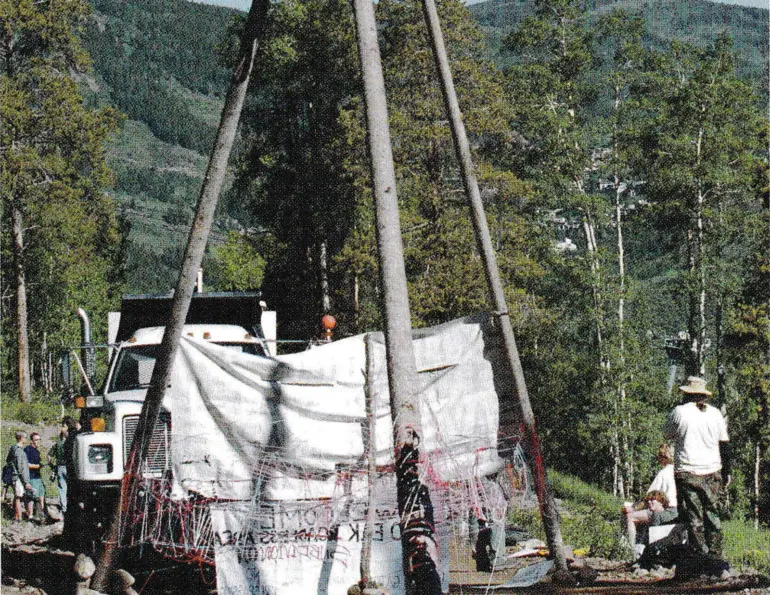
Listening to the industry tout its Sustainable Slopes charter on the one hand, and to green groups talking about the ski area environmental scorecard on the other, is like trying to listen to two different radio stations at the same time. SAM asked writer Berwyn to revisit the arguments without the usual static and emotion. Here’s his report.
How did we arrive at this state of affairs? At its heart, downhill skiing is a healthy, close-to-nature pastime that seems an unlikely target for environmental critics. But for the past 30 years, nearly every proposed ski area expansion from coast to coast has been challenged. Sometimes, its impacts to wetlands, old-growth forest or wildlife habitat; other times concerns relate to water or air quality, or even social issues like affordable housing and transportation. Whatever the cause, the green rhetoric is heated, making it easy to discern what they don’t want.
What’s not always so easy to understand is what they DO want from the ski industry. Many of the most vocal critics say they are enthusiastic skiers. But they have been playing defense for so long, trying to block expansions and saying nay to almost every ski area development proposal, that it’s not always easy for them to turn around and articulate a positive vision for the future of the sport and the industry.
Why can’t the ski industry and the conservation community get along? How can the two sides begin to find common ground? What do green groups want from ski areas and the industry as a whole? Why have leading ski companies like Intrawest and Vail Resorts been portrayed as environmental pariahs?
Auden Schendler, environmental guru for the Aspen Skiing Company, is an environmentalist with an unusual perspective. He sees the issues from inside the industry, and this gives him as clear and objective a vantage point as anyone. “They want the ski industry to stay the same size it is now,” he said of the environmental activists. “The big hot-button issues are the expansion of permit areas and snowmaking. The environmental community wants to see us address the issue of stream flows head-on. They want us to keep more water in the streams and to figure out how to keep it there, even when there’s no legally enforceable mechanism requiring it.”
But environmentalists also want resorts to take responsibility for impacts on the larger community as well, Schendler said. “They want us to directly address energy use, transportation, sprawl, affordable housing. They want us to recognize that the resorts are responsible for sprawling development in these mountain valleys.”
Size Matters
Phil Strobel, an EPA official in the agency’s Denver office who has reviewed numerous ski area projects on Forest Service lands for NEPA compliance, takes an historical view. “I think the increased attention to resort development reflects changes that have happened in the ski industry,” he said.
“It wasn’t too long ago that most resorts were limited to the front side of one mountain. We now have resorts with runs and lifts that extend three mountains back into formerly undeveloped forest,” said Strobel.
“Until recently, snowmaking was rare in the Rocky Mountains, except perhaps near the mountain base. We now have large-scale resorts covering the majority of their runs with manmade snow. There are resorts that now employ 24-hour grooming, 24-hour snowmaking and four-season recreation. There have obviously been changes in the scale and purposes associated with resort base areas. So as the impacts have grown, attention to resort development has, not surprisingly, increased.”
Where clusters of large resorts are concentrated, those impacts can be significant. It’s probably not a coincidence that some of the most vociferous criticism of the modern ski industry is centered on Colorado—Summit County and the Vail Valley—where resort-related sprawl along the I-70 corridor is completely altering the ski vacation experience. Instead of small, distinctive mountain communities shaped by their environment, visitors to these areas find suburban-style development, with plenty of strip malls featuring chain stores and massive parking lots.
Even though the resorts in this region have wrapped themselves in a green flag, conservation groups say official government records tell another story. As an example, Colorado Wild activists point to the recent battle over the White River National Forest plan revision. With the exception of the Aspen Skiing Company, the ski industry—with political support from Colorado Congressman Scott McInnis (R-Grand Junction)—attacked a draft version of the plan for its emphasis on ecological sustainability. When the Forest Service issued a watered-down final version, the industry appealed many of the remaining conservation measures, claiming they could interfere with existing operations and future expansions. It seemed that the Colorado resorts were in favor of environmental conservation only when it didn’t interfere with business as usual.
Much of the recent environmental opposition to the ski industry in the Rockies appeared to coalesce around the Category III expansion at Vail, now known as Blue Sky Basin. The Cat III project, said Ted Zukoski, a former attorney with the Land and Water Fund of the Rockies, now with Earthjustice, the Sierra Club’s legal arm, is emblematic of all that is wrong with the ski industry today—a needless expansion at the expense of important wildlife habitat.
“I think what the conservationists want to see are healthy human communities and healthy ecosystems in the High Country,” Zukoski said. “It seems to me, the people who run the lifts should actually be able find an affordable place to live in the towns where they work.”
Visions of Community
His comments reflect the notion among conservation groups that resorts are broadly responsible for the social, economic and environmental well-being of their communities. Zukoski said the groups that he counsels want to see vibrant local economies that aren’t controlled or dominated by a single corporate entity. The ski resort companies obviously need to be part of that economy, he said, but they shouldn’t maximize their profits at the expense of local businesses—or the surrounding public lands.
“The conservation community wants public lands to be not land where stockholders can maximize their profits at the public’s expense, but where land managers try to balance competing uses,” Zukoski said.
Conservation groups want resorts and land managers to look at projects with a larger lens, considering cumulative impacts over time instead of doing “piecemeal” analysis that does not capture the full extent of environmental impacts.
“I think they should try and sit down and have a dialogue with the local communities and the environmental community and try and figure out what kind of footprint they want to have in the local community. And the Forest Service needs a plan to look at these issues overall,” he added. “The ski areas are competing against themselves and each other. It’s an arms race. It would be great if the ski industry joined with the environmentalists and asked the Forest Service to take a comprehensive look at where the ski industry is going. Maybe they could get out of this competitive cycle,” he concluded.
“I grew up in a ski town and I want to see people out there enjoying what we’ve been blessed with,” said Jonathan Staufer, a Vail native and business owner who helped put together the ski area scorecard as a member of the Ski Area Citizens’ Coalition. “But there needs to be some sort of recognition on the part of the ski industry that there’s no need to expand. Skier numbers have been flat for three decades.
“They need to acknowledge that real estate development on private land next to the ski areas is part of the deal. They can’t keep pretending that the two aren’t connected. Maybe they could sit down with us and have a constructive dialogue, with an honest assessment of the impacts on issues like housing and transportation,” he added.
“We want skiing to survive economically and to be environmentally sustainable, but we have to acknowledge that the Southern Rockies are in dire straits ecologically,” he continued. “We’re cutting incredible swaths through important wildlife habitat. Category III and Jones Gulch [a proposed expansion at Keystone Resort in Summit County] are two examples.”
Is Smaller Better?
This is not just a Colorado issue. From his national perspective as the Sierra Club’s conservation director, San Francisco-based Bruce Hamilton said the ski industry must begin by facing up to the fact that some mountain valleys have already been over-developed, putting a strain on water resources, air quality, wetlands and wildlife habitat.
“As I look ahead, I think the biggest issue we’re facing, in terms of expansions, is that we’ve already gone too far in some cases. I think the first thing is to try and make sure that the existing resorts are operating on a basis that’s environmentally sustainable in the long term,” Hamilton said. “In some places we may need to go back and mitigate for impacts that have already occurred, or maybe even scale back.”
Hamilton advocates developing smaller-scale, community-based resorts that might be more in tune with the early intent of the Forest Service as it explored the country’s mountains, searching for opportunities to provide accessible recreational experiences.
“There’s got to be something between the mega-resorts—not everyone wants to visit them—and the mom-and-pop operations that are going out of business,” he said, encouraging the ski industry to offer an alternative vision. “I think there are two types of customers. One is looking for an urban experience, with a big commercially developed base, music in the terrain park. But there are still a lot of people who go skiing because they are looking for a natural experience,” he said.
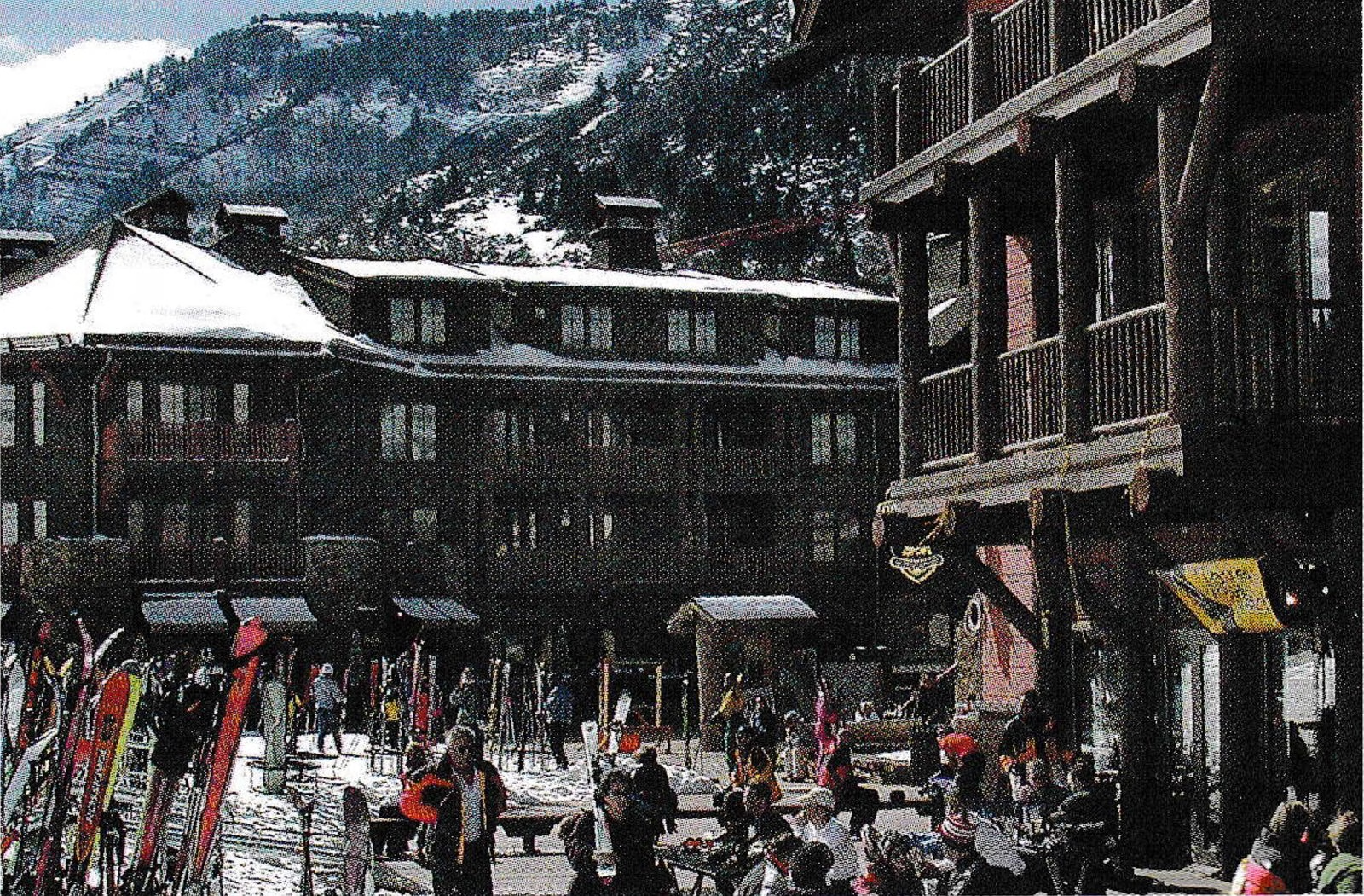
For resorts with high use, Hamilton said it’s important for the industry to recognize that it needs to invest in urban infrastructure. “If you’re going to pack them in, then invest in water treatment and mass transit. Build up, rather than sprawling out,” he said.

The refrain is similar, no matter where you are in the country, said Beth LeClair, part of the Forest Service’s eastern region winter sports team. “My sense from talking to people interested in the management of ski areas on the national forests is that they don’t want to see large expansions of ski areas,” she said.
Visions of the Mountains
Out in the Sierra Nevada of California, Mammoth Lakes activist Andrea Mead Lawrence addressed similar issues in a broader, philosophical context. As a double-gold medal winner at the 1952 Oslo Winter Olympics, she packs impeccable ski credentials. As a long-time Mono County commissioner, she also understands the political realities of resort development in mountain communities.
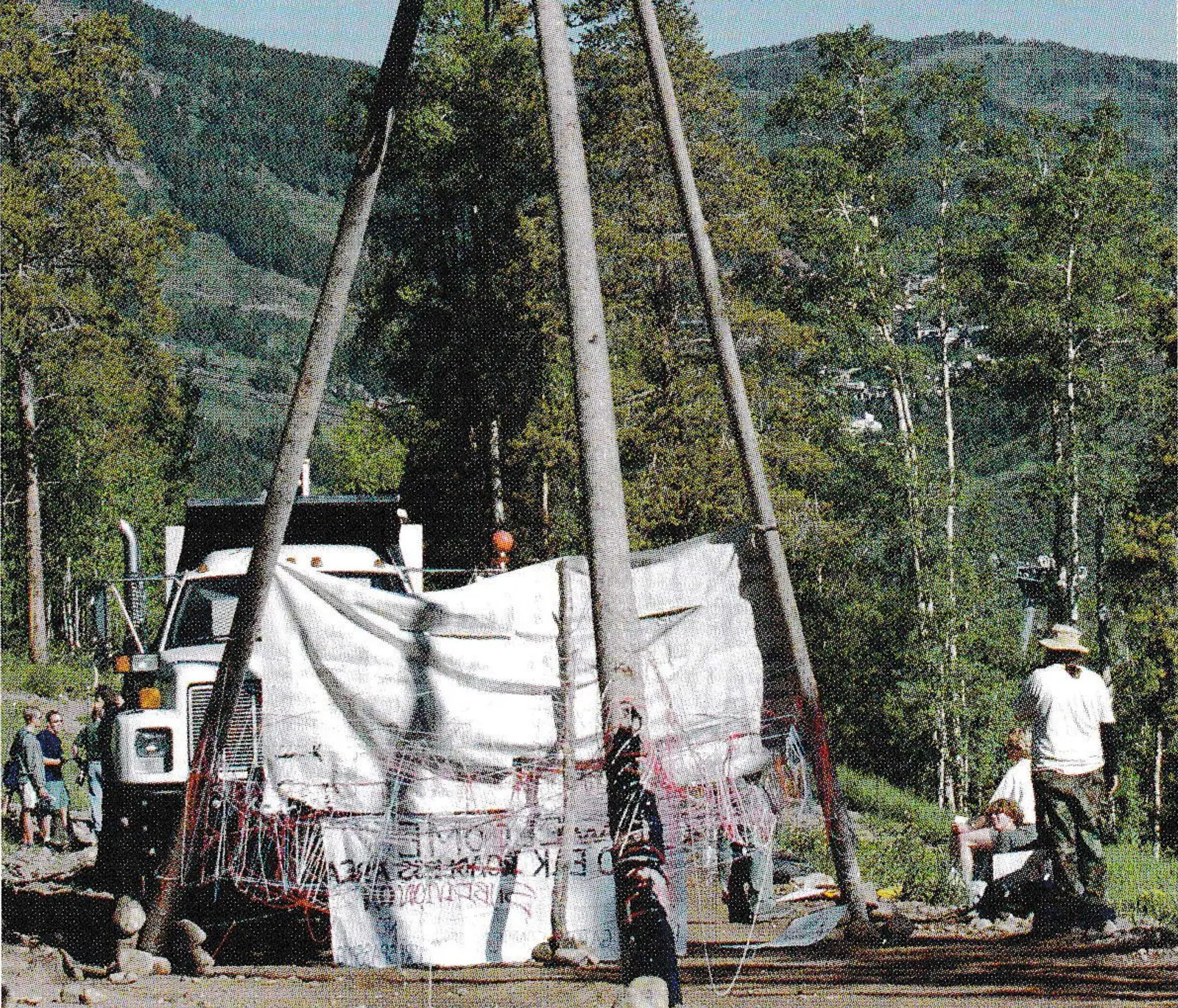
“One of the things we’ve been talking about is trying to bring back some kind of reverence for the mountains,” she said. “We have to get back to a mountain experience. Skiing is about being in nature and being in tune with nature. It’s always been about that, but we’ve gotten away from that recently with all the commercial activity that has developed around the sport. It’s a real educational process,” she said.
On-mountain educational kiosks and information centers could be one way to start redeveloping that ethic, she explained, citing efforts by Mammoth Mountain along those lines.
“There are all kinds of things you can do if you have a slower experience. You can build in a way that emphasizes the quality of the experience. Look at Alta, for instance, where you have slower lifts but people rave about the quality of the experience,” she said.
Water and Wilderness
As snowmaking has grown, so have concerns about water use. People in the East, said LeClair, “are concerned about water flow levels in the rivers in the winter. Linked to the water flow issue is water quality. The higher the water flow, the more dilution of pollutants.”
“The water flow issue has resulted in the State of Vermont establishing minimum flow levels for rivers that have water withdrawal devices. And that has resulted in more water storage facilities (snowmaking ponds) in the northeast in general,” she said. Environmental groups generally favor snowmaking ponds over water withdrawals from streams as the lesser of two evils.
Water quality is also one of the biggest issues identified by Julie Wormser, a conservation director with The Wilderness Society in the Northeast. “It’s important to make sure that water withdrawals for snowmaking, herbicide use, sewage and other management activities don’t harm nearby streams and lakes,” Wormser said.
“Another issue is the expansion of ski areas and associated development into the surrounding mature, unroaded forest habitat. This is particularly a concern when it involves identified roadless areas on public lands—especially where environmentalists would like to see new wilderness areas created,” she added.
Echoing comments from other regions, Wormser said the sprawl of condos and strip malls around ski areas and gateway communities is another issue she’d like to see the ski industry address.
Wormser also cited examples of ways in which ski areas could serve to reduce environmental impacts in more pristine areas. “Ski areas may be good places for siting cell towers and windmills, since they are already intensively developed, and that would take pressure off more remote mountaintops,” she said.
A Way Out?
At present, the showdown between environmentalists and the ski industry is at a standstill. The industry, with a few exceptions, doesn’t seem willing to acknowledge that ski area and associated base area and village development impacts are taking a toll on natural resources and the quality of life in mountain communities. Environmentalists can’t seem to understand that growth and development are inevitable, and that their best hope may be to try and help determine the direction of the ship rather than trying to stop it. A green organization could probably exert more influence over what happens by hiring a top planner away from a resort or from a planning group and using that expertise to shape “green” alternatives in situations where development is inevitable, and even, perhaps, desirable. More ski resorts—and especially the large corporations—could establish committed environmental programs along the lines of what the Aspen Skiing Company has done.
Is there a way for these changes to occur? Yes, says Aspen’s Schendler. “If you distilled the conflict between enviros and ski resorts down to the bare bones, it would be that enviros oppose expansion into green space. Ski resorts want to improve, grow, expand and make money.
“The common ground might be in the difference between ‘growth’ and ‘development.’ Growth means expansion; development means increasing complexity, increasing diversity. And there’s a difference. Ecological systems, for example, become healthy as they develop complexity and diversity. But they do not necessarily become bigger. Ski resorts can do the same. They can continue to improve, without growing like cancers. They can tear down old buildings and create better, more efficient, luxurious, user-friendly structures. They can create infill projects in previously developed areas, and they can make the most of the terrain they already have.”
What’s needed most, says Schendler, is leadership. “Cultural and operational changes in business typically only happen when forced from above. Look at Patagonia, Levi’s, Starbucks, Nike, Home Depot, Toyota, Kinko’s, etc. All the leading green companies had mandates from above.
“If a ski area wants to have a better relationship with the enviros, it needs to take an action that is so purely environmentalist and unmotivated by profit that it throws the environmental community for a loop. The enviros will ask, ‘Why did they do this?’ And the only answer can be: because it was the right thing to do. A good example might be a ski resort buying large quantities of wind power. It’s costly, and there’s no return on investment. Equivalent PR benefits could probably be garnered for a tenth the cost. But supporting renewable energy is the right thing to do.
“The enviros have a role to play, too,” Schendler says. “If a resort does something good, it should get loud and unqualified praise from the enviros, not ‘wow, we were surprised…’ Once, Aspen announced some energy efficiency programs, and some enviros criticized the industry for expanding. My response was: ‘Hey, one problem at a time here. We’re not talking about expansion right now. This was a good thing, we should get credit for it.”
Perhaps more importantly, environmentalists must admit that local communities need successful ski areas, said Schendler. “Few in the environmental community recognize that the environmental health of communities is linked to their economic health. Look at photographs of western mountain towns 100 years ago: they were trashed. The enviros rarely say, ‘Holy cow, if the ski area goes out of business, the rich people go away, and there goes our operating budget. There goes all the local money for cool projects. There goes the tax base.’ Enviros need to acknowledge that they want and need the ski resort to be successful, and that being environmentally sustainable is one way to get at that success.
“Finally, there is another issue that has to be addressed: The extreme polarization between the ski industry and the enviros. In part, this polarization is a relic from the radical environmentalism of the 1970s. But the ski industry is guilty of pursuing profit at any cost. And the enviros are guilty of pigeonholing the entire industry as evil.
“People are generally good, and they’re not trying to destroy the world. People don’t drive SUVs because they’re bad; they do it because there’s nothing else with better gas mileage that meets their needs for convenience, comfort, safety and performance. Nobody wants to go home to their kids and say, ‘Today I destroyed a big chunk of the planet.’ There is common ground in the fact that we are all pursuing the same goals, enviros or ski industry folks alike: we all want clean air and water, beautiful views, healthy children, satisfying work we can feel good about. In a word, dignity.

