

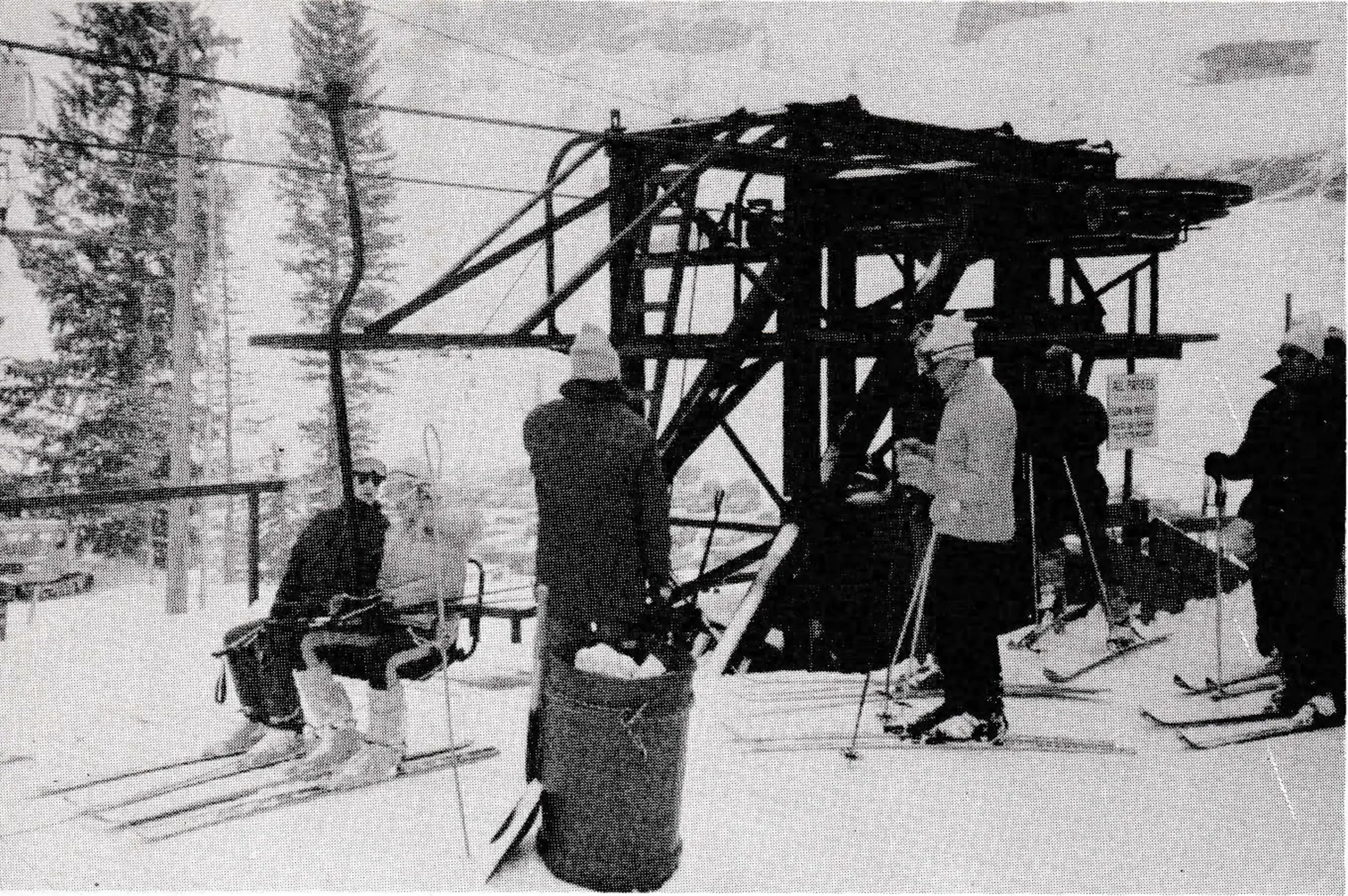
With increasing frequency ski area operators are facing the dilemma of the aging lift. Should it be replaced, remodeled, or “run into the ground”? The current economic climate compounds the problem and, as with some other machinery, lift operating life is being extended. Some surface and aerial lifts remain in daily use after 25 to 30 years of operation.
Age and continued usability of a ski lift are functions of the design and quality of the product originally selected; the number of hours operated; maintenance; and the current demands upon the facility. At some point, public safety and the safety of operating personnel are considerations in judging continued usability. Dependability is also essential to the area operator, and area prestige and current passenger preference must enter the evaluation. A lift facility that can no longer perform its intended function in a safe, dependable, and acceptable manner must be remodeled or replaced.
These points warrant consideration in determining whether to remodel or replace an existing lift:
Feasibility and practicability. There are limitations beyond which it is impractical, either physically or economically, to achieve capacity demands or operational characteristics by remodeling. The old cliche of the silk purse and the sow’s ear.
Relative costs. The acid test. Comparisons of total costs and an evaluation of new facilities may make the choice of replacement or remodeling obvious.
Capital expenditures. The expense of replacing ropes, drive components, and others parts to maintain an original design are maintenance items chargeable as direct expense. Expenditures to alter a facility for increased capacity or more dependable operation are capital expenditures which must be depreciated the same as capital invested in a new facility. A decision will vary with the financial situation and tax advantages offered each individual operation at a particular time.
Operating expenses. Depreciation, insurance rates, fuel or power consumption, maintenance, numbers of operating personnel, and other operating expenses associated with the facility may well influence a decision to remodel or replace.
Reclassification. Major remodeling frequently brings with it a reclassification by state or federal authorities exercising jurisdiction. This may mean that operation under a “grandfather clause” provision of code or standards is terminated and full compliance is expected.
The New Lift
When finances and other considerations indicate the advisability of replacing an existing installation with a new facility, there are several benefits. First, the procedures for obtaining permission to build, the certification of construction, load testing, and operational approval from authorities having jurisdiction are well established. The area management is free to negotiate purchase with a number of suppliers on a competitive basis. The capability and quality of the new product may be specified and are virtually assured. Furthermore, there is satisfaction and comfort in knowing, all elements of the installation are new and that hidden fatigue stresses will not surface in structural or mechanical failures.
In locating a new lift, the area has the option to re-use precisely the previous lift location or to introduce a more advantageous lift length, terminal location, or line. Finally, a new lift enhances area prestige and there may well be a salvage value in the lift being replaced.
The Remodeled Lift
Frequently a well-planned and executed remodeling of an existing installation brings needed improvement in transport facilities with the use of available capital. Remodeling may be readily accomplished—certainly between winter operating seasons—and may not even interfere with a summer operation.
While maximum benefit may be derived from usable structures and mechanical equipment, remodeling usually involves one or more of the following procedures:
Increased capacity. This is usually achieved by the addition of carriers; less frequently by increased line speed. Capacity increase often involves a more powerful drive, wire rope of larger diameter or increased strength, additional structures, and line sheave equipment.

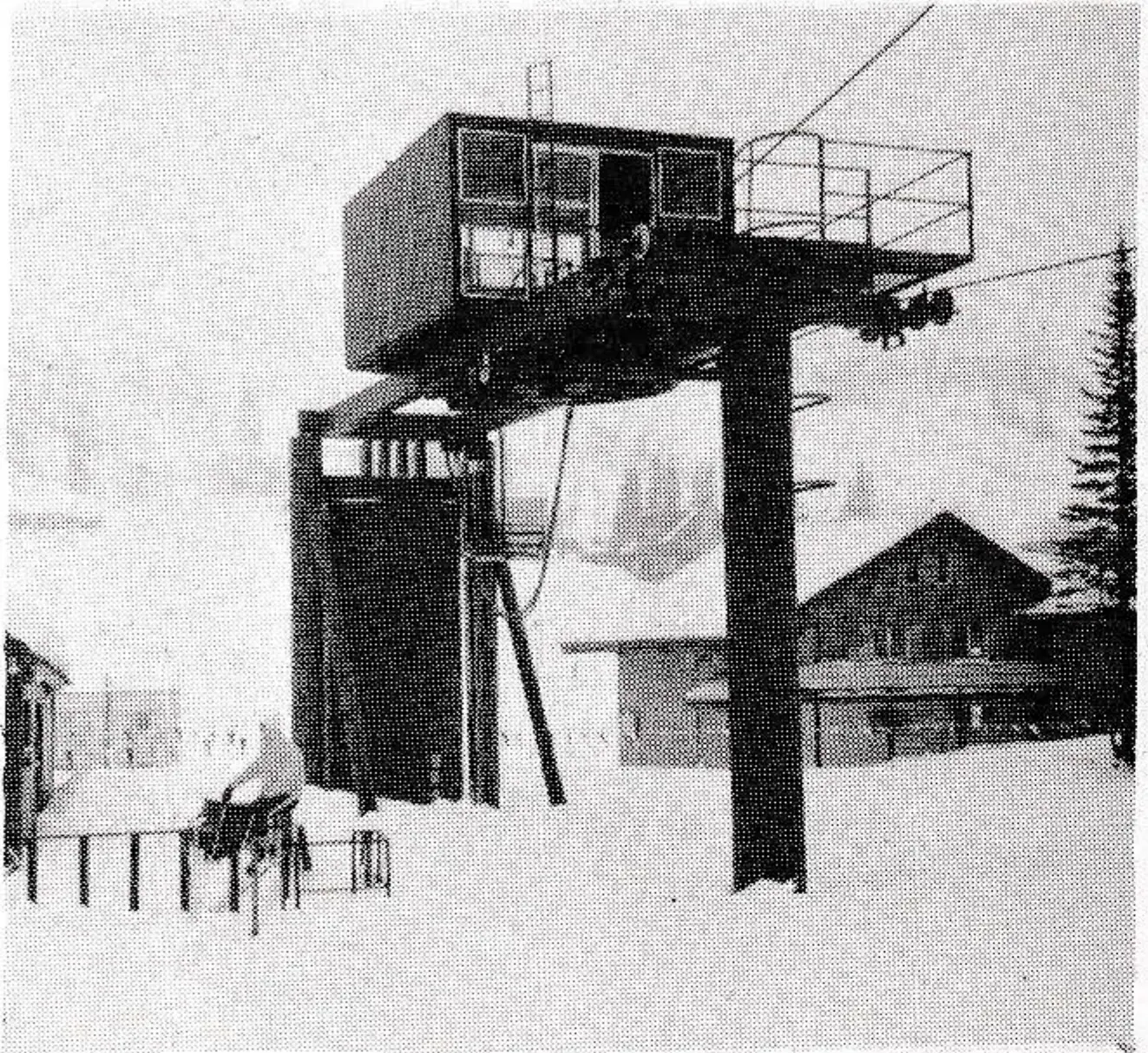
Drive modification. This is initiated to obtain added horsepower; to replace internal combustion engines with electric motors; to replace noisy, inefficient, undependable drive systems; to add speed control, safety devices, and improved speed reduction systems; to incorporate improved (and often mandatory) brake systems.
Terminal modification or relocation. This may include provisions to improve loading and unloading characteristics; provisions for in-line bull wheel loading, bull wheel unloading, and the elimination of high overhead ramps; the stabilization of “floating” return bull wheels; the addition of protective structures for machinery and counterweights; and, the alteration or addition of structures to facilitate operations and improve aesthetic value in the area.
Line structure modifications. This involves alterations to permit installation of intermediate loading and unloading stations; the use of variable height towers at loading points; alterations to relieve undesirable operating characteristics of overheight, low clearance, excessive span lengths; and changes to correct excessive or deficient line sheave loadings.
Carrier modification. This is accomplished with changes or replacements to increase passenger comfort and safety, and modification of grip and hanger configurations to permit incorporation of tower safety devices.
Modification of communication and control systems. This is done to improve operations, passenger safety, and to meet requirements of current codes, standards and industry practice.
Engineering a major lift modification is more complex than an original design. For one thing, the compatibility of new and existing structures and mechanical components must be assured, and frequently the nature of existing equipment is unknown and can be determined only by extensive investigation and testing. For this reason re-engineering or modification may best be done by the original designer or supplier. He has access to design information, drawings, and specifications that have never gone to the customer. He will have access to original or compatible components. When the services of another engineer are used, he should be an experienced tramway engineer having the rare combination of structural, mechanical, and electric capability.
State and federal authorities exercising jurisdiction over tramway facilities often consider major modification as they would a new installation. Relocation, line extension, speed or capacity increases, changes of prime mover or drive systems, change in loading or unloading procedures, and structural changes usually constitute major modifications. Design must be by a registered engineer who accepts responsibility for the modification and its ramification on existing structures, mechanical equipment, and lift operating characteristics. The adequacy of construction must be attested to by a responsible engineer, and complete plans and specifications must be submitted for the modification and those structures or mechanical components affected by it. Post-construction inspection and load testing are generally required.
Timing is critical in any consideration involving major lift remodeling. Advanced planning is essential to permit the design and assembly of materials and components for installation during favorable construction periods and between operating seasons. Unfortunately, lift manufacturers may be reluctant to undertake modification work at periods when their personnel are involved with new installations, and also wire rope, electric drives and controls, speed reducers, and other components may be slow delivery items.
The decision to remodel or replace the aging lift warrants a thorough study and evaluation. It should be undertaken advisedly and with professional assistance in making the determination.