
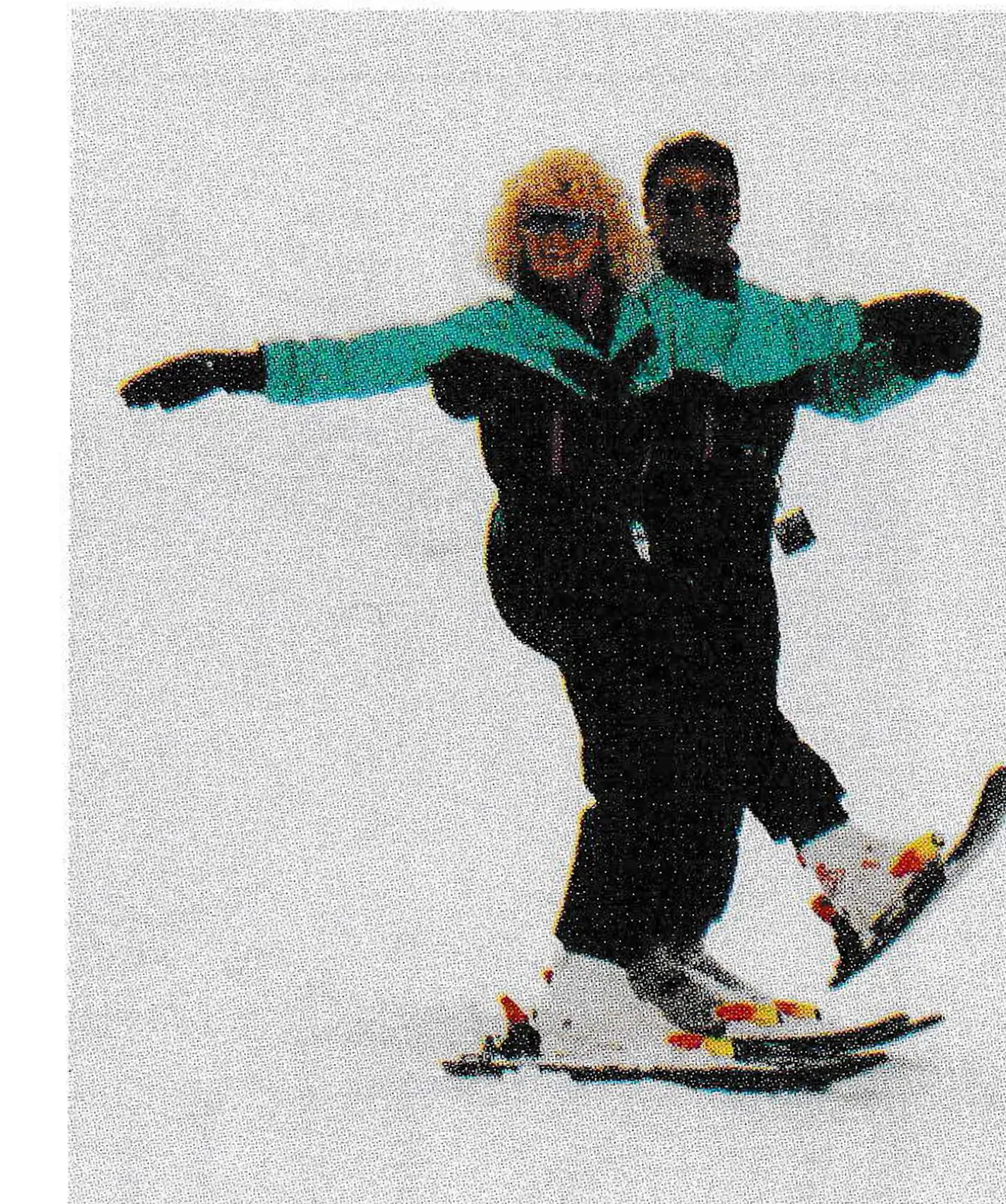
Remember goon skis? In the late 1950s, stunt skiers liked to make super-short skis by sawing the shovels off a pair of old wood skis. If you steamed the skis and turned up the tails, you had a pair of goon skis capable of doing spins, backward motion and other figure skating tricks.
Well, they’re back. At least, new, high-tech versions of the old short skis are here. And marching right along is a generation of specialty powder skis, almost as broad as cafeteria trays.
Atomic has been importing 63cm Figl skis since 1985; two years ago, Kneissl introduced the 64cm Big Foot; and this season, we have the 80cm Gauer 360. With the SnowRunner, the concept of ski length shrinks to invisibility: the ski is the boot sole.
This season, combined United States sales of these products amounted to about 8,500 pairs and distributors expect to ship about twice that many for sale next winter — less than two percent of the combined market for skis and snowboards. Nonetheless, it’s a market worth attention, for a variety of reasons.
While most experienced skiers tend to sneer at “shoe skis,” many coaches and instructors have used super-shorts for years as tools for teaching advanced students and racers to achieve a centered stance. With no lever to lean on either fore or aft, it’s pretty obvious that if you don’t load the arch or heel accurately, you’re going over onto your nose or bum. Doug Leavitt at Atomic says that the vast majority of Figls his company has sold over the past eight years — about 300 pairs a year — have gone to coaching programs. “It’s a grass-roots, cult thing,” he says.
While Kneissl’s Big Foot is pitched at a much broader audience (the company claims 52,000 pairs will be shipped into the Austrian market next year), Ski magazine testers report that the deep-sidecut snow-skate forces a skier not only to ski centered, but to carve an efficient turn on the edge. Good skiers note immediately that the Big Foot is unstable when ridden flat — the solution is to edge and drive the ski like a hockey skate. Kneissl’s John Esterbrook expects Big Foot sales to double this season, from the 3,000 pairs shipped last year.
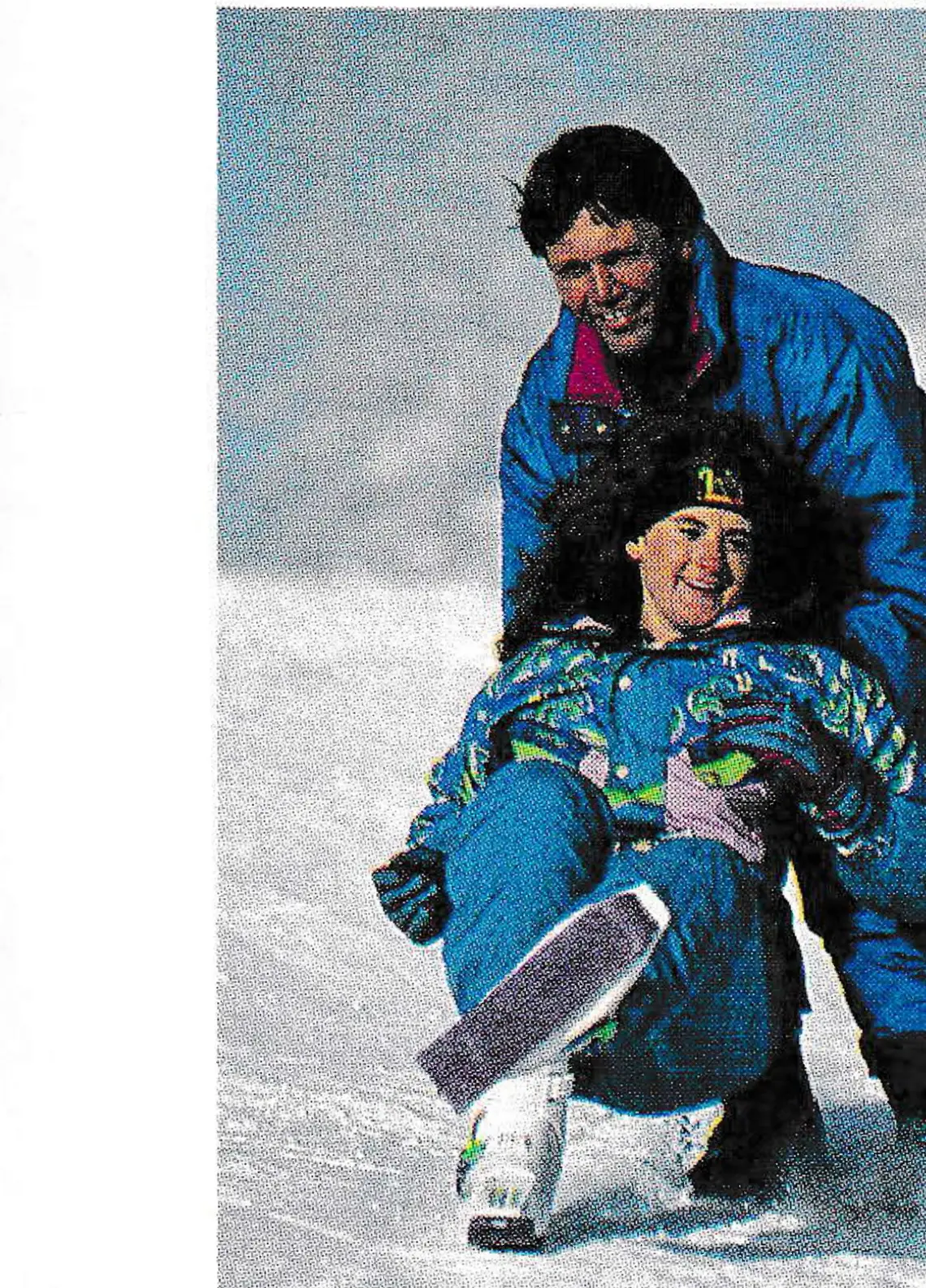
At Gauer Sports, Becky Kern hopes to earn a PSIA endorsement of their ski as a teaching tool and is aiming at having the ski in use at rental operations at 10 to 20 ski areas. The company is so new that it has not sold a significant number of skis at retail, but independent testers report that the stiff, heavy skis are easy to balance on and are much more stable than other short skis. Skiers can duplicate skiing maneuvers, do skating tricks or invent their own stuff. Because they are easy to use and offer versatility, the potential for capturing drop-outs, older skiers and less-athletic never-evers is a possibility. Many first-time users say the Gauers are more like dancing than skiing.
In the U.S., the most successful product in terms of units shipped is the SnowRunner made by Italy’s DalBello boot company, which also manufactures less expensive Raichle models. SnowRunner’s David Peri expects to ship 10,000 pairs next winter, half of them to rental operators. “This is not a diluted form of skiing,” he points out, “but a sport that can stand alone. It appeals to inline skaters and also to folks who don’t like the barriers to traditional skiing — high cost, complex equipment, potential for injury and a long learning curve.” Rental shops typically put SnowRunners out for $8 to $15 a day and Peri reports they can make their product investment back in seven to eight days. “Some shops do multiple daily rentals,” he says. “We’ve seen a single pair go out three times in a day.”
Should you provide super-shorts for rental in your own operations? Aspen’s John Reveal thinks so. “Skiing on these things [SnowRunners] is actually a hell of a lot of fun,” he says. “Yes, they carve a deep groove in the snow, but it’s no worse than what a snowboard does. We ask people on the shorter skis to stay on groomed runs, mainly because folks on SnowRunners sink into the snow up to the crotch when they get into deep snow or hollow spring snow. Then they either walk down, making postholes, or roll down the slope.”
Figls, or firngleitners, which were originally designed as packable skis for mountain guides to use descending glaciers in the spring and summer, and Big Foots don’t pose that problem. They’re wide enough to float on a couple of inches of slush or even powder.
The other problem Reveal notes is that super-shorts promote a different type of group dynamics. “People can ski very close to each other, so you get a kind of dog-pack effect,” he says. “It can be intimidating to other skiers. Alpine skiers tend to line up tip-to-tail, snaking downslope in a line. Snowboarders tend to move side by side. Big Foot and SnowRunner skiers move in a big flock.”
Because the numbers are still small, most ski areas haven’t yet formed a policy on super-shorts and the tendency is to welcome them. Safety doesn’t seem to be much of an issue — the super shorts don’t exert much leverage on the leg and they come equipped either with standard ski brakes or safety straps. Except for the SnowRunner, all have steel edges, and even SnowRunner concentrates so much pressure on its edges that purchase on hard snow is good.

“We’ve seen only a handful of skiers using them and we allow them,” says Mark Menlove of Park City, Utah. “We’re still studying them,” says Pam Murphy of Mammoth Mountain, Calif. “We allow the Big Foot at June Mountain and will make a decision this month about using super-shorts at Mammoth.” “We have no policy on super-shorts,” says Kristen Kopplin of Copper Mountain, Colo. “We allow SnowRunners and they’ve done demo days here with no problems.”
Most distributors see demos and rentals as the only efficient way to sell their super-shorts. SnowRunner’s vans have reportedly put 20,000 people on the product over the past couple of winters and Kneissl’s Esterbrook says that skiers always scoff until they try the Big Foot. “We’d like to build a tougher binding and get the ski into rental,” he says.
Meanwhile, the success of Atomic’s Powder Plus fat ski (about 3,000 pairs sold this past year) has inspired a ferment of imitation and innovation in the powder ski market, long regarded as a closed-end niche. Rossignol, Evolution and Wolf, Kneissl, Elan, Lacroix, Miller and Research Dynamics have all introduced some sort of extra-wide powder-and-junk ski. So has a start-up called Odyssey.
“This market is going to prove much larger than anyone predicted,” says Mike Brunetto of Wolf, designer of the Evolution/Wolf fat ski and original owner of Research Dynamics. Doug Leavitt at Atomic agrees. “Folks have been offering big premiums over retail just to find a pair to buy,” he says.
Heli-ski operators from Canada to Nevada say that the fat skis saved their business — they can fly up to twice as many people and ski them all day instead of seeing skiers poop out at noon. “We don’t make money when we don’t fly,” points out Marty Neudegg at Canadian Mountain Holidays.
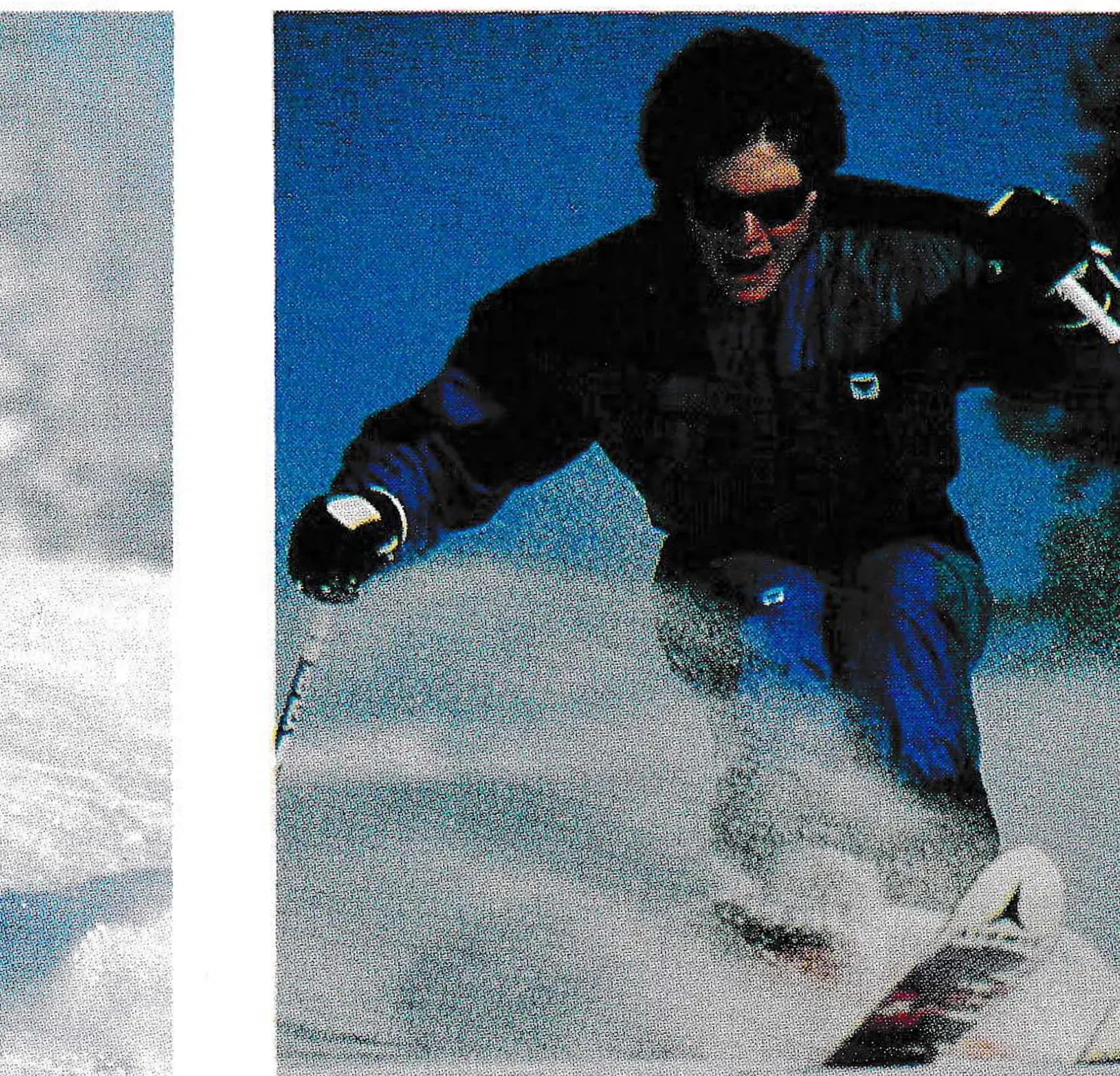
Fat skis are up to 140mm wide at the waist (compared to 70mm for the traditional super-wide powder ski). What the fat skis do is float on the top two or three inches of snow, instead of sinking deep. An intermediate skier can use his or her normal skidded-turn technique on the surface instead of having to learn curved turns with skis invisible in the depths.
Primary market for retail sale is two-fold: the spouses of committed powder-hounds, who can now follow along happily, and aging jocks who want to be able to ski powder all day long, just like they usedter (the demographics of the older powder skier seems very similar to the profile of masters racers — 35 to 70 and leathery-tough).
The Lacroix, Research Dynamics and Evolution/Wolf fat skis are close approximations of Atomic’s winning formula. Kneissl and Elan have evolved very deep sidecuts, skis twice as wide as normal at the tip and the tail for good float, but with the very narrow waist of a modern slalom ski. The result is a ski that holds and carves a quick conventional turn on hard snow and in bumps. The Miller ski is a wider version of the time-tested Miller Soft and Rossignol’s Axiom — still in development at press time — is apparently a longer “mid-width” ski. The Odyssey is also a mid-width ski. Atomic-style skis run about 180-185cm for men, 160-165cm for women; the Elan goes to 203cm for men.
In use at Western ski areas this past winter, the Atomic Fat Boy greatly expanded the use of woodlands and the population of tree skiers exploded. If sales of fat skis balloon from 3,000 pairs a year to 30,000, ski patrols will have to sweep the woods more carefully after every powder day.