A Clean Fire
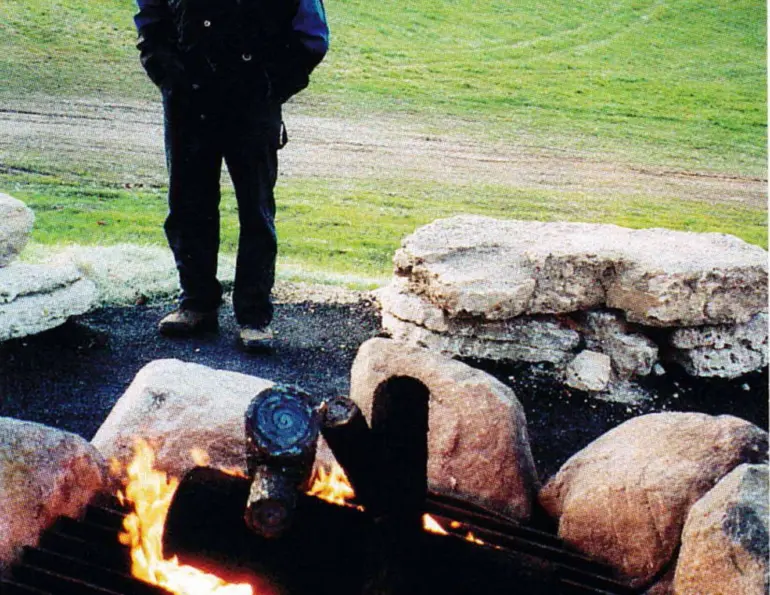
The new grate was custom made in the lift maintenance shop as were the steel logs that were molded from an old snowmaking pipe. The logs were even “flame etched” to look like real logs with bark. Similarly, age rings were added to both ends of each log.
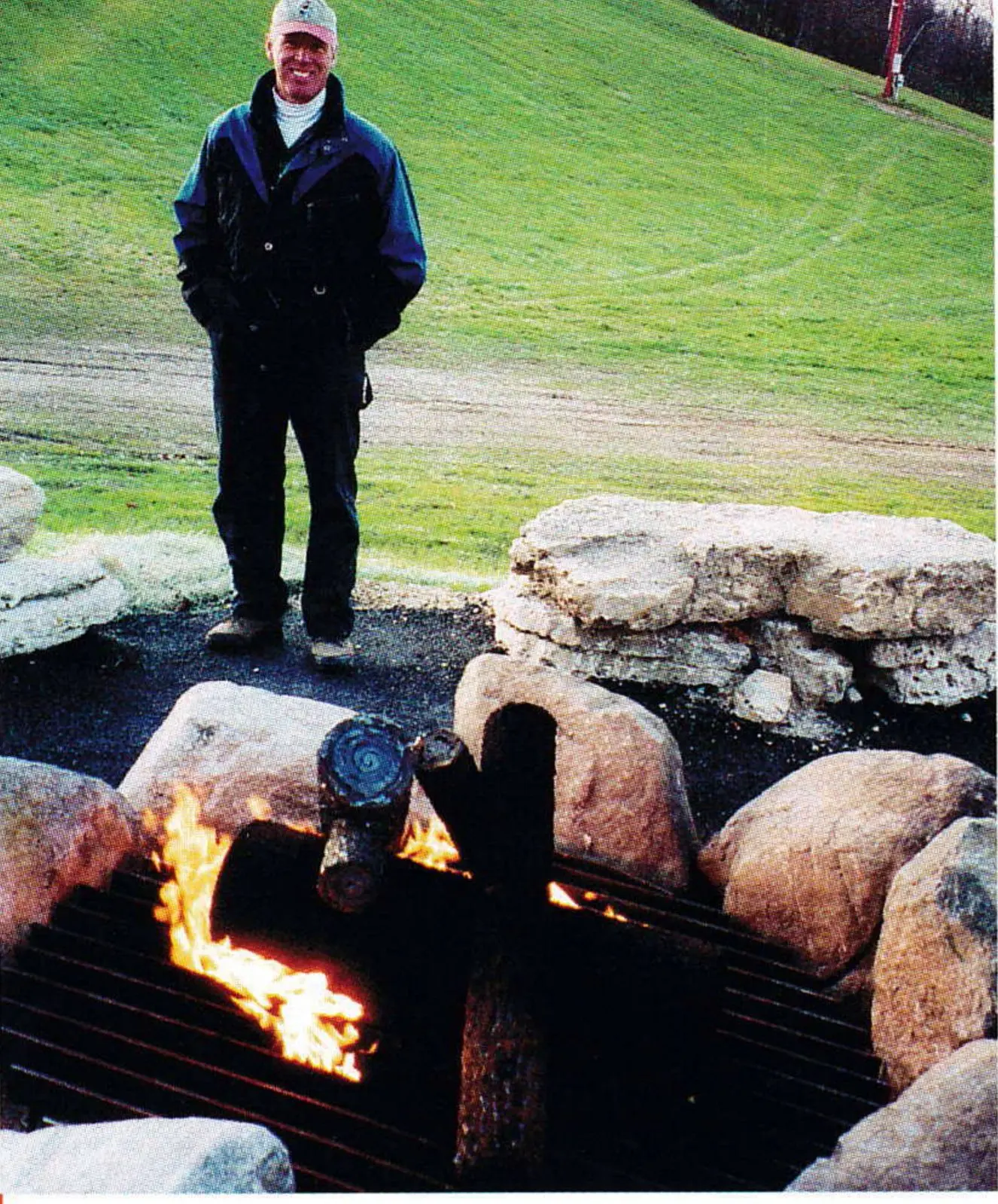
The 24-inch gas ring was purchased in Milwaukee at The Fire Place (414-527-0400). A 100-foot-long buried gas line feeds the ring from an enclosed LP tank, and a thermo-couple, like the ones used on home furnaces, was added to the gas ring. It will automatically and conveniently shut off the gas supply should strong wind blow out the fire. All controls have been installed inside a 12-inch by 14-inch weather-tight box, which is anchored to the surrounding rock fireplace.
This year, Sunburst is a “smoke-free” ski area—keeping both kids and parents happy.
Moving Railings
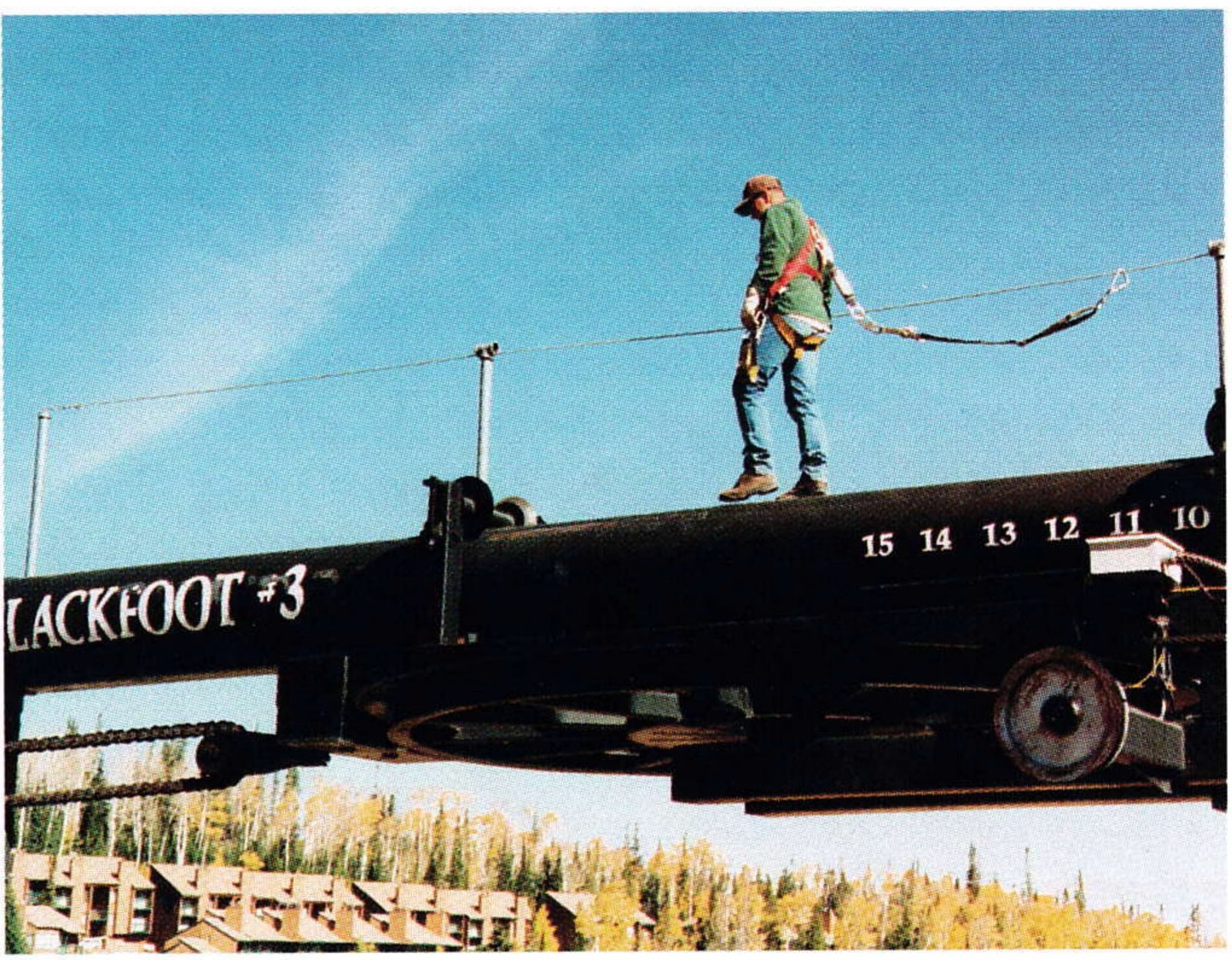
The lift maintenance department at Brian Head, Utah, was looking for a fix for the slippery, as well as dangerous, job of shoveling snow off their adjustable bottom tension terminals. Clearly, a railing of some kind was needed, but while one portion of the terminal is stationary, the tension carriage is free to move with the counterweight.
The final solution was to add a 5/16-inch vinyl-coated aircraft cable—7 by 19 GAC—secured at both ends to the stationary front and rear of the terminal. The cable has a breaking strength of 9,000 pounds. It is supported and guided on the movable carriage by welded pipe tees, fixed to the top of 3-inch by 40-inch pipe posts, allowing the carriage to move through the cable system. The end posts have welded eyes, which secure the cable.

While the original intent was to simply use the cable as a handrail, it is now also a tether point for safety harnesses.
Snowtube Park in a Day
The U.S. Army moves swiftly these days, not only in Afghanistan, but in Alaska, where a snow-tubing park was built in one day this fall at Fort Wainwright’s Birch Hill Ski, Snowboard and Snowtube area.
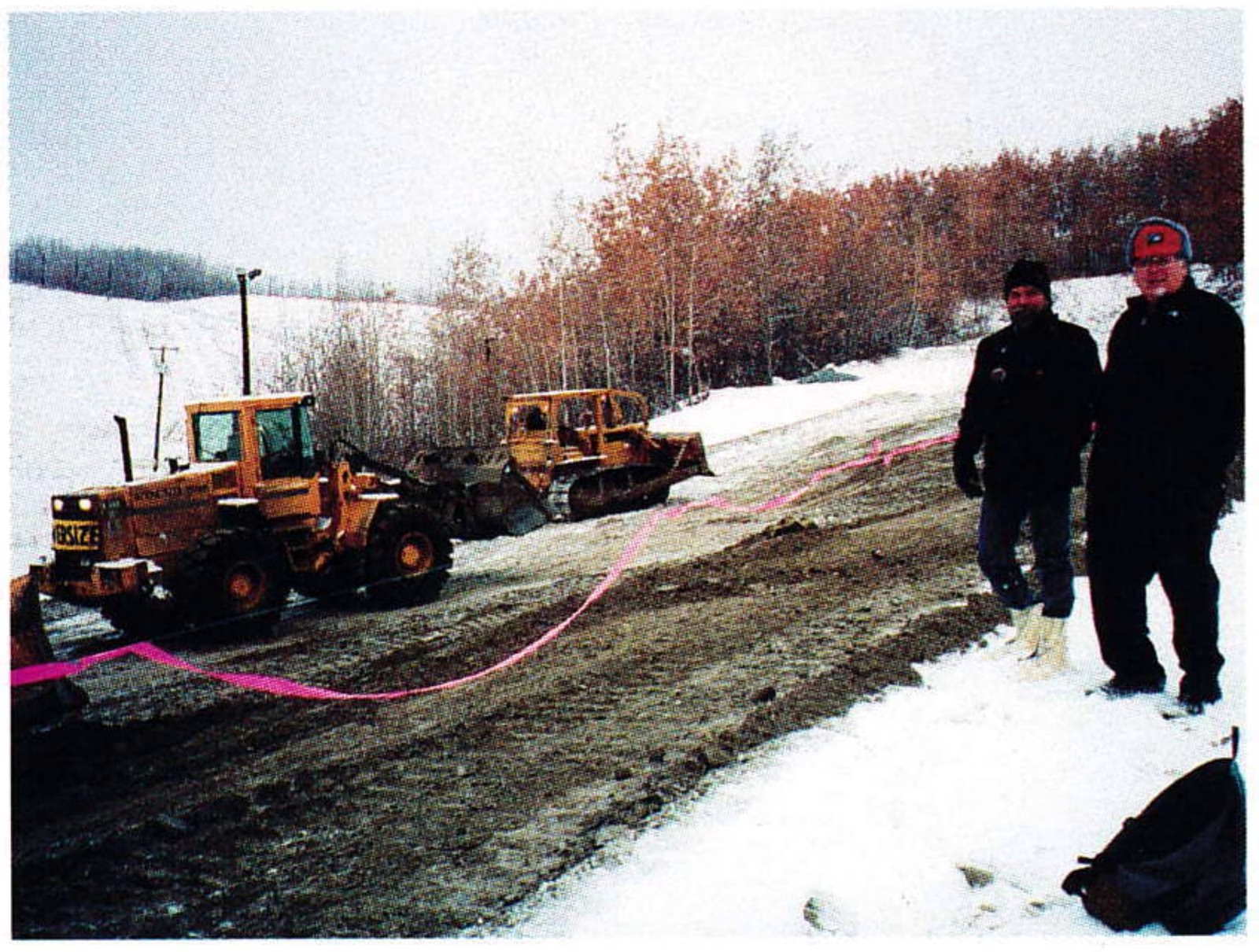
When area manager Harry Johnson (on the left with outdoor recreation director Charlie Hunt) got the O.K. to construct a snowtube park on the post in late August, nighttime temperatures were already below freezing. Jeff Skeels, mountain manager, saved time by first installing the Multi-Lift handle tow and grading the hill profile later to match the lift line. This “cart before the horse” approach saved valuable time and money.
To install the lift, Skeels ran a 1/16-inch steel strand in the space between the two bullwheels where the haul rope would go in later. The pink ribbon shown was wrapped around the thin strand to make it more visible. The correct tension was found by measuring the sag at mid-point between the two bullwheels. To do this, an M16 rifle scope was held at one of the bullwheels, reading the values at the measuring stick’s mid point. In this case, the correct tension at 600-foot slope length equals an eight-foot sag in the middle. A team of two bulldozers and a front-end loader graded the lift-line profile by following the ribbon-covered strand. The lift-line profile and the snow tube runs were finished in a matter of hours.