Photo: Claire Walter
Brill, 30, is the idealistic founder, builder, guiding spirit and president of Silverton Mountain Ski Area, a daring anti-resort in southwestern Colorado. Silverton has the potential to put the entire ski industry on notice that tame, super-manicured, snowmaking-intensive, condominium-rich mega-mountains aren’t the only way to go. It might just be an idea whose time has come.
Brill describes the mountain as “a lift-served backcountry area,” with no conventional amenities, no novice terrain (in fact, not even any blue-square terrain), no grooming, no ski school, no fancy food service—in short, no frills. During the two-summer construction period, Brill and a handful of helpers—many of them volunteers, eager for just such a place to ski and ride—hand-cut trees for the lift-line, used shovels to dig holes for 15 tower foundations and performed countless other large and small tasks.
As this issue was completed, Silverton Mountain was scheduled to open before Christmas. Still, for more than a year before the Colorado Tramway Safety Board was to sign off on the lift, even before the Bureau of Land Management (BLM) would put its stamp of approval on the operation, Silverton Mountain was regularly snaring to-die-for publicity.
Mountain Gazette wrote of Brill, “This young man plans to do something about the corporatization of skiing, but you will not see him picketing the slopes or sabotaging corporate ski areas.” Powder rhapsodized about “killer stash” and predicted that Silverton Mountain “has the potential to change the face of skiing in the U.S.” calling it “America’s La Grave.” Couloir noted that, “the area will cater to skiers and riders who want steep, ungroomed terrain, lots of snow and reasonably priced lift tickets.” Ski observed that, “the mellowest [runs] tilt ‘only’ about 35 degrees—steeper than The Plunge at Telluride, steeper than just about any inbounds skiing in the U.S.” A tantalizing picture of a lone snowboarder at the nascent area graces the cover of the latest Back Country Magazine.
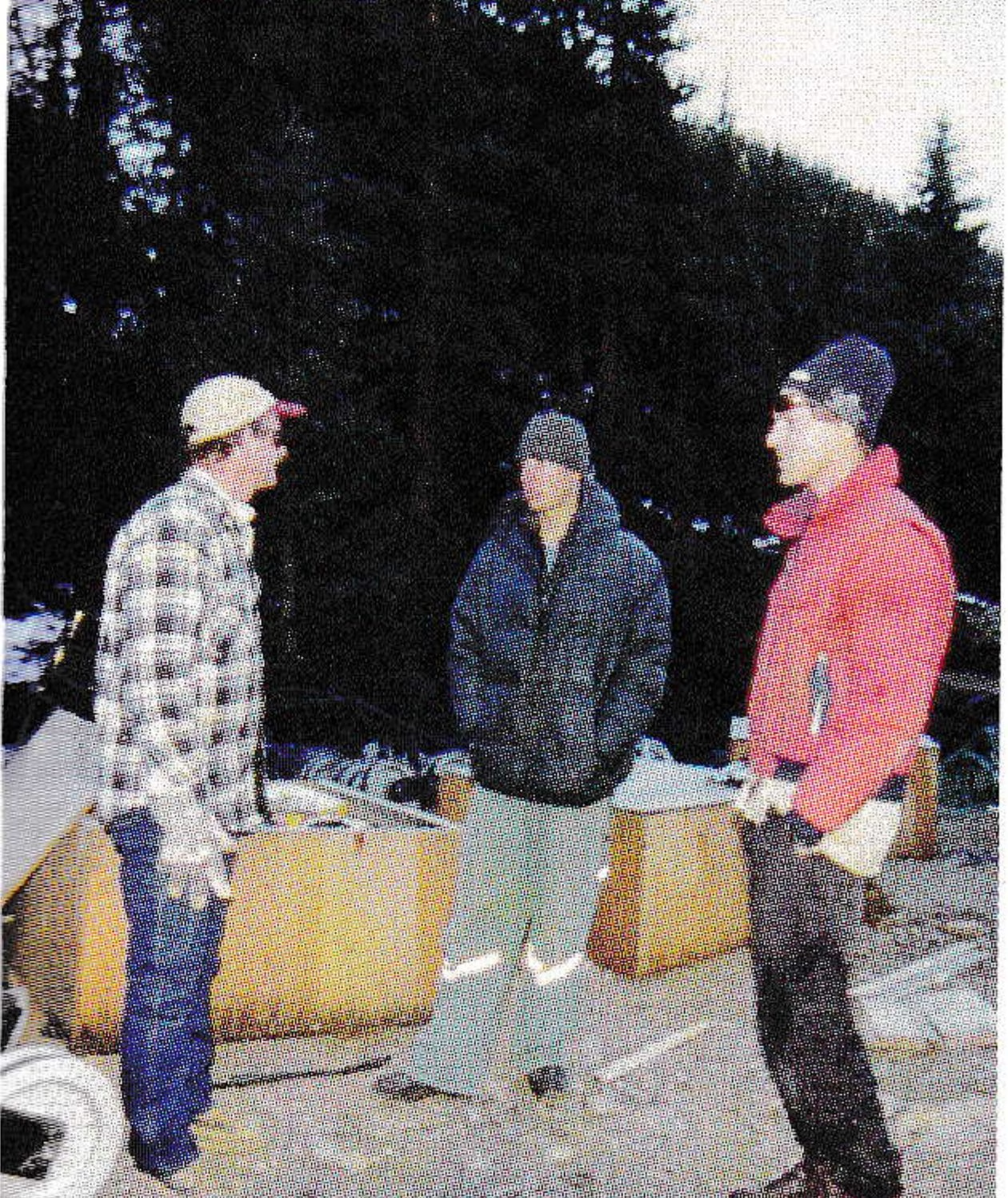
Photo: Claire Walter
Brill clearly has hit a chord. Last winter, 250 people paid for guided skiing to preview the terrain, and www.silvertonmountain.com was getting 60,000 hits a month in summer and racked up 100,000 in November. The Website’s images of drop-away slopes blanketed in soft, seamless snow and the promise of “the steepest, most powder-filled skiing this side of Valdez, Alaska, for only $25 per day” is apparently resonating with skiers and snowboarders.
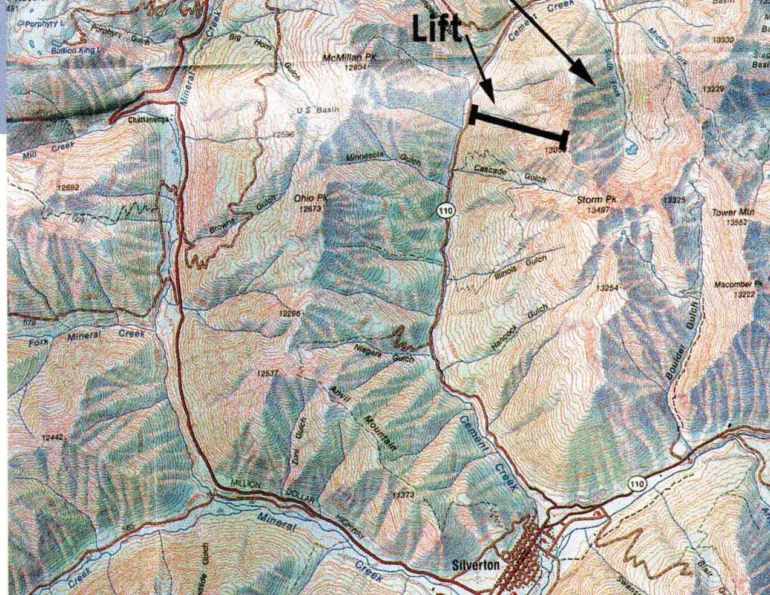
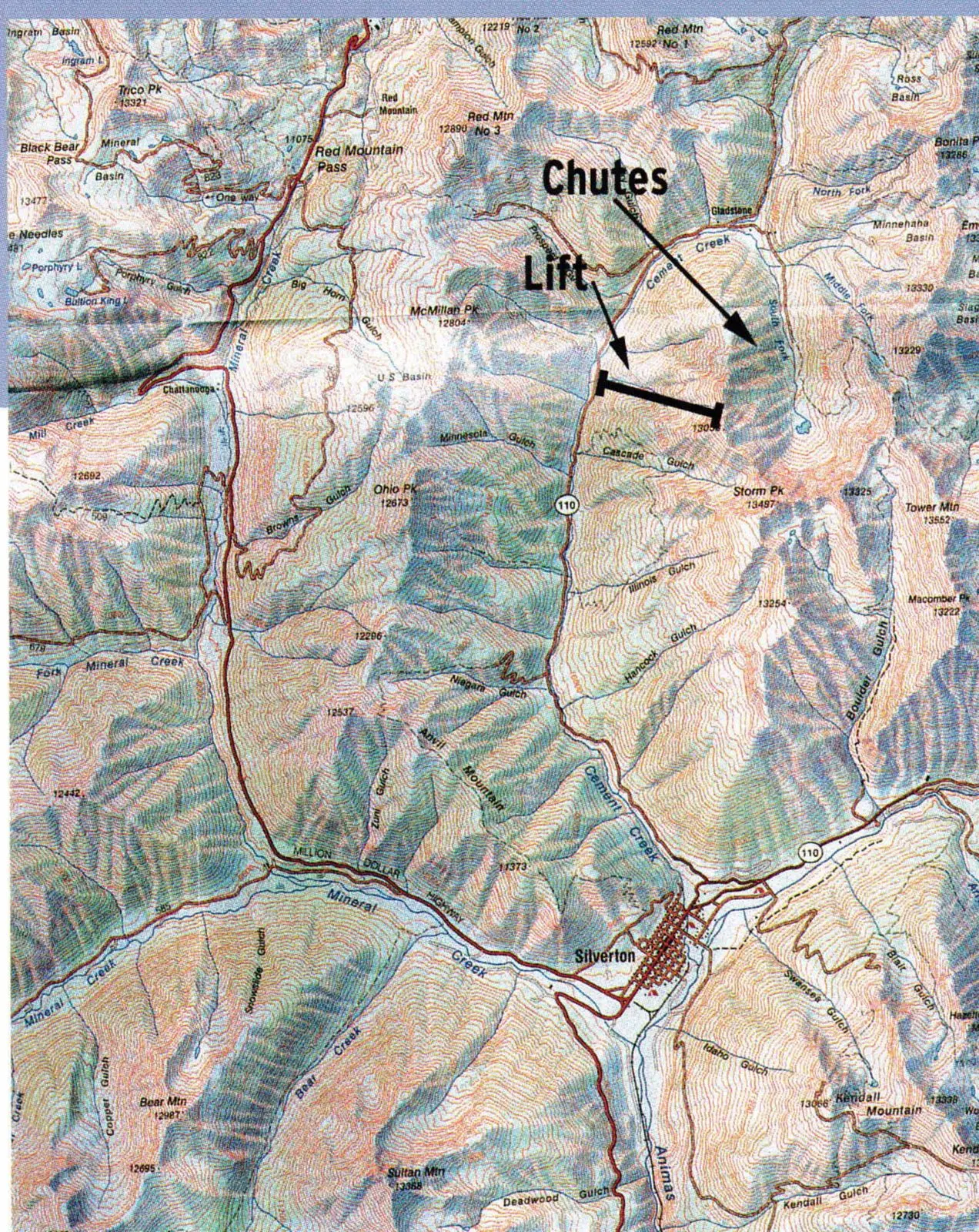
Silverton Mountain Ski Area is a marketing name for terrain off Storm Peak’s north ridge. The ski area has 344 acres of private land and a base right beside a plowed road. The opening-year infrastructure consists of a double chairlift, a 1,200-square-foot heated tent and a couple of portable potties. Brill has a county permit for a 2,200-square-foot base building and 10 simple overnight cabins, but those will be built in the future.
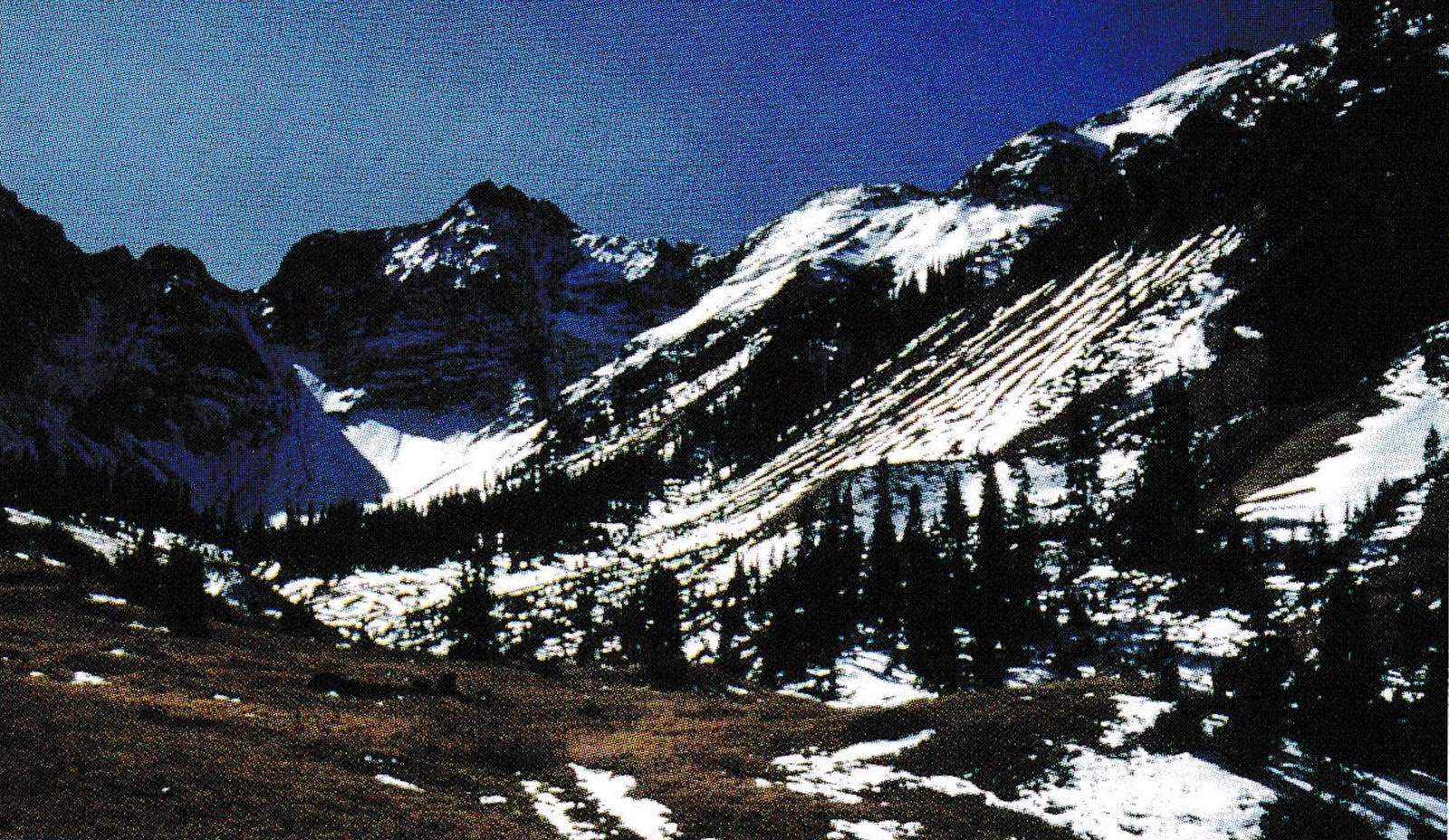
Photo: Claire Walter
The vintage 1973 double chairlift from Mammoth Mountain, Calif., cost $20,000—loaded on trucks. Mammoth, which had replaced five lifts in two years, initially wanted $100,000, but had no takers. The Forest Service, landlord of the land on which the lift sat, finally said, “get rid of those lifts.” That’s how Brill got his bargain. He installed it this fall with minimal blasting and had the towers set by helicopter. Because it is all on private land, Brill could have built a road, but he is as philosophically opposed to running a grader over his real estate as he is to cutting one more tree than necessary. When he’s asked how much the whole place cost, Brill only says, “less than a condo in a regular ski town.” He has two partners, but he’s running the show.
And what a show it is. From a 10,250-foot base, Silverton’s chairlift ascends the west side of a forested ridge and unloads well above the treeline at a 12,247-foot saddle—plus almost 1,000 more vertical feet of hike-to terrain. The view across the valley is of the venue where, from 1981 to 1983 and again in 1991, America’s only true speed-skiing competitions were held. The view straight down is of radical, east-facing chutes and slopes into Velocity Basin, a huge north- and northeast-facing cirque.
Photo: Claire Walter
It is here, on 1,300 or so acres largely administered by the Bureau of Land Management, that Brill wants to add skiing. The easiest runs average 32 to 35 degrees; the steepest sections are 60 degrees. Access to this paradise is what the area will be all about. Cement Creek flows out of the big basin past the shuttered Sunnyside Mine and then past the ski area base. The ski-out is along the creek to the end of the plowed road with a shuttle to take guests back to the lift. (At present, Brill says he has no plans for a backside lift.)

In order to access the cirque, Brill had to get BLM approval, and while other government reviews passed with relative ease and few objections, the final OK did not come until late November. They picked the second of two operating plans proposed by Brill. The first would have run the lift Sunday through Thursday, plus holidays, and sell a $25 lift ticket to a daily maximum of 475 skiers or riders, who would have to pass a test to prove their basic avalanche knowledge. Also required under this proposal is a Colorado hiking pass ($3 a year, which funds backcountry rescues), an avalanche beacon, a probe poles and a shovel (low-cost rentals available). Guides would be available for those who didn’t pass the avalanche test.
However, with such steep slopes, numerous inbounds slide paths and a stunning 400 to 600 inches of annual snowfall, Silverton’s avalanche potential led the BLM to choose the second scenario: Only 20 people a day to go out with guides at $99 per person. Of the 10 criteria determining whether an EIS or merely an EA is required, one is public safety, and the BLM ultimately concluded that a year of conservative use was called for.
The BLM issued an outfitter and guide permit, setting the stage for the second operating mode. “Safety wasn’t an issue. It was the issue,” said Richard Speegle of the USFS/BLM district field office in Durango.
Not being allowed to operate under the first scenario might have been a blessing in disguise for Silverton because the BLM warned that if a skier or rider is caught out of bounds, the area—not the violator—risks a $1,000 fine. By allowing only 20 people a day with a guide, the area is able cut down on this risk.
Mindful of the hazards, Brill is putting a premium on snow safety, and he knows the territory. He and a small core team have run the Colorado Outdoor Learning & Recreation Center on that very terrain, with courses on avalanche training and other backcountry skills. In fact, the area is now in its third year of an avalanche study permit. Under full operation, Brill plans for at least eight patrollers on a snow safety squad captained by Pat Ahern, whom he lured from (relatively) nearby Telluride. Additionally, Liam Fitzgerald of Alta, Utah, Doug Abromeit of Ketchum, Idaho, and Craig Sterbenz from Telluride are consulting for the BLM on snow safety issues.
Silverton Mountain takes its name from a former mining town six miles down the road. Since the Sunnyside Mine closed in 1991, the town has been best known as the northern terminus for the Durango & Silverton Narrow Gauge Railroad, a successful tourist attraction that delivers 150,000 sightseers each summer. The population shrinks to fewer than 500 souls, and just about the only jobs are with the town, the county or Durango Mountain Resort, 28 miles farther south. Owners of Silverton’s 10 lodging properties and a handful of restaurants, bars and shops open year-round are anticipating business that Silverton Mountain might bring, and Brill could potentially tap into the summer tourist market with scenic chairlift rides.
Young though he may be, Brill is a throwback to the pioneers who made American skiing. The current skier/rider generation is plugged into his concept, and an earlier generation—people like Ernie Blake, Dave McCoy and Walt Schoenknecht, who dreamed original dreams and made them come true—would surely approve.