


Take to heart how much the mainstream ski press highlights resort “amenities,” and you’d think that unless your area installs the world’s first 12-passenger high-speed lift and blankets the lower third of the mountain with fractional-share condos, it’s near impossible to stay alive, let alone thrive. The reality is, many small and basic ski areas in the U.S. are humming along, providing increasing numbers of skiers and boarders with family-oriented, close-to-home days of fun.
Their success is built on a combination of basic business principles and smart diversification. Typically, the four areas profiled here owe their success, in varying degrees, to driving high utilization rates through strong ski school programs and established terrain parks, and to revenue-generating nonskiing businesses. But all say that their ongoing ability to provide terrific customer service is what ultimately matters most.
Ski Sundown
Located in northwestern Connecticut, Ski Sundown, with just 15 trails on 65 acres of skiable terrain, holds it own against larger ski areas in Massachusetts’ Berkshire Mountains and southern Vermont. Compared to five years ago, visits are up 10 to 15 percent. Sure, there’s a large nearby population base—owner and general manager Bob Switzgable estimates that about 4 million people live within 60 miles of the ski area—but that alone wouldn’t guarantee success, let alone growth.
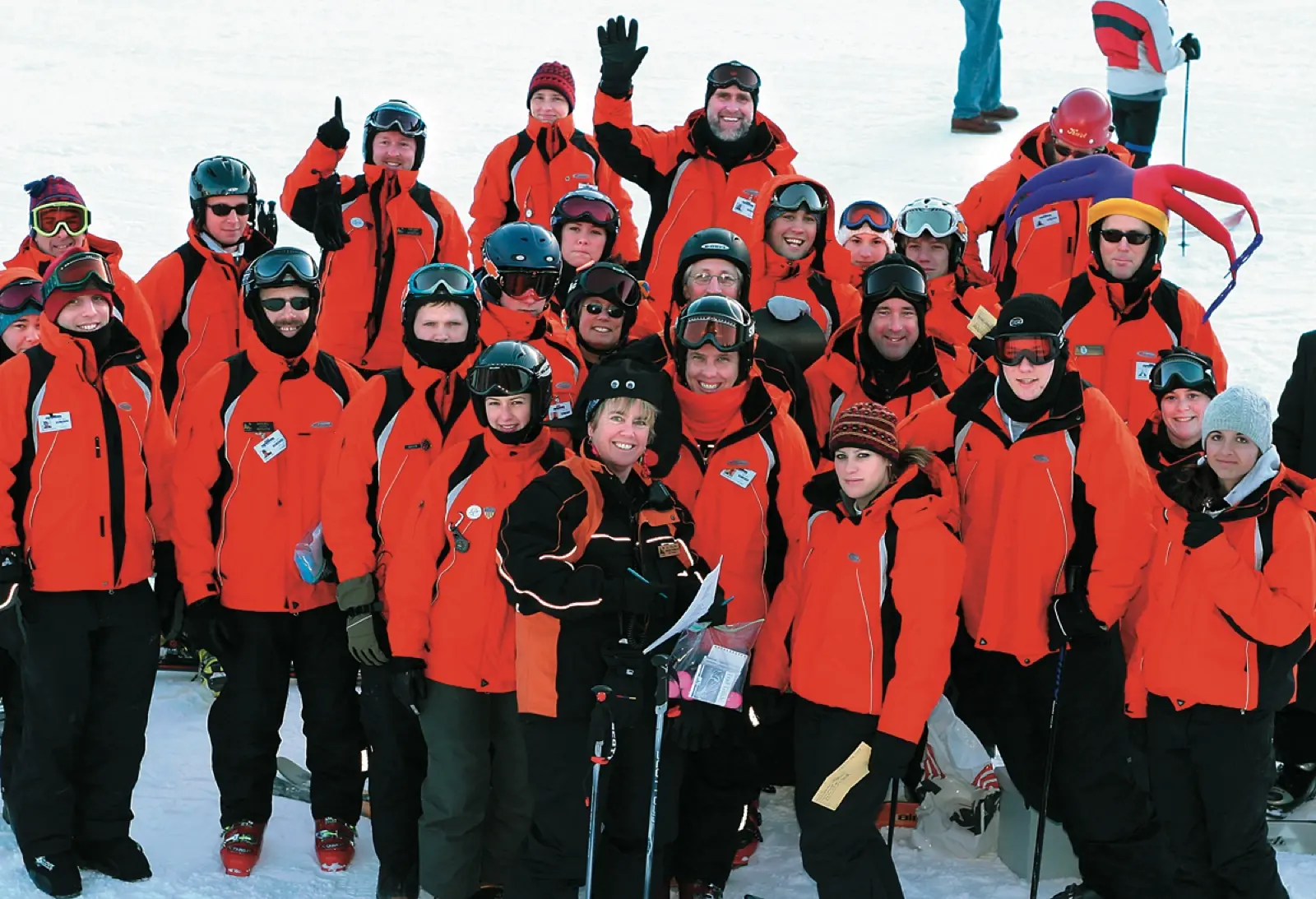
Photo courtesy of Ski Sundown
A legacy of smart management has accompanied Sundown since the area opened in 1969, with a staff of two and four trails. “As long as I’ve been here, the place has been a success,” says Switzgable, who started 20 years ago at Sundown as a snowmaker and eventually bought the area in 2002. The area compensates for its short season (100 days average) by staying open seven nights a week.
Sundown actively promotes its extensive snowmaking, which is essential. “We have weekends where we’ll get two or three inches of rain and get washed out, and we’re back in business the next day,” says Switzgable. “We can make snow on 100 percent of the mountain overnight if we have to.” Sundown then e-mails its database of 15,000 customers with a photo of the mountain post-snowmaking. It never fails to impress, and the overall strategy seems to be working. “Last year was really warm in the beginning,” recalls Switzgable, “and then it turned freezing cold. But we still had a very, very solid year.”
To accommodate customer growth, the area added 5,000 square feet to the base lodge in 1996 and an additional 3,000 last winter. The rental shop doubled in size a few years ago, and terrain expansion is a possibility.
Switzgable credits Sundown’s terrain park, in part, for bringing in guests; it has no halfpipe. “We used to consider ourselves a feeder area, but now that we’re doing so much more with terrain parks, kids can do the same thing here that they do up north,” he says. The ski area, with only 625 vertical feet, draws young jibbers from not only Hartford but also southern Connecticut and New York.
“This year we’re committing a whole trail to the terrain park,” says Switzgable. “We’ll have a dozen rails and several hits—our plan is to come up with three different versions and keep changing it during the season.” Sundown also hosts competitive events in the park on Friday nights, as well as big air competitions and a rail jam. And park neophytes can find smaller features on an easier trail this season. Notes Switzgable, “We’re really trying to push progression.”
That emphasis on teaching and progression reflects the commitment of Sundown’s ski school. For the fourth year in a row, a Sundown instructor has been named to Ski magazine’s annual list of 100 top ski pros. The popular multiweek kids’ programs typically sell out by Thanksgiving.
Fittingly for a small area, attention is lavished on beginners. “We have people right where you enter the area, and they are looking for people who might not know where they’re going, to help them through the process,” says Switzgable. Evaluation cards handed out after beginner lessons include a discount coupon for the next lesson.
More than anything, Switzgable attributes Sundown’s success to its customer service. “I am convinced that it’s our employees that set us apart from everyone else,” he emphasizes. Of the area’s 350 staffers, a majority return each season. And great service translates into loyal guests. Notes Switzgable, “Even if they can’t put put their finger on it, they walk away with fond memories, and I know that brings them back.”
Hyland Ski and Snowboard Area
The Gap or PacSun might not say “snowy winter slopes” to you, but then you’ve probably never visited Hyland Ski and Snowboard Area in Bloomington, Minn. “You could throw a rock from here to the Mall of America,” says Hyland’s general manager, Fred Seymour. Thanks to its location near the shopping mecca, and less than a half hour’s drive from the Twin Cities, Hyland posted a record 161,000 skier visits last winter.
The area’s modest stats—35 acres of skiable terrain and 175 feet of vertical—don’t explain why visits have increased almost every year over the past decade. A consistent draw is Hyland’s ongoing ski school programs, most of which run for four consecutive weeks; kids’ programs sell out for the season before the area even opens. Hyland sold 34,000 lesson packages last year, according to Seymour, and about 70 percent were reserved through the area’s website. To meet the demand, the ski school employs almost 300 instructors.
The ski area opened in 1955 as the Mount Normandale Ski Lodge, then was purchased by the Three Rivers Park District, which still owns it today. The park district installed snowmaking, which covers 100 percent of the area, and built the large base chalet—since remodeled—in the early 1970s. New this season are a Magic Carpet lift and a quad that replaced one of the three triple lifts. Not only does the ski area support itself, but it also contributes revenue to the park district’s general fund, which helps maintain 27,000 acres of park land.
Seymour believes the area’s family-friendliness is an important component of its success. “We’ve very kid-oriented,” he says, “and the whole ski area is completely nonsmoking. Because we’re so close [to the Twin Cities], parents can drop their kids off. It’s not unusual to see 8-, 9-, and 10-year-olds out here by themselves.” Hyland’s Hot Cocoa Club, geared toward skiers ages 3 to 4 and their moms, is another popular program. To accommodate the moms, these parent-and-child lessons are timed specifically to fit into family schedules.
Hyland also focuses on youth through its terrain park and halfpipe, as well as its race programs (teams from 11 area high schools practice at the mountain). Because the park and pipe are so popular, Hyland plans to add some terrain features elsewhere within the ski area. And the ski area stays open every night of the week.
Perhaps surprisingly, Hyland doesn’t do much advertising, other than direct-mail brochures. “We rely heavily on word of mouth for our marketing,” says Seymour. “Kids start off with us at a very young age, and now we’ve got two, three, four generations of people that have learned to ski with us.”
Though skier visits were annually increasing by about 10,000 over the past few years, Seymour admits that “161,000 took me aback a little bit. But we had really good early season sales. Early snow and really cold weather got people fired up.” And he anticipates that “we’ll be in that neighborhood again” this winter. Despite the growing numbers, Hyland can’t expand much beyond its current size, as legislation dictates that only 20 percent of Three Rivers Park District land can be used for active recreation or education.
That leaves Seymour and his winter staff of 500 even more determined to focus on another of Hyland’s strengths: guest relations. “We really concentrate on customer service and on taking care of kids,” Seymour says. “We’re creating an environment that’s fun and safe for them, and they keep coming back.”
Hoodoo Mountain Resort
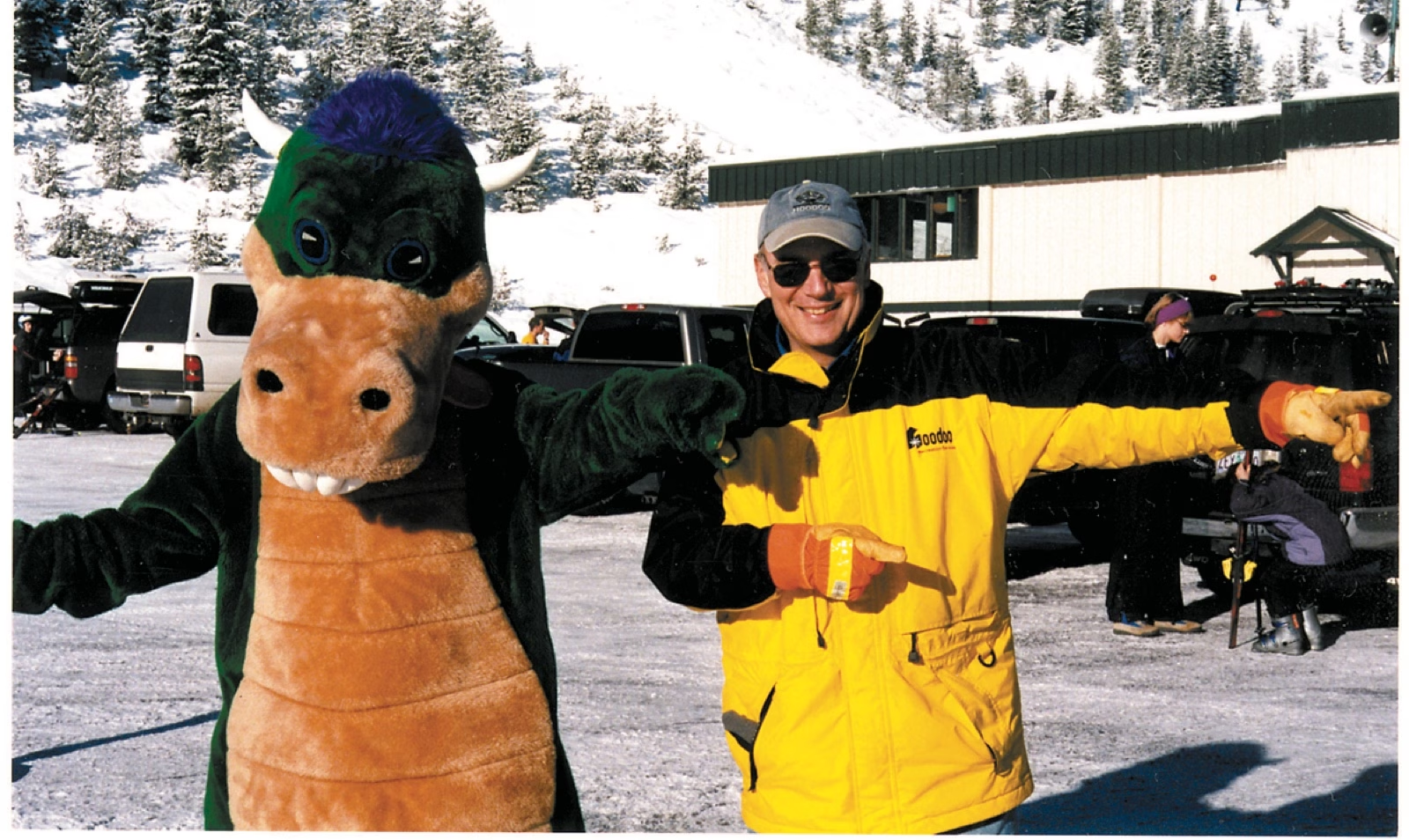
Chuck Shephard’s success with Hoodoo shows how much of a difference an owner can make. To call him a hands-on owner would be an understatement. On Saturday and holiday mornings, you’ll find Shephard, who bought the 806-acre ski area in the central Cascades in 1999, welcoming guests in the parking lot. Log onto Hoodoo’s website and go to “Chuck’s page,” Shephard’s own blog that he updates weekly during the ski season, where you can read about anything from ski area improvements to the owner’s view on NASCAR fans. Through his enthusiasm for the ski business, respect for Hoodoo’s tradition—founded in 1938, it is Oregon’s second-oldest ski area—and creation of additional revenue streams, Shephard has managed to resuscitate and reinvent a gem of a mountain.
But first there was a sagging reputation to overcome. “Hoodoo was the place to go back in the old days,” says Shephard, whose background is in real estate and banking. But as other Oregon ski areas came into their own, Hoodoo sank to the back of the pack. “When I took over, there was great terrain and great snow,” notes Shephard, “ but the lifts were from the ’60s, and the lodges were from the ’70s. A lot of people [even] thought Hoodoo had closed. It was within a couple of years of going bankrupt, probably.”
Shephard, who was living in Eugene, asked his eighth-grade son and his friends what they thought of Hoodoo, and the answer was, “It sucks”—though none of them had ever skied there. “So I paid for them to go to Hoodoo and tell me how they liked it,” Shephard relates, “and they came back and said, ‘It’s rad.’” Soon after, Shephard skied the area and fell in love with it. “I realized what a hidden gem this was, and within about a week I’d put down earnest money,” he recalls.
Shephard has pumped $15 million into capital improvements that have paid off through savvy prioritizing. For example, the old lift system was inadequate, so he replaced a pair of doubles with two fixed-grip quads, and added another quad. He created a lift-served tubing area adjacent to the ski hill last season, and its success sparked the introduction of season passes for tubers.

Though it might seem incongruous, the terrain park, on the other hand, is intentionally less than state of the art. Hoodoo already attracts snowboarders, thanks to its variety of natural terrain features, Shephard says. “We put the terrain park in not so much to draw people as to make our [existing] customers happy,” he adds.
But there was no question that the smallish, uninviting base lodge had to go. In its place is a 60,000-square-foot resort center with cafeteria seating for 1,000, a bar, rental and retail shops, day care, and a sound system for live music. “I wanted to make the lodge so that people would come up and think about how comfortable a place it was to be,” says Shephard. “When I saw four ladies in their 80s in front of the fireplace playing bridge, I knew I’d made it.”
As a result of the upgrades, skier visits jumped from 40,000 the season before Shephard arrived to 60,000 for 2003-04. But Shephard is not relying on skiing alone to keep his business profitable. He aims to turn Hoodoo into a “full-fledged recreation company.” To this end, his company has the management contract for more than 70 U.S. Forest Service campgrounds, as well as three RV parks (one at Hoodoo itself). Shephard intends to expand the campground component as well as add on-hill summer activities, such as an Alpine Slide or a zip line.
And, as with the other successful ski area operators we spoke to, he says customer service at Hoodoo is a critical component. “We’ve invested money, but the compliment we get the most is about our employees,” Shephard notes. He cites as an example a guest who commented, “It’s not that [your employees] are trained to care, it’s that they do care.”
Apple Mountain
Talk about diversification: golf is now the biggest draw at central Michigan’s Apple Mountain. But the resort also thrives through a creative combination of ski area programming, convention business, and catering sales. This sort of ingenuity is a tradition at Apple—the mountain itself exists solely because back in 1960, someone had the imagination to sculpt a 220-foot-vertical hill out of dirt and turn it into a ski area. Today it has 11 runs, including a terrain park and halfpipe that have been in place since 1997, served by one quad lift. And of course, snowmaking serves 100 percent of the terrain.
The unconventional approach begins with Apple’s targeted market: nonskiers. “The people who would not normally come out skiing is who we go after,” says sales and marketing director Kathy Schofield, who has been at Apple since the current owners bought the area in 1994. “We’ve marketed [Apple] for what it is, a learn to ski and snowboard area. That has defined our programs.”
Everything from employee training to resort layout is geared toward beginners and families. “We have to be ready to provide service so that skiers who walk in the door aren’t intimidated, from the rental department to the snack bar,” says Schofield. She describes the ski hill as a “safe area [where] families feel they can drop their kids off. Our snack bar looks out over the entire terrain, so parents can see what their kids are doing.”
And as with many other small areas, Apple packs a lot into a relatively short season that runs from mid-December to mid-March, both days and nights. Skier visits have grown from 12,000 in the 1994-95 season to a projected 30,000 for this winter. Schofield breaks down Apple’s clientele into three equal segments: season passholders, group sales, and walk-ins.
Apple’s year-round conference center has become another major revenue center, with two large ballrooms, 19,000 square feet of meeting space and a restaurant/lounge. The center hosts weddings and the occasional business seminar or trade show and currently brings in about 25 percent of the resort’s revenue, though Schofield pegs it as an area with more room for growth. (Skiing brings in another 25 percent and food and beverage services tally up at 10 to 15 percent, with the golf course, open since 1998, accounting for the remaining revenue.)
The restaurant itself is a key revenue source. It’s open to the public and draws anyone from golfers and skiers to nearby residents. Apple’s catering operation also provides food services to the private jets that land at MBS International Airport just five minutes away. “It’s becoming a big business, since we have the only restaurant in the area,” notes Schofield.
Though Apple relies primarily on word of mouth rather than advertising, Schofield predicts that skier visits will keep increasing. She credits a big-snow winter about four years ago with a significant jump in guests that was the beginning of a steady upward trend. And Apple received an NSAA marketing award this spring for its School Days outreach effort. Students from elementary to high school pay just $12 for lesson, lift, and rental. Last winter 40 schools participated, and approximately 3,700 kids discovered the unexpected at Apple.
In fact, it’s a focus on the customer—whether a young beginning snowboarder, a skiing parent, a well-heeled frequent flier, or an 80-year-old card player—that makes all four of these areas successful. If there’s a single lesson in these varied tales, it’s this: understand your total universe of existing and potential customers, and give them what they want. That’s the ultimate customer service.
The Guest Editor’s Take
What these examples really speak to is the intimate knowledge these ski areas have about their customers. They do understand their universes of current and yet-to-be-had customers and serve up what they want. In doing that so successfully, they and other smaller areas like them are developing a set of guest service expectations that many of these new skiers and riders will carry with them as they venture out and travel to destination mountain resorts.
For example, these guests are used to ski school programs, so that’s the most natural and realistic place to start. Ski Schools should try to understand their guests’ past experiences and expectations. Programs with small class sizes and moderate pricing are good transitional experiences for guests coming from smaller resorts.
What about the guy who has that wad of lift tickets on his coat? How about a special discount or value-added component if the guest has a pass or multi-day ticket from another resort? What would happen if a ticket seller or ticket checker suggested he could get a picture pass for his multi-day ticket? The gesture could go a long way in providing that special wow factor.
On a human resources side, we can be very strategic in identifying employees who have work or guest experience in these smaller, more customer-intimate areas and make sure we place them in positions where their experience will be most valuable, like beginner lifts where a little slower, friendlier pace is in order. Or, an instructor who knows something about the last resort visited or who can name another instructor who worked there, can create a small bond that could have a big impact on the comfort level of that guest.
The resorts profiled in Cindy Hirschfeld’s article have certainly thrown down the gauntlet on customer services. Understanding the entire galaxy of expectations and delivering on them is an on-going challenge we all share.
—Lucy Kay

