


Thanks, in large part, to China’s booming economy, the worldwide demand for steel is off the charts. In fact, you’d be hard-pressed to find any commodity that has appreciated more in the last year and a half. It’s a seller’s market, and buyers in the ski industry may be thinking it’s more like steal than steel. This increased demand has led to price increases the likes of which have not been seen in a quarter-century.
According to the Wall Street Journal, from November 2003 to November 2004 the price of steel scrap went from $1,159 per gross ton to $1,608 per gross ton—an increase of nearly 39 percent. As recently as December of 2003, the price of U.S. HR coil steel was $330 per short ton. But by the end of the first quarter, in March of 2004, the price had shot up to $565 per short ton—a 71 increase in just four months.
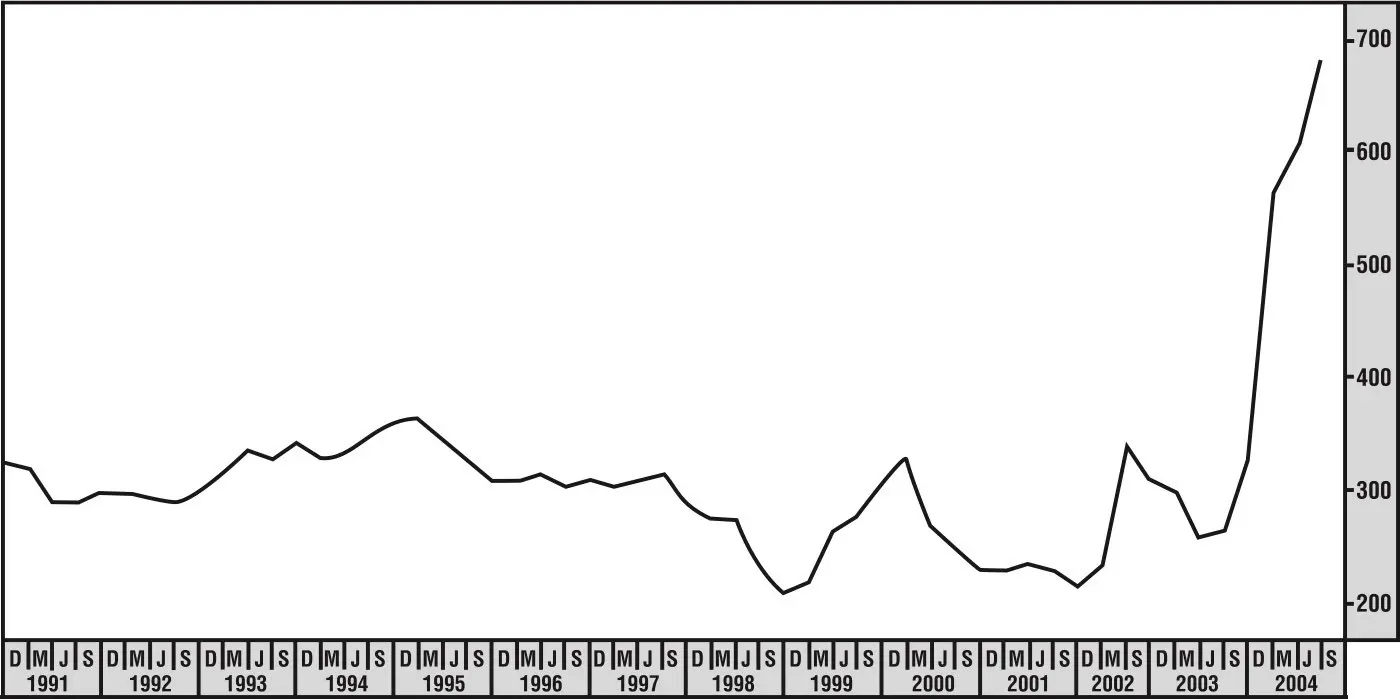
It hasn’t taken long for those skyrocketing prices to cause a splash on the slopes. From lift and snowmaking equipment to base-area construction projects, steel is one of those necessities. And no one expects the prices to drop anytime soon. In fact, most industry suppliers believe the current pricing level will stay right where it is—at the very least.
Snowmaking equipment manufacturers like Snow Economics in Natick, Mass., are feeling the strain. “Our cost of goods is up this year in almost every product we manufacture,” says president Charles Santry. “Steel and aluminum make up 99 percent of our product.”
Santry believes the rising cost of steel had a great affect on the ability of ski areas to buy pipe and add to their snowmaking systems. “We saw some areas cut back projects, and others who were considering projects thought better of it in the hope that steel prices might not be as high next year,” he says. “We set our prices and haven’t adjusted due to the increase, so it has cut into our margins. We saw a little downturn in business.” Snow Economics is in the minority when it comes to prices; most suppliers have been forced to raise them.
At Stowe Mountain Resort in Vermont, the timing of the steel price increase is almost a bad joke. Stowe is in the midst of a major development project that will include new lifts, increased snowmaking, base lodges and a base village, among other things. The price increase has made for challenging decisions for those in charge.
“We’re seeing a 25 to 40 percent increase in steel,” says Rod Kessler, Stowe’s VP of mountain operations. “It’s certainly put a lot of pressure on the management decisions as to how much to do and when. When you have unforeseen market issues, it really challenges you to get creative. You have to balance market conditions that are driving costs up against delivering a great guest experience. It definitely makes it fun.”
The Sno-Star Pipelines office in Denver has been supplying steel pipe to ski areas for snowmaking since the late 1970s. Sales manager Reynold Wilden says that from the end of 2003 to mid-summer of 2004, there was a 40 to 50 percent increase in the cost of pipe to ski resorts. In some instances where quantities were small, the cost increased by 100 percent due to availability and shipping.
“We’ve had periods of fluctuation in pricing before, but the last time we were in this range was in the late ’70s,” Wilden says. “Prices started going up in November and December of 2003, and ski resorts purchased their pipe in the spring to do the work in summer. We warned people at trade shows in January of 2004 that pricing might go up, but we didn’t anticipate how high it would go.” Snowmaking suppliers agree that, from a resort standpoint, the only silver lining is that the price increase is happening now and not a decade earlier, when a large amount of resorts were making massive snowmaking installations or upgrades. Thankfully, they say, the snowmaking boom has already happened.

Peter Kavanagh, manager of Star Lifts in Sunapee, N.H., says skyrocketing steel prices are not just a U.S. problem. Star Lifts imports portable rope tows from Switzerland and Sun Kid Wonder Carpets conveyor lifts from Austria. Kavanagh says the price of steel in Europe has doubled in the last two years. “It’s safe to say it has increased the price of our lifts by four to five percent,” Kavanagh says. “In the conveyor business, it’s all steel frames.”
And it’s not just the rising demand for steel that has suppliers and resorts paying through the nose. Government restrictions on driving times and rising fuel prices have increased costs in the trucking industry, adding to the overall cost of obtaining steel. Sno-Star’s Wilden says trucking rates are up 40 to 50 percent. As a result, it costs more to get steel from the mills to the supplier, and from the supplier to resorts. “We’ve had trouble this past year moving pipe. A shortage of trucks made for delays of two to three weeks,” Wilden says. “Before, it might have cost us $2,000 for a truckload of pipe to go from Texas to a ski area in New Hampshire. Now it’s $3,800 or more. When you send a few truckloads, that cost adds up in a hurry.” Other suppliers have dealt with similar transportation increases.
Caught in a (Wire) Noose
Dan O’Connor of O’Connor Ski Lifts in Monson, Mass., sells and installs replacement lift cables and wire rope tows for race camps, beginner slopes, and tubing hills. The price of wire rope is dependent on the current worldwide price of steel rod, he says, and that has also gone up. But rather than hold off on new cables, O’Connor says, “People are figuring that if they’re going to buy something, they’d better do it now,” he says. “Plus, if you borrow money to put a new lift in, you want to do that now while interest rates are low, too. We raised prices by 15 percent last year and I think we’ll go up 15 to 20 percent this year.” At least O’Connor has managed to minimize increases in trucking costs by using the web. Rather than going with a single supplier, the company shops online for the best shipping deal at the time.
Many in the industry have resigned themselves to the fact that the current level of pricing is here to stay. “We’re still hearing from the mills that they’re going to have another increase in January,” Sno-Star’s Wilden says. “Not a huge one, but probably in the four to five percent range. I think we are close to the peak, but I think steel will remain in short supply. That will cause the numbers to stay where they are. I don’t see it taking a spiral downward to where it was in the last 10 years.”
And that’s the optimistic view. Danny O’Connor says wire rope manufacturers are telling him to plan on seeing the cost of steel rise 10 percent per month—for the next 18 months. For him, the price increase has been compounded by an inability to get firm price quotes from U.S. companies. “The only place I can get stable pricing is overseas. I haven’t bought a single cable in the U.S. in the last year. We’re buying a lot from lift manufacturers in Austria, Switzerland, and Italy,” he says.
Wilden concurs on the direction of pricing. “If anyone is looking for it to go back to where it was a year ago, I don’t think that’s going to happen,” he says. “I see a more normal pricing pattern starting from a higher level.”
Ski areas planning projects that utilize steel may have to choose between the lesser of two evils: spend a lot now, or perhaps spend even more later.

