

The snowmaking tests held in conjunction with the 1972 NSAA Mid-Winter Meeting at Waterville Valley were an industry first. As an attempt to show the comparative performance capacities of today’s snowmaking systems, the tests can be judged successful. And although the data arrived at was limited, it was sufficiently accurate to provide a basis for the accumulation of additional test data in future test programs.
Two tests, run at different times on different days in order to obtain data under varying climatological conditions, were run at Waterville. Each was measured by at least two members of a four-man NSAA committee.
Equipment tests began when each supplier advised the committee that his system had been satisfactorily adjusted. An 8-foot-square sampling board was placed in the snow pattern area and once the test was underway, measurements of various technical parameters (see charts on pages 32-33) were made at 10-minute intervals over 40-minute (Run 1) and 30-minute (Run 2) periods.
The parameters that were measured were chosen because of their importance in the evaluation of the performance of a snowmaking system. The specific effects that these factors have on a system’s overall performance are self-explanatory in many cases; in other cases, they are not.
Ambient temperature
The importance of ambient temperature is evident. What might not be so obvious to the ski area operator, however, is the fact that ambient temperature is used in conjunction with wet bulb temperature and psychrometric tables to establish relative humidity.
The ambient temperature, or dry bulb temperature, and the wet bulb temperature were measured with a sling psychrometer. At ambient temperatures below 32° F, the wet bulb depression—i.e. the difference in temperature between the dry bulb and the wet bulb thermometers—is minimal. For this reason, the wet bulb depression that was used to measure relative humidity was determined by averaging dry bulb readings and wet bulb readings.
Relative humidity
Relative humidity quite naturally has an effect on snowmaking performance—the higher the relative humidity, the more difficult it is to make snow. Interesting to note were the variations in relative humidity during Run 1, conducted on a clear and cold night, compared to variations during the second run, where the weather had changed to cloudy and warmer.
System temperatures
Both air and water temperatures were measured by immersion-type mercury-filled thermometers that were placed in the pipeline upstream from the air and water flow metering equipment. An examination of the chart shows a direct relationship between air temperature and air flow, the higher rates of flow bringing about higher air temperatures caused by friction buildup within the piping system. This is a good indication of the necessity of a properly sized piping system in providing cool air to your snowmaking gun.
Though this temperature/flow relationship is not so obvious in the water system, it does not mean that the water piping system should not be adequately sized to account for frictional losses that occur.
System pressures
Air and water pressures were measured by liquid-filled pressure gauges also mounted in the pipeline upstream from the air and water metering equipment. Because all snowmaking systems were adjusted manually for optimum performance, system pressures vary to a larger degree than system temperatures.
In the air system, some correlation can again be seen between volumetric flow and system pressure, with higher flows generally characterized by lower pressures. However, there are certain instances where this general relationship does not hold true. This difference can generally be attributed to the different orifice sizes used in the air-flow metering equipment. For example, a different-sized orifice was used for extremely high and extremely low flows. The pressure on the upstream side of a small orifice was resultingly greater than the pressure on the upstream side of a larger orifice.
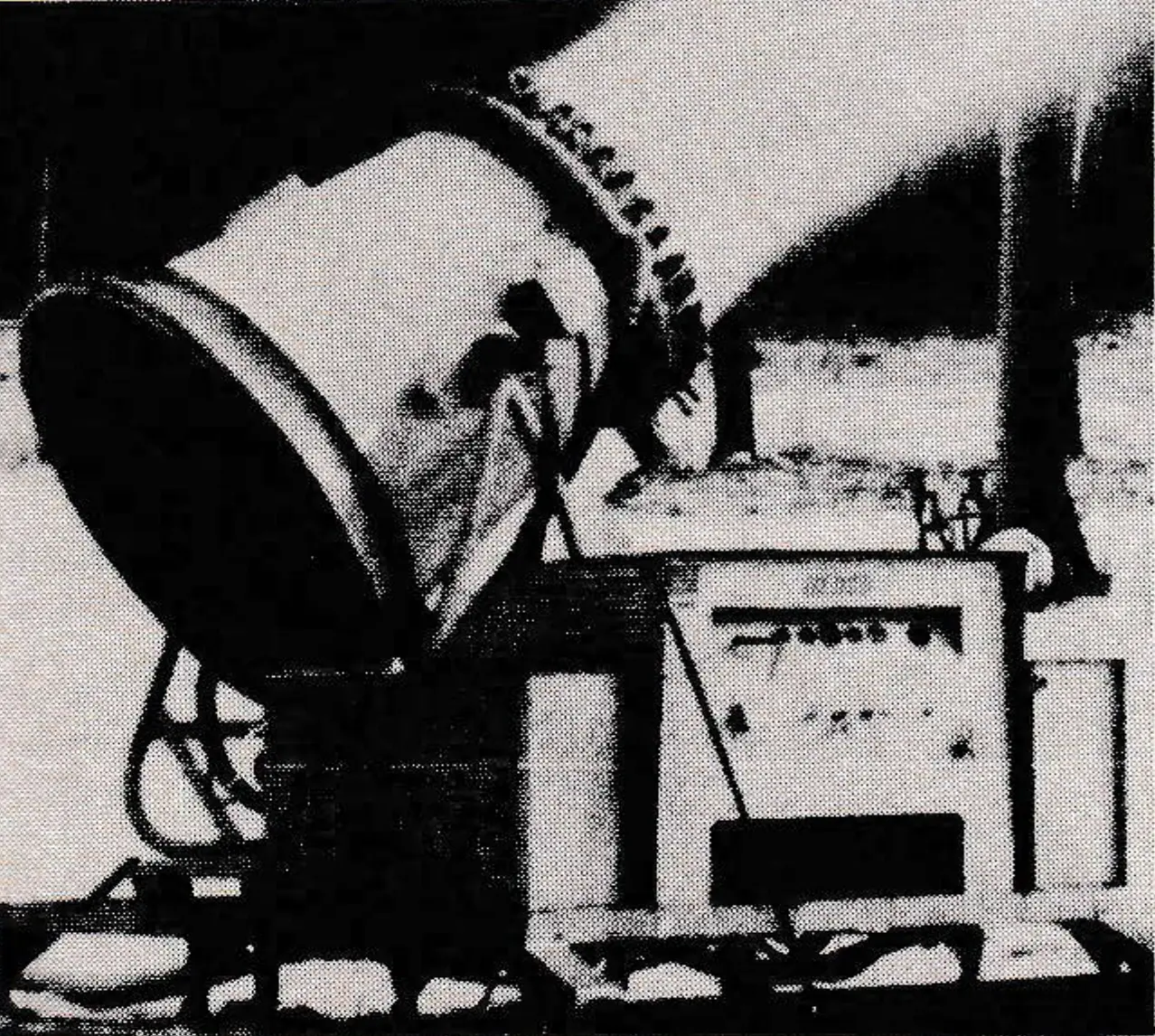
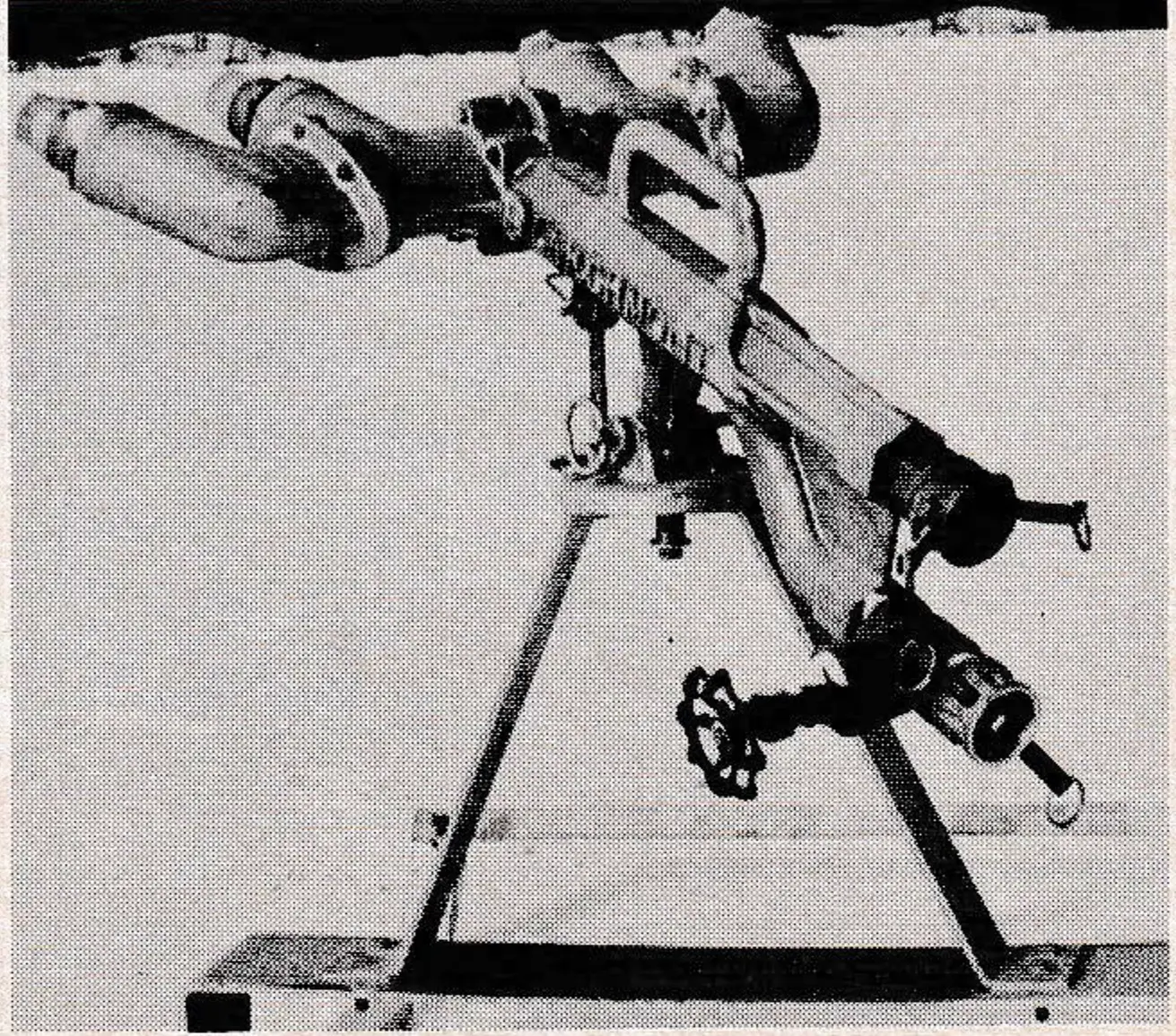
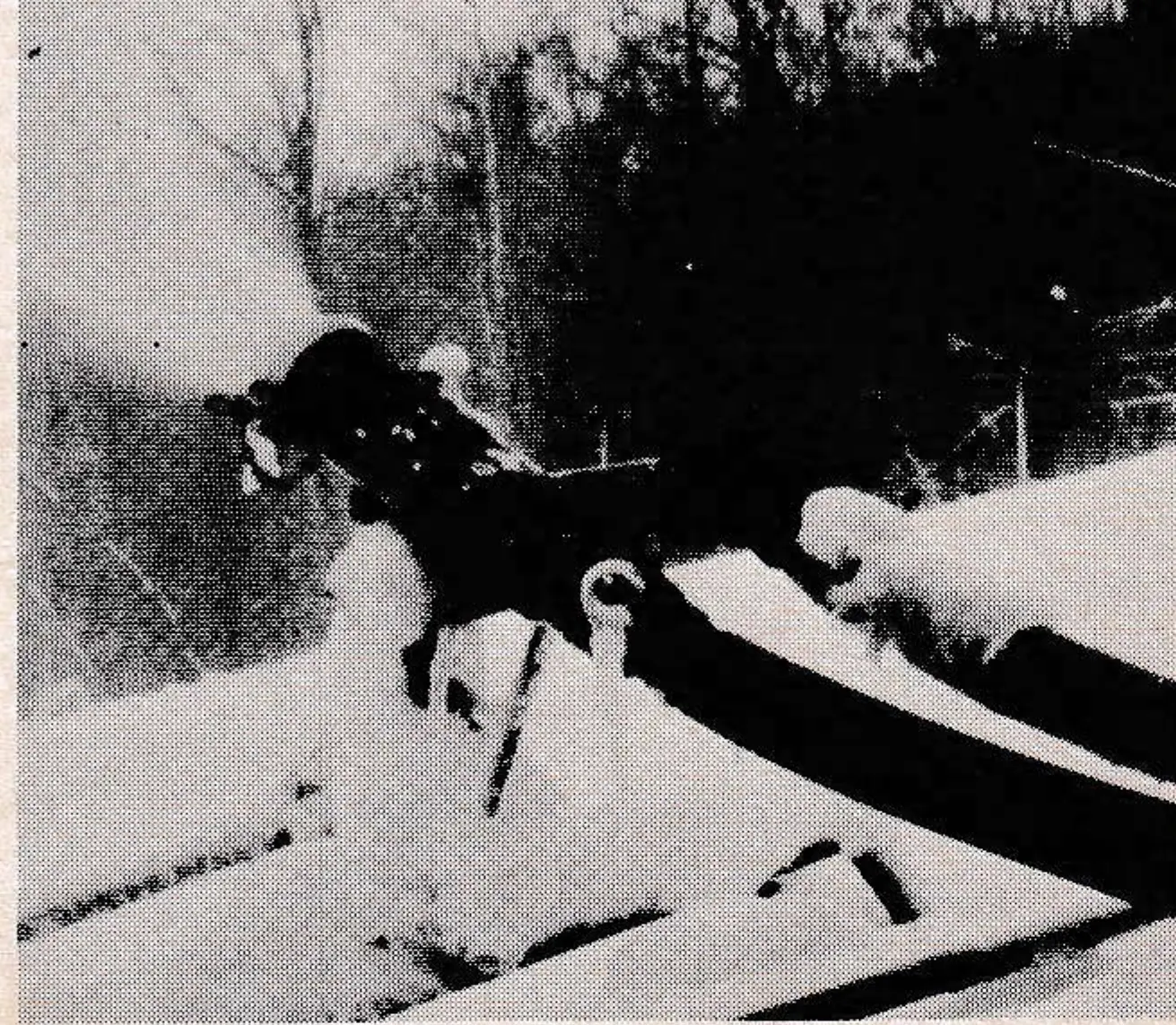
| Equipment | Ambient Temp. | Relative Humidity (%) | Compressed Air — Temp. | Compressed Air — Press. (psi) | Compressed Air — Flow (cfm) | Water — Temp. | Water — Press. (psi) | Water — Flow (gpm) | Air/Water Ratio | Snow Characteristics — Density (cu. ft.) | Snow Characteristics — Noise Level (decibels) | Snow Characteristics — Skiability | Adjust Time (minutes) | % Unfrozen Water | Electrical (amps/volts) |
|---|---|---|---|---|---|---|---|---|---|---|---|---|---|---|---|
| *Model H-2d (Hedco) | -2 | 69 | — | — | — | 35 | 295 | 305 | — | 31.7 | 4 | Wet & granular 45′ from gun, balance sugar all skiable | 3** | 86 | — |
| *Linde Snowmaker (A.S.H. Mountain Prod.) | -3 | 68 | — | — | — | 35 | 354 | 35 | — | 26.9 | <1 | Fine dry snow over entire pattern, very skiable | 2** | 84 | 27/455 |
| Snow Steam II (Snow Machines Int.) | -5 | 66 | — | — | — | 36 | 205 | 54 | — | 29.9 | 1 | Wet & unskiable 33′ from gun, balance sugar, very skiable | 5 | 80 | 23/455 |
| *Model H-2d with Propelling Winch (Hedco) | -4 | 67 | — | — | — | 36 | 402 | 254 | — | 31.7 | 9 | Wet & granular 65′ from gun, balance sugar, very skiable | 3** | 88 | — |
| Skinner Super Gun (C. M. Skinner) | -1 | 70 | 43 | 78 | 1829 | 37 | 200 | 388 | 5/1 | 29.9 | 5 | Dry sugar 80′ from gun, balance wet & coarse, all skiable | 4 | 110 | — |
| Mach II Sno-Gun (Snowmaking Ind.) | -2 | 68 | 40 | 85 | 383 | 38 | 261 | 68 | 6/1 | 31.3 | 4 | Wet & skiable 30′ from gun, balance fine sugar, very skiable | 6 | 105 | — |
| Snow Giant I (Ratnik Ind.) | -1 | 70 | 39 | 107 | 412 | 36 | 416 | 85 | 5/1 | 32.2 | 7 | Dry & skiable to outer edges | 3 | 93 | — |
| *Sled Mounted Quad-Jet (Larchmont Eng.) | -1 | 70 | 36 | 107 | 336 | 35 | 337 | 123 | 3/1 | 34.0 | 10 | Wet granular to outer edges, then dry sugar, very skiable | 14 | 97 | — |
| Alp Maker III (BA Rice) | -2 | 69 | 39 | 96 | 900 | 36 | 80 | 117 | 8/1 | 28.0 | 2 | Wet & granular to edges, difficult; edges dry & skiable | 10 | 101 | — |
| Sno-Fury Mark II (RAB Eng.) | -3 | 68 | 39 | 104 | 650 | 35 | 315 | 220 | 3/1 | 28.2 | <1 | Fine sugar, excellent skiing | 5 | 91 | — |
| Annuleair (Annuleair Co.) | -1 | 70 | 42 | 86 | 1506 | 36 | 415 | 77 | 20/1 | 31.2 | 5 | Wet & granular 30′ from gun, close to natural snow beyond | 19 | 98 | — |
| Snotrol (North Amer. Eng) | 1 | 70 | 42 | 96 | 1024 | 37 | 240 | 84 | 12/1 | 30.8 | 4 | Excellent skiing, wet on edges | 3 | 111 | — |
Air flow
In conventional, compressed-air snowmaking systems the cost of air represents a primary operating expense; consequently, a measure of the amount of air required by a system is necessary. For the Waterville tests, the volumetric air flow was measured by an orifice/by-pass metering assembly using by-pass air flow meters with vari-sized orifices.
The metering equipment used in the tests was not calibrated to establish absolute accuracy of flow. However, because each conventional gun was tested in the same manner using the same testing equipment, it is safe to assume that the air flow rates are accurate in a comparative sense.
Water flow
Accurate measurement of the volumetric flow of water is necessary to provide the operator with some indication of the overall technical requirements of the water system—pump sizing, pipe sizing, recovery capabilities—needed to support his snowmaking equipment. In the NSAA tests, water flow was measured with a rotating vane-type water meter.
Air/water ratio
The air/water ratio is a guide that is generally used to measure the operational efficiency of a conventional snowmaking system.
With the cost of air representing a major component of the overall operational cost of snowmaking, it can be assumed that the lower the air/water ratio, the less it costs to run a conventional system. However, because there are other variables associated with the air/water ratio, the ski area operator should treat this parameter with caution.
For example, an extremely low air/water ratio means that a gun is utilizing more water per unit of air and the density of snow made by the gun is much higher than that made by a gun operating at a higher air/water ratio. The air/water ratio should therefore be judged in conjunction with other parameters such as snow density and percentage unfrozen water.
| Equipment | Ambient Temp. | Relative Humidity (%) | Compressed Air — Temp. | Compressed Air — Press. (psi) | Compressed Air — Flow (cfm) | Water — Temp. | Water — Press. (psi) | Water — Flow (gpm) | Air/Water Ratio | Snow Characteristics — Density (#/cu. ft.) | Snow Characteristics — Noise Level (decibels) | Snow Characteristics — Skiability | Adjust Time (minutes) | % Unfrozen Water | Electrical (amps/volts) |
|---|---|---|---|---|---|---|---|---|---|---|---|---|---|---|---|
| Snotrol (North Amer. Eng.) | 16 | 63 | 38 | 98 | 1208 | 39 | 128 | 72 | 17/1 | 24.5 | 32 | Edges, dry and skiable, center soft, skiable but tricky | 3 | 109 | — |
| Annuleair (Annuleair Co.) | 18 | 67 | 46 | 91 | 1686 | 39 | 415 | 42 | 40/1 | 24.7 | 40 | Very good texture, skiable over whole pattern | 5 | 91 | — |
| Sno-Fury Mark II (RAB Eng.) | 19 | 66 | 49 | 97 | 1299 | 40 | 240 | 100 | 13/1 | 29.0 | >50 | Edges, dry and skiable center, wet, barely skiable | 5 | 107 | — |
| Alp Maker III (Rice Eng.) | 20 | 77 | 49 | 90 | 1516 | 41 | 51 | 38 | 40/1 | 21.5 | <1 | Fine texture, dry & skiable over whole pattern | 5 | 106 | — |
| Sled Mounted Quad Jet (Larchmont Eng.) | 20 | 81 | 47 | 106 | 504 | 39 | 370 | 84 | 6/1 | 41.2 | >50 | Mashed potato texture, very wet, tricky to ski | 5 | 99 | — |
| Snow Giant I (Ratnik Ind.) | 21 | 77 | 46 | 104 | 618 | 40 | 423 | 37 | 17/1 | 22.2 | 1 | Wet heavy snow over whole pattern, tricky to ski | 4 | 100 | — |
| Mach II Sno-Gun (Snowmaking Ind.) | 21 | 76 | 44 | 108 | 367 | 41 | 110 | 23 | 16/1 | 21.5 | <1 | Fine texture, dry and skiable over whole pattern | 15 | 96 | — |
| Skinner Super Gun (C. M. Skinner) | 20 | 90 | 54 | 79 | 2079 | 40 | 390 | 90 | 23/1 | 26.4 | >50 | Edges, wet & skiable center, mashed potato texture | 3 | 107 | — |
| *Model H-2nd Self Propelling Winch (Hedco) | 19 | 80 | — | — | — | 39 | 375 | 115 | — | 26.4 | 38 | Wet over whole pattern tricky to ski | 12** | 87 | — |
| Snow Stream II (Snow Machines Int). | 18 | 79 | — | — | — | 39 | 132 | 12 | — | 22.9 | <1 | Wet 10′ from gun, balance dry and very skiable | 5 | 80 | 19/440 |
| Linde Snowmaker (A. S. H. Mountain Prod.) | 19 | 81 | — | — | — | 39 | 210 | 44 | — | 28.9 | 40 | Edges, dry and skiable center, wet but skiable | 7** | 82 | 22/440 |
| Model H-2d (Hedco) | 20 | 87 | — | — | — | 37 | 468 | 99 | — | 26.0 | >50 | Unskiable 65′ from gun, balance good granular skiing | 3** | 82 | — |
Density
The density of the snow was measured by taking a snow sample in a volumetrically calibrated container and weighing it on a balance. Of all the variables measured, this was the least accurate in an absolute sense. However, because of limitations on time and the prohibitive cost of other methods of measurement, this was deemed satisfactory as it provided a measure of comparative densities.

Unfrozen water
Percentage of unfrozen water provides an indication of the effectiveness with which water being passed through a snowmaking system is being converted into snow. The percentage of unfrozen water was determined by using a probe instrument which measured the electrical conductivity of unfrozen water. This instrument was highly dependent on graphical extrapolation and values obtained might not have been the same using more sophisticated techniques. Again, however, because each system was measured in the same manner, results were accurate in a comparative sense.
Skiability
Because snow skiability involves subjective assessment, it is difficult to measure in an absolute sense. At Waterville, members of the ski patrol were asked to evaluate skiability by skiing across the general area of the total snow pattern with particular emphasis on the 8-foot-square sampling area. The nature of the snow and general skiability were then recorded.
Adjustment time
Although adjustment time cannot be considered a characteristic of the performance of a snowmaking system, it is a factor, in terms of time and labor costs and ease of operation, that must be considered in determining the input required by a system.
The time that elapsed from initial start-up—the point at which air and water were turned on at the main line—to the point at which the supplier indicated that his gun was operating to his satisfaction was measured and recorded for each system.
Noise level
A system’s noise level was measured by means of a sound-level meter. For the Waterville tests, noise level readings were taken at the sampling area. Consequently, because of varying snow dispersion patterns, the reading for one unit may have been taken at one distance from one unit, whereas the reading for another unit may have been taken at a distance further away. In future tests, a more accurate measure of noise level could be determined by taking a reading at a point equidistant from each system.
Electrical
This measure applied to only two units, the Linde Snowmaker and Snow Machines International Snow Stream II Gun. Where electrical power was required on the mountain, the power consumption, in amperes, was measured while each unit was operating at full capacity. This requirement was measured in order to provide the operator with an indication of the power requirements for an electrical system.
Limited testing scope
The Waterville tests were neither absolute nor complete. They were only the beginning, an answer to the long-sought attempt by both suppliers and area operators to put today’s snowmaking systems to a head-to-head test. What was measured were those capacities that are considered of primary importance in the evaluation of a snowmaking system. As for the testing procedures, they were chosen because they provided a direct and comparative measurement of basic snowmaking requirements under technically practical conditions.
Owing to constrictions of cost and time, the scope of the tests was necessarily limited. There are, of course, other operational features an operator would need to assess before making a snowmaking investment decision.
Distribution pattern, for example, is an important aspect of any system, but it is a property that is highly dependent on unrelated variables—wind, nature of snow (wet snow will give a more defined pattern, dry snow a less defined pattern)—and could not, given the limitations of time, have been measured accurately at Waterville.
All guns were tested at the same elevation. Elevation, however, has a pronounced effect on a system’s volumetric air needs and the capacity requirements of a compressed-air system. (At higher elevations a system needs more air to operate effectively because of lower air density.)
Fuel consumption is another factor that was not gauged at Waterville. This is an operational cost that the operator must weigh, however, in assessing a gas-driven unit.
Size and number of guns? Both are important as they reflect a system’s adaptability to a ski area. Smaller guns, for example, have a well-defined pattern and are generally best suited to narrow trails; higher-volume guns, on the other hand, are normally capable of a much broader snow pattern and are better suited to wider areas.
What the Waterville tests did verify was that no one gun is the complete answer to an area’s overall snowmaking needs. If the operator hopes to maximize efficiency, he must determine his individual trail requirements and then establish the combination of smaller guns and larger guns that will satisfy his requirements. The data compiled at Waterville is a first step in this direction.
Peter Alford, who directed the NSAA snowmaking tests, is president of Alford & Associates, a utilities consulting firm headquartered in Canada. Alford was formerly with Diamond Shamrock Corp. and North American Engineering where as chief engineer he oversaw design of the snowmaking installations at Gunstock and Loon Mt., N.H.