


Insulation of teaching terrain gives beginners their own space. It allows them to progress at their own pace, building confidence in newly acquired skills among other people who are at a similar level. Natural features such as the tree islands at Whitetail, Pa., can be used to separate beginner terrain from downhill traffic if no other border exists.
Taos, N.M., famous for steep terrain, was featured in SAM in March 1996 as one of the first areas to realize the importance of controlled gradients for beginners. Among other changes at Taos, the terrain selected for the newly-zoned teaching space ranged from zero to 12 percent, in contrast to the 18-percent beginner hill.
After the teaching terrain was redesigned, ski school instructors reported an increase in second-day lessons. In general, controlled gradients (ideally five to eight percent for never-evers; up to ten percent as the student progresses to riding a lift) allow beginners to concentrate on skills and techniques without fear of attaining an excessive rate of speed.
Finally, beginners need a well-defined physical progression of terrain that corresponds to the skills being taught. At Keystone, Colo., the Energizer Bunny Hill has defined spaces for first-timers, beginners and novices. First-timers use gentle terrain swales at the base of the teaching area, beginners use eight- to ten-percent slopes serviced by handle tows and novices graduate to a Poma lift on 10 to 12-percent slopes. Ideally, teaching terrain should be located close to the rental shop and the ski school.
The three ski areas in the following case studies, though different, all had similar problems with teaching terrain that were solved by developing these characteristics in recent redesigns. —H.S.
Jiminy Peak, Massachusetts
by Brian Fairbank, President and CEO
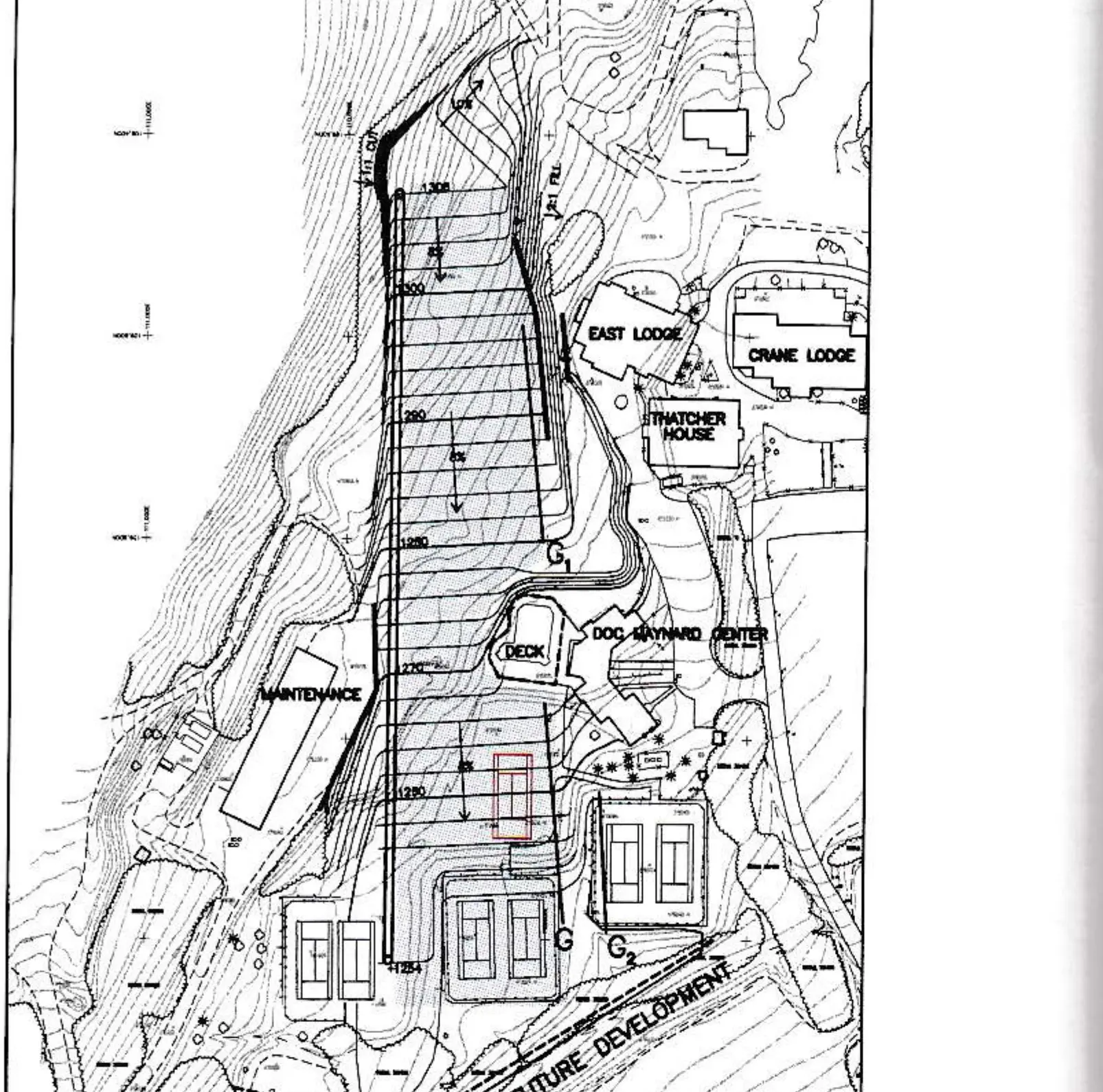
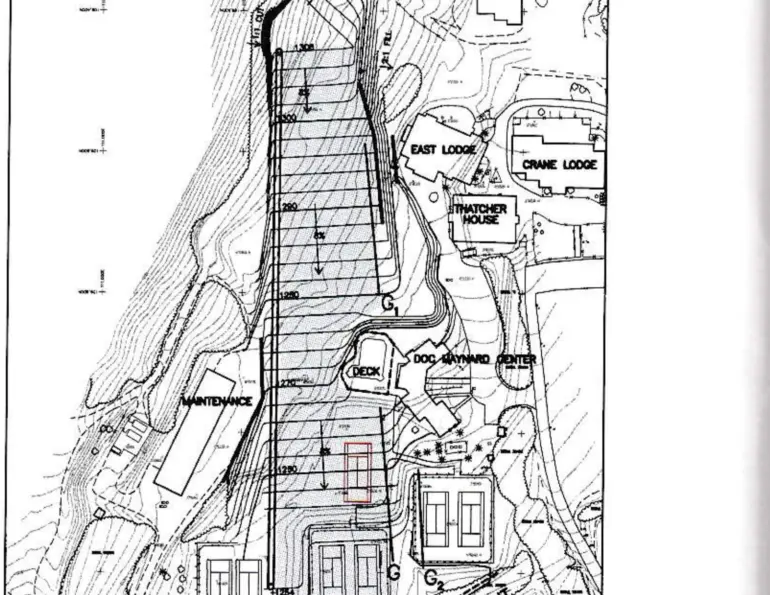
Jiminy Peak suffered for many years from a lack of adequate beginner teaching terrain. A tight base area was surrounded by tennis courts, a swimming pool, a maintenance facility, condominiums and base lodge facilities. A 400-foot J-bar and a 150-foot Mitey-Mite covered only one acre of skiing terrain for hundreds of SKIwees as well as another 200 beginners on any given weekend. For a while it seemed that the tight valley configuration was a situation we would have to live with. After viewing ski area configurations throughout the United States and Europe, however, we brought Sno.engineering in for a reevaluation of our beginner slope and we came up with an alternative solution that expanded our capacity and created an easy progression for beginners at the same time.
By eliminating a tennis court to the south and reshaping five acres of a side hill, teaching acreage was increased by 500 percent. After moving more than 25,000 yards of earth, we installed the 700-foot-long Cricket triple chair for beginners and a separate, 210-foot-long Mitey-Mite for children.
The top of the beginner trail is northeast of the main base area buildings. The triple can be accessed directly from these buildings, which include the rental shop. First-time skiers can leave the rental shop, get on the triple, ski the beginner trail until confident, then access the main mountain from the top of the triple via another trail with a 10 percent grade.
The beginner trail was kept at an eight percent grade with a natural runout, which meets the grade around the swimming pool. We made up to two feet of snow on top of two tennis courts which are used as additional runout for the teaching area.
Above and beyond creating the opportunity for better beginner skiing and teaching, the entire beginner area is now protected from downhill traffic.
We saw results from these changes over last year’s Christmas holidays: the chairlift was almost fully loaded day and night, but people seemed to find it a comfortable and pleasant place to ski or snowboard. Even the ski pros could not believe the change. They now have true fall-line conditions with adequate run-out space for the best possible teaching facilities.
Camelback, Pennsylvania
by Richard Wiseman, Vice-President and General Manager
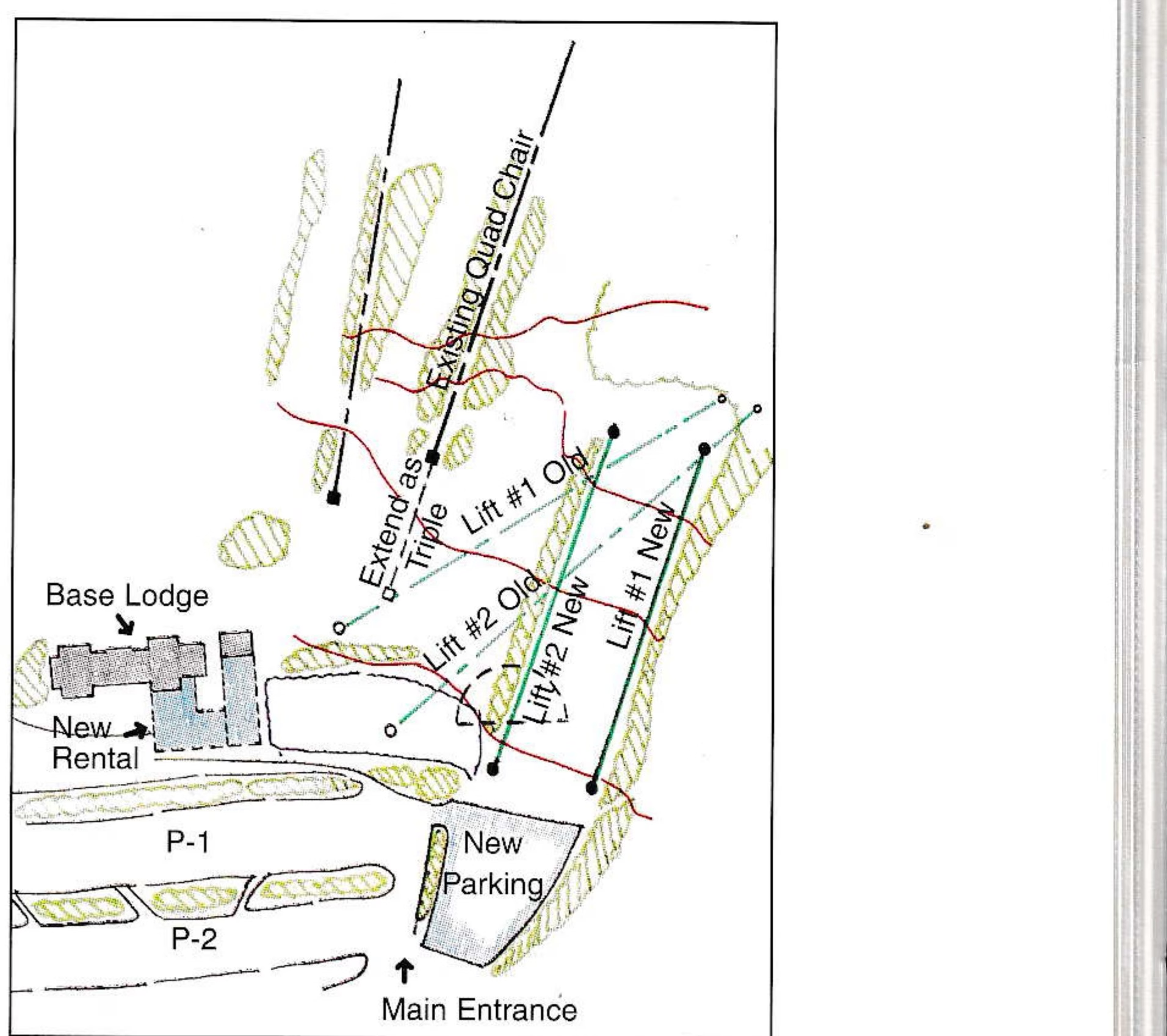
Although the learning area at Camelback was always insulated, the position of the lifts and a slight double fall line had presented difficulties for students in the ski school. Because of that, a reconfiguration of the Coolmoor learning area had been planned for many years, but it was difficult to work around existing constraints such as a batting cage and a parking lot, as well as an unfavorable lift alignment. Finally, it was agreed that the only way to expand our learning area was to eliminate the batting cage—a summer attraction—and extend the learning terrain into the parking lot by 40 or 50 feet.
Once those decisions were made, redesigning the learning terrain became a little easier, and in March of 1996, the board of directors decided to invest a sizable sum for improvements, doubling the teaching terrain size to four acres.
The project was done in five steps:
1) Remove the batting cages. 2) Regrade the existing parking lot. 3) Remove two novice lifts and the accompanying infrastructure (snowmaking system, lights, etc.) 4) Regrade the terrain. 5) Reinstall the infrastructure and lifts in new location.
The lifts had run across the fall line and the drive station of one lift was in the middle of the base area, and the trail faced more east/west than north. After the lifts were removed, the trail was regraded at a more northerly orientation so it would hold snow better. It was also graded at about 10 percent—from the previous 10 to 16 percent—so novice skiers could maintain a comfortable, but not intimidating, rate of speed. The slope was also widened, which allowed us to reinstall the lifts parallel to one another approximately 200 feet apart, with one lift slightly longer than the other. This new alignment and regrading resulted in a berm between an existing trail and the learning terrain so that there would be no cross-skier traffic.

After the lifts were reinstalled, the bottom of the new Coolmoor teaching area was connected to the ski school meeting space. It’s an easy progression for new students from the rental shop to the ski school meeting place to the new lifts.
We also replaced the snowmaking system to gain capacity with 20 tower guns on both sides of the trail to ensure quick cover and to maintain conditions. Additional lights were also installed for a friendlier nighttime atmosphere.
After the teaching terrain reopened, it was a major success. The gentler grade turned out to be almost perfect and the lift alignment is much better than it was in the past. In addition, there is no double fall line and the teaching space is insulated to provide a friendly and safe atmosphere for novice skiers to learn.
Seven Springs, Pennsylvania
by Scott Bender, Vice President of Mountain Operations
After evaluating our skier facilities and services in November 1995, we announced a $15 million facelift and expansion program at Seven Springs. The five-year, multiphased project had several goals: to upgrade facilities that had served us well since the 1970s, to centralize them and to make the area more skier-friendly. For beginning skiers, this meant widening and regrading beginner trails, upgrading lifts and redesigning the beginner bowl.
The beginner bowl is located in front of the 400-room hotel and main lodge. Previously, it was a three-sided, 130 by 240-foot bowl requiring students to sidestep up gradients as high as 20 percent to begin a lesson. After climbing, the students would do a step-around turn and ski down to the center of the bowl, where more students were simultaneously arriving from the other sides.
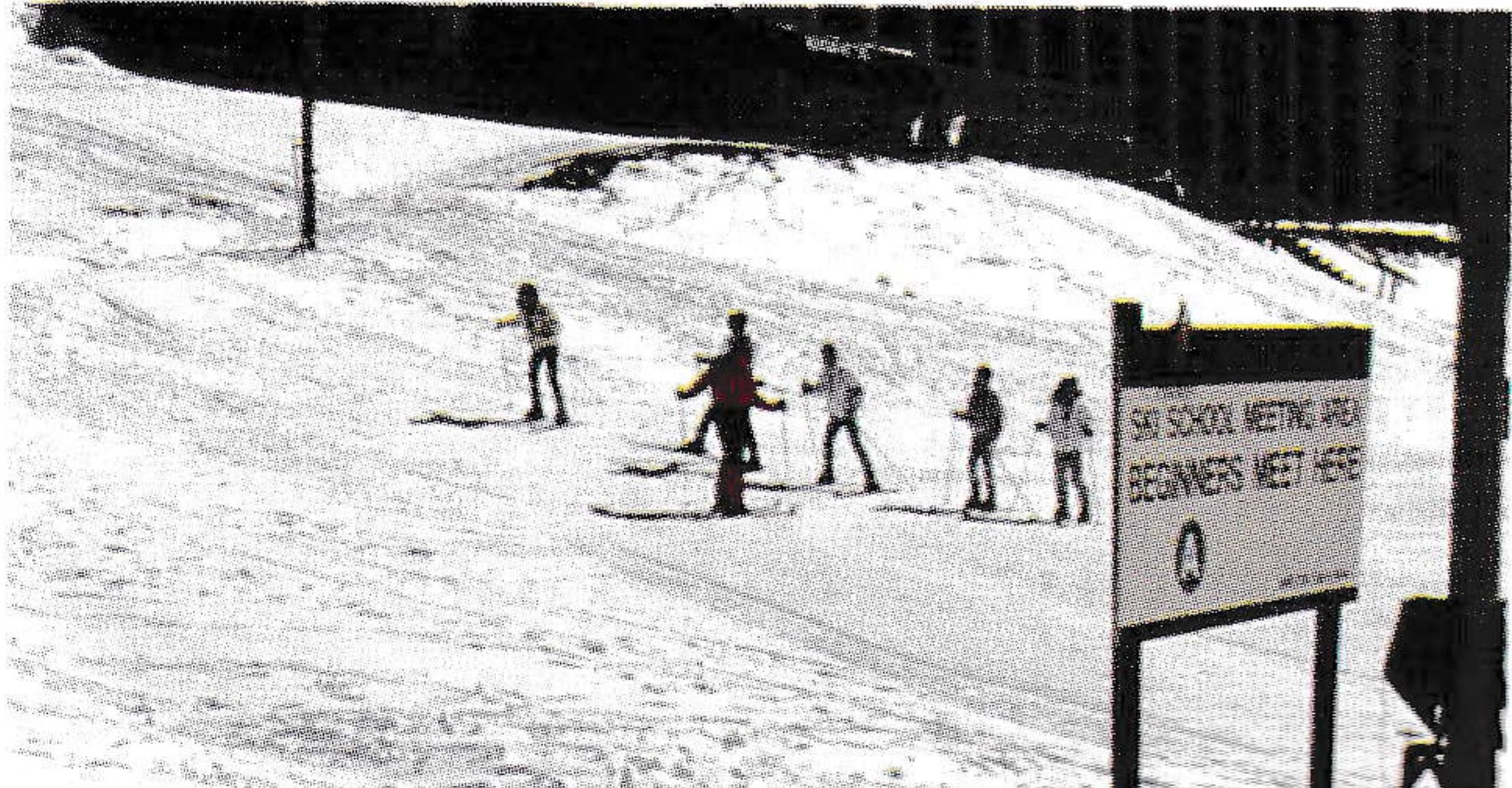
To add to the confusion, skiers waited at one end of the bowl to ride an adjacent quad chairlift and the center of the bowl was also used as a staging area. This caused problems on a typical peak Saturday morning where it was not uncommon to have up to 400 beginners for the 10 a.m. lesson.
“While this area worked reasonably well Monday through Friday,” said Ski School Supervisor Rick Boxler, “it became very crowded on weekends and all the unrelated cross traffic made it difficult to provide a good learning experience.”
As part of an entirely new design that focused on skier progression, the bowl was filled in, expanded to 150 by 300 feet and graded to six percent. In addition, several steps were taken to isolate the beginner terrain from other traffic.
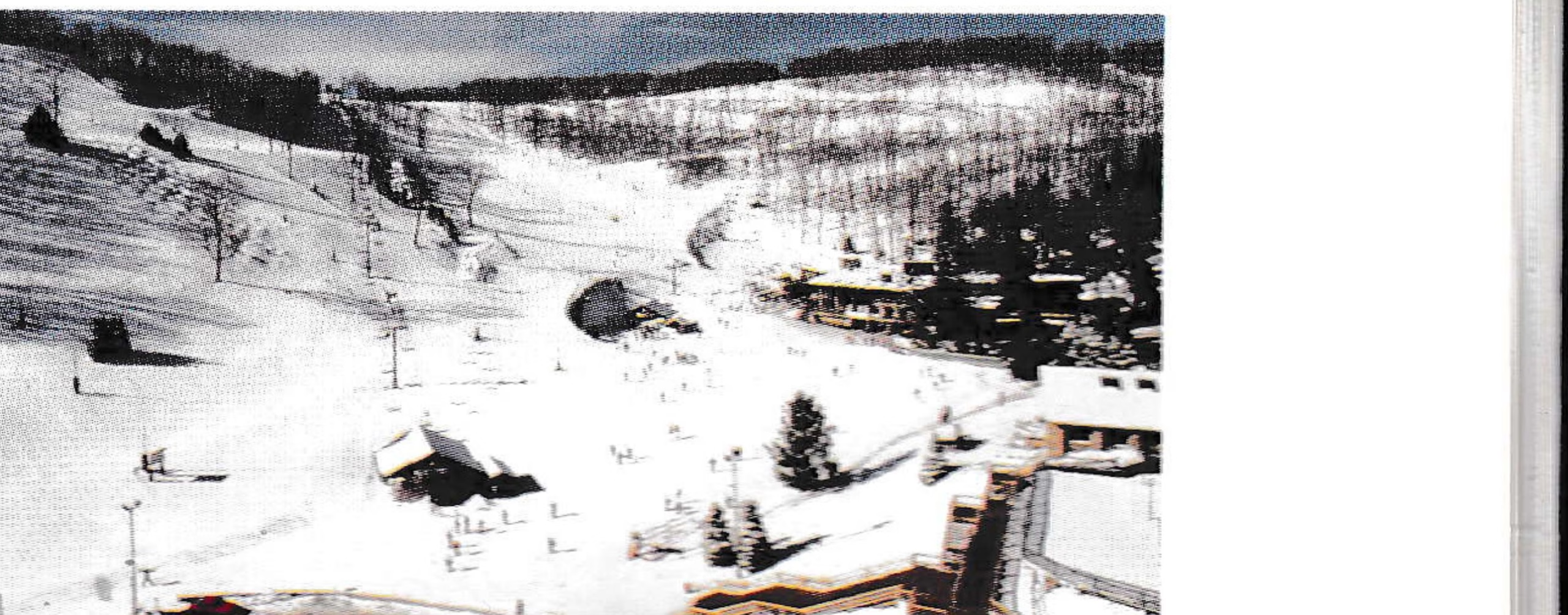
A large staging area for beginners was developed just outside the ski lodge/rental shop at the top of a slow handle tow—rope speed of 250 fpm—that was installed along the edge of the teaching slope. The base terminal of the adjacent quad chairlift was moved 350 feet uphill, away from the teaching area, to service more advanced skiers exiting the main lodge. Also, a picnic lodge was removed and the office of the director of skiing was moved.
The loading area of a new fixed-grip quad chairlift—replacing two doubles—was positioned near the base of the new Learn-to-Ski area. While it serves skiers of all abilities, the new lift is designed to transport ski school classes at a speed of 250 fpm from the teaching terrain up to more advanced beginner terrain. The natural physical progression for new skiers is now firmly established from the staging area to the teaching terrain and, finally, to the beginner terrain served by the new quad chairlift.
The redesigned teaching circuit has improved the learning experience dramatically. Students are less fatigued without all of the sidestepping and the handle tow allows instructors to recycle students who need more instruction. Plus, there is no interference from other skiers.
“We’ve definitely made it easier for our beginners to learn how to ski,” said Boxler. “Isn’t that what it’s all about?”

