


The term “timeshare” became a dirty word in the resort real estate business in the 1980s. Buyers, mostly in the low- to middle-income bracket, had feelings of being trapped, there were few amenities provided for them and the timeshare units were often trashed by users. Timeshare was tainted and couldn’t be sold.
Move to the 1990s. Timeshare has acquired new names including “interval ownership,” “fractional ownership,” “vacation club,” “resort club” and “membership” in a “private residence club,” as well as a new format, image, identity and cachet. Today, some timeshares being developed at resorts might more accurately be called “quarter-share” or “one-eighth share,” and buyers are more upscale, have more options available with a purchase, are provided with more amenities and purchase better units. At the same time, they reap such condominium-type benefits as lockers for belongings between trips and timeshare advantages such as a lower minimum investment and the ability to trade their time for other units, in ski country or not.
At the same time, sellers of the new concept in timesharing can also reap profits from unit sales and management fees (although this is not necessarily anyone’s main motivation). They are also adding hot beds instead of cold ones and putting more people on the slopes—with all that implies for cash flow.
Private developers have built or are building high-end fractional-ownership properties at Deer Valley, Utah, and Telluride and Steamboat Springs, Colo. But among area owners, one of the leaders in this new timeshare concept is the American Skiing Company (ASC), which develops and markets properties where quarter-share is the minimum fraction sold. Buyers of these units provide a ready-and-willing customer base—and a financing platform, too. President Les Otten says his company covers more than 50 percent of its construction costs before breaking ground by requiring a non-refundable deposit from buyers. This signals a commitment on the part of the buyer and a higher level of usage of the resort from people who have made that commitment once the project is completed. Because such fractional shares include weeks around the calendar, there is also increased summer and off-season usage—either by owners themselves or via a resort-run rental office.
Otten believes in making a “lifestyle sale” to skiers. “We want to make it attractive for people to invest in real estate,” he says. “We sell to people who come skiing. The message from us is: ‘For no more than the cost of a car, you can buy a condo at our resort.’ It’s our seed market. These buyers are our customers and guests forever. These people will be American Skiing Company customers who’ll follow us anywhere. They’ll be our lead buyers and they’ll want to move up.”
Of the first 600 unit-shares sold, Otten says there was only one foreclosure. The buyers seem to be solid first-time, second-home buyers in the 35- to 45-year-old age group who are active skiers, many with friends who want to get back in the sport. Otten views selling a distinctive form of real estate to this particular segment of the market as a better bet than taking his company public. “You can register with the SEC, [but], unfortunately, once you become a securities broker, you are no longer selling lifestyle, but dollars and cents. Then you get into comparative shopping,” he says. “Our companies won’t predict rental income or increase value. They sell lifestyle.”
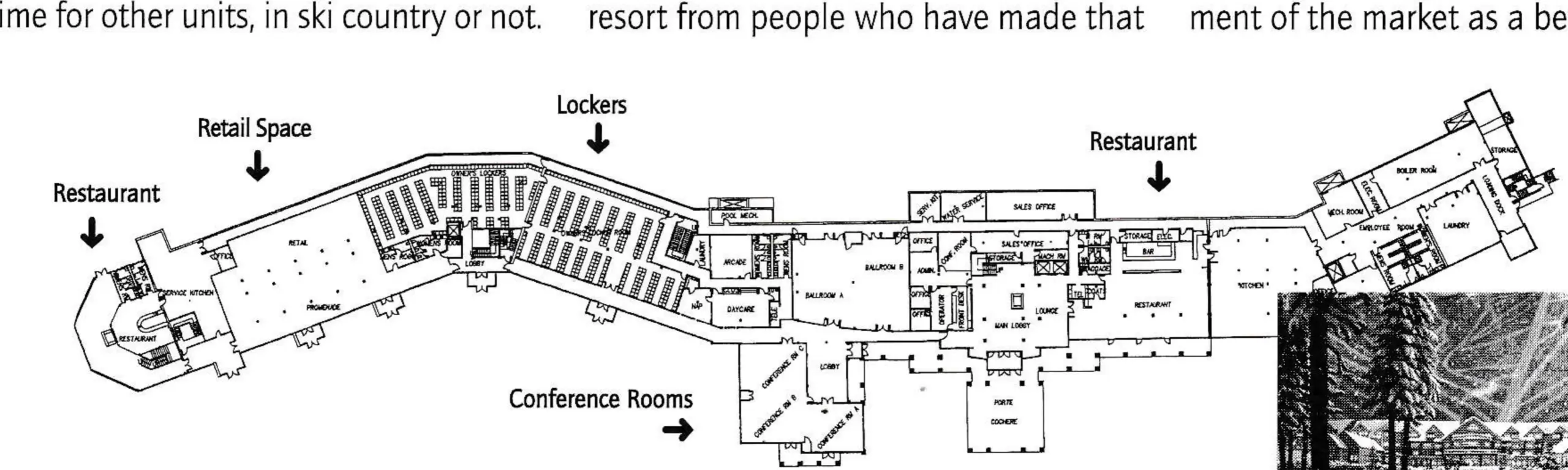
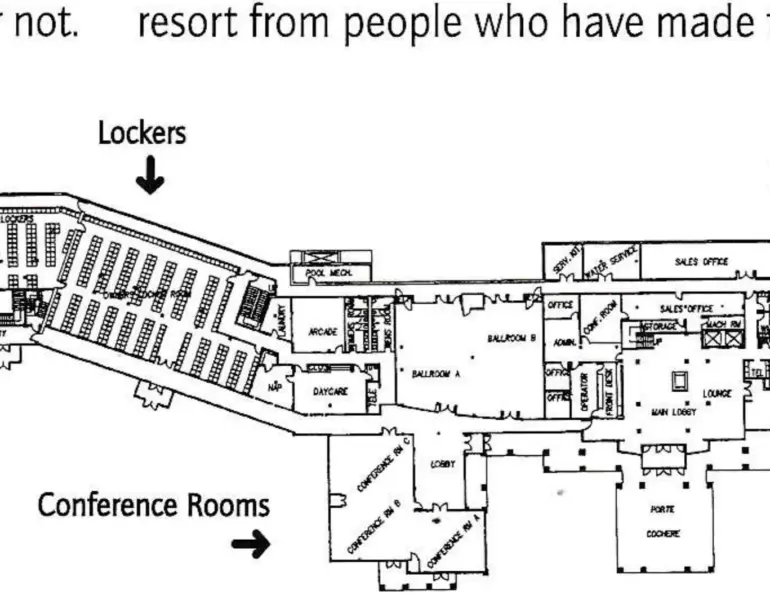
Currently, all the ASC resorts have quarter-share properties in existence, under development or in the planning stages— approximately one million square feet under construction over the summer. The Summit Hotel at Sunday River, Me., has been open for some time and the Grand Summit Hotel at Attitash/Bear Peak, N.H., opened in February. Three other time-share hotels were, at this writing, under construction with openings planned for the 1997-98 ski season: a second one at Sunday River, plus new ones at Killington and Mt. Snow in Vermont. Prices range from under $20,000 for a studio at Attitash/Bear Peak to $130,000 for a three-bedroom unit at Killington. The Grand Summit Hotel at Sugarbush, Vt., is in the permitting process and a similar one is under consideration as part of the master plan for The Canyons (formerly Wolf Mountain and before that ParkWest) in Utah.
Owners of ASC quarter-share properties automatically belong to the Crown Club, which includes space-available priority at other resorts, and also to Resort Condominiums International, operator of an exchange program for condo owners, to further interchangeability. This benefits the customers and also the resorts, which have fewer cold beds. Crown Club’s space-available program enables owners to use the hotel at a nominal charge, but not necessarily their own unit, if it is less than 90 percent booked within 48 hours of planned arrival. In addition, owners who do not use their units for their full time can put them in the rental program.
New age timeshare is not limited to large ski resort operators. Jiminy Peak, a mid-size Massachusetts resort, has identified similar benefits for the resort and for buyers, but has scaled the concept down one level offering one-eighth increments, which translates to six weeks one year and seven the next.
Jiminy’s first 12-unit building went in last winter, with a projected build-out to about 150 studio through two-bedroom units within the next five years. Roughly half of the units have been sold, with Jiminy Peak acting as the managing agent and also realty agent in the event of resale. Tyler Fairbank, who heads the project for Jiminy Peak, says that for winter, they could have easily sold twice the inventory they have, but that “midweek is still slow, so we can’t justify adding another 100 rooms.”
Fairbank says that Jiminy Peak prices units to sell and does not plan on high margins in the development area. One-eighth shares of a studio unit carry a $15,900 price tag and $24,900 for a quarter share, which comes to under $2,000 a week—a bargain in the world of timeshares. He notes that they have to sell “a lot to break even at quarter-ownership,” but he adds that “our incentive is to build a stronger resort economy by relying on a strong bed base.”

| Week No. | 1997 (Friday to Friday) | 1998 (Friday to Friday) | 1999 (Friday to Friday) | 2000 (Friday to Friday) |
|---|---|---|---|---|
| 1 | Dec 27 – Jan 3 | Jan 2 – Jan 9 | Jan 8 – Jan 15 | Jan 21 – Jan 28 |
| 2 | Jan 24 – Jan 31 | Jan 30 – Feb 6 | Feb 5 – Feb 12 | Feb 18 – Feb 25 |
| 3 | Feb 21 – Feb 28 | Feb 27 – Mar 6 | Mar 5 – Mar 12 | Mar 17 – Mar 24 |
| 4 | Mar 21 – Mar 28 | Mar 27 – Apr 3 | Apr 2 – Apr 9 | Apr 14 – Apr 21 |
| 5 | Apr 18 – Apr 25 | Apr 24 – May 1 | Apr 30 – May 7 | May 12 – May 19 |
| 6 | May 16 – May 23 | May 22 – May 29 | May 28 – Jun 4 | Jun 9 – Jun 16 |
| 7 | Jun 13 – Jun 20 | Jun 19 – Jun 26 | Jun 25 – Jul 2 | Jul 7 – Jul 14 |
| 8 | Jul 11 – Jul 18 | Jul 17 – Jul 24 | Jul 23 – Jul 30 | Aug 4 – Aug 11 |
| 9 | Aug 8 – Aug 15 | Aug 14 – Aug 21 | Aug 20 – Aug 27 | Sep 1 – Sep 8 |
| 10 | Sep 5 – Sep 12 | Sep 11 – Sep 18 | Sep 17 – Sep 24 | Sep 29 – Oct 6 |
| 11 | Oct 3 – Oct 10 | Oct 9 – Oct 16 | Oct 15 – Oct 22 | Oct 27 – Nov 3 |
| 12 | Oct 31 – Nov 7 | Nov 6 – Nov 13 | Nov 12 – Nov 19 | Nov 24 – Dec 1 |
| 13 | Nov 28 – Dec 5 | Dec 4 – Dec 11 | Dec 10 – Dec 17 | Dec 22 – Dec 29 |
The Bentley Brook quarter share at Jiminy Peak, Mass., schedules the time that each “quarter owner” will have each year five years in advance. The owners are put into one of four groups and each group has a separate 13-week schedule. Each year, the schedule is different so that each owner has the chance to spend the bigger holidays and weekends at the condominium.
Any discretionary real estate purchase is vulnerable to regional or national economic downturns as the Loon Mountain, N.H., experience proves. The resort developed the Mountain Club on Loon a decade ago with the intention of selling quarter-shares and operating the property as a timeshare hotel, while retaining ownership of such common areas as the lobby, restaurant, meeting facilities and laundry. As everyone remembers, the late ’80s became a resort real estate minefield and Loon’s plan blew up. Around 1993, Marriott Ownership Resorts took over management of the hotel and also leased the common areas from Loon.
Now Marriott is gone and the unit-owners association owns the common areas and leases the hotel operations to Connecticut-based Newcastle Hotels while Loon Mountain again runs the food-and-beverage end. As Newcastle’s man at Loon, Dick Hamilton tells the story, an entity called Loon Club Corporation emerged when the original developer went under and purchased the unsold inventory and still owns about 20 quarter-shares, which are in permanent hotel inventory.
Furthermore, the Mountain Club on Loon and the ski area have developed a symbiotic relationship. Lift tickets are sold at the hotel’s activities desk, guests may charge everything from tickets and mountain bike rentals to restaurant meals to their rooms and, to all appearances, it is one seamless operation. Hamilton says that the Mountain Club on Loon is courting off-ski-season business, while Loon Mountain is developing into more of a year-round facility.
In all these projects, the price/value relationship seemed to be important to potential buyers and the fractional ownership format, by itself, was no guarantee of a project’s success. The Doral Telluride Resort & Club, developed five years ago at the base of the Telluride ski area (but not by the mountain company) is a classic case. A fancy real estate office in downtown Telluride was trying to peddle a hotel room for five weeks a year for roughly $60,000, but there were few takers. Ultimately, the Doral’s perilous financing scheme collapsed and the property was bought for far less than building costs and turned into the successful Peaks at Telluride, a conventional hotel.
“Real estate drove a lot of ski areas into Chapter 11,” says ASC’s communications manager Skip King, who attributes his boss’s success to his refined sense of timing. “Sometimes, the ski areas themselves have been profitable, but they ended up sitting on a lot of inventory and revenues went to keep the [construction] notes alive so there was nothing left for mountain infrastructure improvements.”
Still, Otten doesn’t think real estate development ought to frighten ski area managements. “Don’t be afraid of real estate,” he tells operators. “You’re already in the craziest business.”
In addition to working as Skiing magazine’s travel editor, Colorado-based Claire Walter is the co-author of Buying Your Vacation Home for Fun & Profit, published by Dearborn Financial Publishing of Chicago. Telephone number: (800) 638-0375.

