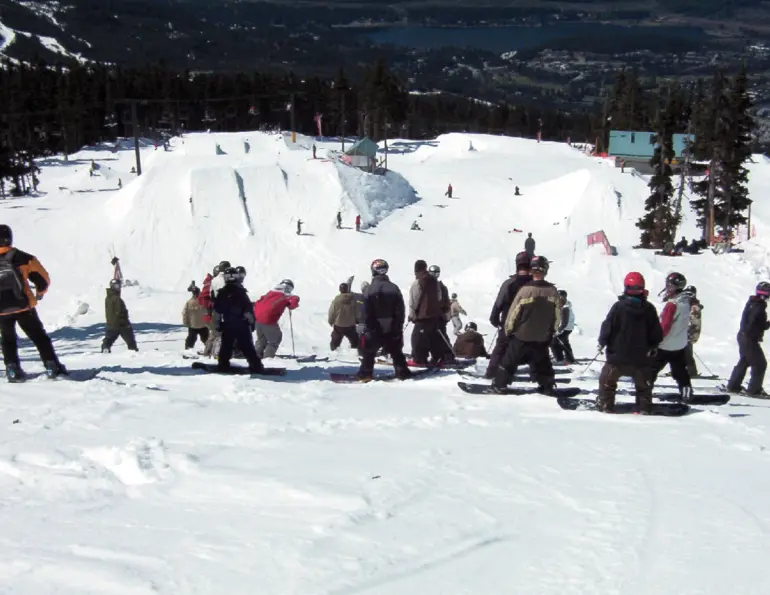
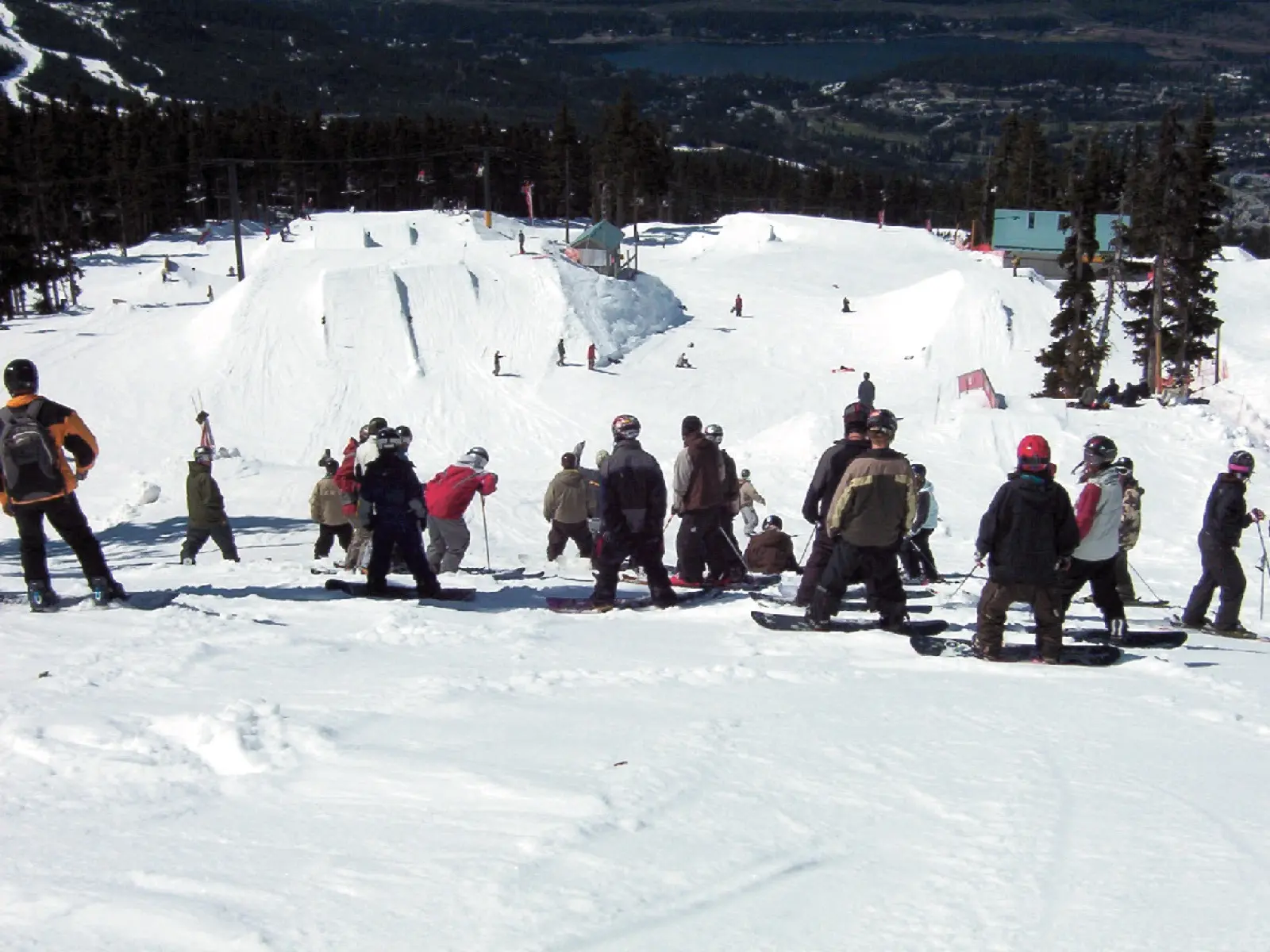
Beginners—they used to be the bane of terrain parks: Clueless kids rolling over 60-foot tabletops, rookies traversing across landing zones, and head-in-the-cloud day dreamers cutting everyone off.
“Don’t build a bad park, that’s worse than no park at all. And a bad pipe is worse than no pipe at all. Do it right and make it good.” —Jeff Flood, terrain park manager for Timberline ski area and part of the X Games park and pipe design team.
Thanks to a focus on quality and a goal of progression, those days are fewer and farther between, as the traditional one-park-per-resort system changes. Learning areas are being developed, rails are becoming friendlier, and safety is being promoted.
It’s not all about the beginner, mind you. Pro photo shoots remain integral to marketing campaigns, and builders continue to make technical rails. Trends are still followed and elite riders catered to. Riders and skiers see high-end parks showcased in the media and want to ride them.
The difference for the 2004/05 season is this: High-end doesn’t always mean huge and intimidating. High-end means taking care of your clients and ensuring their terrain park experiences are memorable and positive.
Progress Through the System
“We really concentrate on having a progression [in our parks],” says Whistler Blackcomb terrain park grooming supervisor Steve Petrie. “We try to tailor everything to skill levels.” Petrie and his crew have been ahead of the skill-oriented park curve for years. Whistler Blackcomb is one of the busiest resorts in the world, and has had to accommodate pro-level athletes along with those striving to become one. The result is a series of terrain parks carrying users from the most basic features up to the massive jumps of video and magazine lore. For Petrie, carefully tailoring a progression of features for every level of user is key.
“Our beginner park is where people can learn to ride transitions, with rollers and really wide rails. From there, it progresses up to smaller tables and more difficult rails,” he explains. “There’s a direct progression from one park to the next.”
That sentiment is echoed across the continent, as terrain park designers and resorts are determining the best ways to promote responsible terrain park use and reduce accidents.
Oregon’s Timberline ski area utilizes a similar park system to Whistler Blackcomb’s. “Our clientele is mostly intermediate to advanced,” says Timberline’s Jeff Flood, a veteran of terrain park design since 1981. “But I tell you, our beginner to intermediate parks just get hammered. I’ve talked with a lot of guys around the business and they’re saying the same thing. To get people to the big park, you have to have something in between for them to learn on.
“We used to just build huge giant hits and nobody could learn how to do them. We weren’t progressing them up to the big features, we were just saying, ‘Here it is.’ So we’ve learned the progression thing over the years; start them small and they’ll work their way up.”
Take a Lesson
Progression is now being addressed at resorts through terrain park freestyle lessons. But to provide lessons for customers, there must be a park suitable for lessons, preferably away from high-flying experts.
That’s how Mount Snow handles it. “We have the smallest park geared toward the ski school, our Perfect Turn program, so people have a more comfortable venue with less pressure for them to practice tricks and get used to transitions and air,” says Elia Hamilton, freestyle terrain director for the American Skiing Company and terrain park manager at Mount Snow.
Linda Crockett, spokesperson for the American Association of Snowboard Instructors, says teaching programs are enhanced by terrain that allows incremental increases in skill. “Some things that make all the difference for the entry-level park group include features that are relatively lower, softer, and rounder,” she explains, [features] that are easy-on and easy-off, and are generously spaced apart.”
Terrain park managers like Flood, Petrie and Hamilton communicate with the ski school instructors to make sure that the instructors’ teaching needs are incorporated into park design. “We talk with the ski and snowboard school; that’s why we came up with the idea of progression. They get a lot of feedback [from teaching lessons],” Petrie notes.
“At first, we had a big problem when people would bring lessons in the park,” he says. “There would be a train of 10 people trying to move through the main park. In the separate terrain garden, it’s mellower. The ski school needs to have an area where they can get away from the crowds.”
Educate the Masses
Providing beginner, intermediate and advanced parks is one thing, encouraging people to use them properly is another. Hamilton believes the biggest challenge is developing a system comparable to the green, blue and black difficulty symbols universally used for ski runs.
“We’re really trying to direct people to the feature size most appropriate to their ability and making sure people understand there are differences,” he says. “We’re taking the guesswork out of it, taking some variables out. We figured it out decades ago with green circles, etc., we just have to figure out how to get the same message across using different symbols because it’s not necessarily the same thing.”
Focus on Features
Whether terrain parks are for beginners or pros, one thing remains the same: design trends change as regularly as the seasons. This year, look for features inspired by their roots—urban architecture for rails, of course, but also something new: natural mountain terrain is inspiring jumps.
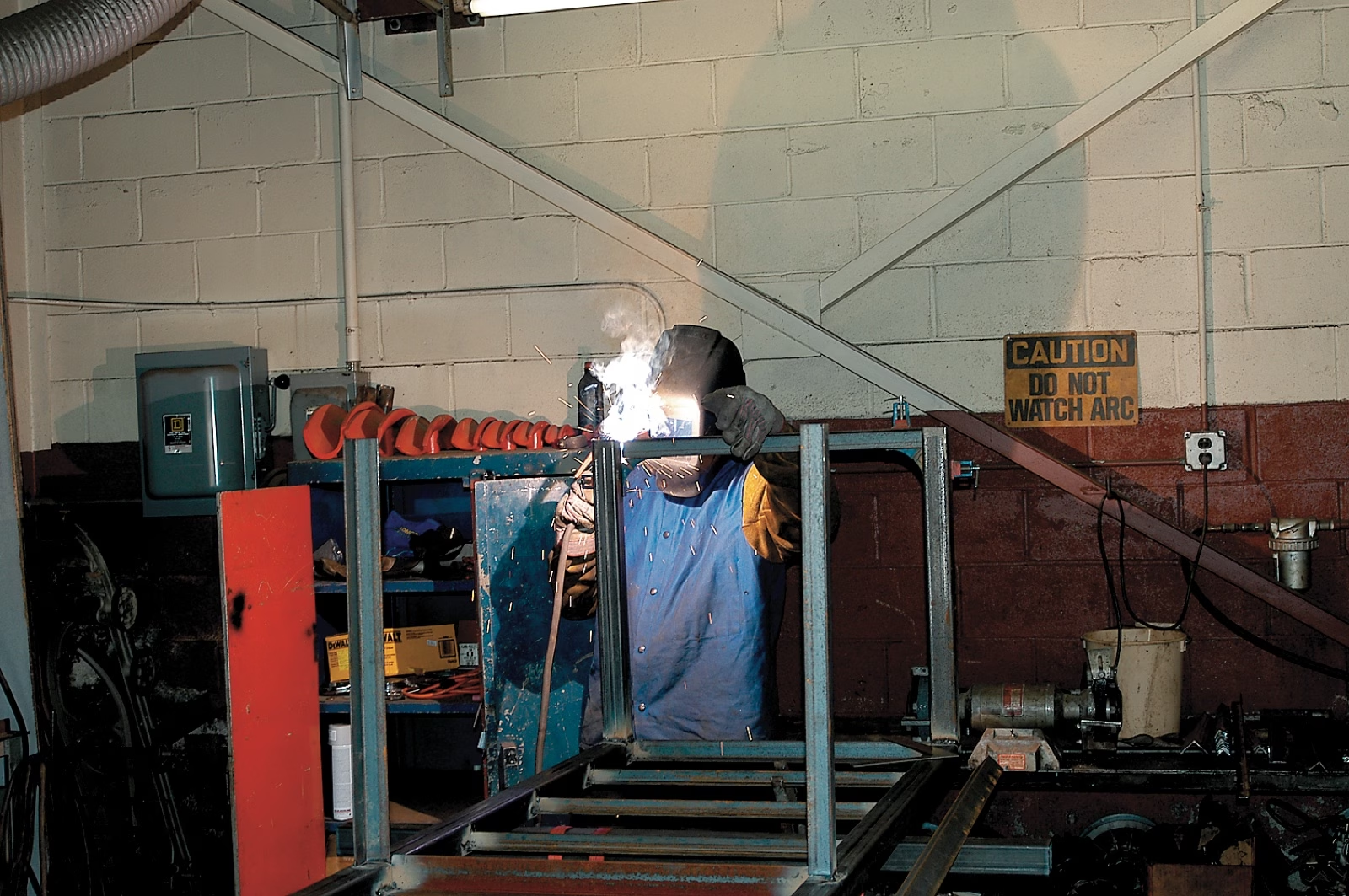
Rails and boxes: “Rails are super popular,” confirms Josh Lempert, terrain park manager for Sunday River resort in Maine. “Everyone wants to have them and everyone wants to ride them.”
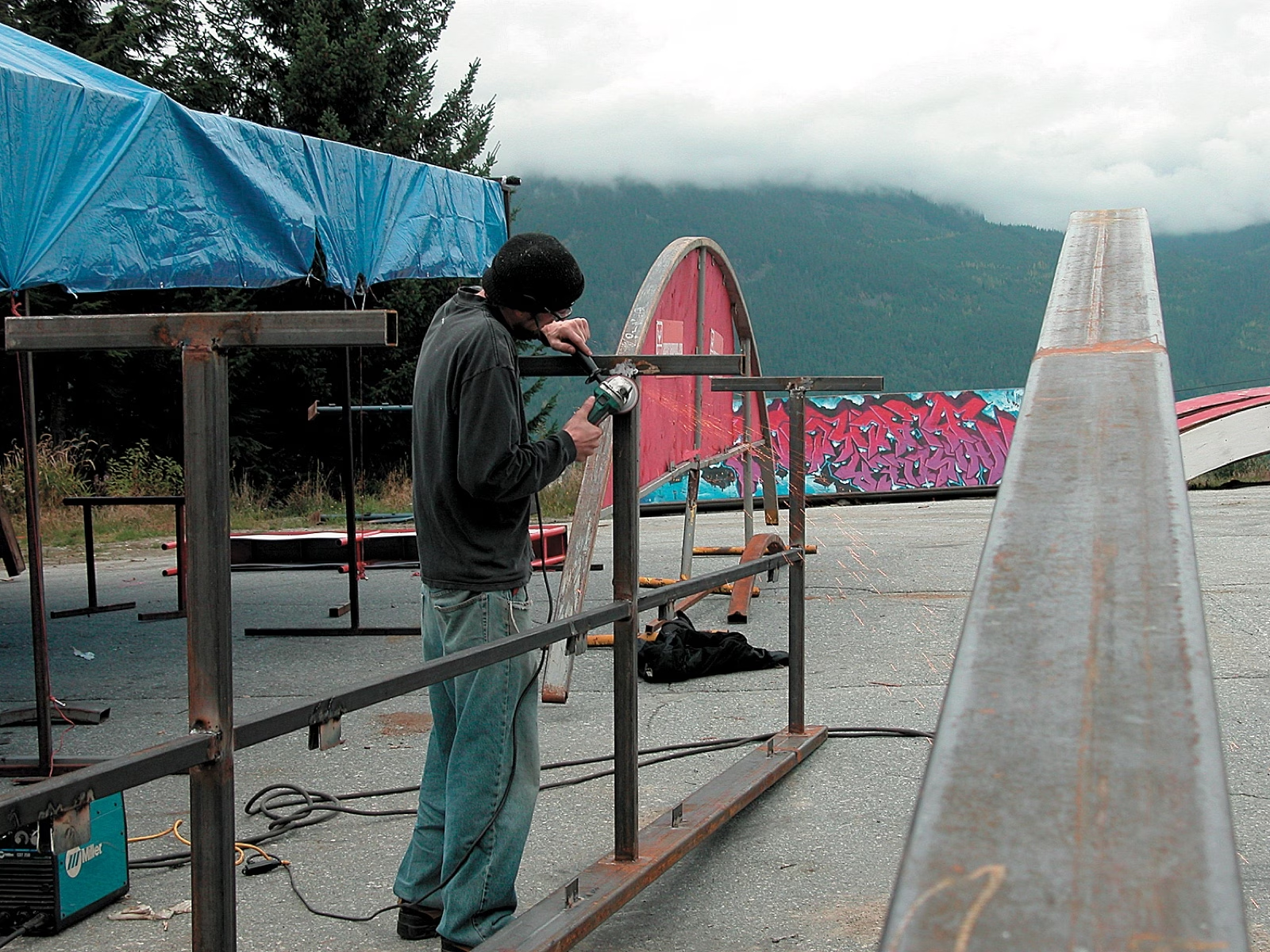
Lempert estimates Sunday River will have close to 40 rail features when the resort’s six parks open this season, up from 30 last season. Split evenly between boxes and rails, Lempert’s creations have a more urban feel, as he keeps his eyes open during trips to the city for inspiration. “I definitely try to mimic the stuff I see—kink rails, down rails, flat-down-flats, and double-kinks,” he says.
Those trends apply to boxes as well as the traditional handrail. Day Franzen, Heavenly Resort terrain park manager and owner of Railbuilders.com, says the bulk of Railbuilders’ business is now boxes, a trend he says started in the West and is now firmly entrenched in the East.
“The thing with the boxes is—if you’re creative—there are more options for new designs, whereas rails have kind of gotten stale as far as what you can do with the materials,” he says. “You can curve the boxes, use different angles and add kinks. Plus, they’re just friendlier to the riders, they seem less intimidating.”
With both boxes and handrails, Franzen agrees that urban-influenced style is the hottest trend in design. “The kids want the street on the slopes,” he says. “I even did a stair set last season with fake brick for all the skirting so it looks like it’s downtown somewhere. It’s kind of the hot thing right now.”
Petrie says his team will be building a lot of combination lines with their rails this season. He says they’ll set up 6 or 10 in a row (a “pod”) so riders can create interesting combos by linking rail tricks. “We’re keeping it fresh, really,” he says, “They [riders and skiers] get so good at sliding rails. No matter what we set up, they seem to kill it every time.”
Jumps: Like the terrain park handrail that looks just like its city equivalent, tabletop features, hips and spines are mimicking natural backcountry formations. Since his resort boasts some of the most popular backcountry terrain in the world, Petrie says he’ll try to incorporate more natural-style features into his parks this year, like step-up jumps (where the rider lands higher than his or her take-off point) and drop-offs.
Wallrides: Wallrides will continue to grow in popularity this year. “We’re doing wallrides for the first time,” says Franzen. Other areas are likely to do the same.

Combos: As far as design goes, Petrie and others say they’re better utilizing precious terrain park space by combining features, such as a tabletop with a hip built into the side and a rail to jib on top.
Craig Burley, terrain park manager for Mount St. Louis Moonstone, Ontario, says his resort’s small space has to be maximized. “All the features have two or three options for combinations because they [riders] are doing the same run over and over again,” he says. In addition, his tabletops each have two to three take-offs, allowing users to jump where they’re most comfortable.
Like multi-feature tabletops, says Franzen, wallrides can be combined with other elements to get more bang for your buck. At Heavenly, he’s doing “a lot of combination boxes, like wallride-lipslide combo boxes. So there’ll be a wallride, lipslide and then a top section that’s a regular fun box. So you’re getting three boxes in one.”
Superpipes: Most resorts have embraced large-transition superpipes, finding that both beginner and expert users prefer them. (Experts love the bigger airs made possible by superpipes, while beginners find the larger walls safer and more conducive for learning.) Superpipes have also become standard in competition, encouraging their construction at any resort looking to host a prominent event. In order to save both time and money—predominately in snowmaking and cat hours––when constructing the large-scale halfpipes, more and more areas are resorting to in-ground excavation.
Quality over Quantity
As terrain parks mature through what we can consider their adolescence, they are showing an increased emphasis on quality. Many resorts are choosing to replace features rather than add more, and a terrain park’s flow now receives more attention.
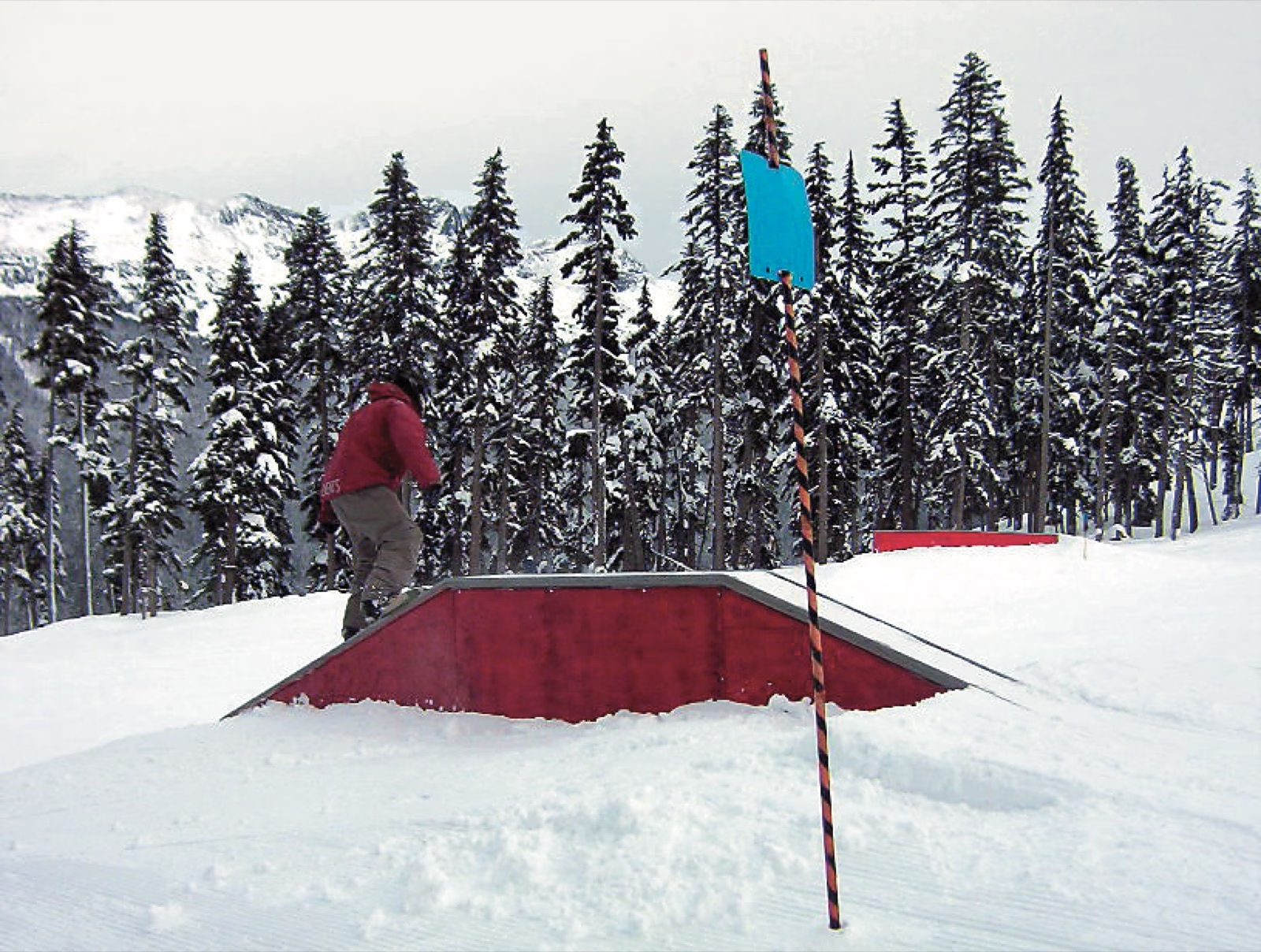
“We used to try and just pack as many jumps and as many rails as we could into the run without a flow to it,” says Flood. “We’d put all this stuff out there and think, ‘they’ll really like it.’ It turned out we were causing traffic jams. Now we’ve kind of backed off and said, ‘whatever we’re gonna build, let’s build it well and get a good flow to it.’”
For resorts located in small, competitive markets, quality of features and park construction is a matter of survival. Customers gossip, and if they have somewhere else to go, they’ll switch loyalties in a second.
“We groom our parks every night,” says Robert Huter, general manager of Mount St. Louis Moonstone. “We’re known to have everything in tip-top shape every day. If you’re going to make the commitment, go in and do it properly. If [your park] isn’t good, they talk and bad news gets out very fast.”
What’s Next?
As resorts increasingly cater to varying ability levels and provide lessons on how to use parks, terrain park design will be limited only by the imagination.
So think outside the box, like Petrie. He sees an ever-expanding future for rails, hits, and other features. “I could see them getting more adventurous,” he says. “Parks spreading outside of the designated terrain park area, so [skiers and snowboarders] aren’t just staying in one area all the time. That’s my vision.” He expects this would spark new excitement in freestyle riding.
This idea is not so far-fetched. The all-mountain park already exists, at California’s Bear Mountain. If you think you are seeing parks everywhere now, just imagine what the future holds.
Controlling Use
Safety is one of the terrain park’s greatest concerns. It concerns insurance companies, resorts, ski patrollers, park users and their parents.
It may have crossed the minds of the occasional resort owner or manager that life may just be a little easier minus a terrain park, never mind a series of them. However, three years ago, Intrawest-owned Blue Mountain in Ontario came up with a clever solution (also employed at Stratton, Vt., and Whistler/Blackcomb, B.C.).
It instituted a mandatory park pass for its advanced terrain park, The Badlands. The park is accessed by a separate lift, and staff check for park passes at the gate. Users have to pay a $10 seasonal fee, sign a waiver and watch a video on park safety and etiquette to obtain the pass. The result was a 60 percent decline in terrain park-related accidents in its first year, and the figures have remained low since. It’s a safety feature that’s proven popular with both parents and those who use the park.
“Getting rid of terrain parks is not the answer; educating riders on how to use them properly is,” Edwards says with conviction. “When we stop seeing such serious accidents, we can push the frontiers of terrain parks a little bit further. We are one of the few who allow inverted moves.” —KB
The Guest Editor’s Take
This article is right on. Each year terrain parks grow in popularity, and along with that the range of talent in the parks increases. Progression is now key. Learning areas facilitate the increasing demand for lessons on freestyle terrain, while advanced clientele want to go bigger than ever before. And as our parks become more crowded with people of all abilities, flow becomes more important, and urban features are a must.
There is definitely a a trend in terrain parks going from big and intimidating to fun and friendly. I really like the idea of making a beginner park with small, mellow features that set up well for lessons. Keeping this terrain away from high traffic areas and keeping the features low to the ground is important for improvement. The managers quoted in this article are right to say that communication between ski and snowboard school and park staff is crucial. This ensures that the area knows what features are working best for beginners.
I agree that signage is important, and that getting everyone to follow instructions is a challenge. Making the smaller parks fun for intermediate skiers and riders is what will ultimately keep these guests off the big features.
I am a huge proponent of quality over quantity. Cutting back the features and maintaining them well is a great way to accommodate more people in the park with a greater margin of safety. Having features with multiple lips is the best way to utilize snow and allow customers to maintain their comfort level. Combos also add dimension to your park. They allow riders different variations on the same feature and keep the park interesting.
And I love the urban rails and boxes. This allows us to be more creative and incorporate new ideas. Advanced riders like technical boxes and rails, so it’s important to have a handful of new ones each season, and to make changes to the parks throughout the season.
—Tim Boyd