

When other resorts install triple and quadruple chairlifts to get more skiers on the mountain sooner, Alta runs its lifts below capacity.
When other resorts shell out megabucks for expensive advertising budgets, Alta has no such budget.
When skyrocketing interest rates are a nemesis of other resorts, Alta enjoys a healthy return from high-yield certificates of deposit.
When comparable corporate board members and shareholders receive handsome stipends and dividends, Alta Ski Lift Co., pays none because, frankly, nobody has requested any.
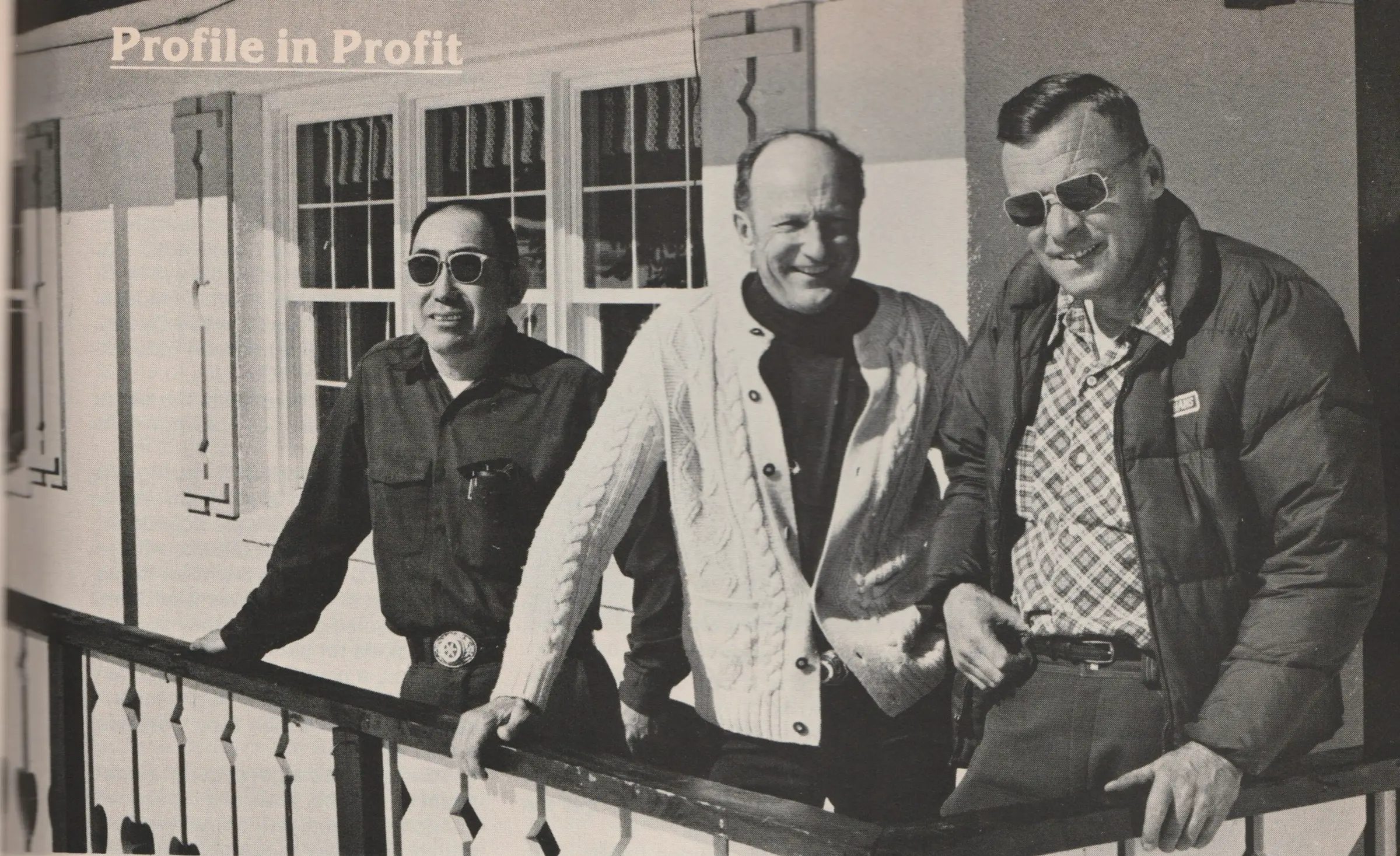
“I guess you can say Alta is as close to being a public service project as you’ll find in the ski industry,” shrugs lanky, mild-mannered Charles B. (Chick) Morton, president, general manager and board member.
“We’re a profit-making corporation, sure, but we plow all the money back into the operation, into capital investment. That’s the way it’s been since the resort opened in 1938 and that’s the way it’ll probably operate indefinitely.”
Explaining some of Alta’s Camelot-like procedures which would send shivers through most resort board rooms, Morton says its operation is as basic as an elementary lesson he learned in business school: Sell the best product you can at the most reasonable cost.
Alta operates on two basic financial levels—the money taken in and the money paid out—according to Morton. “Our ticket prices are based on the difference between our costs and expected income. We intend to make a profit and do, but our lift tickets are not based on what the traffic will bear or on what the other resorts charge.”
He says Alta is not influenced or concerned about competition, namely posh and luxurious Snowbird, one mile down the road, gigantic Park City and elegance-shrouded Deer Valley which opens for the first time this season a few miles from Park City.
“We’ve never changed our policies due to the competition,” says the resort executive. “We’ve always felt that if we treated our customers right we won’t be threatened by the competition. Frankly, we get more customers from them than they get from us.”
Continuing his argument, Morton says the larger, more exclusive, more expensive a competitor is, the better it is for Alta. “Many people don’t like bigness and we have the best—or some of the best—snow and ski conditions that you’ll find anywhere.”
“That’s why we don’t have an advertising budget. We let our customers do our promotion for us. We’re selling a quality ski experience at Alta and we prefer to put our advertising money into the hill and into paying our personnel more so that they can be happy, stay with us longer and ultimately treat the skiers cheerfully.”
The leathery, bespectacled Morton says the main reason a skier visits Alta is to experience a quality ski run each trip down the mountain. A skier doesn’t want to be looking over his shoulder all the time, fearing for life and limb, worried that he’s going to be steamrolled by a horde, says the resort president.
“Skiers may be in a lift line a little longer here than at most resorts because we operate the lifts below capacity much of the time, but that’s a small trade-off, especially when you consider you get a fine ski run and at very reasonable prices.”
Morton is visited periodically by irate skiers, usually first-timers at Alta, who rant on about the lines. Morton listens patiently and then asks them the reason for their visit to Alta.
“They tell me it’s to ski and enjoy themselves,” he says. “That’s when I explain our procedures which are aimed at giving them a more enjoyable trip down the mountain. They leave my office telling me they wished other resorts would adopt those procedures,” he grins.
As though justifying his policy of not crowding the mountain, Morton says that when the popular Germania lift was replaced a few years ago, many wondered why the original lift wasn’t left in place and another installed adjacent to it. Such an idea has the blessing of the U.S. Forest Service which controls most of Alta’s destiny.
“We didn’t want to inundate that area,” says Morton. “The Forest Service couldn’t believe it. But in looking back, I’m sure we made the right decision.”
In addition to not bothering with an advertising budget, Alta does not allow group discounts nor does it participate in various discount coupon programs. In fact, Alta does not financially support Ski Utah, the industry’s promotion arm, although Morton is a member of the executive committee of the Utah Ski Association, parent organization of Ski Utah.
“We receive phone calls from travel groups saying they have 3,000 skiers and ask what kind of a discount will be provided,” says Morton. “We tell them they’ll receive no discount and the fast-talking tour directors get the surprise of their lives.”
When the tour guides finally calm down, Morton tells them if they can find comparable ski conditions at prices lower than Alta’s, they should ski there. Most, if not all, end up skiing Alta.
Adding to Alta’s fare of gourmet skiing this season are two new chairlifts installed in a picturesque area which was heretofore the haunt of cross-country skiers near Devil’s Castle. The Cecret Lake (so spelled in early mining maps) and Point Supreme lifts increase the resort’s uphill hourly capacity to 8,000 (Park City leads the state with 14,500). The new Jan double-chairs and accompaying grooming equipment represent a $2 million capital investment, and as is Alta’s long-time procedure, not installed until the facilities are paid.
“We’ve had to increase our lift tickets from $9 to $10 to defray those costs,” explains Morton. “The lifts won’t really increase our skier days, merely spread out those skiers we usually attract.”
Reason for the projected lack of growth is the resort’s limited parking spaces. Nestled in narrow, glacial-cut Little Cottonwood Canyon, 30 miles southeast of Salt Lake City, Alta is not blessed with wide expanses of landscape conducive to parking lots. And there’s always the conservative nature of the Forest Service which constantly is looking over the shoulder of such plans.
“As much as we tend to cuss the lack of parking, that may be our regulatory device,” says Morton. “The only way we can increase our skier days with our limited parking is to have more skiers travel by bus, but more buses mean more crowded hill conditions.”
The “comfortable capacity” of Alta is 4,000 skiers a day. During last season when Alta hosted numerous bus loads of skiers from other resorts in the West which didn’t have adequate snow, the resort realized days with 7,000 skiers, a condition which Morton calls “a disaster.” He says “the picture changes dramatically when they unload 40 buses on us.”
But Alta’s success does not occur by happinstance or by tradition. It is earned annually.
This was exemplified during the lean snow season of last year. While most western resorts were floundering on marginal slope conditions, Alta recorded 5,000 skiers fewer than its all-time record of the previous year. Many skiers traveled by bus as they scoured the Rockies for skiable slopes.
Morton, a no-nonsense, on-site general manager, explains last season’s successes as though they were last week.
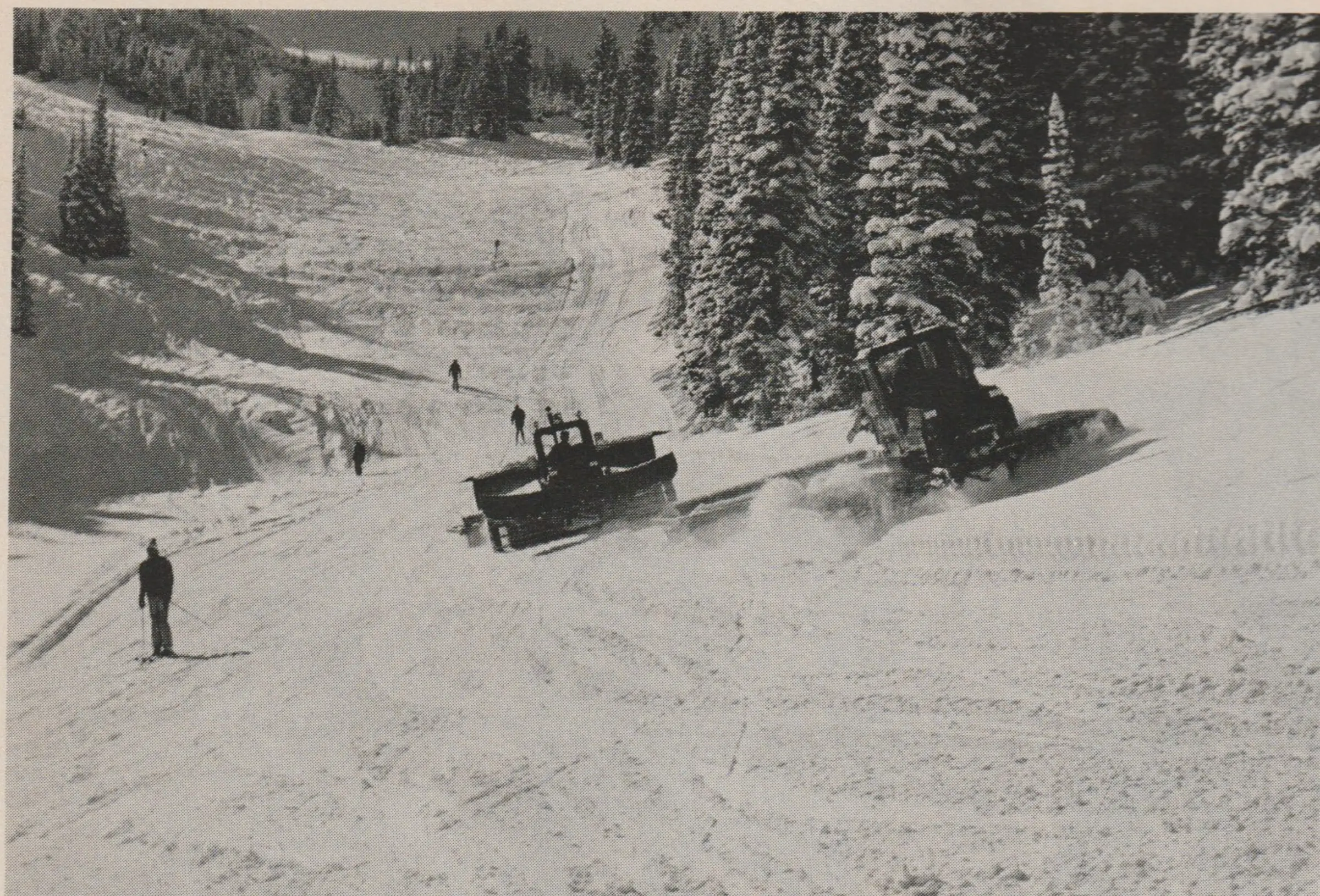
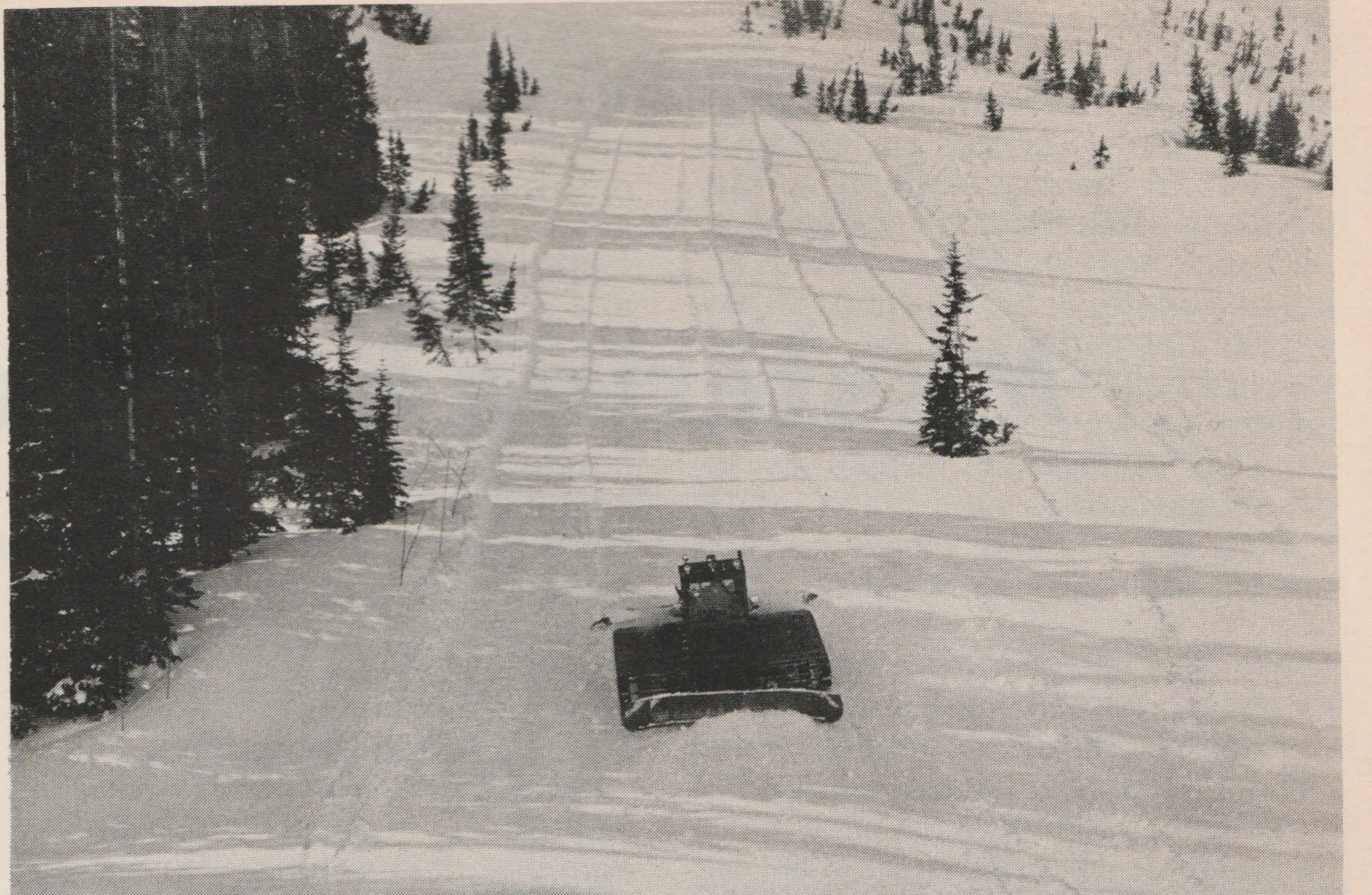
“We received a good base, a good storm on October 20-23 and it put down 26 inches of real wet snow. Well, we called out every piece of equipment and every person we could find to machine pack, foot and ski pack it. It’s very important that you pack that early snow or our dry air will turn it into sugar by sucking out all the moisture. That served as our base . . . it wasn’t the touted Alta powder, but it was skiable for most of January and a lot better than what was available at most other resorts which didn’t bother to pack.

“Any time we get a storm after mid-October that dumps enough snow to allow equipment on it, we pack it at a great deal of expense and effort. It sure paid off last year until January 23 when we got 80 inches. Then we were in great shape.”
In addition to minimizing its woes on the ski slopes, Alta is not strapped with fiscal-and personnel-intensive endeavors such as lodging, restaurants, ski shops and condominiums. It is strictly a lift company which has left the non-ski amenities to others.
“That’s very healthy for the entire Alta community, including the skiers,” explains Morton. “With five lodges and two condominiums, two day lodges and four ski shops under separate ownership, you have competition and that means better accomodations at better prices with better service.”
To understand Alta’s envied, albeit unorthodox, method of operation, it is necessary to know a little of its history.
A loose affiliation of Salt Lake City businessmen and ski buffs were upset because, in 1936, the Union Pacific Railroad launched its big ski resort in Sun Valley, Idaho. The Utahns figured it should have been somewhere along the populous Wasatch Front which today houses Alta, Snowbird, Park City, Deer Valley, Park West, Solitude and Brighton, all a half-hour’s drive from downtown Salt Lake City.
Well, the disgruntled Utahns acted on their own, formed the Salt Lake Winter Sports Association, under the auspices of the Salt Lake City Chamber of Commerce, and set out to finance and build a chairlift at the old mining camp of Alta, which in the 1870s had 7,000 residents, five breweries and 26 saloons.
All but one of the original incorporators have resigned, retired or have died. The survivor is Salt Lake City attorney S. J. Quinney, 88.
The premise of the founding of the association, according to Quinney, was to develop Alta as a ski area primarily for the benefit of Salt Lake skiers. And that’s still the motive as far as he’s concerned.
In the 1930s, Alta United Mines owned mining claims embracing 2,000 surface acres in the Alta area. American Smelting and Refining Co., which had advanced funds to the Alta United firm, raised no objections when it was proposed by Alta, through its colorful and storied mayor, George Watson, to convey the surface rights to the U.S. Forest Service. Thereupon, the Forest Service, as part of this transaction, verbally agreed to issue user permits to the Salt Lake Winter Sports Association to construct and operate a ski lift with the government agency controlling avalanches.
ASARCO officials reckoned that a mining company, with long experience in lifts and hoists, could assist in the design and construction of a chairlift. So it was ASARCO engineering which played a part in the birth of the first “Collins” chairlift in 1938.
Price of a ride: 15 cents.
The original paid-in capital was $10,000. Quinney now reckons equity after depreciation of what is now called “The Alta Ski Lift Co.,” is nearly $4 million. That includes cash or cash equivalent, lift and maintenance equipment and buildings.
As for his personal involvement, Quinney says “Everybody has to have a private charity . . . Alta is my avocation.” Over the years he figures he’s signed several hundred thousand dollars in promissory notes to finance Alta operations, especially during its lean early years. His life-long involvement with skiing and Alta won him a berth in the National Ski Hall of Fame in Ishpeming, Mich., in 1975.
Not even James Laughlin, vice president and substantial stockholder, gets a stipend from the resort. Laughlin, publisher of the avante guard New Directions Publishing Co., and his family, together with Quinney, control the company. Stockholders have never received a dividend out of earnings. And stock in the company rarely changes hands. Quinney and Laughlin’s strong ownership position, according to Quinney, resulted from the fact that both had steadfastly declined to cash in convertible notes they had taken to finance Alta lift company facilities.
Morton notes that neither Quinney or Laughlin get as much as a lift ticket in payment. “Joe (Quinney) doesn’t ski anymore,” grins Morton, “and Jay usually goes cross-country skiing when he visits from New York, so he doesn’t require a lift pass.” Morton says that both men are more interested in creating quality skiing than in financial return and that is what has made Alta so unique, so successful.
The company’s organizational chart is almost as abriviated as its list of shareholders: Quinney is board chairman and secretary; Morton is president and treasurer, and Laughlin is vice president. Quinney and Morton are the executive committee. Janet Lawson, Quinney’s daughter, is the fourth member of the board.
Morton persistently credits long-time key employees with the success of the resort’s day-to-day operations since he became general manager in 1958, after a six-year stint as manager of the Alta Lodge.
“I’ll put my departments against any in the business. We have one of the top ski patrols in the country, the top avalanche control unit in the country, the best lift crew, the best grooming crew and our ski school is internationally known,” claims Morton.
He credits the resort’s quality performances to minimal personnel turnover among important supervisory personnel. Some 30 supervisors are on the payroll year around; during the summer performing maintenance which this year cost some $300,000.
Alta’s hierarchy has Frank (Buck) Sasaki, lift superintendent, an Alta employee for 30 years; Hans Brogle, assistant superintendent, an employee for 25 years; Alf Engen, the legendary ski school director who’s been affiliated with the resort off and on since its start; and Max Lundberg, assistant ski school director, who has been on the payroll the past 18 years.
“They are the people—along with Joe Quinney and Jay Laughlin—who personify Alta’s slogan,” says Morton, minimizing his own contribution.”
What is the resort’s slogan?
“Alta Is For Skiers,” he says. “And we never forget it.”
Vital Statistics
Alta, Utah
- Vertical Rise: 2000
- Top Elevation: 10550′
- Number of Lifts of each type:
Double chair: 8
Rope: 3 - Grooming Fleet:
four 3700 Thiokols
one 2500 Thiokol
one 2100B Thiokol
one 1200C Thiokol
two 1200 Thiokol
one 1400 Thiokol
one Pisten Bully (equal to 3700’s) - Amount of Terrain (acres or miles of trails): 1620
- Lift Ticket Prices:
Weekend Adult 10.00 Junior 10.00
Weekday adult 10.00 Junior 10.00 - Season Pass Price (standard individual)$250.00 (limited- balance thru drawing)
- Number of Employees:
Full-time 31 Seasonal 88
(not including ski school) - Number of Instructors:
Full-time 28 Part-time 42 - Miles of track-set cross-country trails: 0
- Facility Management:
Area Owned: Ski School
Concession: two Restaurants on Mt.
Independently owned & Operated:
four ski shops six restaurants
four rental shops five bars