


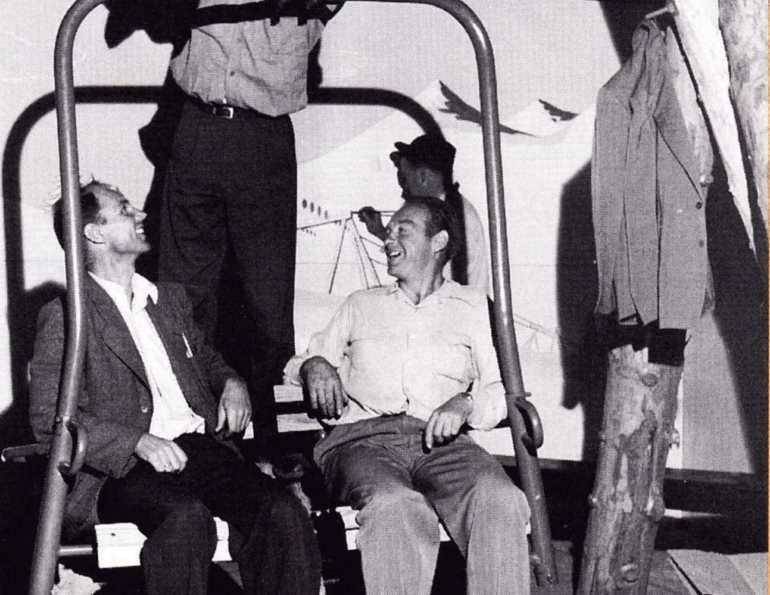
It was March of 1943 and a young German ski racer, Karl Ringer, was on a train from Munich to Nikolajew, a town on the Black Sea, where he worked as an engineer in a shipyard. It may have been in the middle of the war, but he sketched his idea for a chairlift, planning to file for a patent at war’s end. The design was radical. Not only was it for a double chair at a time when none had yet been built, but it also called for a “double-swivel” unloading feature that was unique— both then and, as it turns out, forever.
By the time Ringer came to America in 1950, he had already absorbed a lot of American ski impressions. As a university racer, he had won the Dartmouth Winter Carnival downhill in 1934, and in 1938, he and his University of Munich teammates had financed their swing across America by yodeling and schuhplattling (traditional Bavarian dancing). It was also during this period that Ringer learned about the world’s first chairlifts that had been installed at Sun Valley a couple of years earlier.
Wolfgang Lert, later to become a Ski Magazine editor, remembers meeting Ringer at the time: “A very personable, bright engineering student and skier, he could see the potential for lift building in the U.S.”
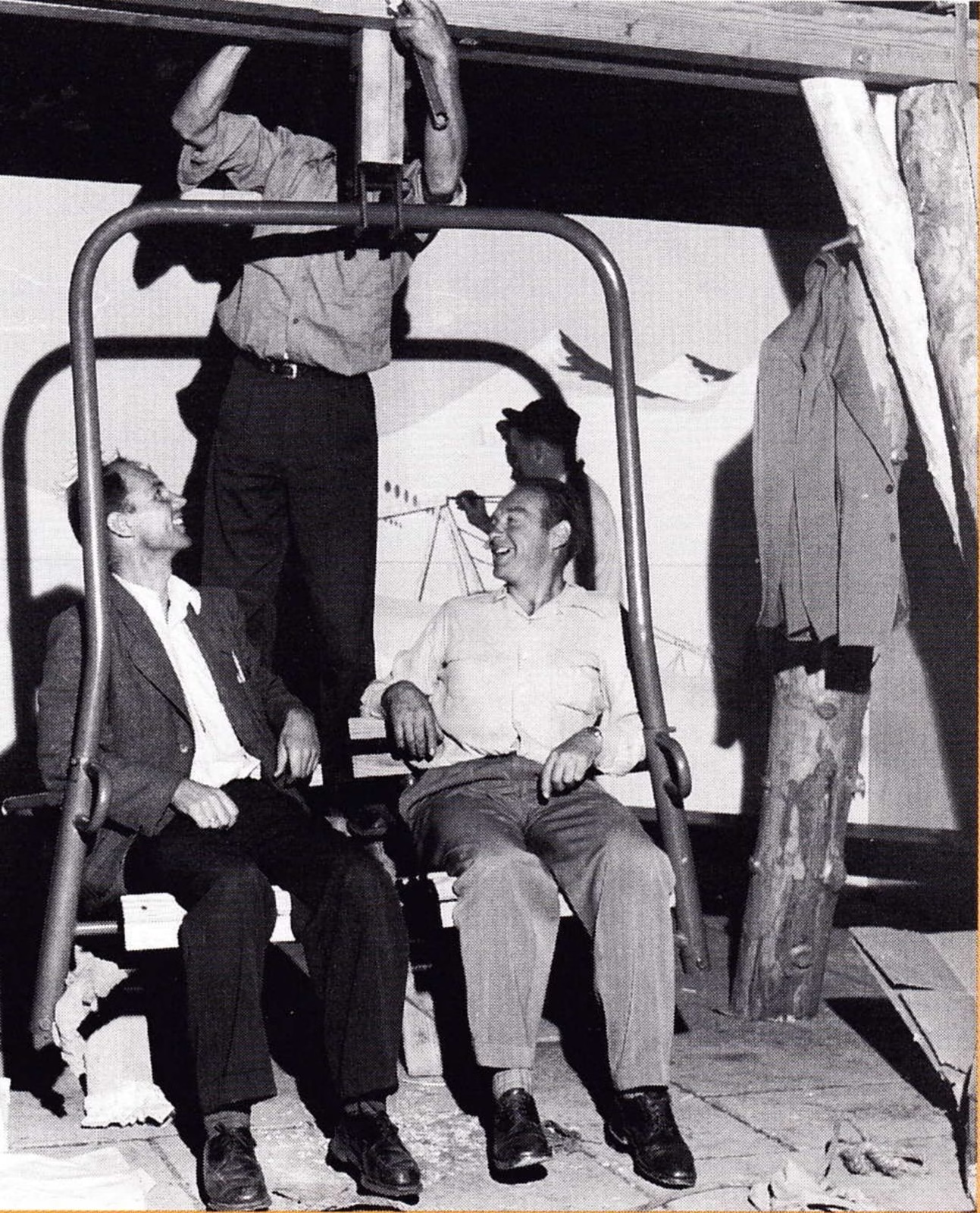
Arriving in the West in 1950 with high hopes and a complete set of his Double Swivel Chairlift drawings, Ringer lost no time in selling these lifts that same year to Chewelah, Wash., (now 49 Degrees North) and Holiday Hill, Calif., (now Mountain High East).
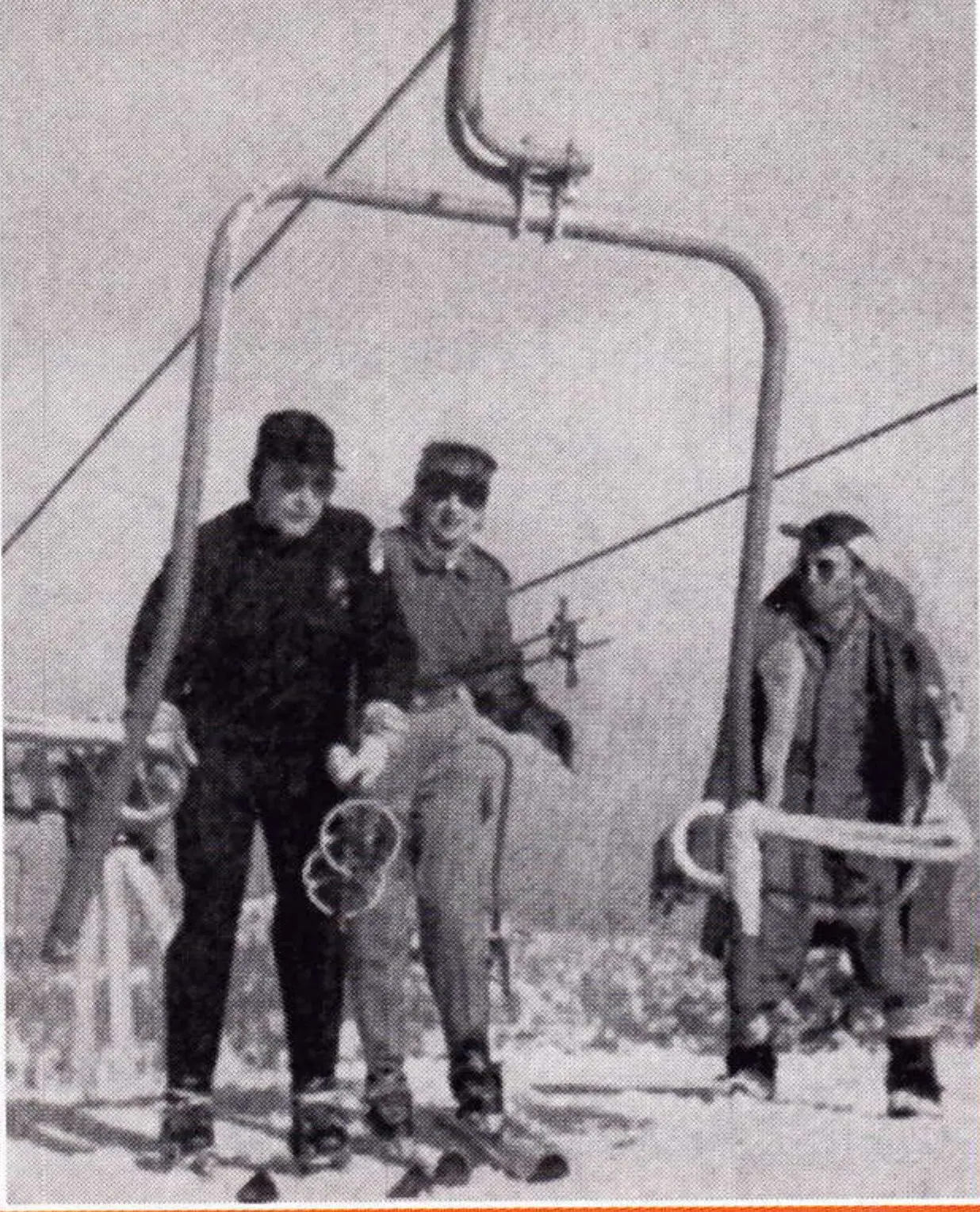
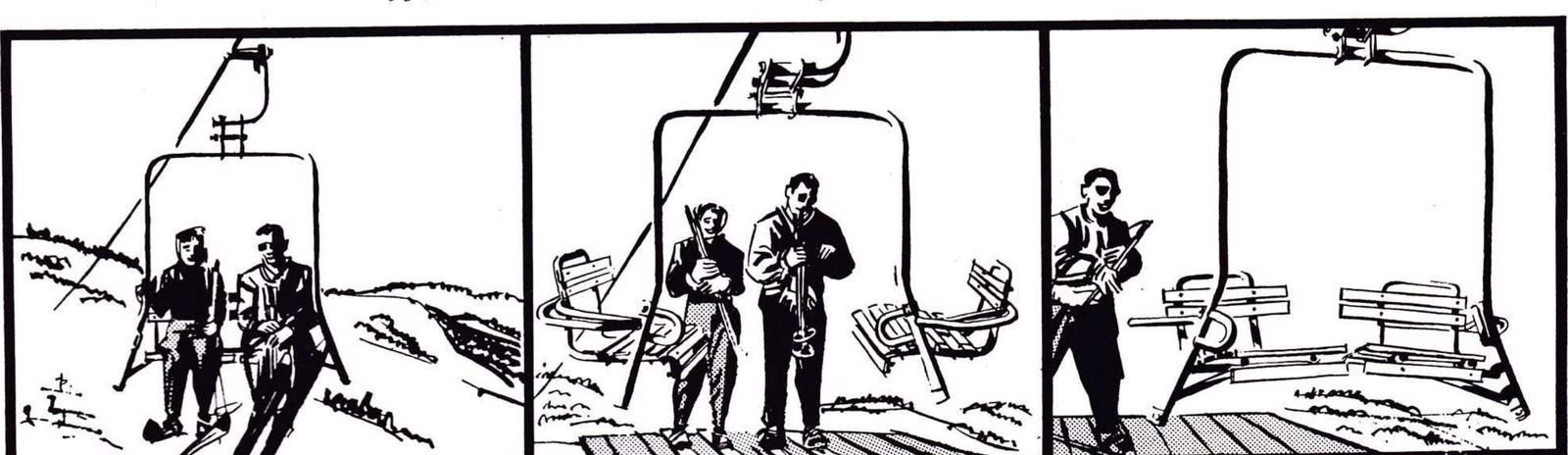
The swivel feature (which came into play on unloading only, since loading was standard) called for passengers to just stand up when arriving at the wooden unloading platform and the chairs would swivel around them. The two-passenger seat was cut in half and each hinged side was weighted and cantilevered to open when the skiers stood up and created resistance against the chair seat with their backsides. The bale of the chair simply continued past the skiers as they stepped onto the snow. The weighted seats would then swing back together.
In the meantime, the Korean War caused a prohibition on the use of metal for recreational facilities. This was a situation Ringer had faced before, building lifts in the shambles of post-war Germany and developing impressive resourcefulness in the art of scrounging. Years later, Ringer reminisced as follows in a letter to Wolfgang Lert: “Engineering consisted in developing a mental picture of what you wanted to build and then in looking around all the scrap yards and army surplus places to find something that might fit the picture.”
By 1952, Ringer was hurting for components for the lift he sold to Snow Summit, Calif., which made history as America’s first monocable detachable chairlift. It opened in January 1953. Scrounging the automatic couplings from old German cable-car sets, Ringer retrofitted his chairs onto the cable. Each chair had a sheave with the clutch attached at the grip. It was operated by a man who pushed a chair around the bullwheel to a point where the skiers sat down. He would push them further until the spring-loaded clutch would open the claws of the grip and then re-close on the moving haul rope. At the top drive station the clutch disengaged the chair from the cable and it would stop; the skiers would unload and a man would push the chair around the bullwheel to send it back down. The lift boasted some 1,150 feet of vertical and was 5,000 feet long, with huge spans between the 11 towers.
The final story on this particular lift was not a happy one. Dick Kun, today’s Snow Summit president, remembers, “The design was unnecessarily advanced and complicated for the technology of the times. It was labor- and parts-intensive.” The first winter, a chair fell off due to the clutch not engaging. People were injured, but not killed. But that following summer, the mono-cable system derailed on the uphill side, knocking the sheave off the chair as it came into a tower, dropping the chair and killing one passenger. It was never operated again.

In the meantime, Ringer continued installing fixed-grip, double-swivel chairs. His eighth and last lift was at Terry Peak, S.D., in 1953. (See box.)
The end of the story? According to Ringer, “In the winter of 1953-54…I traveled to Switzerland to talk to various lift manufacturers about a license. . .and signed an agreement with Bell on a small down payment plus royalties on lifts using my patent. I thought I had it finally made. But then I found that Bell had bought the patent in order to take it off the market rather than use it. Thus was the end of my skilift building.”
Ringer went on to a successful career centered around the Cold War that included work on starting ramps for the intercontinental Minuteman missile and then on to critical-path planning and development of a graphical method for the planning phase and computer controls for IBM International. He retired in 1971 in Bad Waldsee, Germany.
The bright comet of Ringer’s skilift career was short. Heinz Steinman, son of one of the founding partners of Holiday Hill, concludes: “When you look at it on paper, it looks like a terrific idea, but people’s instinct was to run away from it instead of standing still and letting it go by you. Then, when you demonstrated that the chair would split in half, well, can you imagine the looks on their faces?”
The author acknowledges help from: Karl Ringer, Germany; Jack Morcom, Lead, S.D., Dick Kun and Wolfgang Lert, California; Eric Baaken, 49 Degrees North, Wash.; Greg Stafford, Mt. Rose, Nev. Ernie Smith, Gene Schalack and Ole Alm, Chewelah, Wash.
Chronology of Ringer Chairlifts
A total of eight Ringer chairlifts in four western states were installed between 1951 and 1953, seven of them Double Swivels. Here is the historical record.
- 1. 1951 Chewelah, Wash. (now 49 Degrees North)—3,800 feet long.
- 2. 1951 Holiday Hill, Calif. (now Mountain High East)—over 5,000 feet long with 1,600-foot vertical (“almost double that of any other Southern California chair lift,” said Ski Magazine, January 1951.)
- 3. and 4. 1952 Mt. Baldy, Calif. — 4,000 feet long by 1,330 feet vertical and 2,600 feet by 1,020 feet vertical.
- 5. and 6. 1952 Reno Ski Bowl, Nev. (now Mt. Rose)—Transportation lift from Sky Tavern, abandoned following construction of all-season road. Towers still visible along Mt. Rose Highway. Also, chairlift 4,500 feet long that operated until 1971 when it was converted to a Riblet.
- 7. 1953 Snow Summit, Calif.— America’s first detachable mono-cable. 5,000 feet long, 1,150 feet vertical.
- 8. 1953 Terry Peak, S. D.—4,500 feet long, by 1,150 feet vertical.

