


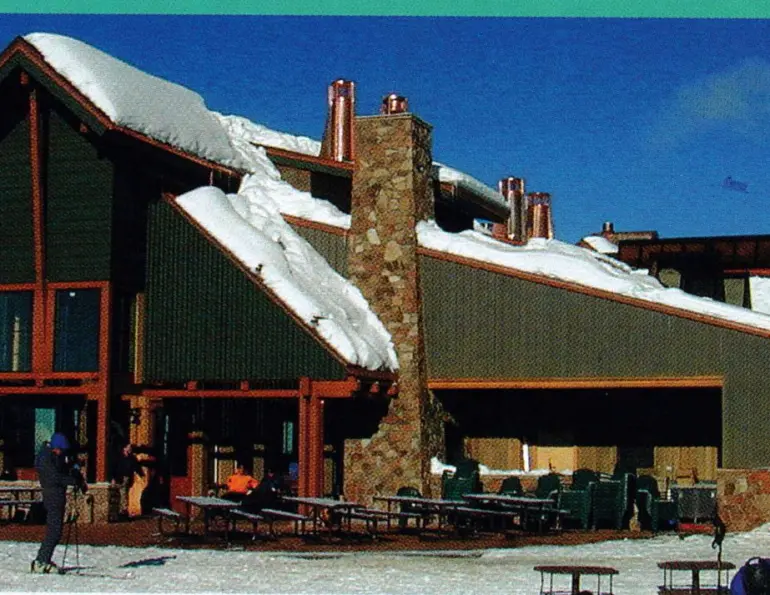
Most buildings are resource pigs. They use 30 percent of the all energy in the U.S. and 60 percent of the electricity. Construction consumes one-fourth of all wood harvested and three billion tons of raw materials annually. Construction and demolition debris fills landfills, wastes valuable materials and costs considerable money to cart away.
But buildings don’t have to be so environmentally damaging. Green development is an approach to design, construction and management that reduces the impact of buildings on the environment and offers many benefits to owners and occupants. These buildings use less energy and water, meaning they cost less to operate; they are more comfortable, often using natural ventilation and avoiding toxic adhesives and plastics; and they look better, blending into the environment and using sunlight to supplement heat and interior lighting.
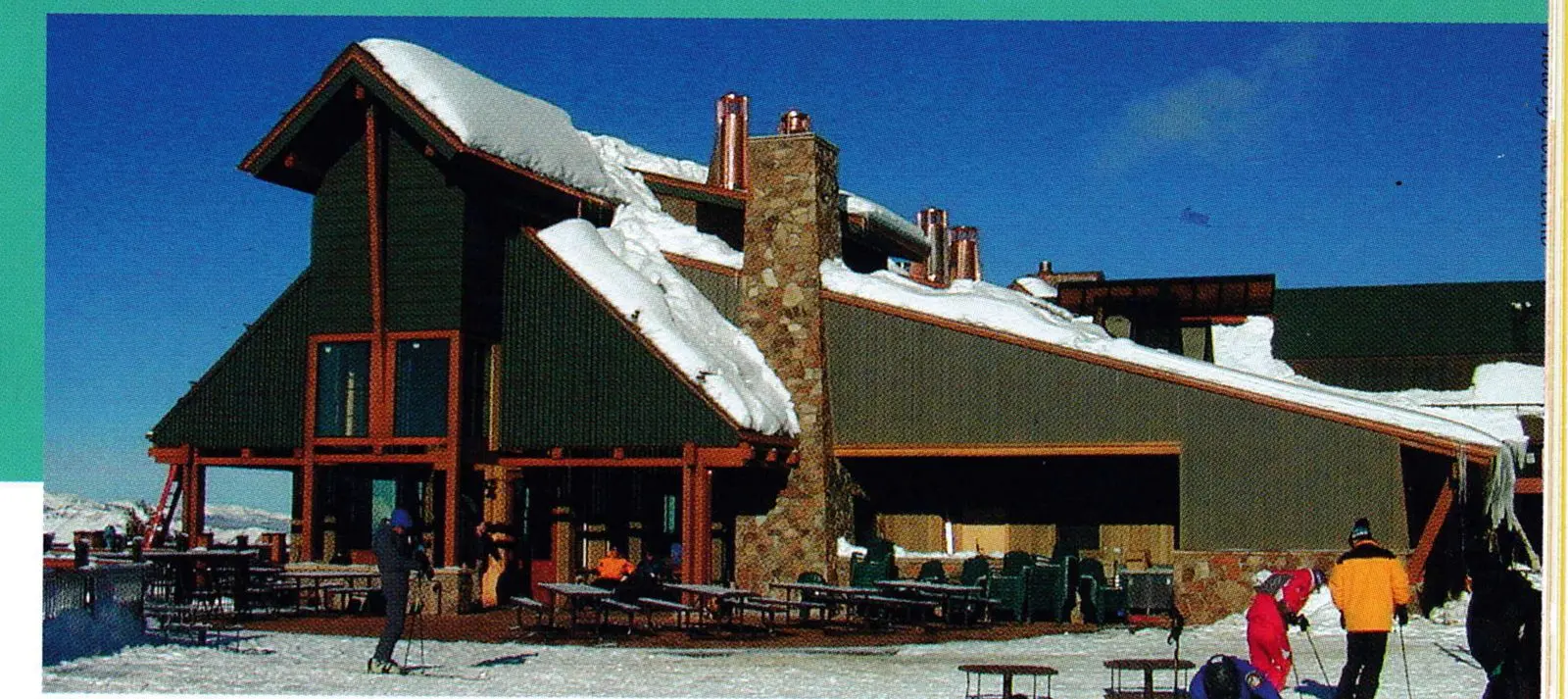
Last year, Aspen Skiing Company took the concept of green development to heart when it planned the new Sundeck restaurant on top of Aspen Mountain. The company’s planning and environmental affairs departments decided to look at ways to make the new building (and the demolition of the existing 50-year-old structure) more environmentally sound and less expensive to operate than the former.
The team came up with a two-pronged approach. First, the Sundeck would be deconstructed, not demolished, so that salvageable materials could be reused. Second, the new building would participate in a pioneering program to develop green-building standards. The project became one of the most ambitious environmental projects undertaken at Aspen.
Deconstructing and Recycling
In Aspen, as in many ski towns, new construction and remodels are a leading industry. As a result, almost half of the Pitkin County landfill is comprised of construction waste. Nationally, there are 136 million tons of this waste per year, enough trash trucks to reach halfway to the moon. In many ski towns, the dumps are short on space and land is costly, so it’s becoming more pressing to find alternatives to throwing the old stuff away. In our case, instead of bulldozing the old building, we “deconstructed” it—essentially running the building process in reverse—to remove useable items, sort metal, wood and glass and, finally, grind the insulation, sheetrock and wood into pulp for composting. We started the deconstruction process during the second week of April, 1999. In 11 days, enough had been moved off site for construction of the new structure to begin. By using this approach on the Sundeck Restaurant, as well as the Snowmass Lodge and Club—a larger project undertaken at about the same time that used the same deconstruction methods—the company kept 84 percent of both buildings out of the dump. That’s 8,000 cubic yards of debris kept out, adding three months of life to the landfill. Best of all, deconstructing the old Sundeck cost $93,000 instead of the $135,000 that was bid for a conventional demolition. Grinding the remainder reduced volume sent to the landfill by a factor of five, meaning fewer truck loads, saved cash and less pollution. In fact, the county landfill manager waived his disposal fee of $21.50 per cubic yard because he would resell the ground up wood, sheetrock and insulation as compost. All of the interior appliances, furniture, wood trim, plywood sheets, glue lam beams and solid wood beams were either reused in the new Sundeck or sold as salvage in a monster yard sale. The Sundeck’s fireplace was also salvaged and donated to the Aspen Historical Society, which auctioned off the individual rocks to raise $25,000.
Faced with stacks and mountains of salvaged material, project managers held the yard sale in the Buttermilk Mountain parking lot. They placed a few newspaper ads and posters, then waited nervously to see if anyone would show up. They needn’t have worried. An hour before opening on a Saturday morning, there was a line of 20 pickup trucks waiting to get in. Almost everything sold in less than four hours: 100 sliding glass doors, 80 windows, a few 40-foot beams, dozens of fir closet doors and even a dumpster full of old plywood and roof beams. Aspen made $10,000 that day and applied it to the labor cost of deconstruction.
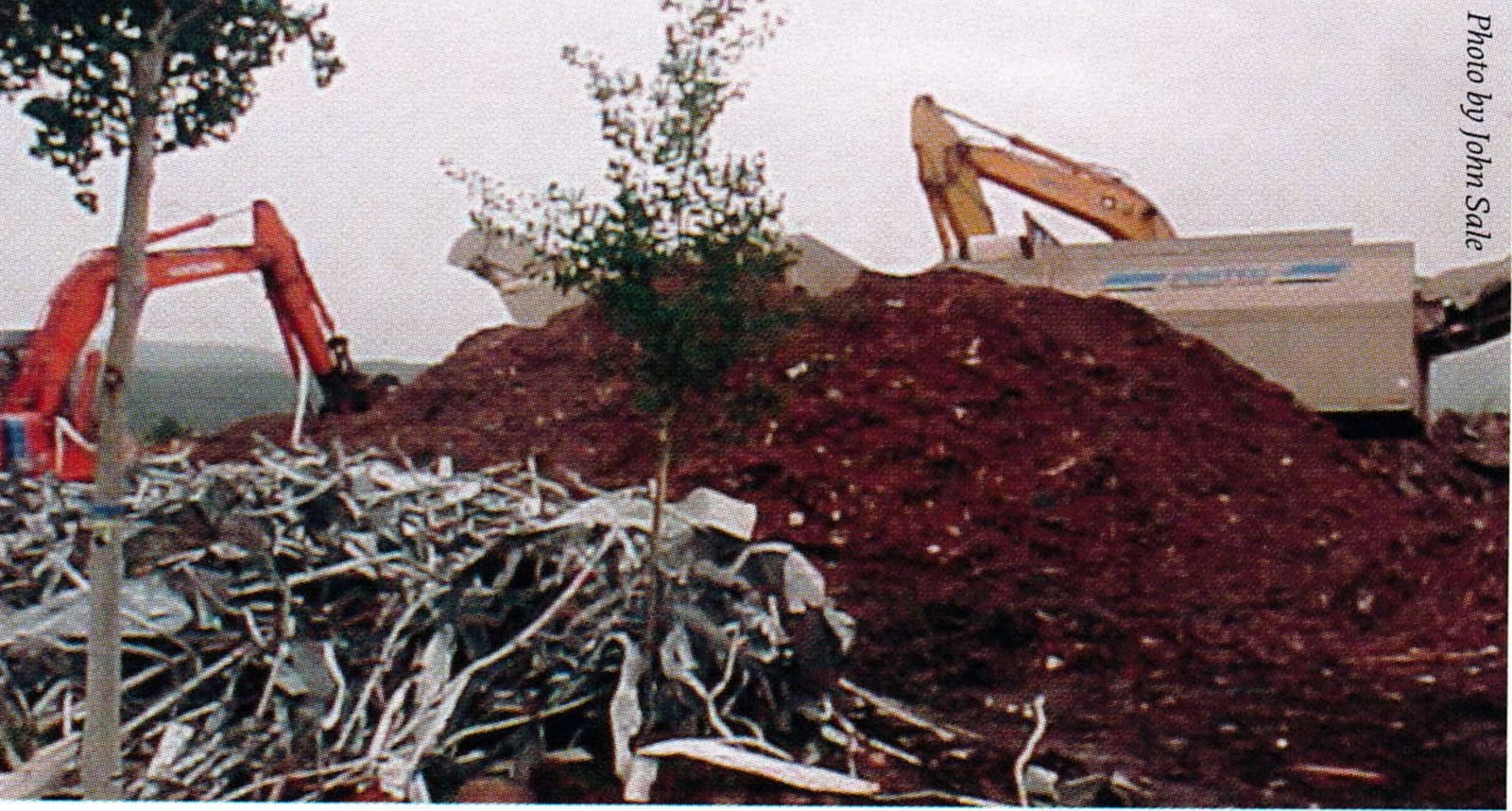
Photo by John Sale
By proving deconstruction is cost-effective, local builders are now following suit. Already, a nearby home has been deconstructed. And, thanks in part to the success of the salvage sale, a Boulder organization has shown interest in creating a regional salvage depot where builders and homeowners can buy and sell materials, which makes practical sense in ski towns where most building products are trucked in from distant locations.
LEEDing the Way
In building the new Sundeck, Aspen worked with the U.S. Green Building Council—a building industry coalition—to develop the Leadership in Energy and Environmental Design (LEED) program. When complete, LEED will provide a process builders can follow to create certified green buildings. The Sundeck is one of about three dozen buildings in the U.S. involved in this pioneering effort to standardize construction techniques and materials that use energy and resources efficiently and are healthy places to both work and play.

To ensure a healthy indoor environment for guests and workers, adhesives, sealants, paints and coatings that contain volatile toxic compounds were eliminated from the Sundeck project. To avoid “sick-building syndrome,” which causes flu-like symptoms in occupants and can lead to productivity losses and health problems, the Sundeck uses low-toxicity caulks and sealants. To further protect guests and employees from carcinogens, smoking is not permitted anywhere in the building and janitors store chemicals and cleaning products in closets that are vented to the outside.
The building’s namesake, the deck itself, is built from a commercially made decking material called Choice Dek that combines recycled wood and plastic bags. Toilet partitions are also made from recycled materials. Recycled structural beams, out of view but incorporated into floor joists and ceilings, save money and natural resources.
On top of using alternative materials, the Sundeck’s energy-efficient windows insulate more than twice as well as the sundeck’s old windows and trap heat in the form of infrared light by reflecting it back into the building thanks to special coatings. A super-insulated “cold” roof was designed to hold snow by increasing the roof’s insulation to almost three times the recommended amount, thereby preventing radiant heat from melting snow on the surface.
While energy-efficiency cuts emissions of pollution and greenhouse gases, the Sundeck still uses a good deal of energy. To address this, Aspen purchases clean renewable wind power to supply 30 percent of the building’s energy requirements. Additionally, all new heating, ventilation, air conditioning and refrigeration is free of ozone-destroying chlorofluorocarbons (CFCs) and halons. Building materials, including insulation, carpeting and pads, are also free of CFCs.
After construction was completed, the resort company restored 100 percent of the disturbed habitat on site, revegetating the area with native grasses instead of water-intensive, non-native sod. Workers set aside topsoil for reuse and limited disturbance of the site as much as possible. Finally, bathrooms incorporate low-flow faucets, toilets and urinals, and bicycle racks and lockers are available to commuting employees and guests at the base of the gondola and at the Sundeck itself. Commuters can ride local buses to the gondola and walk from the gondola to the Sundeck. Aspen also built two employee housing units in the Sundeck, so resident staff won’t have to commute at all and can enjoy breathtaking views.
The Future
While the Sundeck is a good start, it’s only the beginning of an integrated process of green development that will take years to develop and mature. The crux of the design process is to bring all stakeholders into the process from the beginning. The result of this integrated process is, invariably, a superior building that is visually appealing, healthy and functional. The fact that it goes easy on the earth is just gravy.

