Photo by Rick Thompson
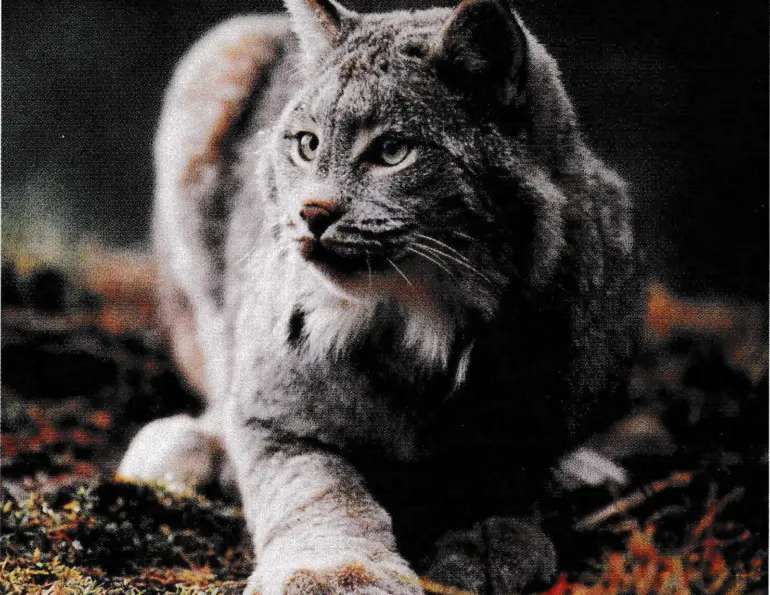
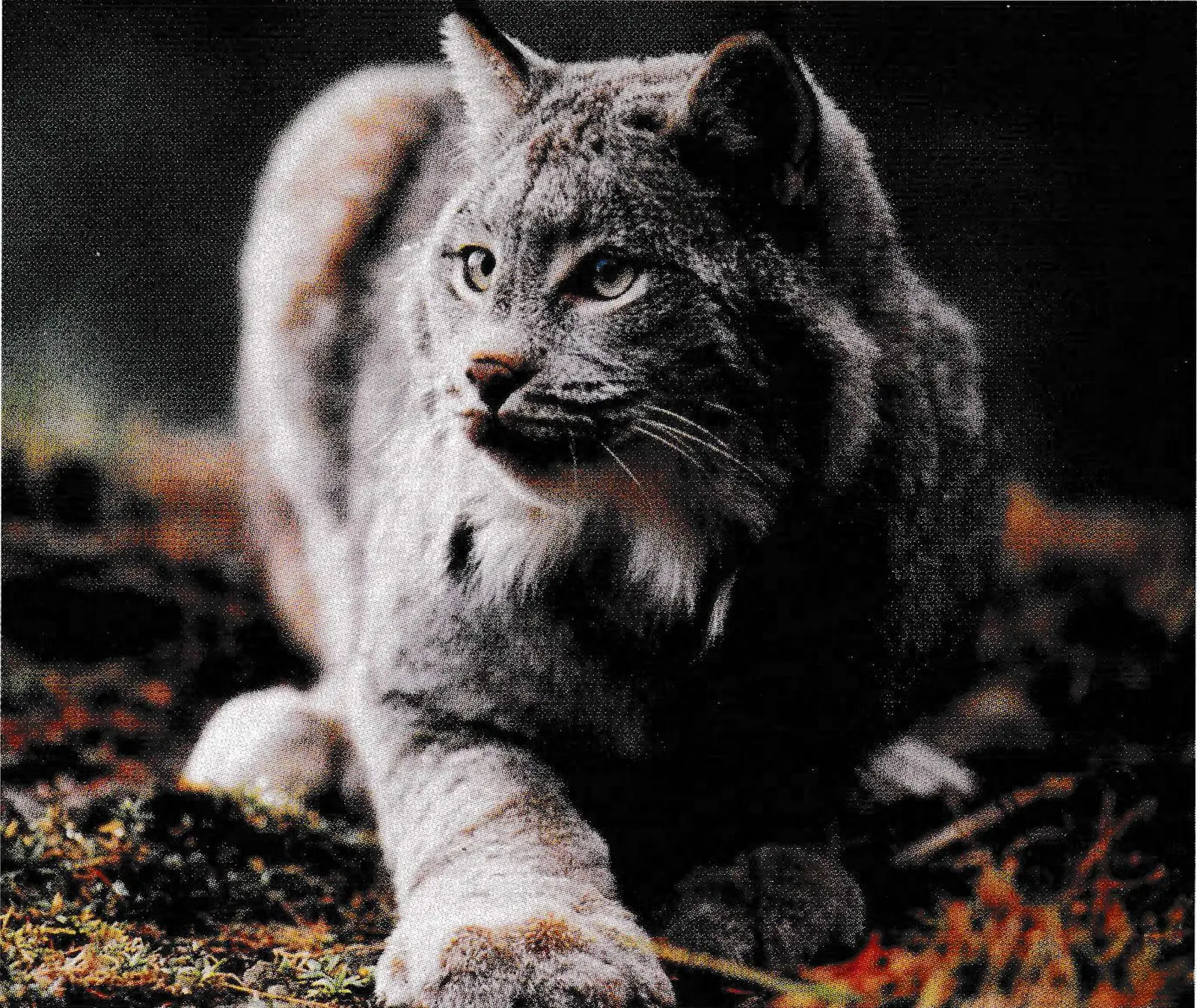
Mostly nothing is what’s known about the Canada lynx. We do know that this cat favors the same higher-elevation, snow-vaulted geography as ski areas. That simple fact promises to add layers of complexity to ski area expansion on federal lands in 16 states if, as most observers expect, the lynx is listed for protection on January 8 under the U.S. government’s Endangered Species Act.
The sharp teeth of that law, sometimes called the “junkyard dog of environmental legislation,” could potentially shut down even big projects. Rick Thompson, a consulting wildlife biologist for Vail and other Colorado resorts, says the federal listing would, “at the very least, complicate the lives of the ski industry.” The U.S. Fish and Wildlife Service, administrator of the Endangered Species Act, doesn’t make a point of shutting projects down, he says, but the possibility exists. Thompson has worked on lynx impacts for 15 years under state and Forest Service regulations. He describes the Fish and Wildlife Service as a much bigger entity “that can wield a much bigger club.”
In Colorado, the state wildlife agency talks a blustery game but has almost never sued. The U.S. Fish and Wildlife Service does. Moreover, when it gets upset, other federal environmental agencies take note.
“The impacts will vary greatly from region to region,” says Geraldine Hughes, director of public policy for the National Ski Areas Association (NSAA). Listing of the species as endangered or threatened, she said, “could be potentially significant, but at the same time manageable, if the industry is able to work closely with the agencies involved, educate them on our operational needs and also keep them honest, to make sure their decisions are based on science.”
Viable lynx populations remain in just a few pockets along the Canadian border, although Colorado this year transplanted 41 to augment what few, if any, lynx remain there. State wildlife biologists were loudly criticized by both ranchers and animal rights activists, but for very different reasons. While both argue that the state knows too little about lynx, the ranchers fear more reintroductions of ever-larger carnivores and restrictions on their use of public lands. The biodiversity advocates want those larger carnivores and habitat restrictions, but feared a failed reintroduction would doom future protection efforts under the toothy Endangered Species Act. Weaving a middle course, state wildlife biologists say that to understand what lynx needed to survive they needed to get some on the ground to study.
“If you read any of the studies coming out…repeatedly we see that we really don’t have a lot of science, there isn’t a lot of data on the species,” added Hughes.
“So, decisions are being made with the understanding that things can change as new evidence becomes available.”
But even if the lynx is not listed, ski area operators can expect more caution from federal land agencies as they hustle, environmental organizations nipping at their heels, to catch up with legislative mandates to protect disappearing carnivores. In fact, other forest carnivores, namely the wolverine and the fisher, are in similar circumstances as the lynx and environmental groups may pursue getting them listed or protected.
Hughes, and others, predict the greatest complexity for ski areas located in highly developed and already geographically-fragmented regions, particularly Colorado. But, all Rocky Mountain states from New Mexico northward will be affected, as will the Pacific Northwest, the Great Lakes states and the Northeast. California should see no effect.
Ski area managers plotting expansions should examine Vail’s case closely. Wildlife biologists attribute aging forests and excessive trapping and poisoning to the virtual disappearance of the once “tolerably common” lynx in Colorado. The last one seen in the flesh was killed, illegally by a trapper, adjacent to Vail in 1973. By 1988, when Vail planners began work on their largest expansion ever, the lynx had already become an issue under state wildlife and U.S. Forest Service regulations. Surveys revealed “probable” pawprints of lynx there in 1989 and again in 1991, and nearby again last year. But no hair, no feces, no irrefutable evidence of lynx has been found there, or anywhere else in Colorado, since 1973.

Nonetheless, the cat became symbolic for what many believe is a moth-eaten, high-altitude ecosystem in Colorado. A foot-dragging U.S. Fish and Wildlife Service, after first rejecting recommendations from its field biologists, yielded in 1998 to a federal court ruling and proposed the lynx for protection in 16 states below the Canadian border where it once was found.
Because of the potential listing, an inter-agency team (Forest Service, the Bureau of Land Management, the U.S. Fish & Wildlife Service and the National Park Service) released a report in September called the Canada Lynx Conservation Assessment and Strategy. Three elements of that plan are likely to become embodied in specific National Forest plans.
Foremost will be the connectivity of lynx habitat. Lynx roam. Those released in Colorado this year wandered up to 200 miles away within two weeks. Even settled and well-fed animals move about. Six radio-collared lynx near Lake Louise, in Alberta, established home ranges of 92 square miles for females and 140 square miles for males.
Maintaining the landscape linkage “was the key issue with Category III,” says Ed Ryberg, winter sports program administrator for the Forest Service in the Rocky Mountain region.
Connectivity was found to be no problem in expansions at Telluride and Wolf Creek, also in Colorado, but that’s not to say that “we won’t conceivably come across a project that jeopardizes this landscape linkage,” said Ryberg.
A jeopardy decision could kill a project. At Vail, where there were possibly just one or two lynx, any new activities
[Editor’s note: The remainder of this article continues on a later page that is not included in the archived PDF.]