


One of the newest toys is the Zorb, a nine-foot-diameter clear plastic sphere that somersaults its passenger down the hill. At Mount Cranmore, N.H., Marketing Director David Evans says that Zorbing was popular last winter and is expected to be even bigger this year, since it got a late start last season. “It feels like you’re inside a dryer,” describes Evans, who says riders are attached inside a tunnel within the giant ball via a climbing-style safety harness.
Cranmore charges $10 a ride and has only one Zorb. It uses a lane alongside its tubing slope that is perfect for the activity because it levels out at the bottom. “It’s giving us another novel sliding device for people to have fun on.”
Snowbiking to success
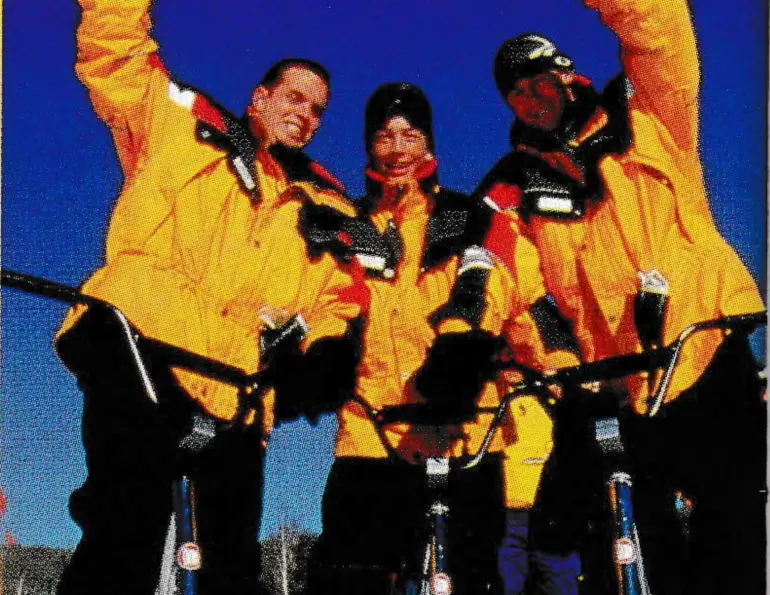
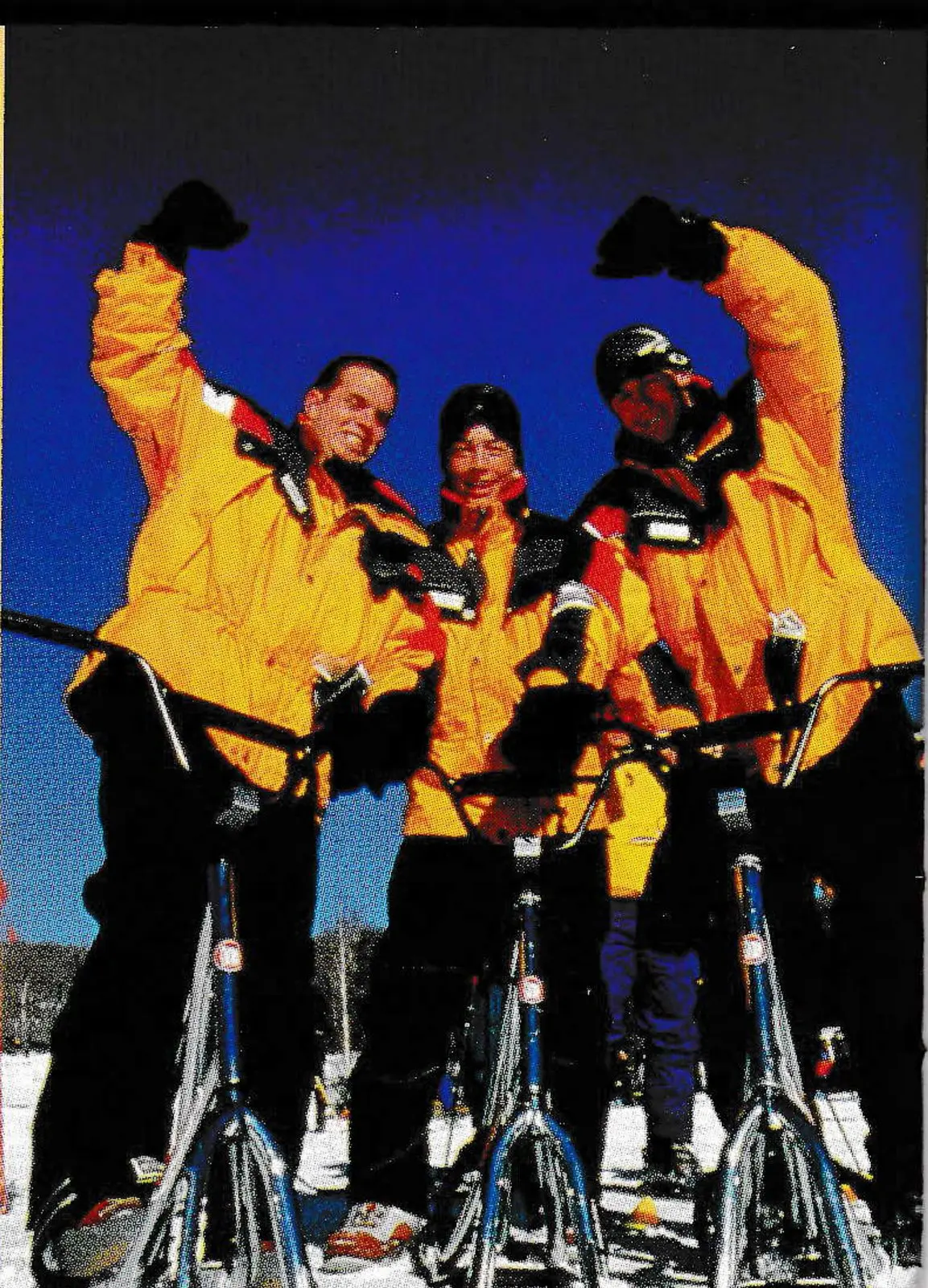
Last winter, Cranmore, along with the rest of Booth Creek’s eight resorts, introduced Snowbikes to guests. The idea? “We’re using Snowbikes and other snow toys to teach people how to ski or how to learn to slide on snow,” says Tim Petrick, Booth Creek’s executive VP of brand performance and a former PSIA demo team member. He spearheaded the company’s push to offer different snow experiences to guests at all of its resorts.
“We found that it was no different than bringing snowboards out onto the hill,” Petrick says, adding that during last season more than 2,500 people tried Snowbikes, the Snowscoot and the Skifox—three types of snow toys offered at Booth Creek resorts. He said at first, the resorts were cautious about where they would allow the new toys, but “by the end of the season, we got comfortable having them virtually everywhere.”
This season, the instructional courses are part of Booth Creek’s new Get Good Quick program, described as a “faster, totally new, less-technical way to learn how to glide on snow.” It incorporates an easy-to-understand guide of fundamentals and tips and Smart Terrain, which involves sculpted snow features shaped to provide a series of different sensations and teach specific ways of getting the snow toys to move and react.
Each type of bike offers a different ride down the mountain. The Snowscoot is a BMX-like scooter with a snowboard attached to its base instead of bicycle wheels. The Snowbike is also like a bicycle, but with a ski instead of wheels. Riders wear short skis on their feet to act as outriggers. The Skifox is a ski with a mounted seat and shock absorber, again with riders using skis as outriggers, but they grip handles alongside the seat.
“They’re all sliding devices with edges so you can control your descent,” says Petrick. He said biking is something everyone understands. “In two hours we can get anyone onto beginner terrain.”
Tubing still leading the charge
While Booth Creek’s effort is somewhat unique in that it wants to use the Snowbike concept as a stepping stone to eventually get people skiing or snowboarding, resorts are also diversifying like crazy to get visitors to spend more money at the mountain, whether they eventually go skiing or not. But whether such snow toys will attract as much interest from non-skiers as tubing, which has proven successful at resorts large and small, remains to be seen.
Tubing, the original snow toy experience, continues to grow. At last count, 100 National Ski Areas Association (NSAA) member resorts offered tubing, a figure that’s expected to grow. The NSAA just published “The Tubing Operations Resource Guide,” a book of guidelines on how to set up a tubing area.
“Tubing has saved a lot of small areas,” says Gail L. Williams, president of Idaho Sewing for Sports, a company originally known for its chair lift pads that started manufacturing snow tubes a few years ago. “Tubing has taken over as a big part of our overall business,” William says, explaining that it does about 6,000 to 10,000 tubing units each year compared to about 5,000 chair lift pads a year.
Snowtubing has fast become part of the winter culture all over the country and it doesn’t seem to matter how big or small the hill is. Whaleback, N.H., a 700-foot-vertical area that averages about 34,000 skier visits a year, gets about 5,000 tubers a season and charges $6 for two hours and $8 for four hours.
“It was an instant money maker,” says Tim Herbert, Whaleback’s president, who added that the 300-foot-long tubing hill is probably one of the smallest ones around. “It has been a great shot in the arm for us—we doubled what we expected to do in the first year.” Herbert says it has been a nice add-on for skiers, but has also drawn in people who would otherwise not go skiing.
At Copper Mountain, Colo., tubing has expanded the resort’s appeal among a non-skiing public and has resulted in a valuable, alternate source of revenue. “It helps attract people to Copper because it’s not just a ski resort anymore—now we have all these non-skiing activities,” says Ben Friedland, Copper’s communications coordinator.
Laser tag and mini snowmobiles
At Vail’s Adventure Ridge, now in its fourth season, the focus is on fun. Located at the top of the Eagle Bahn gondola, the on-mountain adventure center caters to adults and kids, day and night. It’s one of the only places in the country where people can play nighttime laser tag. The state-of-the-art laser guns are linked to computers that electronically verify which team got the most hits. Snowbikes are also part of the action: Instructors provide some basic tips and then lead tour groups down the mountain—at night. Clear goggles and headlamps are provided and ski boots are required. At $45 for two runs, it’s one of the more popular activities, according to Vail Marketing Director Chris Jarno.
New last season at Adventure Ridge was a kids’ snowmobile track with miniature snowmobiles, designed for children, ages six to 13 years old (maximum weight is 90 pounds).

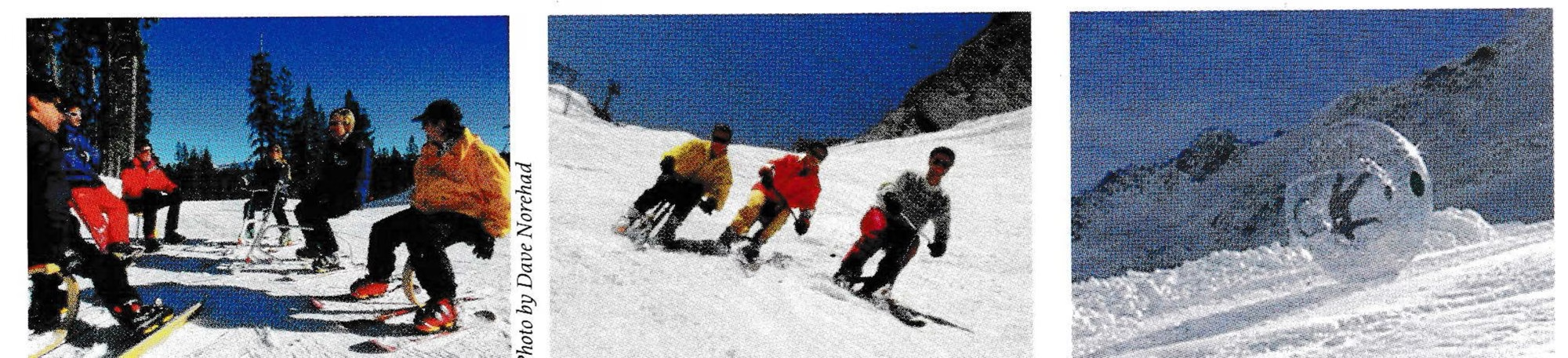
Photo by Dave Narehood
Especially Park skis, twin tips and skiboards
While Vail has designated an entire area for new adventures, resorts around the country are getting involved in smaller ways as well. Every year, the popularity of snow toys increases, with most resorts now offering some sort of mini-ski or skiboard like Salomon’s SnowBlades or Dynastar’s Twin. These skiboards are short skis that give beginners an easier time having fun and give better skiers the opportunity to perform tricks in terrain parks and on halfpipes.
At Shanty Creek, Mich., SnowBlades have been offered by the rental shop since the 1997-98 season and, because of their popularity, the rental shop has increased its stock of SnowBlades each season, says Marketing Director Barry Godwin. “In our resort setting, people just want to do everything, and we make sure we have all of it.”
Shanty Creek’s director of skiing, Steve Kershner, says after starting off with 10 pairs, the rental shop will have 40 pairs of Snowblades this year. “We upped our stock because we found that we were often out of them when people were still requesting them,” says Kershner, who explains the resort offers lessons but has found that 95 percent of renters forego instruction.
He says SnowBlades lend themselves to four-hour rentals and will be part of a new Trade Time rental program at the ski resort this winter wherein customers will be able to exchange rental skis, snowboards and skiboards all day long. “In the Midwest, the success of alternatives to skis is great because of the size of our hills. And you’re catering to families where not everybody skis. Having an option seems to be the key, especially if you want people to stay at your resort for two or three days,” says Kershner, adding that these toys help guests “rediscover” familiar mountains.
“Smaller mountains are going to benefit more from the skiboard because the bigger hills have the terrain to keep the sport of skiing exciting,” says Jason Levinthal, president of Line Skiboards. He says his company’s sales have been growing “exponentially” since starting up four years ago. Levinthal adds skiboards are doing well in New England, the Midwest and Colorado, while longer, twin-tipped “park” skis are popular at Lake Tahoe resorts. He sees potential for skiboards to attract new people to the mountains, primarily enthusiasts of inline skating, as well as one-time skiers and snowboarders who gave up out of frustration at trying to learn.
Snow toys of all kinds have the potential for being profitable. Whether resorts entice newcomers to try skiing or snowboarding or keep them tubing or skiboarding, it means extra revenue that wasn’t there before.
Getting Hold of the Goods
Skifox: Josef Welte Strasse 2, D-78183 Mundelfingen, Germany. Manfred Stiehler. Phone: (011) 49 7707 797; Fax: (011) 49 7707 1291
Snowbike: Rocky Mountain Snowbike, P.O. Box 5407, Breckenridge, CO 80424. Roger Hollenbeck. Phone: (970) 453-5271; E-mail: [email protected]
Snowscoot: Franck Petoud. (011) 33 4508 920 65; E-mail: [email protected]
The Zorb: Zorb Action Sports Marketing GmbH, Graf Galen Strasse 7, D-59755 Arnsberg, Germany. Mr. Heinz Buigener. Phone: (011) 49 2932 940 150; Fax: (011) 49 2932 700 635
For information about snowtubes, refer to our accompanying Supplier Directory 2000.
Detailed product information on skiboards will be available in the Rental Roundup, to be published in our January edition.

