


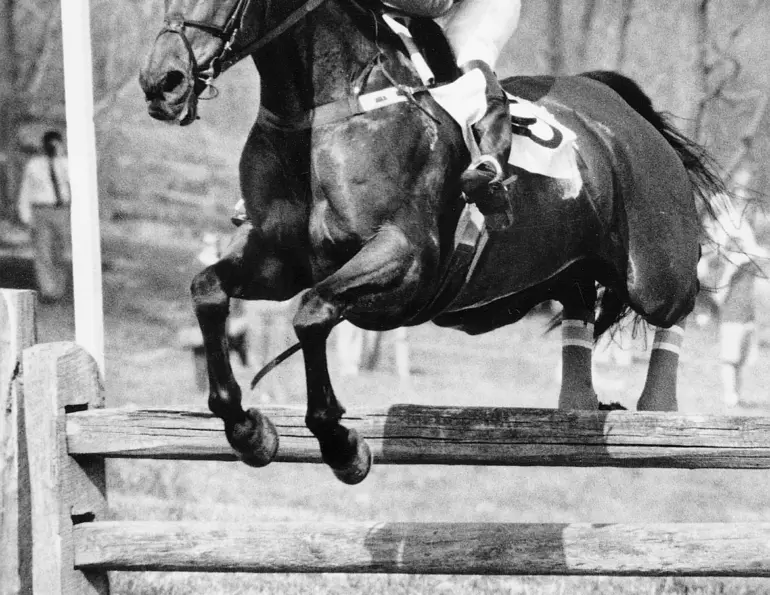
It was about 3:30 pm, April 17, 1999, while doing something I loved and thought I did well, that my life changed forever. I was riding my good Irish horse, Emerald Action in the Grand National timber steeplechase at Glyndon, Md. This was the last prep before the Maryland Hunt Cup, the world’s most difficult timber race. My horse, a skilled jumper, ran beautifully that day until Welterweight, the horse I knew we had to beat, came alongside.
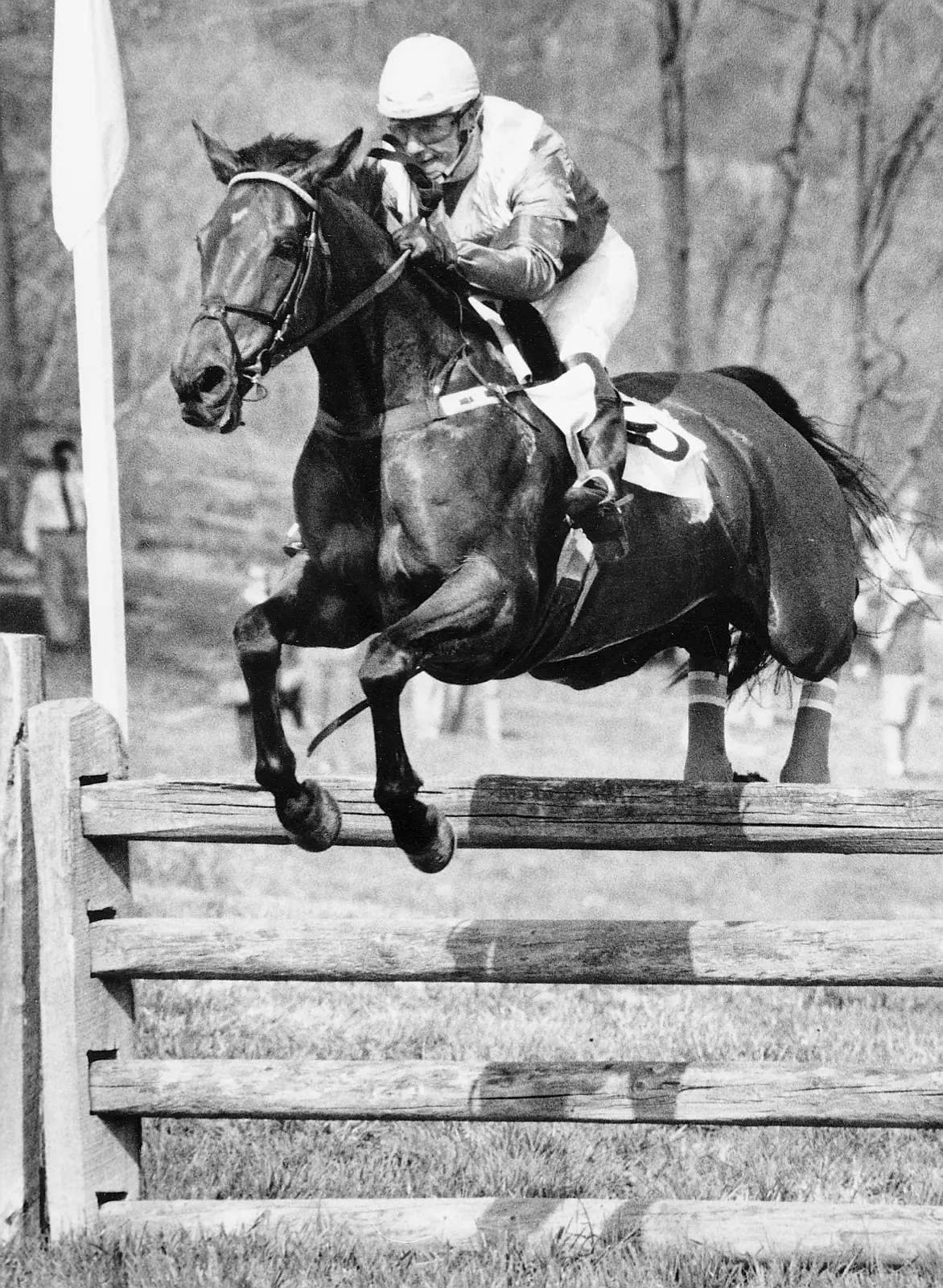
The 16th fence, an ugly little thing, has brought down many horses, including mine. I can only assume that Emerald Action was distracted by the presence of Welterweight—he sure was distracted by something. Then a half-ton of horse traveling at 25 or more miles an hour came down heavily, throwing me to the right side of my face and breaking the C3 vertebrae in my neck.
I remember little after the fall—just that I was paralyzed and could move neither my feet/legs nor my arms/hands. It seemed hours before I was transported, first by an ambulance and then a helicopter, to the final destination at the trauma medical unit of the University of Maryland Hospital. Nothing could have prepared me for what I saw on being turned face down on a revolving gurney. Lying directly in front of me were both my organ donor commitment card and my living will, the former of which pledged any of my donatable parts and the latter of which instructed physicians not to keep me alive mechanically.
I do not recall much of that first week, as I was heavily sedated, and still in the mental mode of refusing to accept my paralysis. I was originally diagnosed as a “C3 complete” as the doctors thought I was completely paralyzed from my neck down with no use of my arms. Within a day or two after the accident, however, I began moving my arms which, thankfully, changed my status from “complete” to “incomplete”—the latter meaning that I had experienced some “return” and could probably anticipate more. My category of injury was also changed from C-3 to C-5/6. On July 1, ironically my 25th wedding anniversary, I wiggled my left big toe, and I suddenly realized that I had some “return” in my left foot. Sadly, this has been the extent of it and all other paralysis in my feet/legs and hands remains as it was immediately after the original injury.
Right after I was hurt, my mantra became “to have just one day with neither pain nor tears.” Regretfully, that day has not yet arrived. There are at least a dozen prospects for cure for paralysis, but the best guessing is that it won’t take place for many years and will then be based on stem cells, those omnipotent master cells, so much in the news recently, that can differentiate into a variety of cell types and may represent the ultimate “repair materials” required.
In the meantime, the commercial side of my rehab was quite active. For liquidity’s sake, I sold my corrugated box company, Cor-Box, Inc., which I had founded in 1968. That was in September, 1999—almost exactly the same time the Whitetail Ski Area in Pennsylvania came on the market. It took a lot of doing to act on this opportunity, with me still in the hospital, undergoing endless medical and rehab procedures.
I set up a diligence team, essentially consisting of key people by department, who analyzed every significant detail of Whitetail’s operation. In addition, I had my own trusted legal and comptroller support, plus the welcome involvement of Hans Geier, a long-time colleague in my ski business and a past GM of Steamboat and a past president of Doppelmayr USA. It was a complex deal and it was gratifying for me to see us successfully complete the purchase in November.
Even better therapy for me was the record season our resorts racked up in the 2000-2001 season. After the weather frustrations of the previous three years, it felt really good to see things work pretty much as we had always planned them.
I am now able to travel and to visit our ski operations in a specially outfitted van. And I have a full plate of board seats and real estate responsibilities.

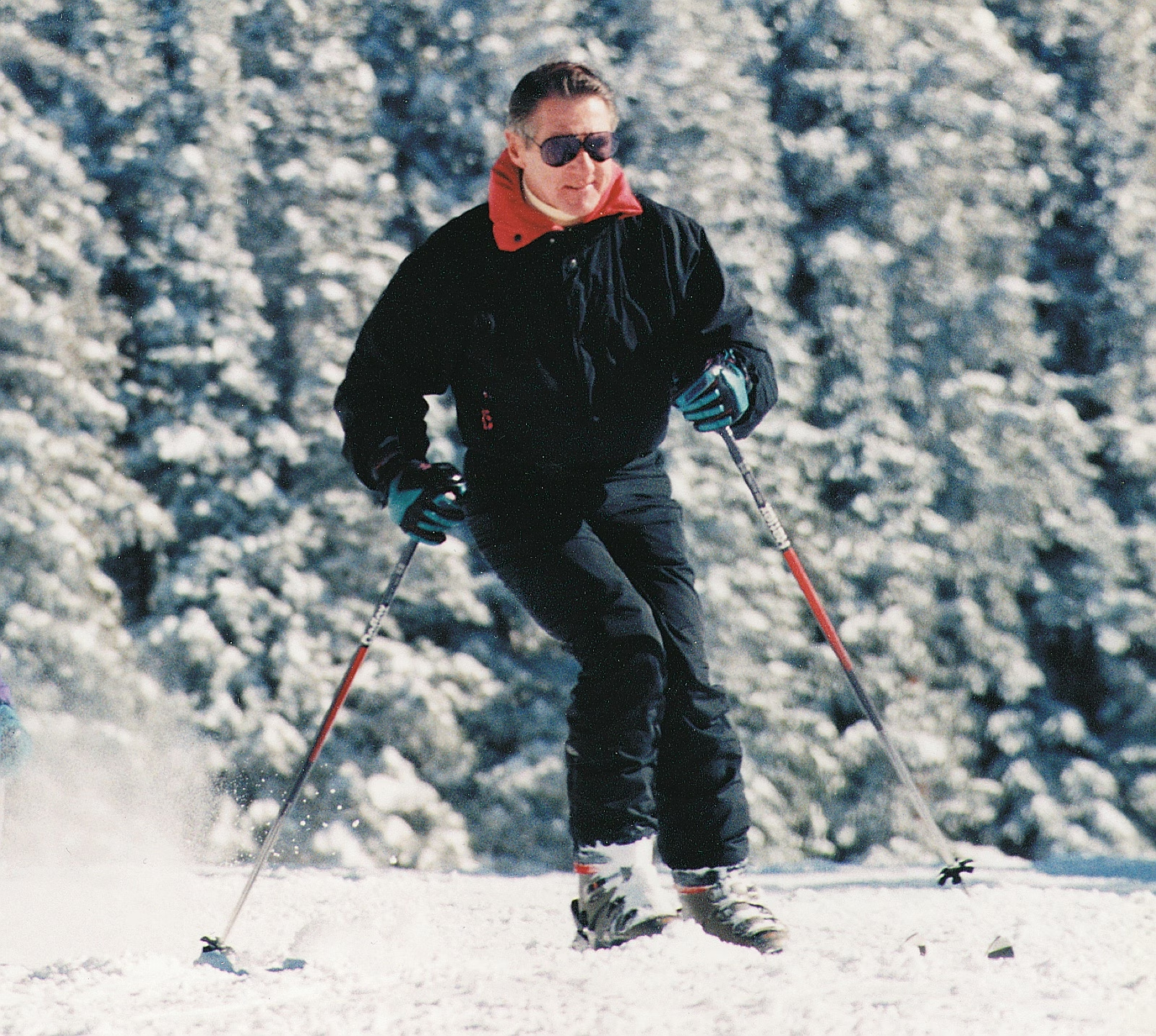
Still, two-and-a-half years after the accident, and after several surgical procedures—including laminoplasty on my neck and microsurgery on a hand—I am reminded of how helpless I really am. That is a very tough acknowledgement for a previously active man who skied five weeks or more every year, including heli-skiing in Canada; who was active as a diver from the Caribbean to Truk Lagoon; who fly-fished from Alaska to Russia. Prior to my accident, I was in charge of my life; now I am dependent on someone for almost everything.
The best way to describe what someone in my position can/can’t do would be for you to wrap duct tape around both of your hands while made into a fist. The only use for your hands would be to gather things and hold them between the two “clubs” and to use the right thumb, after wetting it on your tongue, to turn a page. Otherwise, both hands are completely useless. I eat with the aid of a velcro strap on my wrist which positions a fork or spoon. I rely on a benign dinner partner for drinks and cutting chores, and I hope that my collar napkin catches my inevitable drop. I can’t write or dress myself or peel or hold a banana. The utter frustration can never be appreciated by anyone unless they have experienced a similar handicap.
Sleep is a benefit seldom enjoyed throughout the night. When I dream, I am always able-bodied. Medication seems endless and I think has a lot to do with the “daytime stupor” in which I often find myself. My body is constantly in a high state of “tone,” which means that I tend to spasm a lot. Whenever I move my arms, my legs almost always involuntarily follow, sometimes so violently that my body is literally lifted out of my wheelchair seat.
I may have been the one to receive the blunt trauma from my injury, but my wife, Diane, has suffered with me. It is she who organizes the pills and the personnel and sees to the schedules. Her fingers have become mine. Her devotion to me has raised my spirits and made me appreciate how meaningful it is to care for someone “for better or for worse.” Her encouragement is my touchstone; her focus, my north star.
I am a Lutheran who did not attend Sunday School as often as Mother would have liked, but my current prayers have been consistent. If all of those who have offered prayers have done so, “someone” must surely have heard by now. But I do hope no one else will tell me that “God never gives us a greater burden than we are capable of bearing” – as that one really ignites my tolerance juices.
With a little luck the Sheba Clinic in Tel Aviv or Dr. Wise Young at Rutgers or Dr. Barth Green at the Miami Project or someone else will discover a cure for paralysis and I will be one of their first guinea pigs. Between now and then, I must practice patience, I must try to control my frustrations, I must find joy in what I can do, and not become depressed by remembering what I cannot do, and I must continue to have faith in both prayer and the scientific community.

