Deer Valley
Contractors at Deer Valley, Utah, site of the 2002 Olympic slalom, moguls and aerials events, are wrapping up three years of construction in preparation for the Winter Games that included extensive regrading to level off an earthen platform on which to construct a stadium. In all, 150,000 cubic yards of dirt was moved in the natural bowl area. The result is three adjacent courses—one each for moguls, aerials and both men’s and women’s slalom races—that converge at a common finish area before a temporary stadium. The stadium provides a clear view of all three venues and sits about 1,000 linear feet from the base. Course builders decided to regrade the aerial run to International Ski Federation (FIS) specifications and graded the moguls run to make it the steepest and longest allowed by the rules, creating a sustained pitch of 28 degrees for its entire 870-foot length. Earth was also moved to create the substantial take-off and landing areas needed on the aerials course. Finally, the grading also helped extend a flat area for the runout before a shelf was created for the 10,000-seat stadium.
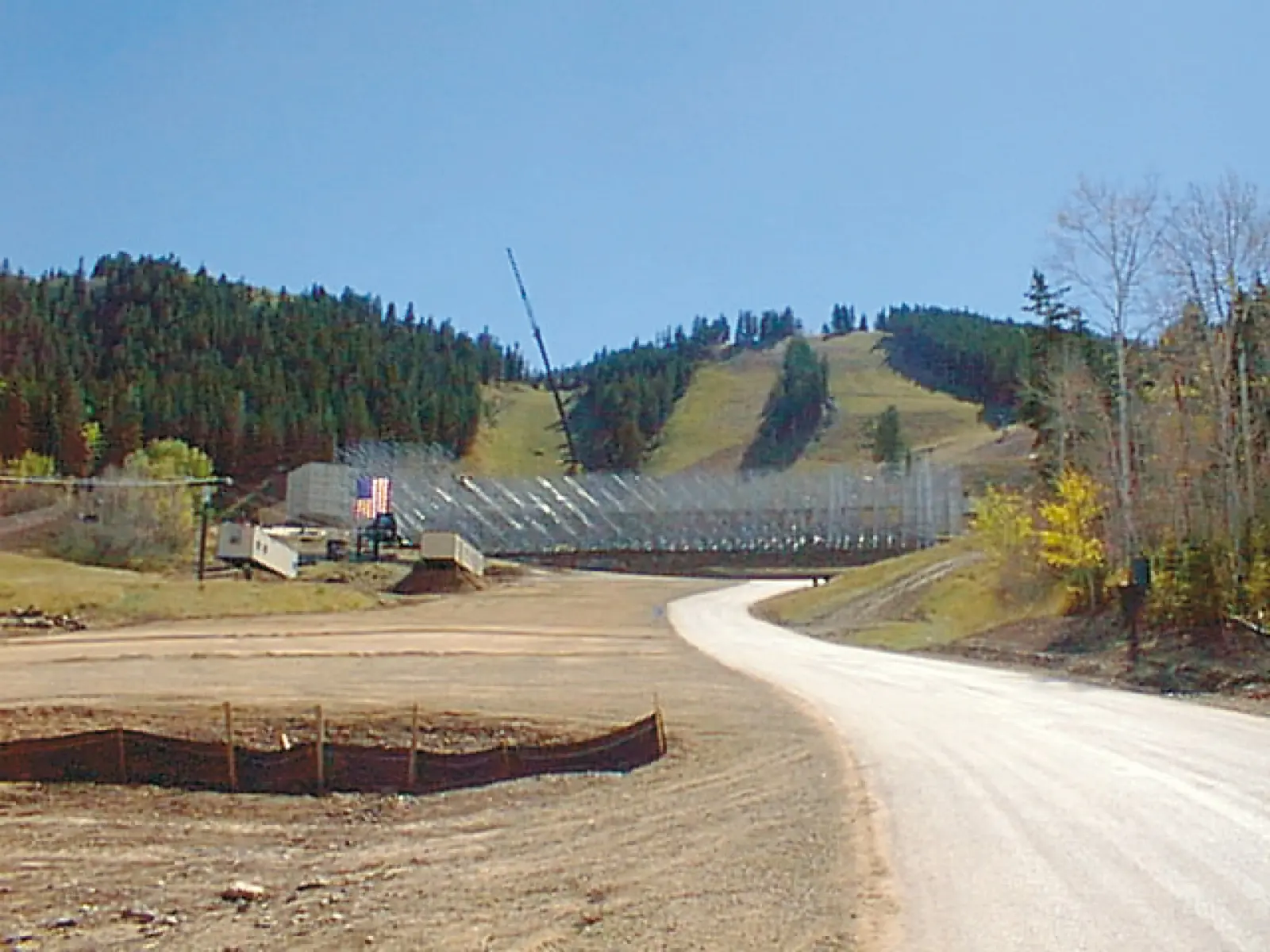
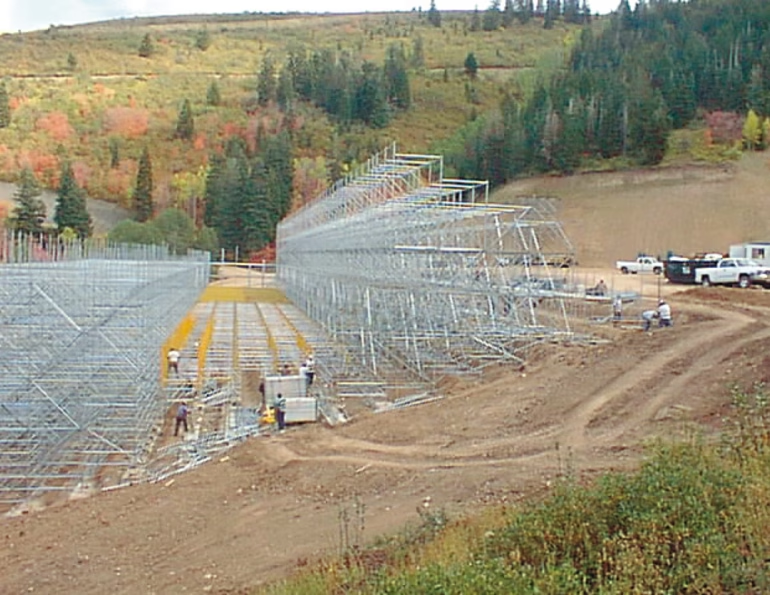
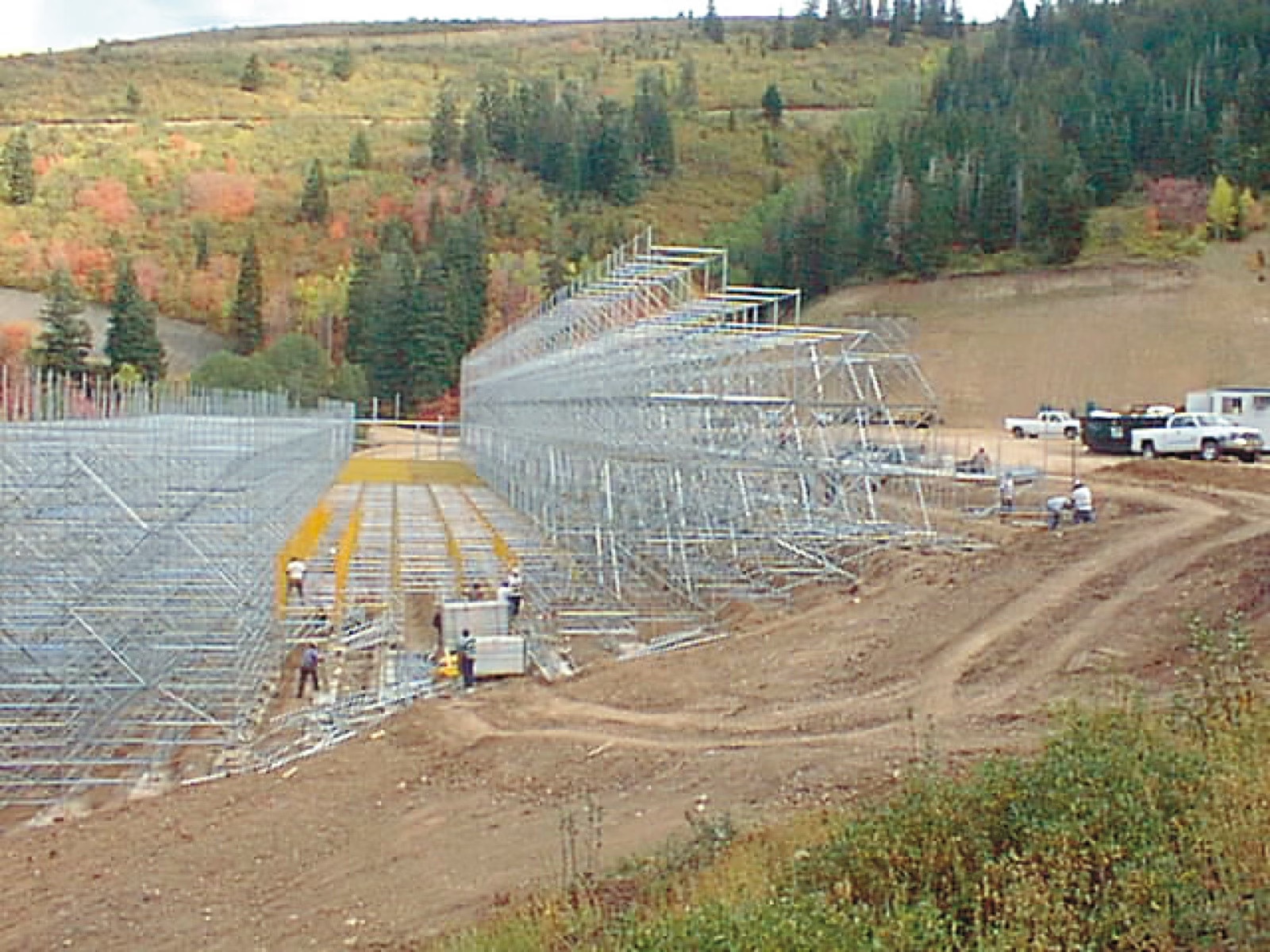
The 55,000-square-foot open-air stadium is an elaborate scaffolding of steel and aluminum lattice work. It took six weeks to build, using 1.6 million cubic feet of scaffold, and rests on concrete slab foundations. At about 127 feet tall at the rear, it is one of the tallest seating structures built for an Olympics. It houses a major concourse in its center and will have about 45 rows of aluminum bleachers. A double row of broadcast trailers comprising about 65,000 square feet will rise above the back row and contain 50 commentator booths at the very top level. The back and sides of the stadium will hold banners and graphics related to the Olympics, and it is estimated that dismantling the rented stadium will take about three weeks once the ski season has ended. Similar stadiums are being built at Utah Olympic Park for the ski jumping events (11,000 seats) and the bobsled track (3,500 seats), at Park City for the giant slalom and snowboard competitions (10,000 seats) and at Snowbasin for the downhill and Super-G (14,000 seats).
For the judges, Deer Valley has constructed a scaffolding tower for the aerials competition and the moguls judges’ house is a trailer that will be pulled out of the way after that event to make room for the slalom races. At presstime, engineers were looking for ways to create terraces on the hill so spectators will be able to watch from alongside the bottom of the courses. Rest room facilities at the venue will be portable units that will be serviced via a new road during the games. The 1,000-foot-long road was paved with recycled asphalt over the summer. Once the season ends, the road will be removed.
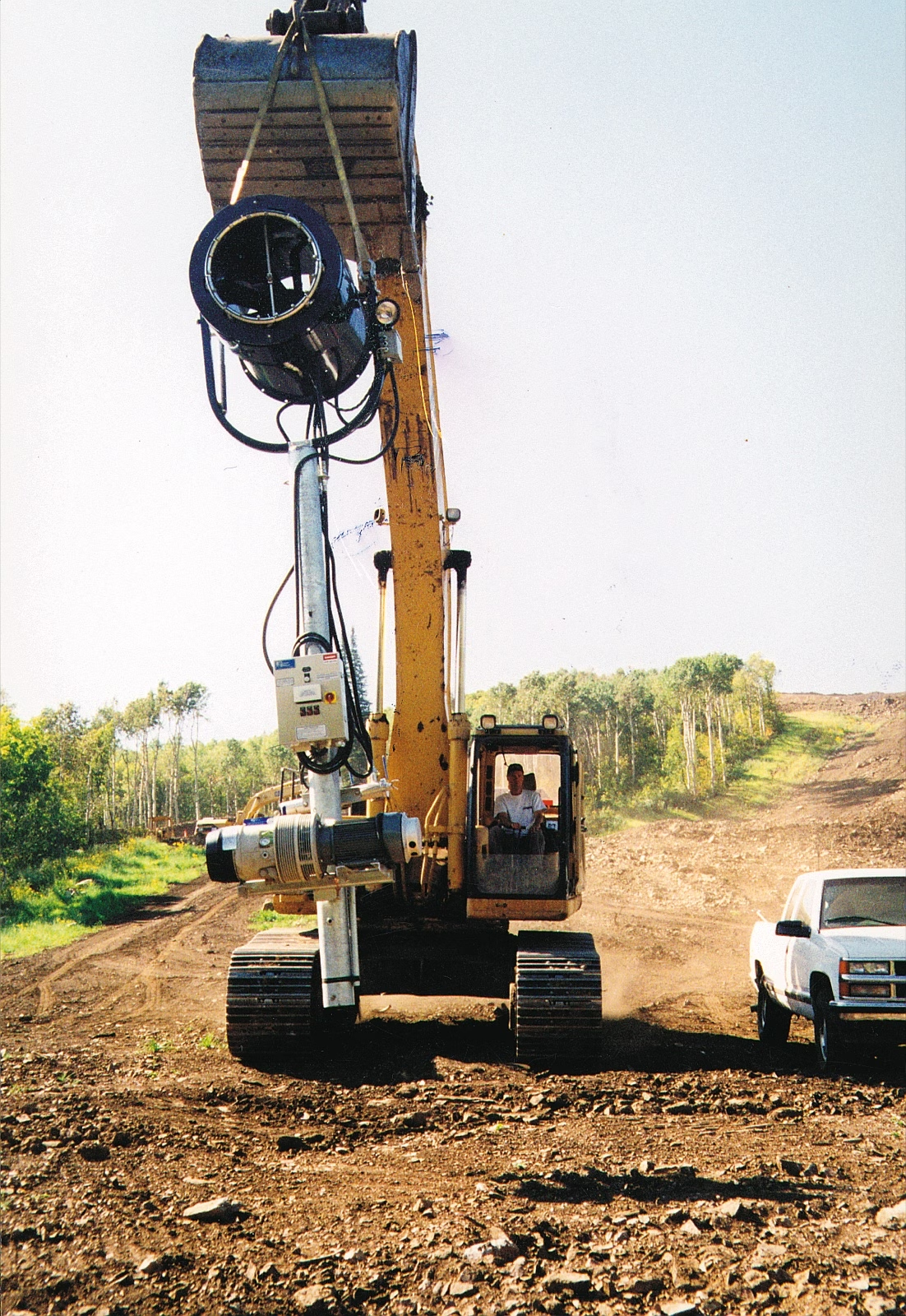
To beef up snow coverage for the Olympics, Deer Valley management hired Snow Machines, Inc. and York Snow to develop a system for the venue. The end result consists of the installation of 6,000 feet of pipe serving 40 hydrants. Another 8,000 feet of armored cable was also buried to feed power to 40 electrical outlets. Snow will be delivered to the steep terrain of the three courses via 26 custom tower-mounted Super Wizzards and about a dozen carriage-mounted Wizzard and Kid Wizzards. Grooming of the Olympic slopes will be accomplished using Bombardier 400-Plus winch cats.
From the time the season opens until January 7, guests will ski around the stadium. Beginning January 7, management will close the three key trails and a couple of adjacent trails to skiers in order to make final preparations for the Games. The venue will begin hosting athletes about February 3 for training prior to the February 8 Winter Olympics kickoff.
Le Massif
Summer workers at Le Massif, Quebec, were involved in a number of projects, all part of a CDN $24.8 million (US $16.2 million) expansion started in April. Massif’s management benefitted from federal and provincial grants totalling $20.4 million, awarded to stimulate the local economy. Part of the agreement says no funds can be used to build lodging at the resort as there are accommodations in the village of Petite-Rivière-Saint-François below the base. This summer’s work completed the second phase of a resort development project that started in 1992 and included lifts, snowmaking, a new day lodge, trails and a new road expected to cut the drive time from Québec City by 15 to 20 minutes, creating a 45-minute drive.

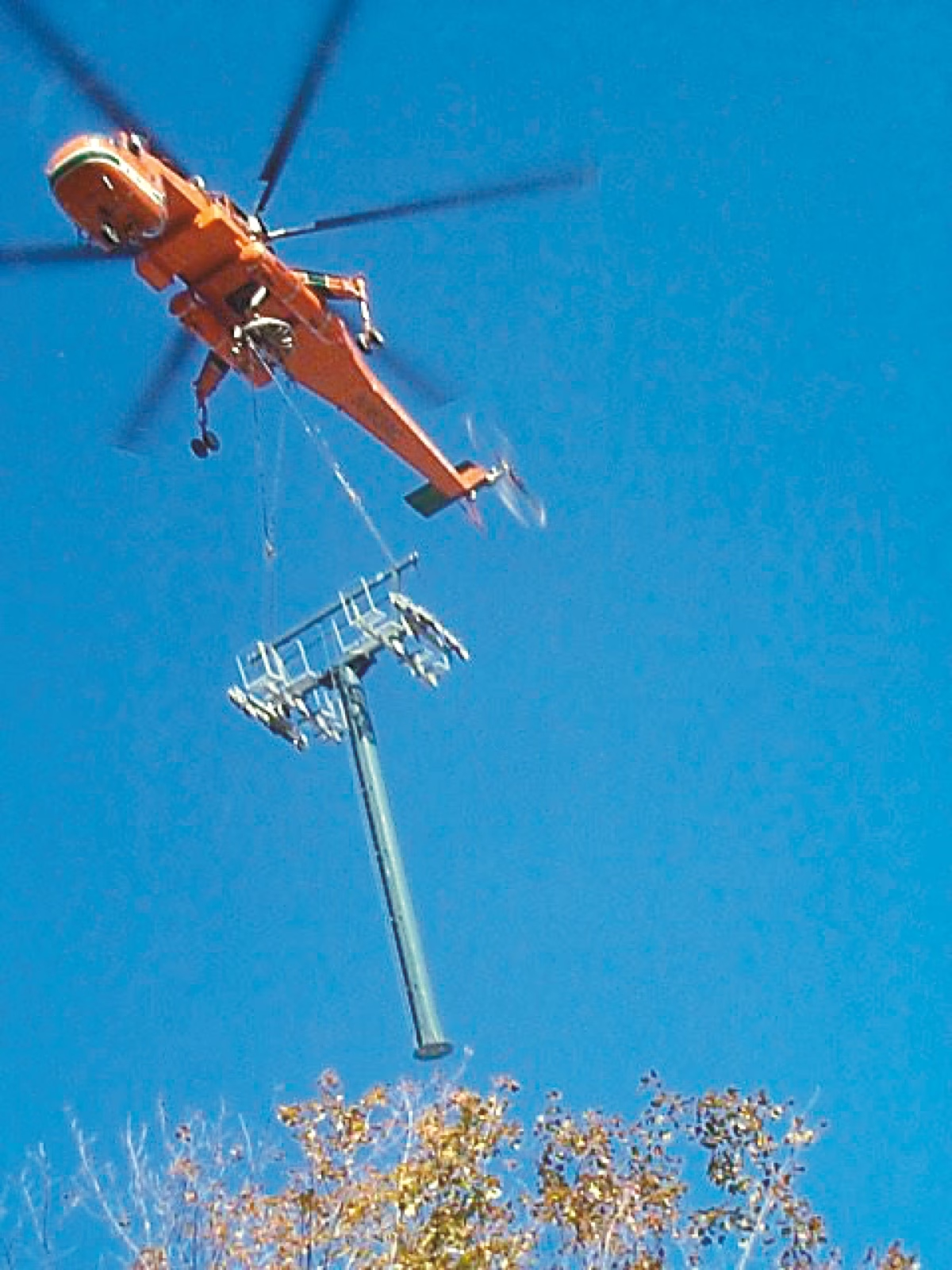
The new road eliminates what was a steep and lengthy approach from the edge of the St. Lawrence River and ends at a 1,500-car parking lot and a new day lodge that will accommodate about 2,000 guests at the summit. A new Doppelmayr detachable quad was installed to carry skiers to the mountain’s summit. The lift stretches 8,061 feet and climbs 2,211 vertical feet. With a capacity of 2,600 pph using 200 chairs, it will have a VTFH of 5,749. The lift will also have a mid station so skiing can begin earlier than the mountain’s typical mid-December opening and extend later at the end of the season, allowing guests to ski on the resort’s top half when snow coverage is sketchy on its lower elevations.
Up to 10 new trails are expected to be added by the December 1 goal to bring total skiable terrain from last year’s 150 acres to 225 acres. To make sure those trails are covered with snow (and to guarantee coverage on two trails designed to meet International Ski Federation World Cup standards so Canadian athletes can train in Eastern Canada), Turbocristal designed a system that will triple total snowmaking coverage. Thirteen of the company’s Supercool Plus fan guns, 25 HKD Millennium towers on fixed bases and 50 York Watersticks will blow snow. A new pump house using two Ingersoll-Rand pumps push a total 3,000 gpm through seven miles of pipe and draw from a new 35 million-gallon reservoir built near the resort’s summit.
Telluride
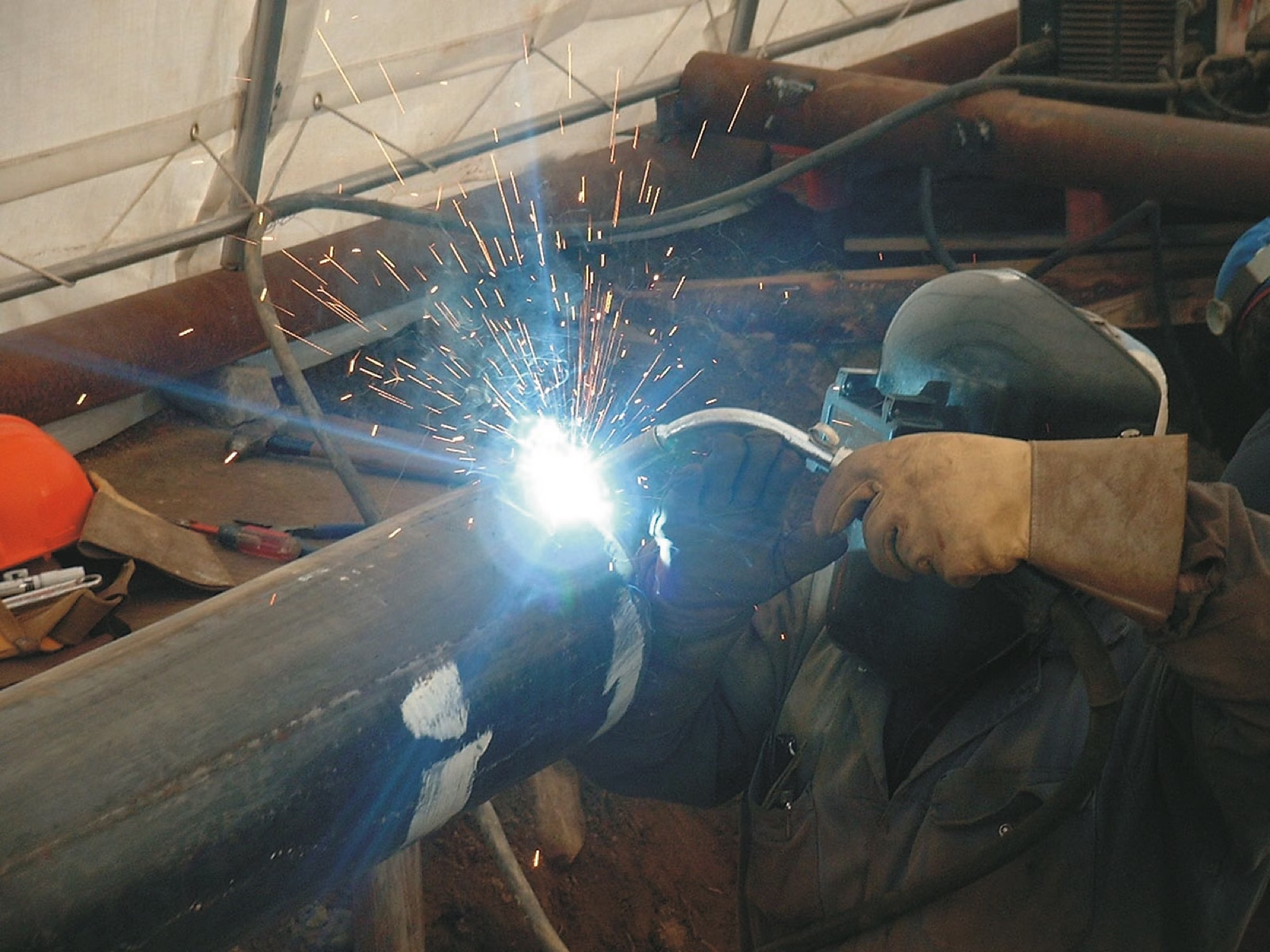
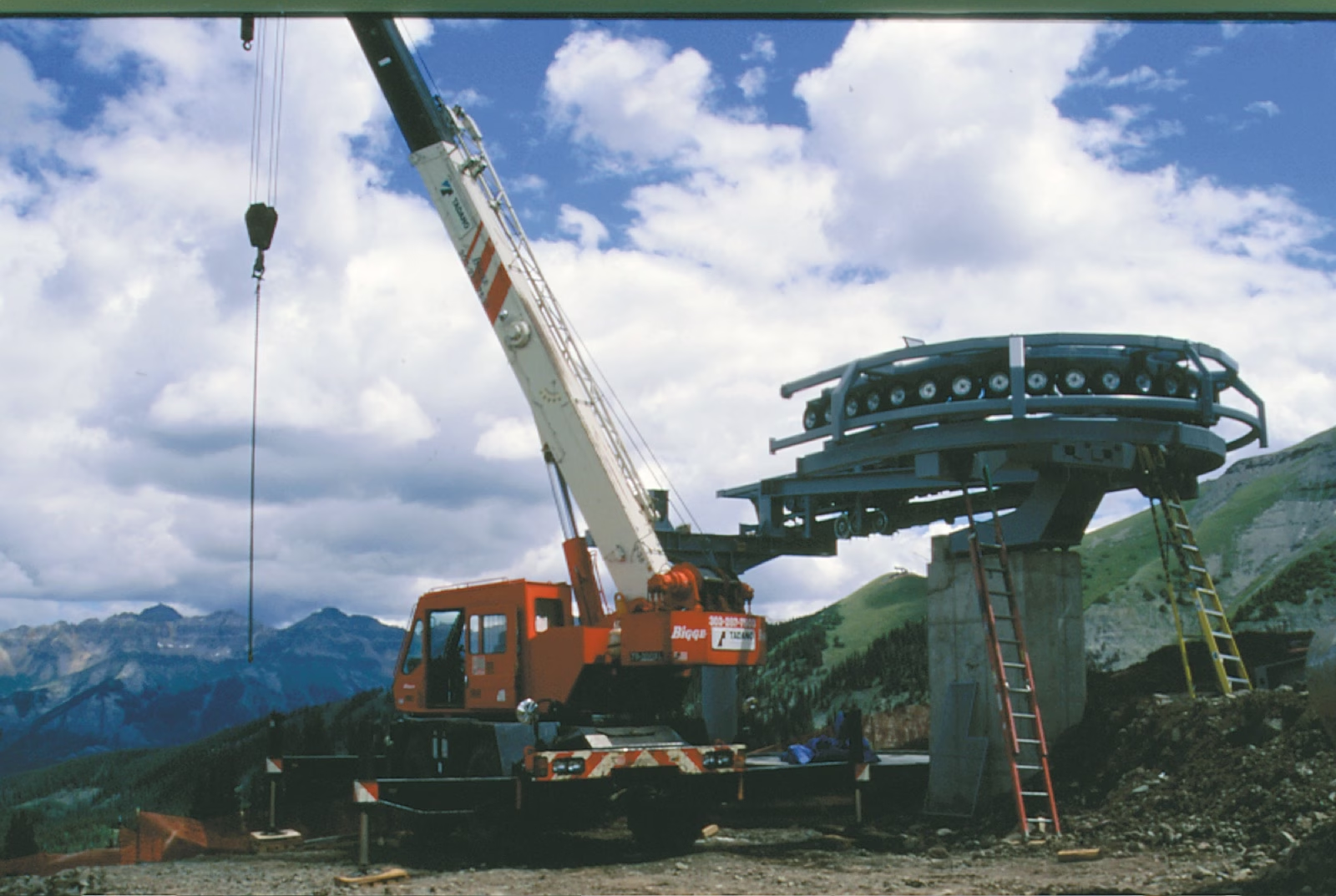
A major expansion at Telluride, Colo., was completed this past summer and fall as crews installed three new lifts and cut trails in a bowl area to increase skiable terrain at the resort by 733 acres. The new terrain brings the total skiable area to 1,700. The expansion includes 19 trails in the bowl, from which one million board feet of trees was removed, half by air and half by truck. It also included the widening of a couple of existing trails to provide easier access to the new terrain and in some sections, tower foundations were dug by hand to prevent erosion by heavy machinery. To access all that terrain, three new Doppelmayr detachable high-speed quads were installed in the Prospect Bowl. One of the lifts, installed primarily for beginners, climbs 274 vertical feet over a length of 2,493 feet. With a design capacity of 2,200 pph, it will open at 1,500 pph using 34 chairs. Its VTFH will be 411. The second lift climbs 1,500 vertical feet and stretches 3,645 feet in length. It also has a design capacity of 2,200 pph, but will initially run at 1,500 pph using 49 chairs for a VTFH of 2,250. The third quad is 5,097 feet long and climbs 1,057 vertical feet. It will open at its design capacity of 2,400 pph using 107 chairs for a VTFH of 2,537. All work is expected to be completed by December 20.
Lutsen Mountains
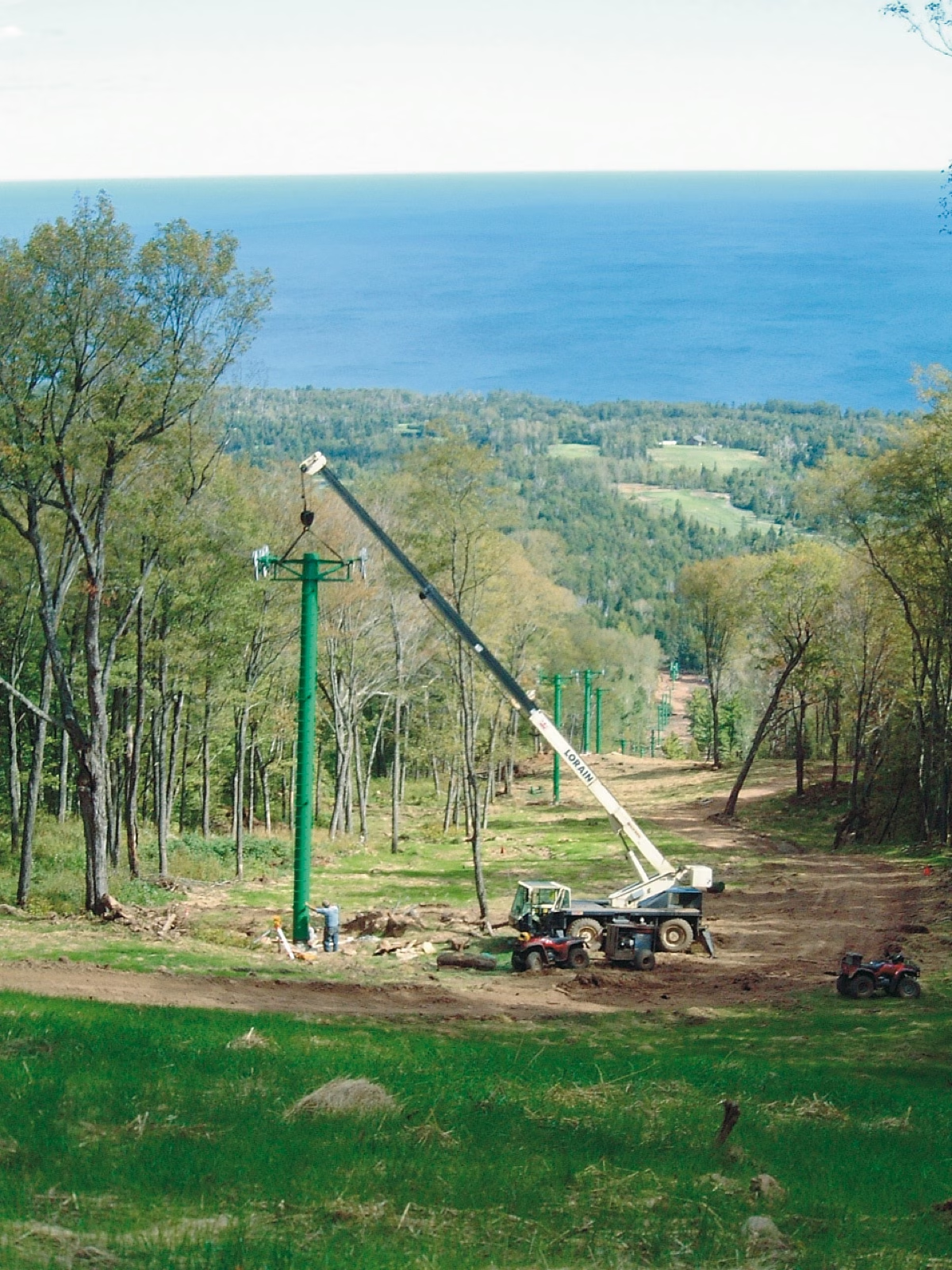
A new trail cut this summer at Lutsen Mountains, Minn., effectively increases the resort’s skiable vertical from 825 feet to just past 1,000 feet. Management was able to increase the vertical by extending the trail down farther than the traditional base area to resort lodging at the edge of Lake Superior. Construction crews also installed a remanufactured fixed-grip Riblet double to the western flank of Moose Mountain, one of four peaks at the resort. The 3,182-foot-long lift climbs 750 vertical feet and will operate at a capacity of 1,200 pph for a VTFH of 900 using 127 chairs. The lift uses new line equipment and will access the new trail as well as 15 new glades (thinned as part of a larger project totalling 25 off-piste gladed runs over the past five years). The recently cut glades were designed so intermediate skiers and snowboarders would be able to enjoy the trees. In total, the terrain expansion served by the new double increases skiable acreage on the resort’s main mountain by 24 percent. Lutsen also built a new terrain park, which includes a halfpipe, below an existing daylodge that will cater primarily to terrain park guests.