


“Solid State,” (i.e. no tubes) technology was introduced on a massive scale with the transistorized radio in the 1950’s. The advantages of the tubeless wonders were many, not the least of which was almost total absence of heat generation and associated power losses, but the advance most obvious to the public was size reduction. No longer were two people necessary to carry a “portable” radio.
Now, “solid state” has come to the ski industry in the form of SCR drives and brought with it the smaller size and the absence of heat generation — two advantages for ski area operators.
What is SCR? The literal translation is Silicon Controlled Rectifier or, more recently, thyristor. It is simply a means of converting or rectifying Alternating Current (A.C) to Direct Current (D.C.) with no moving parts and little heat generation. Vacuum or gas filled rectifier tubes formerly provided the means to allow an electric current to pass in one direction, but not in the other. However, advanced electronic technology brought the semiconductor transistor into the picture and made tubes obsolete.
A characteristic feature of semiconductors is that their low electrical conductivity can be substantially modified by the addition of minute quantities of impurities. For example, one ten thousandth of a part of boron can increase the conductivity of silicon one million times. This fact combined with the ability to control the conductivity of the semiconductor with a small external control circuit enables control of large loads through a silicon rectifier. Thus, the term silicon controlled rectifier.
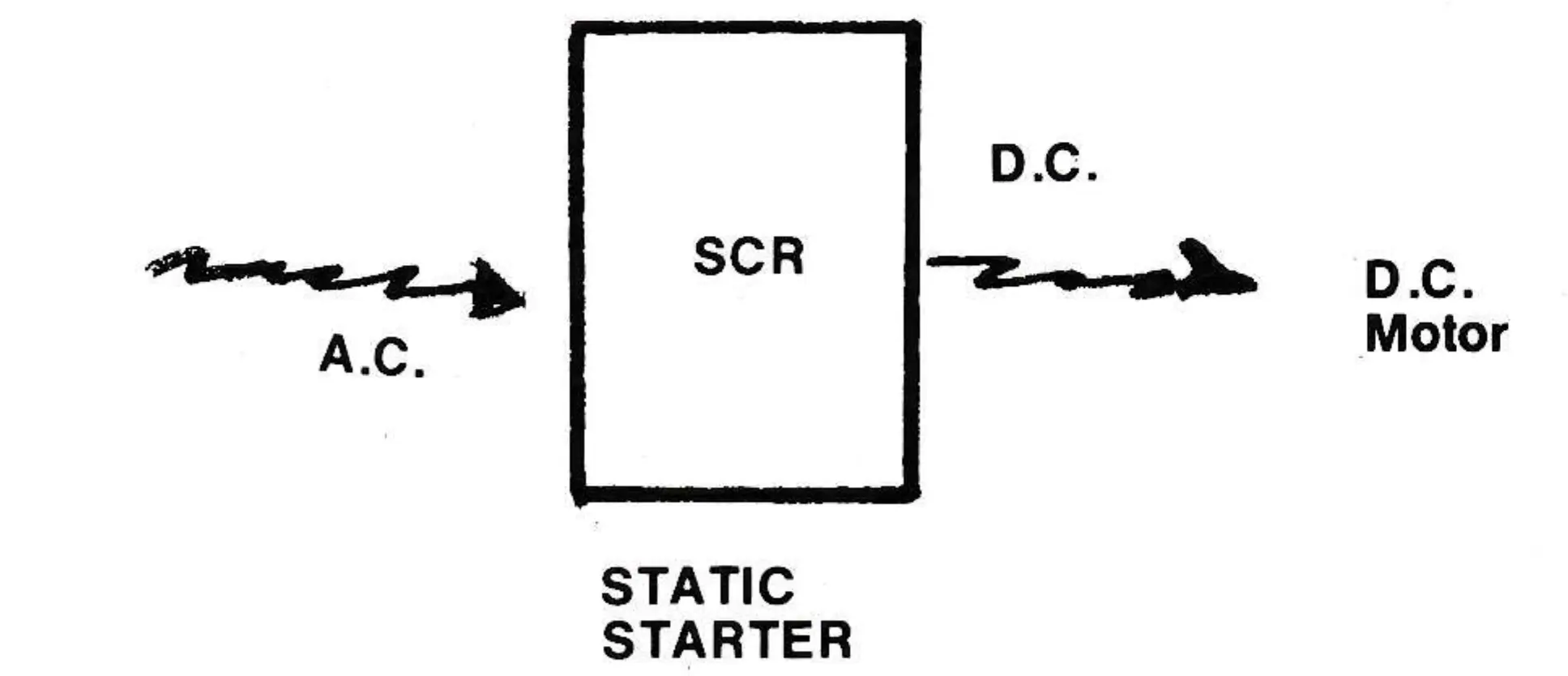
The application is simple: Alternating current supplied to the operator’s station on the “line side” is rectified to D.C. by a “bank” of SCRs (usually six) on the “load” side of the main disconnect before entering a D.C. motor. Through electronic circuitry the speed of the motor can be varied infinitely throughout the normal speed range, regardless of load.
You’re probably saying, “Well, I’ve got darn good speed control in my old A.C. resistor bank units.” You’re probably right, although they may provide a “stepped start.” You might also be fortunate enough to have resistors designed for continuous operation at less than design speed. If not, and one of your lifts was inadvertently operated at less than design speed for a long period, you probably lost your operator’s station in the fire that started. Incidentally, that heat generated in resistor type controls is wasted energy, which is lost money.
All right. So far it appears that SCR is (1) efficient and (2) offers infinite speed control. What else? How about compactness? One manufacturer offers a totally enclosed cabinet that measures roughtly 1 x 2 x 3 feet which provides control for up to a 300 HP motor. Control and safety circuits are housed in separate enclosures, also requiring little space.
Concerning cost, you’ve probably heard that solid state drives are more expensive than the conventional resistor/bank/wound rotor motor types. Several years ago that was the case, but not any more. Most, if not all, lift manufacturers now offer D.C. drives at comparable prices to A.C. as an option. (Contact your supplier for the latest information.)

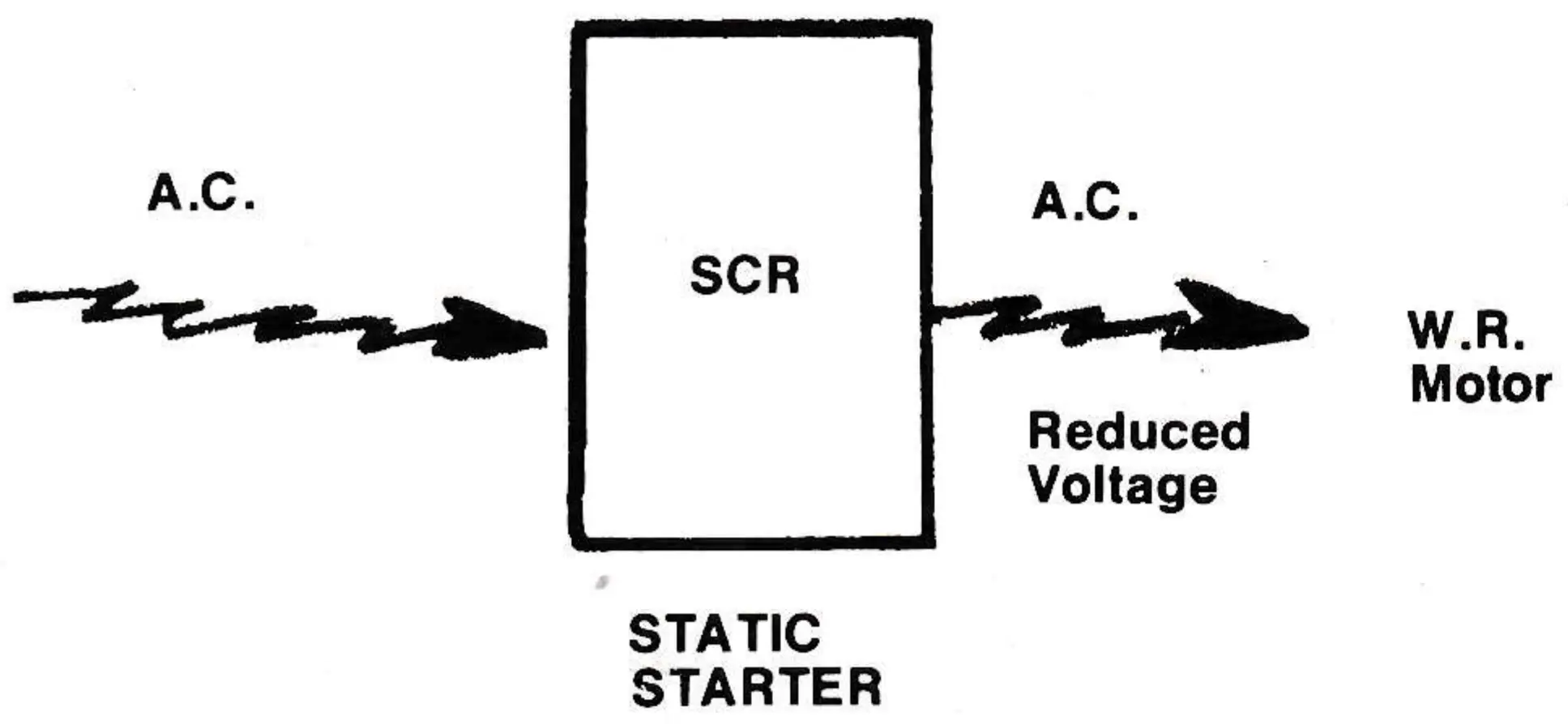
Not all lifts are powered by wound rotor motors, however. Many (most) of the lesser horsepower motors (under 150 HP at 460V and 75 HP at 230 V) are of the “squirrel cage” type. They employ flywheels, hydraulic couplings or reduced voltage starters to provide a soft start for rope tows, T-bars and small chair lifts. Conventional reduced voltage starters have their limitations also. Lift acceleration may be too rapid, or the lift won’t start when fully loaded or extremely cold. Static (SCR) starters are also available for these smaller lifts to provide controlled acceleration. Not only that, but squirrel cage motors are less expensive than their D.C. counterparts.
In addition to the basic speed controllers, there are many options available from tower derail indicators to flow chart trouble shooting. If a derailment should occur, the lift stops automatically and an indicating system locates the precise tower at the operator’s panel. If more than one tower is involved in the derailment, the closest one would be indicated until corrected, then the next closest would indicate derailment and so on. Should circuitry problems develop, a multi-position switch and built-in meter quickly locate the trouble. If all attempts fail, the entire circuitry can be removed and a new module replaced in less than 10 minutes for under $400.
Although there are different suppliers offering SCR drives for your lifts, there are several points to keep in mind: (1) downhill transportation requires an alternate (regenerative) type of D.C. system for breaking; (2) replacement modules are much less expensive when purchased with the lift; (3) options are as numerous as manufacturers, so be selective in choosing both.
Other features (some optional) of static starters with D.C. drives include the following:
- Field adjustable minimum and maximum speeds.
- Adjustable acceleration and deceleration rate.
- Built-in phase protection.
- Built-in thermal overloads on motor.
- Current that can be limited for initial installation and then increased to maximum when additional chairs are added, using same motor
- Torque proving — high speed (thruster) brakes will not release until a pre-set drive torque is reached, thus eliminating roll-back when starting lift.
- Standardization of modules to allow for interchangeability with various size motors (some field adjustment necessary).
- Speed control built-in.
- NEMA 12 enclosure (fan cooled for larger drives).
In weighing the advisability of installing SCR drives or static starters, keep this in mind: During the week when business is slow and your P.R. man says, “Let’s run all the lifts to generate activity,” that may sound expensive. But, who says they have to be operated at full speed? With SCR, you can run half speed, weather permitting, and cut your power cost in half. That should be worth considering.