Of course, to the founders and developers who have endured the grinding process of multi-level permitting, to say nothing of major wetlands mitigation procedures and legal confrontations to unscramble banking blockages, the journey since S-e’s original site evaluation in 1983 has seemed long, not sudden. But that is another story of its own.
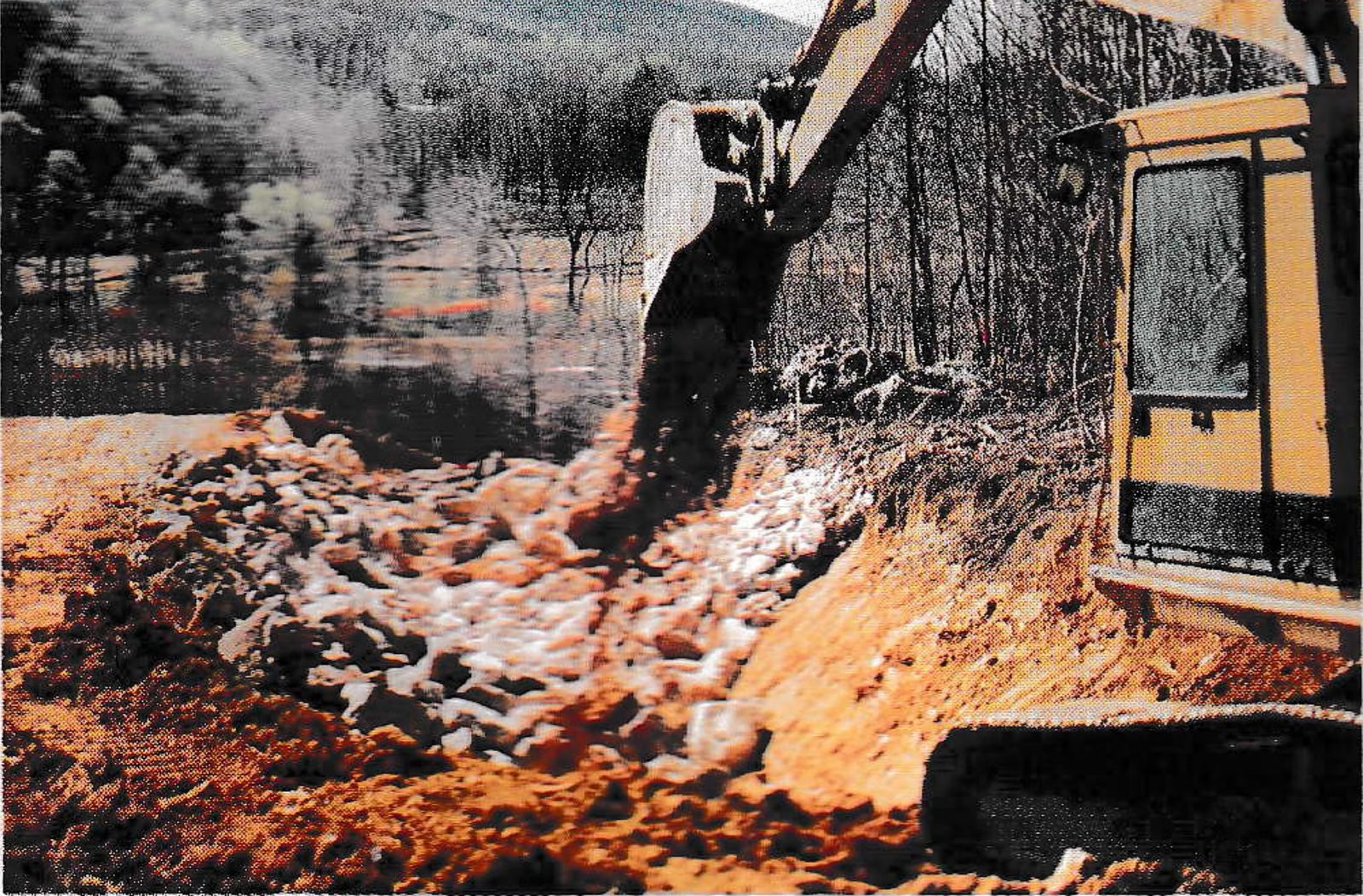
The story here is of the first new major resort in the eastern U.S. since 1981. In and of itself, this is uplifting news in these times of recessionary blahs; to the industry it also represents an intriguing laboratory — an instant case history of what a brand new resort, working with a totally clean slate, installed in the way of equipment. Certainly, in these times, the Whitetail project was pursued with a vengeance by the hunger-starved ski area suppliers, so there is a voyeur’s dream of looking over Whitetail’s shoulder in the
brutal reality of a buyer’s market.
To get a measure of Whitetail, here are the vital statistics:
- Comfortable carrying capacity: 4,000
- Vertical rise: 935 feet; summit: 1,800 feet.
- 95 acres of skiable acres, with 100 percent snowmaking, 67 with nightlighting.
- 100 million gallon snowmaking reservoir, 6,000 GPM pumping capacity and 46,500 CFM of air.
- Lifts (all CTEC): 2 fixed quads, 1 detachable quad, 1 fixed baby double.
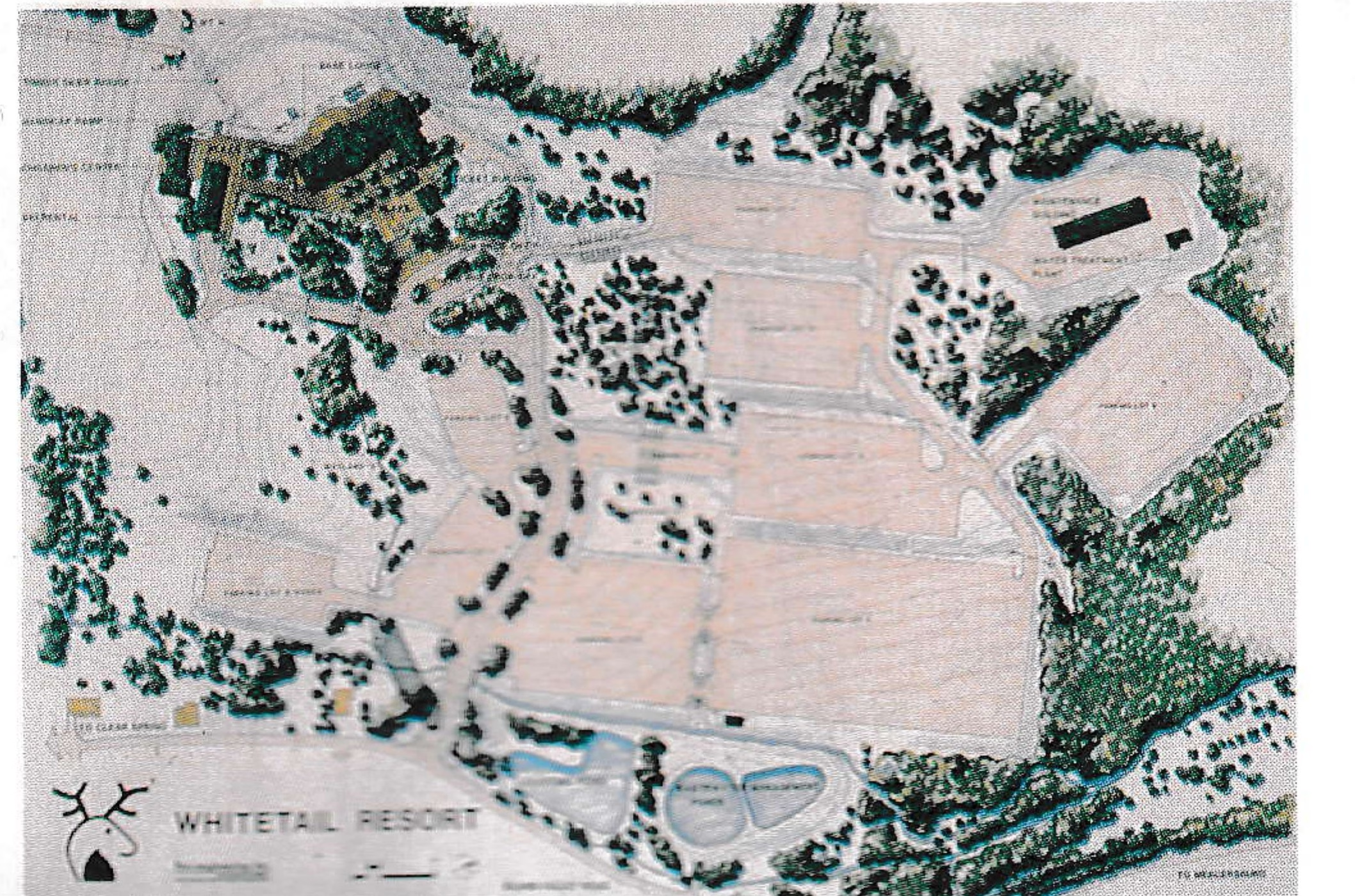
- About 50,000 sq. ft. of buildings, including base lodge (30,100), rental/patrol (9,600), day care facility (4,000) and maintenance/snowmaking (8,000).
- 13 acres of parking.

The trail system permitted by the terrain is almost ideal for the market Whitetail hopes to develop. It has a totally protected and separate beginner area averaging 10 percent for 900 feet, with over 200 feet of width. Distinct from this is a ski school slope that will be the envy of the industry: average grade of 20 to 25 percent with 200-300 feet of width.
The bulk of Whitetail’s skiing will delight the critical intermediate market, and there is also some of the mid-Atlantic’s best sustained terrain for the advanced skier. Expressed as percentages, Whitetail describes its trail mix as 20 percent beginner/novice, 30 percent low intermediate, 35 percent intermediate and 15 advanced.
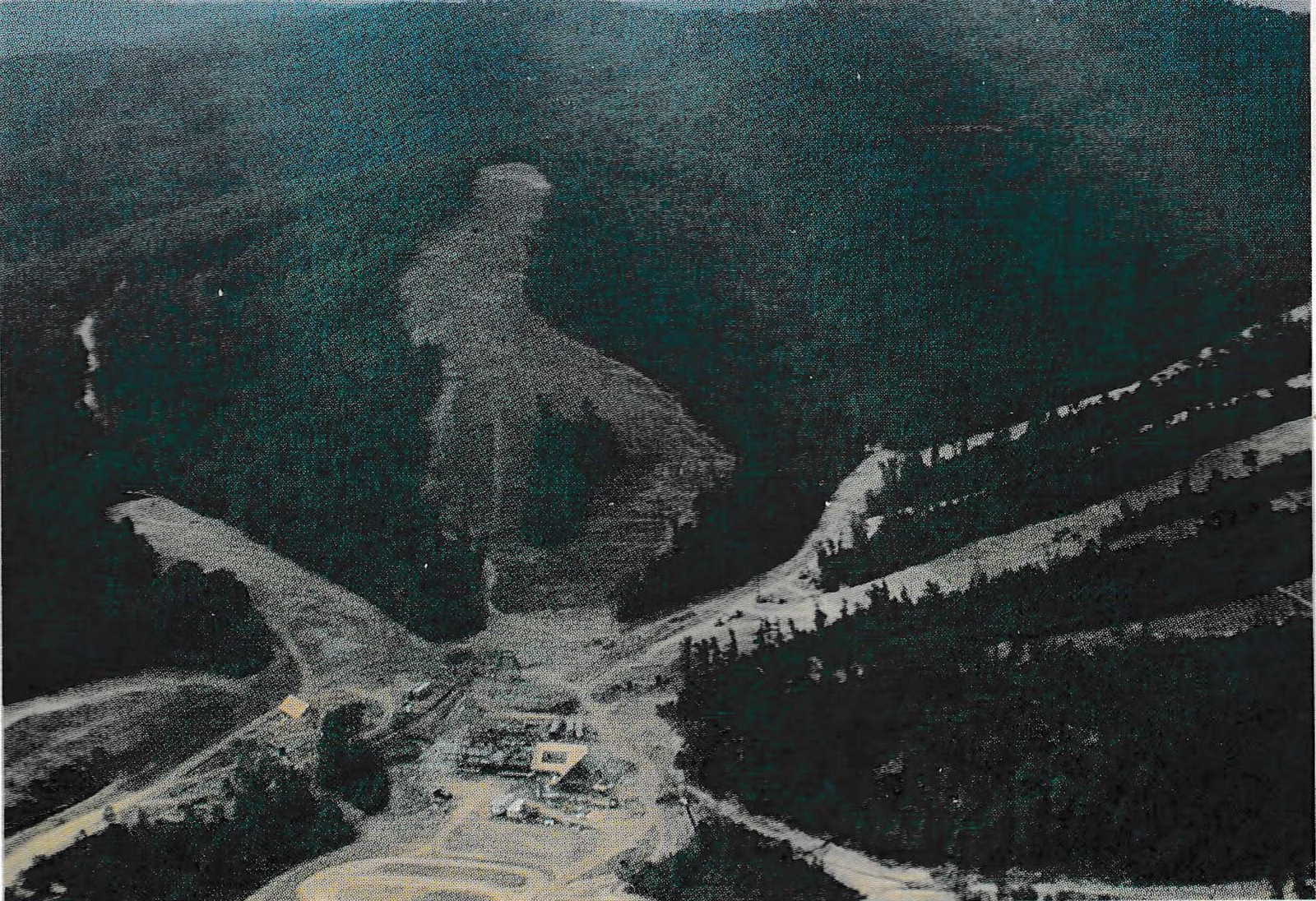
Given the latitude of the resort, the planners called for manicuring the slopes to allow for skiing virtually on anything deeper than a heavy hoar frost.
To groom the trails, Whitetail has bought four Bombardier BR-400+ vehicles with blade and tiller, of which three are new and one used. Also seven snowmobiles were purchased from Bombardier.
Trails, though, are more than places to ski: they should provide an aesthetic experience, and Whitetail’s will, being blessed with superb views, both locally within its well defined valley, as well as to the distant farmlands of Pennsylvania. Says S-e’s Tim Beck, “It is a true mountain experience, rivaling those found in New England.”
Undoubtedly the most critical planning and decision-making went into snowmaking. The ability to make snow and make it in quantity in the short windows of opportunity required by its mid-Atlantic location, is key to the success of the resort.
“Built into the system,” says S-e’s snowmaking engineer, Scott Barthold, “is the capability of accommodating six complete thaw cycles over a winter.” The assumptions were based on climatological analysis showing there are 1,200 hours of weather below 30 degrees, and the fact that these temperatures do not come in long, drawn-out periods that allow for snow production at one’s leisure. The system design will allow for the area to fully cover 100 percent of its skiable terrain within five days, given temperatures below 28 degrees.
The system is an air/water one, with capacities of 46,500 CFM of air and 6,000 GPM of water from a 100 million gallon reservoir. Approximately 280 guns (of which roughly a quarter will be tower-mounted) will be used, and about 340 Rogers hydrants.
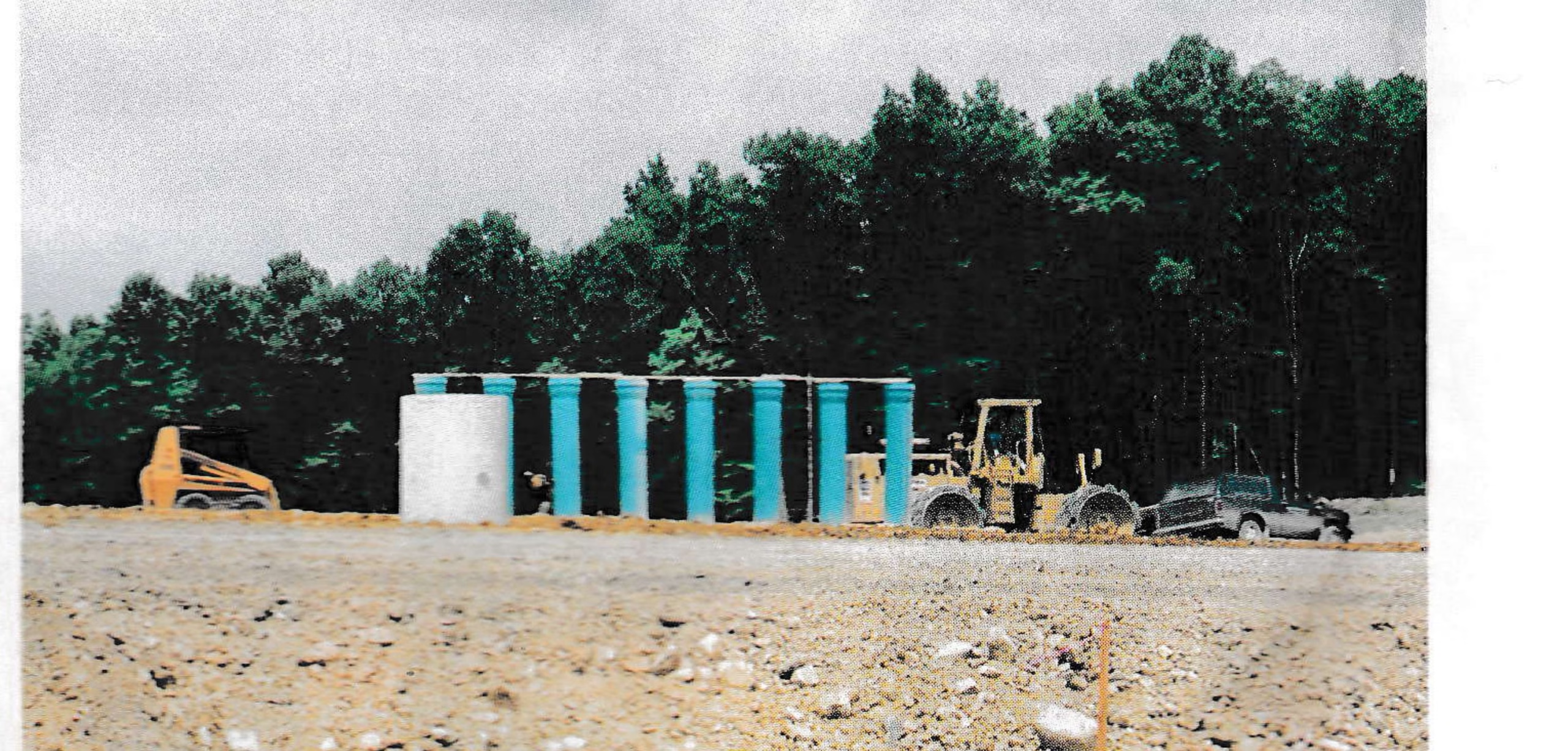
A substantial number of the guns will be Killington 3000’s. Says Matt Purcell, of Sno-engineering, “It’s a gun that works efficiently at the marginal temperatures we have to deal with, and is particularly well adapted to automated operation.” In addition, some other guns are planned for the mix, including Omichrons, Ratniks and Rogers. Airless equipment will also be on hand this winter on a demo/testing basis.
“Gun selection is a judgment call,” says Purcell, “and the real test will be in the actual on-slope performance. In the first season, there will be a lot of trial and error to see what actually works best on which sections of the mountain. As an example,” Purcell explains, “some guns perform significantly more efficiently in wind than others do.”
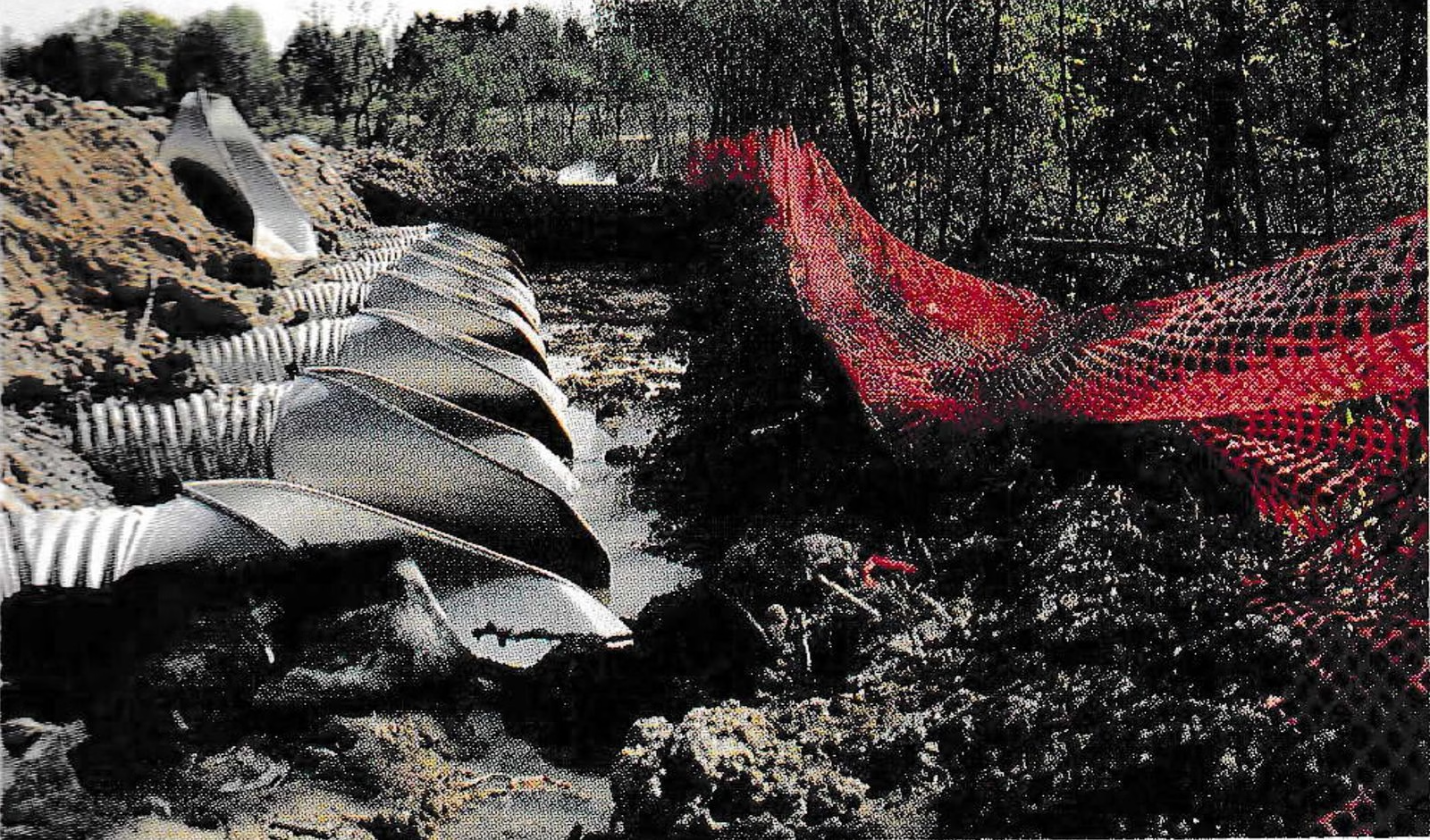
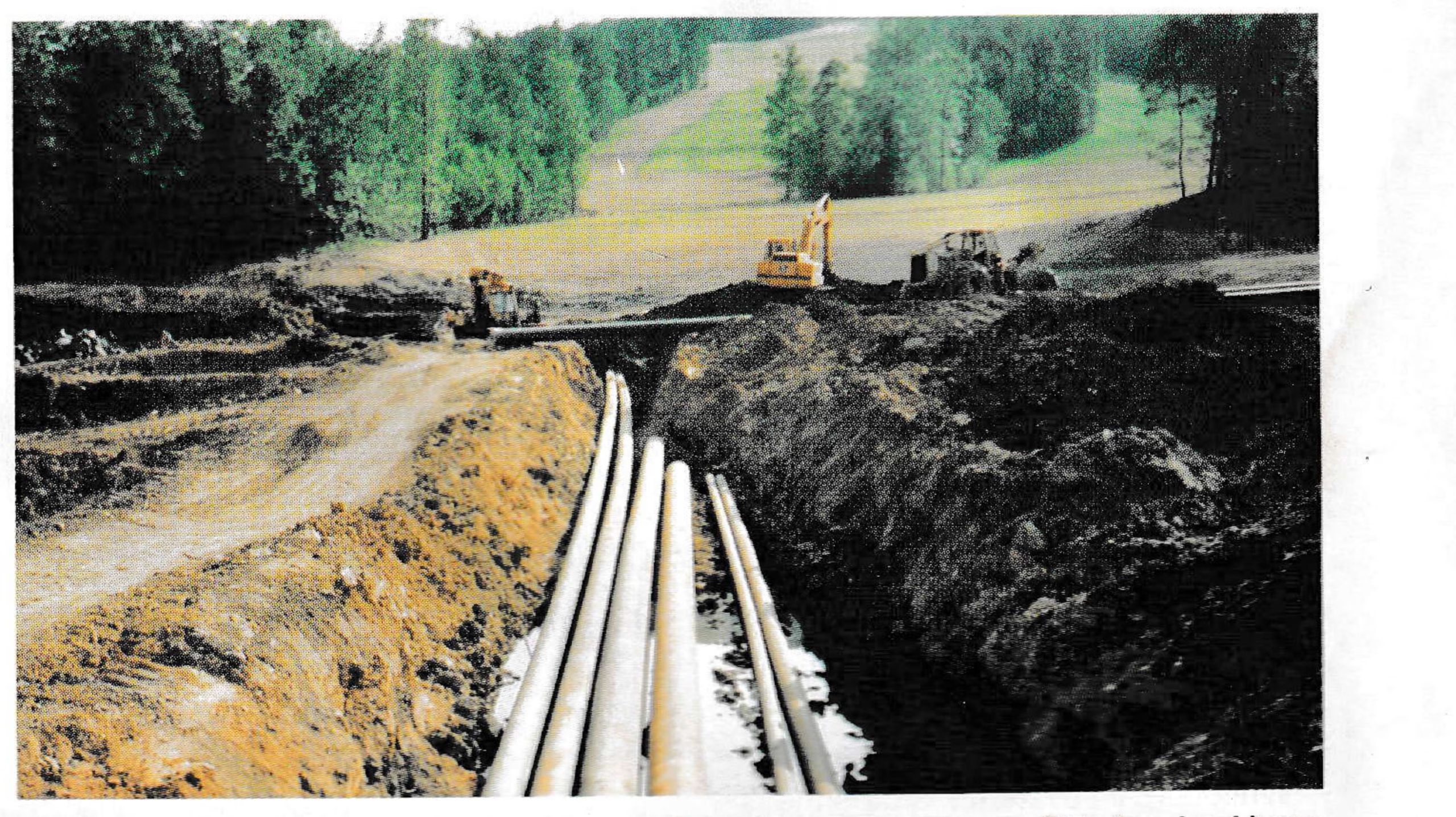
To ensure fast response to favorable snowmaking conditions, the Zap-locked, Sno-Star pipe was buried frost-free to allow for fully charged lines at all times. Sno-engineering also developed some operational procedures to allow for quick start-ups.
One of the intriguing aspects of the Whitetail snowmaking system is the approach to a fast-developing technology. For instance, the decision was not to plunge in with a fully automated system (“The cost benefits are not yet available,” says Barthold), but to provide the capabilities for this at a later date. To this end, electric and control conduit was installed on the mountain to provide for future hydrant automation. The computer control system, which will monitor and provide a data base of weather and efficiency information, can be expanded to fully automate its control of the system.
Also, with an eye on the Dendrite research, the compressor selection — five 1,750 HP Ingersoll-Rand centrifugals — would “allow for relatively easy accommodation of lower pressure air in the event energy costs and technology turn in that direction” (Barthold).
The Whitetail system uses a water cooler to bring the expected 50 degree water down to 35 degrees.

Whitetail’s lift system features the first detachable in the market region. For the occasion, CTEC is giving the bottom terminal a customized design that will give it what Beck calls “a truly futuristic feeling.” In addition, there are three fixed-grip lifts — two quads and a fixed-grip double baby chairlift.
A lot of planning went into matching the downhill acreage with the 5,871 VTFH available from the lift system, according to Beck. “You don’t get a quality ski experience if the lift system overwhelms the slopes,” he says. Given the available flexibility, Beck says the lifts will be able to support additional terrain in the future.
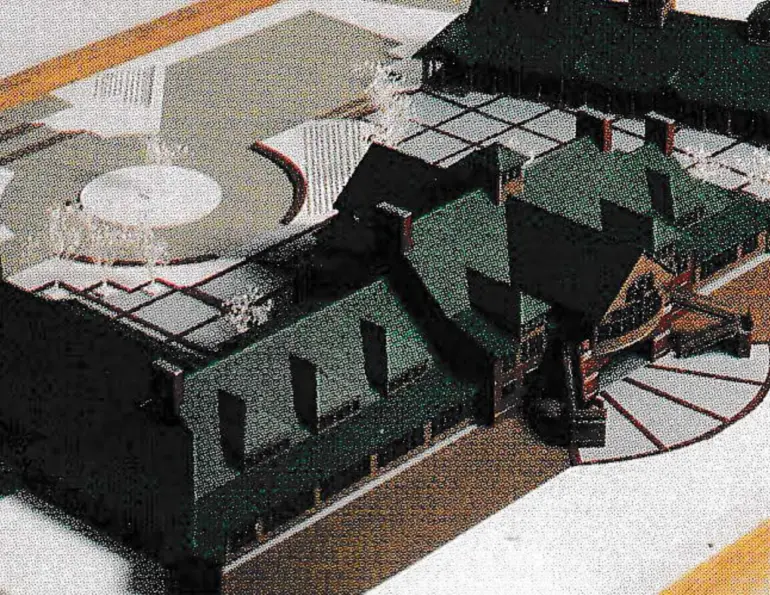
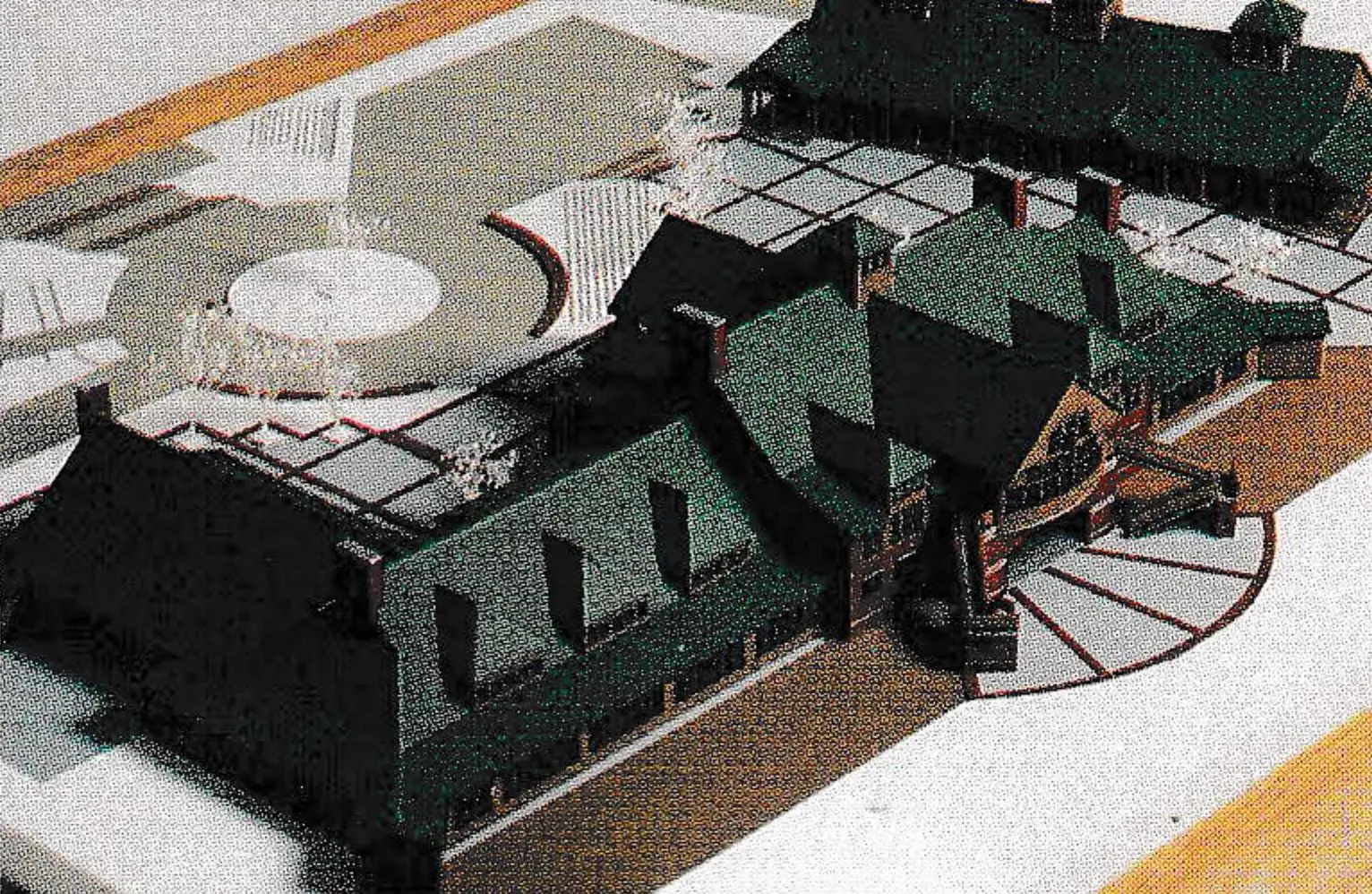
Centerpiece of the base facilities is the 30,100 sq. ft. facility to be dedicated to Jim Branch. “Jim was very much involved in the Whitetail dream,” says Bruce Watson, general manager of Whitetail, “and was personally committed to its success. Because of his stature as a ski industry leader, we felt this to be an appropriate memorial.”
The two-storey building, which seats about 1,100 inside and more than 200 more on outside decks and patios, has rough sawn board-and-batten siding, and will feature brick and limestone trim. The architecture is intended to echo some traditional details found on buildings in the region.
The 9,600-sq. ft. rental/patrol building is sensibly placed next to the beginner slope and near the ski school meeting area. Plans call for 2,000 pairs of rental and demo skis.
There is also a 4,000 sq. ft. standalone day care center, also adjacent to the beginner slope and to a planned snowplay/terrain garden area.
Clearly the vision of CEO/developer Chick Carroll and his Sno-engineering mentors has been that you don’t need exotic imports with experience in running Hilton Head or Hawaiian mega-resorts; what you do need are real ski professionals, with deep experience and demonstrated skills in the hard core disciplines of snowmaking, lift operations, grooming and, of course, in marketing the product.
Whitetail’s list starts with general manager Bruce Watson, who orchestrated the rebirth of the “new Okemo.” In turn, he recruited Jim Arnold from Stowe as the mountain operations and snowmaking manager; for marketing, old pro Manyon Millican, whose work on Snowshoe is still considered a classic. On-staff PR director is Sally Bray from Sugarbush, augmented by Craig Altschul & Associates for publicity and special events. Assisting with a high-profile role as skiing ambassador will be the magnetic Diana Golden. Paul Volkman was brought in from Massanutten to direct sales; Ron Hawkes, from Kissing Bridge, N.Y. (and also Portillo, Chile, in summer) to direct the ski school; Steve Neal from Sugarloaf is ski patrol director.
The marketing effort will be directed, of course, at the dynamically expanding Northern Virginia/Washington, D.C. region, which has been growing at a 35 percent clip over the past few years.
“We think there’s plenty of room for the existing ski areas and us,” says Watson, but his smile perhaps reflects what other observers say: that Whitetail is sure to be a real challenge to the likes of Ski Liberty and other well-established areas that tap this skier-rich lode.
Will Whitetail make it? There are never guarantees, of course. And there have been skeptics along the way. But to those familiar with the conservative financial structure of the enterprise, it looks awfully promising.
Some ten years ago, another ski resort designed by Sno-engineering, Mt. Wachusett, came on line to serve the greater Boston and Rhode Island market. Tim Beck sees a parallel: about an hour from a major metropolitan area, a physical profile in the thousand vertical range, a management commitment to quality in snowmaking, lifts and other bedrock priorities.
Now, to see if the turnstiles click as profitably for Whitetail!