


Photo by Jeff Knight
The dairy farm is gone now and the backyard sport has become a billion-dollar industry, but Black Mountain seems hardly to have noticed. Newly groomed ski trails with names like Udder Delight, Farmer’s Daughter and Back 40 help preserve the mountain’s agricultural past. And the area’s only lift — a 470-vertical-foot T-bar — is a relic from skiing’s earliest history.
In a state full of super chairs and super trails, Black Mountain’s old-fashioned T-bar and hokey-named ski trails are barely worth mentioning.
But to the 8,000 residents of Rumford, Me., who have been on a losing streak since 1986, Black Mountain is a symbol of community pride and proof positive that a little town can succeed.
Lake City, Colo., is a lot like Rumford — a little town with an even littler ski hill. But to the kids of Lake City, that 235-vertical-foot platter pull is the most important lift in all of Colorado Ski Country USA. And after the events of two summers ago, lots of adults in that state think so too.
Lake City and Rumford are two examples of little towns that could. Towns that pulled together against all the odds to keep pint-sized ski hills open and running for their kids. Skiing does indeed have a past and that past came to life in recent winters in two tiny towns at opposite ends of the ski map. Skiing may have moved out of the backyard, but that backyard spirit and camaraderie have not been left behind. There is still room and still hope for even the most humble of ski areas. Rumford and Lake City are proof of that.
Jeff Knight, the manager of Black Mountain ski area, calls Rumford a “typical small mill town.” Nearly everyone in the community of 8,000 either works for, is related to or knows someone who works for the Boise Cascade paper mill, the town’s largest employer.
Like many small mill towns, Rumford didn’t think much of itself. In fact, it was hard not to be down on the town since so many negative things happened there.
“We haven’t had much of a track record here lately,” admits Knight. “First, we had a strike at the paper mill. Then, we lost the movie theater, the animal farm closed and then Bass Shoes left. The town has had a real bad time for a few years.”
Even the ski hill was a failure.
Ever since the Greater Rumford Community Center (GRCC) bought the ski area for a dollar from the Chisholm Ski Club in the mid-70s, Black Mountain had lived up to its status as a nonprofit enterprise. For as long as the town had owned it, Black Mountain had never turned a profit.
“The only thing that kept us going was giving lessons to the kids,” says Knight. But then, even the kids started to give up on the place. With Sunday River and Mt. Abram and guaranteed snow conditions just 20 miles down the road, Black Mountain slid farther behind and deeper into debt.
“Black Mountain was just a losing proposition,” says Rumford resident Roger Arsenault. “With a good snowfall, we could break even. But it had been running at a loss for so long, it was starting to jeopardize the whole GRCC program.”
Not that the GRCC didn’t try to make the hill profitable and appealing. It smoothed out the trails and put in a beginner’s lift, but without snowmaking, the area continued to lose money. Finally, unsure what to do, in 1986 the GRCC hired ski consultant Nils Eriksen to advise them. Eriksen told town officials the only way Black Mountain could continue would be to install a snowmaking system. The snowmaking and other improvements he recommended added up to more than $1 million.
Eriksen might as well have told Rumford to launch a space program.
“With our track record, the banks wouldn’t even look at us,” says Knight.
But just when it looked like Black Mountain was about to become the town’s latest casualty, the attitude of the citizens suddenly began to change. Maybe it was the long losing streak. Maybe it was the kids who jammed Black Mountain on winter weekends. Maybe it was just a community sick of rolling over and playing dead. But all of a sudden, something started to happen. People talked about improving Rumford’s image and the quality of life in the town. And more and more, they saw Black Mountain as a symbol of that quality of life.
Sensing some momentum building for the project, the GRCC decided to ask the voters directly for the $1 million. Although they got turned down, the margin was close enough to give the newlyformed Black Mountain Expansion Committee hope.
Following the Town Meeting Day vote, committee members decided to do what they could themselves by “scrounging around town” for donations and parts for a snowmaking system. Whatever they couldn’t “scrounge up,” members would ask the voters to purchase.
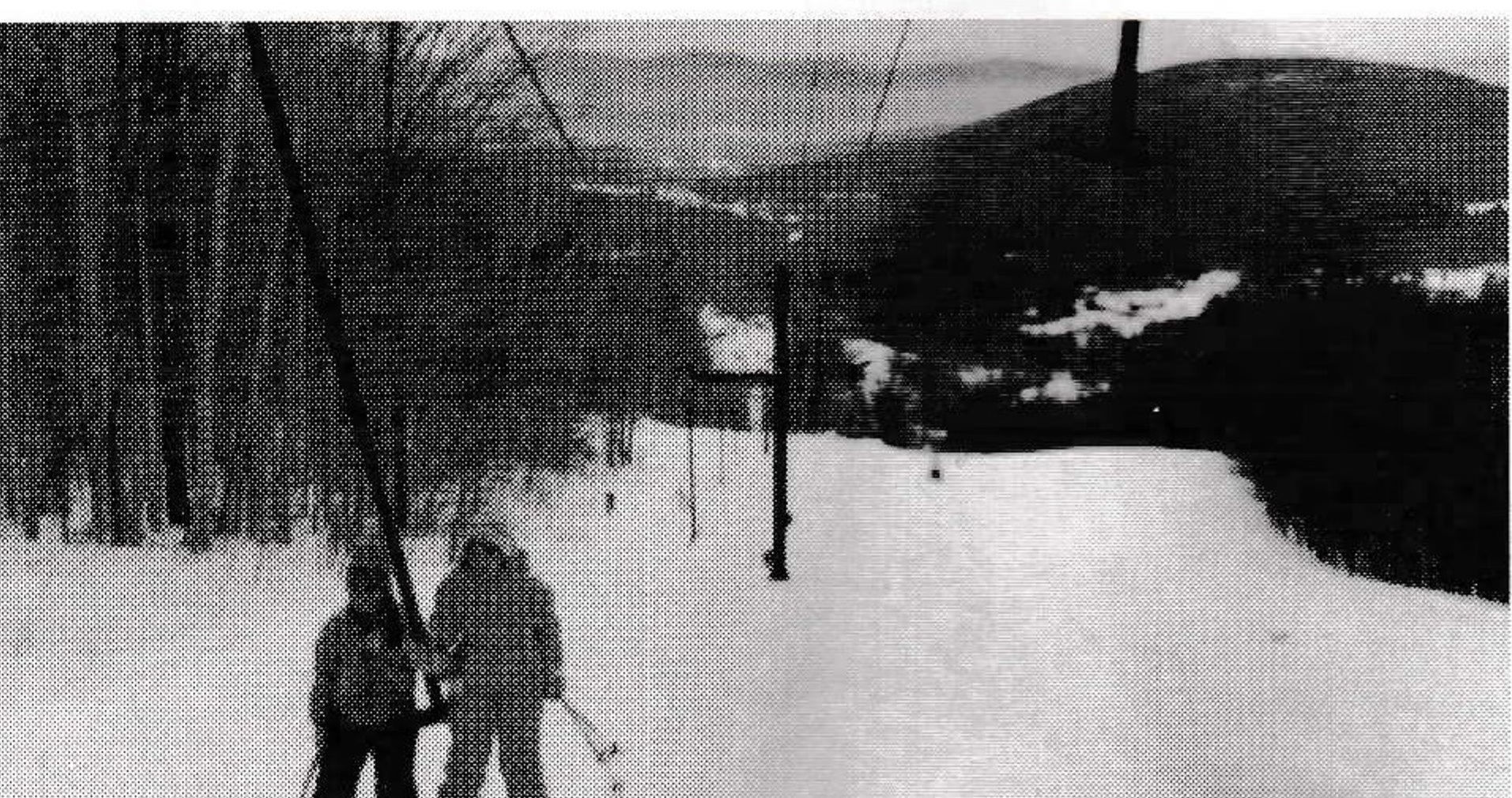
Photo by Russ Dillingham
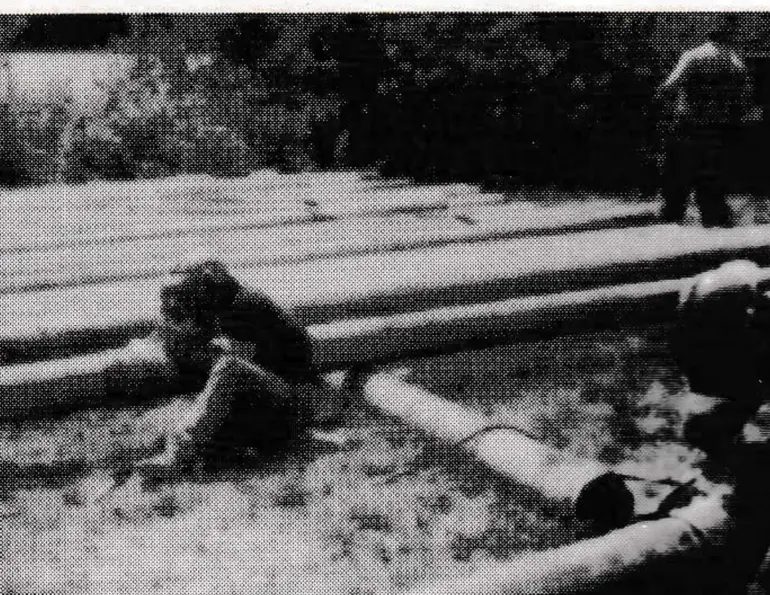
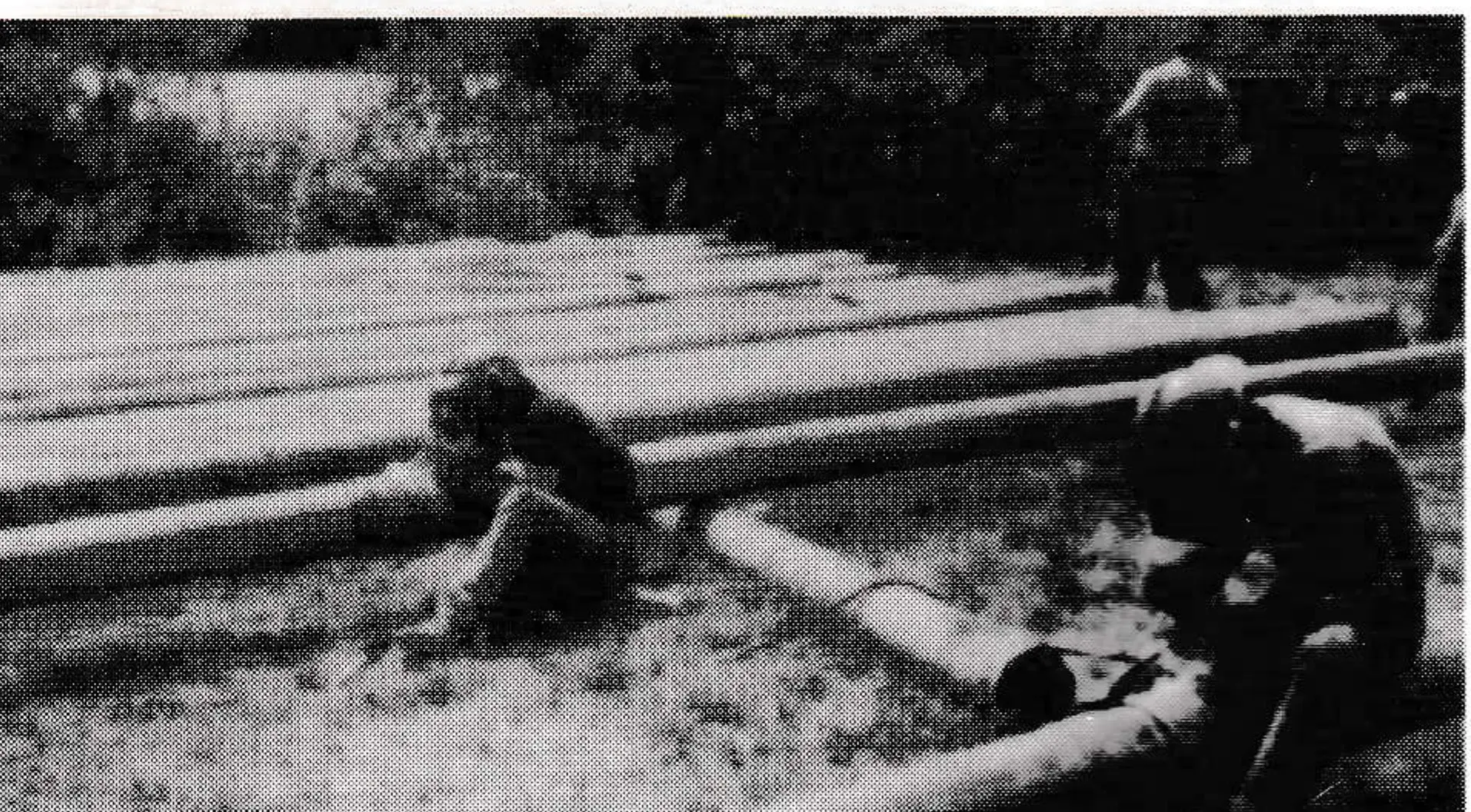
The “scrounging” plan worked better than anyone had dared hope. Boise Cascade donated tens of thousands of dollars worth of parts and equipment including a pump motor, all the pipe, valves, tools and even engineers to help install it. A local welding company offered eight of its top men to weld all the pipes together. A local construction company donated a backhoe and trucks and men to do the excavation work. Other local businesses and individuals contributed money, time, tools and labor to the project.
By the spring of 1989, the expansion committee had everything it needed except snowguns and a groomer. At Town Meeting Day, voters overwhelmingly approved spending $180,000 to finish the project. Over the summer, volunteers installed the system, part by part.
In December, Black Mountain opened for skiing with a four-foot base of machine-made snow. The guns continued to pump out snow all winter and by the end of the season, lift tickets were up 100 percent, season passes were up 100 percent and skier days increased 50 percent. For the first time in history, the area ended a season in the black.
Last winter, despite periods of rain that nearly wiped out the snow, the area again operated in the black, because snow was made to fill in when needed. Business was up 25 percent.
Success has not gone to anyone’s head in Rumford, but it has done wonders for the town’s self-image. The small-time ski area in a losing town that no bank wanted to talk to is now calling the shots.
For the future, Sugarbush, Vt., has given Black Mountain its old Summit double chairlift. When that is installed next summer, the area’s vertical will increase by 400 feet.

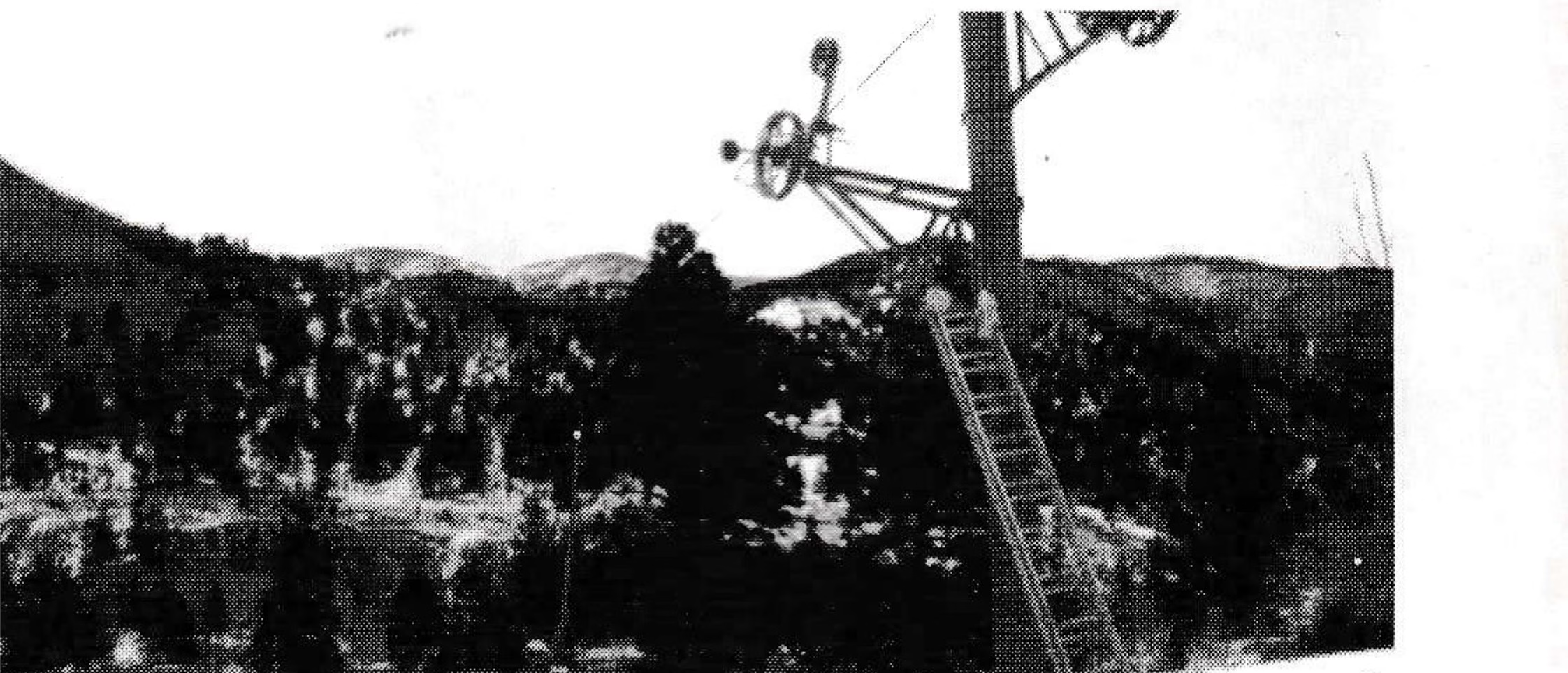
Photo by Gretel Daugherty
Lake City, Colo., could have used a snowmaking system two years ago at its community ski hill. There wasn’t enough natural snow to open the hill even one day, but local folks weren’t too upset about it. After waiting four years to get the hill back in operation, Lake City residents figure waiting one more year won’t hurt. And last season, the area operated with crowds of local skiers.
The fact that Lake City has a ski lift at all is a testimony to the hard work and generosity of the citizens of Colorado.
Unlike Rumford, Lake City’s community tow was not a losing proposition — it was already a lost cause. Six years ago, the Colorado Passenger Safety Board decertified the 1948-Poma and closed down the 235-vertical-foot hill for good — at least it seemed that way to the 297 residents of Lake City. The cost of materials, engineering and labor to upgrade the lift was more than they could come up with.
But then, two years ago, Governor Roy Romer brought his “Home on the Range” public forum to Lake City. Residents saw the visit as an opportunity to get their lift fixed. The governor had no sooner arrived in town than citizens told him they needed the lift back for their kids.
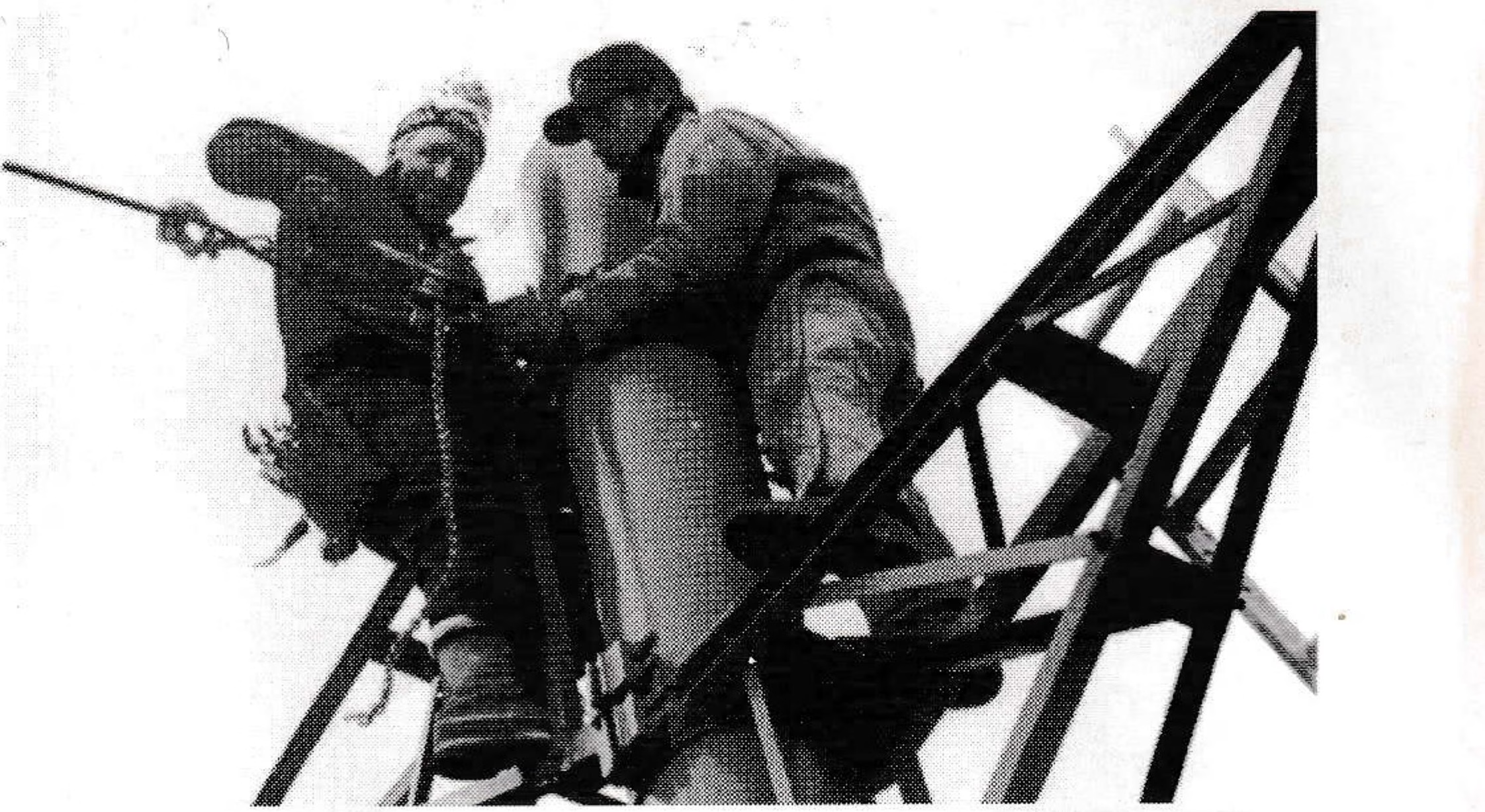
Photo by Dave Wolfe
Romer passed the problem down to Steve Berson, head of the Department of Regulatory Agencies. Berson passed it down to Susan Miller, administrator of the Tramway Board, who called Steve Hyland, manager of lift operations at Vail and president of the Rocky Mountain Lift Association, a consortium of industry professionals dedicated to lift safety.
“We just happened to have a board meeting the next week,” says Hyland. “I brought it up and Jon Mauch, the vice president of the RMLA from Breckenridge, volunteered to drive down with me to take a look at the lift and see if there was anything we could do.
“I’d been told the only thing that would help that lift was to plow it into the ground, but we went down anyway.”
Hyland says the lift looked even worse than he thought. “It was originally built in 1948, but we found ‘1944’ stamped on one of the crossbars. Maybe that’s why the French lost the war. They were building ski lifts instead of tanks.”
Despite the condition of the lift, Hyland made an appeal to the RMLA membership for help. The response was overwhelming.
Poma of America donated $2,000 worth of equipment; Vail gave $1,000 in equipment plus labor; Breckenridge and Keystone sent labor; Howelsen Hill donated an old bullwheel for spare parts; Chuck Peterson of Enartech in Glenwood Springs, did the construction and design engineering for the necessary modifications. Local help came from Gunnison Rural Electric Association and Hinsdale County and Lake City residents who turned out with everything from shovels to paint brushes.
The bulk of the work was done in one massive two-day work party December 5 and 6. Like an old-time barn raising, members from several Colorado ski areas joined local residents in bringing the ancient lift up to modern-day standards.
The visiting volunteers were put up overnight by Lake City residents. On December 5, the whole town turned out to honor the men at a potluck supper at a local church. By the end of the lift-raising session, Lake City’s ski tow had its cable catchers and derail switches working again, and a dozen big-time ski area mechanics had their hearts brimming over with small town hospitality and gratitude.
“Those guys worked their buns off and there’s no way we could even thank them enough,” says Dave Wolfe, a Lake City resident who worked on the project.
Among the volunteers, the feeling was mutual.
“It’s a neat little hill,” says Hyland. “It’s a great place for kids to learn how to ski. All of us love skiing and love the industry; that’s why we’re here. We grew up loving skiing and if we can do the same thing for — these kids down in Lake City, it’s worth it.”
By the first of the year, all Lake City needed to open the lift was insurance and snow. The snow, unfortunately, didn’t come. “It was just one of those things,” says Wolfe. “We worked like crazy to get this thing open, and then the snow wouldn’t cooperate.”
Mother Nature’s lack of cooperation seemed like a cruel joke, but Lake City residents weathered the drought with equanimity. After all, they figure they got the hard part done when they got the lift rebuilt. Compared to that, coming up with a little snow should be easy.
Sure enough, last season there was plenty of snow and business on the hill. The insurance proved to be a large expense, however, accounting for 60 percent of the area’s operating costs. The town and the county made up for the deficit to keep the area operating.
What’s in the future? Wolfe says residents are “scrounging around” for some snowmaking equipment to insure future operating seasons.
