

At many ski areas making snow, the fact that the snow is being made and the trails and slopes are skiable is all management wants to know. At other areas, management realizes the importance of design effectiveness and use of the system. This interest pays off in better snow conditions and lower snowmaking costs.
As an example of poor design, one area converts less than an average of 400 g.p.m. into snow, even though it uses 1400 hp. to compress the air. The air/water ratio is over 15 c.f.m. at 100 p.s.i. for each g.p.m. converted to snow. This waste is caused by the use of inefficient, large snow guns made of pipe. Each gun uses from a little over 1500 c.f.m. in extremely cold weather to more than 3000 c.f.m. in warmer air. Therefore, the area can run no more than four guns and most of the time only two or three. The guns require constant attention and a large snow vehicle is required to move them around.
Another area using 1500 hp. to compress air and 10 to 12 conventional guns does only slightly better. The system has the capacity to double the output, but the snowmaking crew prefers to relax. The management has been snowed into feeling everything is fine because no one cares enough to do anything about the situation.
While the second example is not unique, the most common cause of inefficient snowmaking is the combination of loss of interest of key personnel and management after snowmaking is no longer a novelty and a change in foreman and crews. Let’s admit it. Capable and willing men for the job are not always easy to find, and some who have the qualifications and desire have wives who object. With personnel changes there is less than an adequate transfer of knowledge, so procedures become ragged. Equipment substitutions and additions often are made with a net negative result. Finally, it may be costing substantially more to convert water to snow than it did when the system was installed. Costs can rise so gradually no one is really aware of it.
These problems of poor management contrast sharply with the Mt. Mansfield Co.’s snowmaking installation at the Spruce Peak area, supervised by Gordon Lowe. There, on a 26-degree day, they covered an area 1200 ft. long by 200 ft. wide with four to six in. of snow in six hours. One day, when the temperature dropped below 10 degrees with no wind, they made snow at a rate of four to six in. per hour.
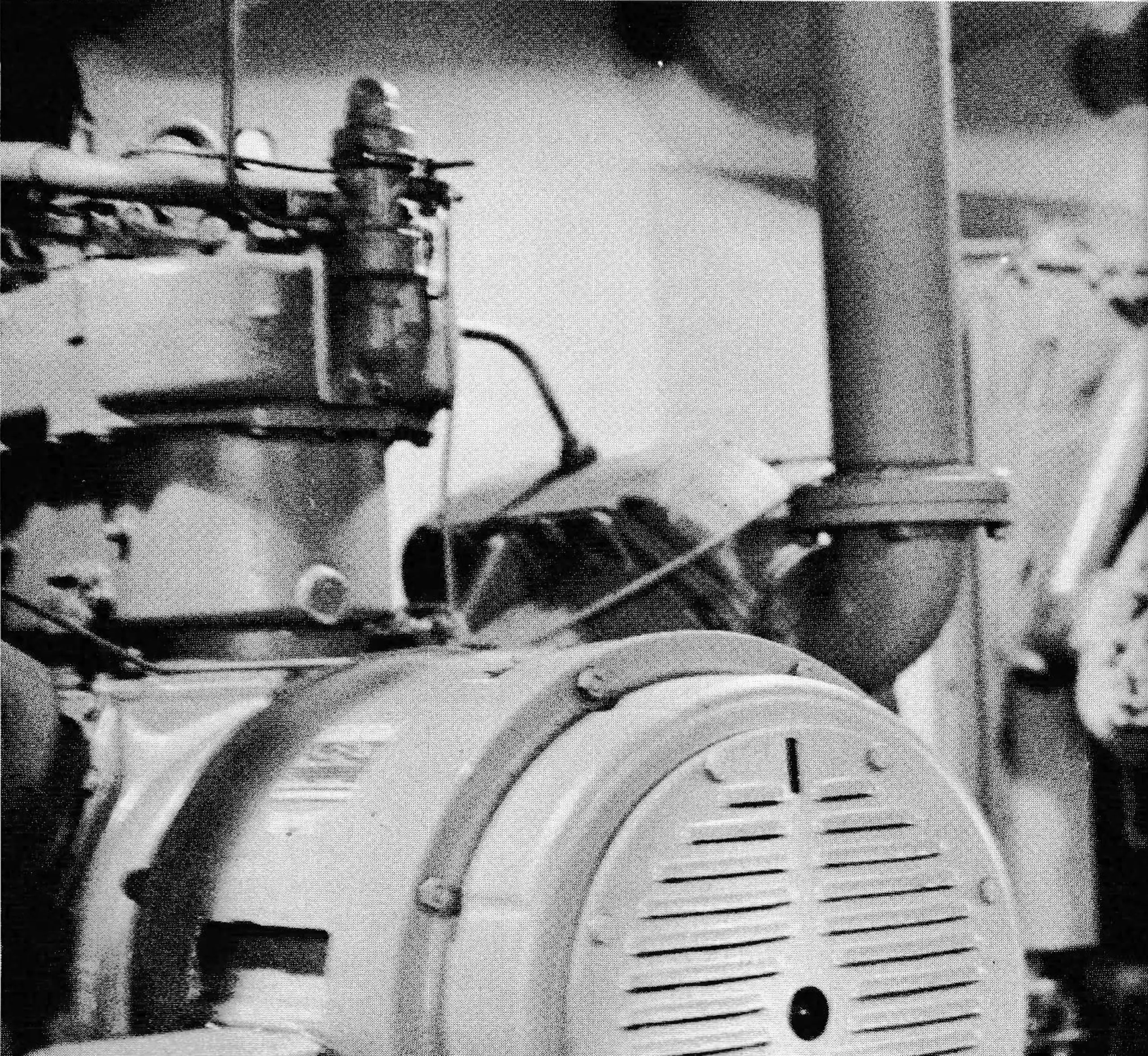
The Spruce Peak system used Larchmont tower turrets elevated about 20 ft. above the ground. Thirteen snowmaking booms are installed at 180-ft. intervals, six on one slope and seven on the other. Each boom is 20 ft. long and rotates 360 degrees every two to three minutes. Four air compressors produce 4400 c.f.m. and are driven by electric motors, producing a total of 1000 hp. Two 600-g.p.m. pumps are installed. One is usually sufficient, but in cold weather the other can also be turned on. The average ratio of air to water is about 8 c.f.m. per g.p.m. and in cold weather less than 7 c.f.m. to each g.p.m.—far less than the 15 c.f.m. for one g.p.m. for the area previously mentioned. Similar efficiency would save the first area about $9,800 a year in direct electrical costs and at least that much more in labor costs.
One of the main factors enabling Spruce Peak to make snow cheaply is the elevated snow turret. Not only does it spread snow well, but the rotation means the snow stream is in new, ambient air at all times and is airborne longer. The tower turrets have produced snow at 36 degrees, have operated two seasons without a freeze-up and require minimal labor costs. No setup time is required, as the towers are permanent fixtures.
To achieve a good ratio of snow per dollar of operating cost for a given system, follow these suggestions:

- Be familiar with operating instructions and make sure they are followed.
- Insist that records be kept, giving the number and location of guns, temperature, humidity, amount and type of snow made, hours run, etc.
- Check results and records.
- Do not change the type of snowmakers without checking their relative air-to-water use under similar conditions and verified with air-to-water meters.
- Larger installations should be equipped with water-flow meters, and the gallonage first can be checked against the conditions prevailing and then compared to results for similar conditions.
- If you expand your snowmaking coverage to include more area, realize the expansion must be as thoroughly planned as the original installation.
The basic problems of snowmaking are still the cost of making it and finding methods that use less labor.
In trying to find better answers to these problems, Larchmont has tested high-pressure fog nozzles with and without guns to propel the mix, venturis, various types and sizes of stationary and crawling snow guns, rotating and oscillating guns, tower turrets, chemical additives, after-cooling, heat exchanging and water pre-cooling. Remote-control tower turrets were demonstrated at the National Ski Areas Assn. shows at Stratton Mountain and Stowe, Vt., where the tower turret was started up at a control panel equipped with a timer that allowed the turret to run for a pre-set time then to shut off and drain automatically.
The most significant development, however, is in the success of two new drastically different Larchmont snowmakers. One, called the Jet Stream 300, has multiple outlets and a unique mixing system allowing the air to mix with the water in a carefully metered way. Air use cannot exceed 300 c.f.m. at 100 p.s.i. and is almost constant. Metered tests show the machine is over 50 per cent more efficient than any snow gun presently in use. Snow texture and spread are excellent. Snow can be made at slightly warmer temperatures than with conventional internal-mix guns, and it has given excellent results in sub-zero weather as well. It is very portable and especially effective for cross-wind application on trails and narrower slopes. It can be adjusted to deposit a lot of snow in a wide pattern for an average distance of 60 to 80 ft.
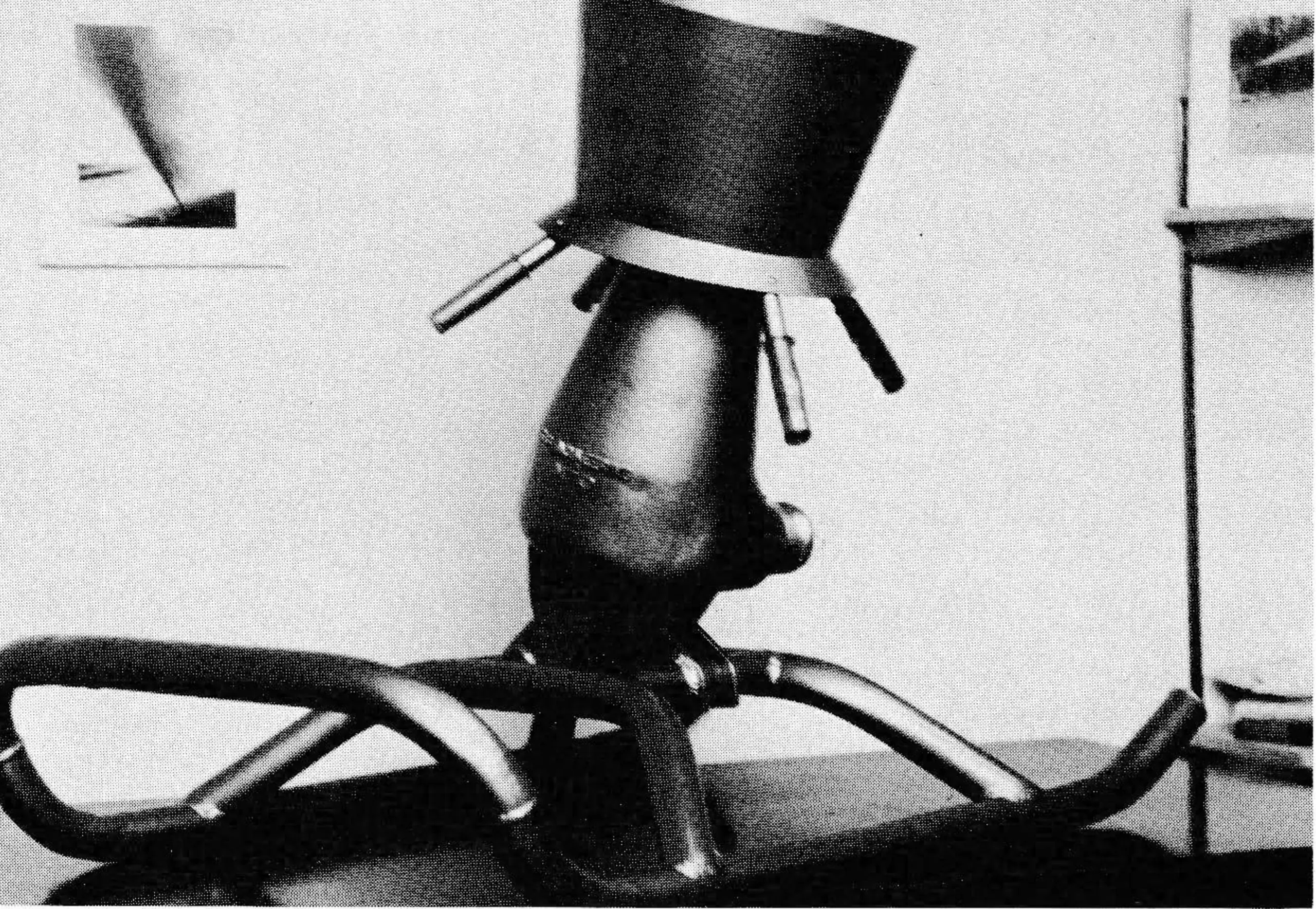
Using a similar mixing method, John Clifford, Larchmont’s Canadian representatives and Larchmont have developed Snow Fury, a large-volume snowmaker using a pre-set amount of air in the 600 to 900 and 1200 c.f.m. range. The unit is sled-mounted and so light one man can easily carry it or slide it to a new position. Moisture content can be controlled at the gun. The Snow Fury propels the mix much farther than any other snow gun, because the full pressure of the water is emitted from the end of the gun. The snow pattern extends out about 300 ft. and due to the height and distance the mix travels, the snow particles are larger than in normal machine-made snow. The snow is airborne longer, and larger particles can freeze. Its application will be best in large, open areas. The efficiency factor of the Snow Fury is almost comparable to that of the Jet Stream 300. It can be used long distances from the pipe lines and lend far greater flexibility to any snowmaking system.
These two snowmakers are Larchmont’s answers to a need for easier and lower-cost snowmaking.