
The one he settled on is a console-controlled system that, with little attendant labor, is capable of producing 1100 cu. ft. of snow per minute (70,000 cu. ft. p. h.) and allows the area complete recovery from rain or from a mild spell in two to three days. It’s an imported variety, designed by North American Engineering Ltd. of London, Ont.
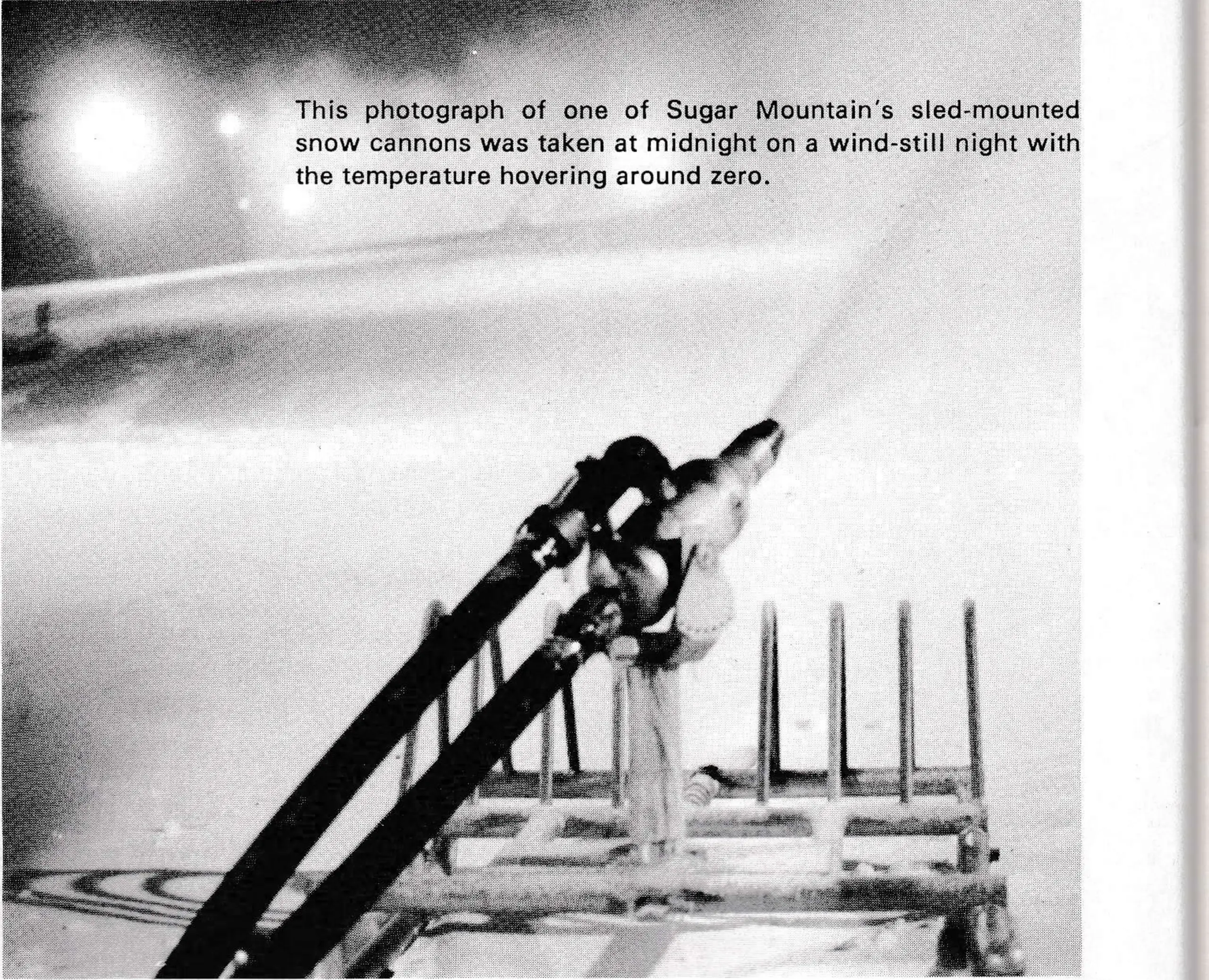
Ten large ground level guns, called cannons, are used. Brigham estimates that a conventional snowmaking system would require about 70 of the smaller guns to cover the 50-acre terrain. New loops can be added to allow for expansion when new trails are cut, as is planned this Summer.
Various-sized nozzles, upwards of one to one-and-a-half in. in diameter, are used. The nozzles are of what North American calls a supersonic design, whose construction the company refuses to reveal. However, president Jeffrey White will explain that these nozzles, which eject the air-water mixture at supersonic speeds, make snow faster for any given combination of air and water. Back, or supply, pressures in various snowmaking systems are the same, and it is the nozzle design which determines the speed of the snowmaking operation.
When Brigham makes snow, he begins on the bottom of the main slope in the early evening, moves the cannons over to the novice slope later that night and covers the upper portion of the main slope the next night. Snow arcs are determined by aiming the nozzles.
The cannons themselves weigh about 100 lbs. each, so one man can haul them from place to place, although a two-man team, of course, works better and more efficiently. The cannons are mounted on sleds that can withstand up to 400-lbs. of thrust created by the release of compressed air and water, and the hoses are strengthened and specially coated to allow dragging along the ground without breaking.
The system drains automatically in case of shut-off or power failure, leaving no pool of freezing water around the gun. The piping itself is deeply buried in the mountain.
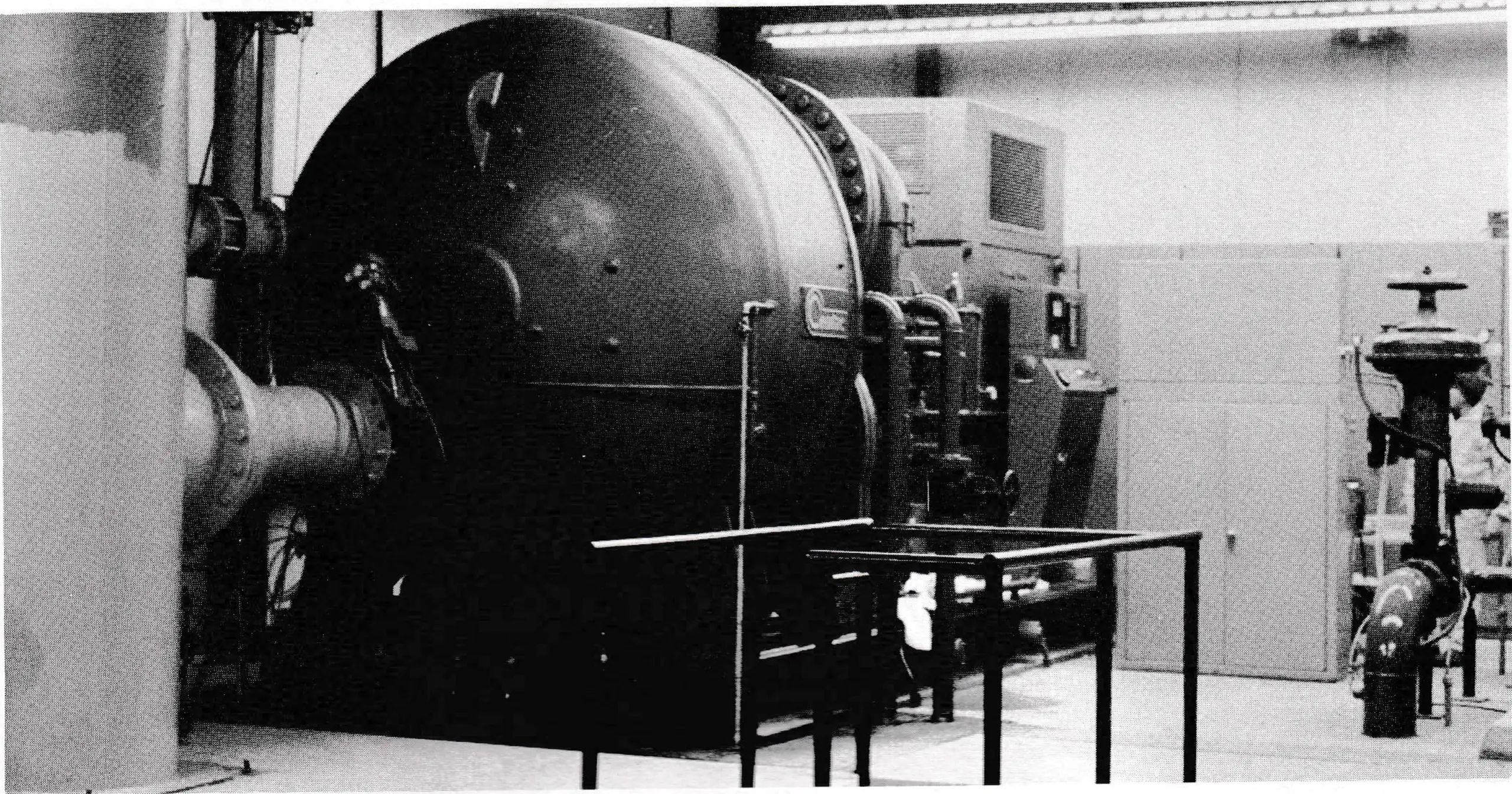
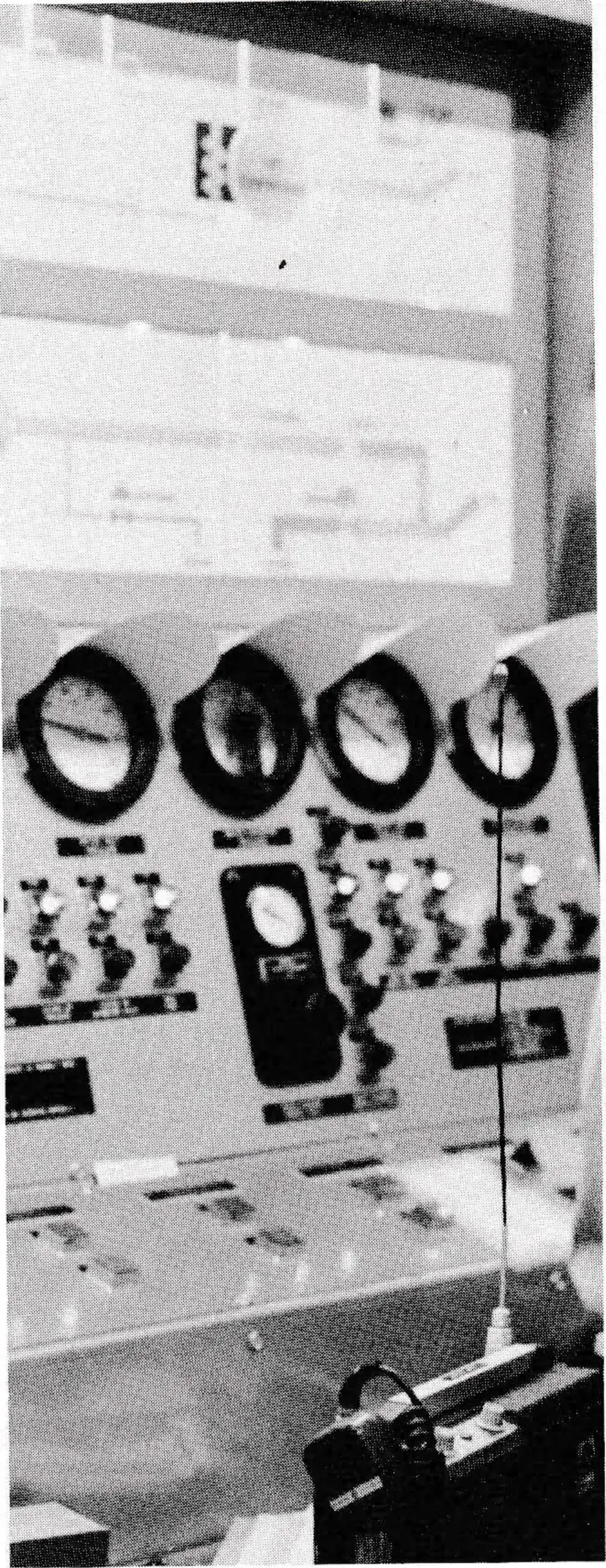
The heart of this automatic system is the console board in the compressor house, located down the hill from the ski slope near what will be a golf course. From the console, one man controls power, water and air in the system, and has a schematic layout for visual interpretation of the goings-on along the line. The man monitoring snowmaking operations keeps a log of dial readings, which, when combined with a study of the amount of snow made under various weather conditions, can be used to achieve optimum air-to-water ratios.
The entire North American system is designed to automatically control the amount of snow being made for maximum efficiency. The system runs at maximum design capacity at all temperatures, says White, but is engineered to run at 15 degrees F. If the temperature changes and the cannons are not moved, the snowmaking operation can be reprogrammed from the console in the compressor house.

Once upon a time, snowmaking systems were rated according to air capacity; now the rating is done according to water. The high-pressure Babcock & Wilcox pumping unit directs 1100 g.p.m. of water into the line at 900 p.s.i. at the bottom of the 1200-ft.-vertical area and 130-140 p.s.i. at the top, while the 2500 hp. Ingersoll-Rand compressor, with an inlet capacity of 11,465 cu. ft. p. min., produces and discharges air at 110 p.s.i. The industry average 10-to-1 air-to-water ratio has been lowered with the North American system to 6 or 6½ to 1. This system, says North American, produces two to three times as much snow as a conventional system for the size of the plant.
Now for money talk: Sugar Mountain’s $500,000 system costs an average of $26 an hour to operate, says White. It is run by three or four men (fewer are needed when there are fewer guns to move and when monitoring is done at the console), paid at the national average of about $1.85 to $2.50 per hour each. Water comes from an on-premises reservoir. Electricity to run the pump and compressor is at low Tennessee Valley Authority rates, which drop as more power is used in a billing period. In other words, making a lot of snow lessens the power costs of each snowmaking shift.
North American manufactures some of the equipment, such as the guns and hydrants, which are brought into the U.S. with six per cent duty. The rest is from suppliers here. Installation is done by the mountain’s own crews. North American’s functions are limited to design, site supervision and consultation.
The company’s background is interesting and significant. Starting out as North American Mechanical Ltd., the firm was Canadian distributor and engineer for Larchmont. It began making snow cannons in an interesting string of developments. There’s oil in the ground at the Athabascan Tar Sands of northern Alberta, which are so far North that they have surprisingly little snow. To keep the ground from freezing, North American in 1965 designed a snow-cannon system that would cover the ground with about 15 ft. of snow to insulate it from the arctic air and allow oil-gathering operations to continue. The company’s work, then, is to industrial design specifications for minimum maintenance and downtime.
North American personnel have installed snowmaking equipment at more than 70 areas in Canada (all but three Canadian areas, coast to coast, that have snowmaking have an NAE-designed system), plus more than a dozen in the U.S. Thirty complete snowmaking systems will be designed by NAE this year.
Sugar’s Brigham tells a few stories that indicate his satisfaction with the system. On February 16, four to six in. of powder were made at temperatures of 38 to 31 degrees in seven hours. At another time, after a warm spell, the temperature dropped on Thursday afternoon. Brigham gave the slush on the hill five hours to freeze, then started making snow. Sugar Mountain was back in business on Saturday with the lower part of the main trail and the novice area; by Sunday, the advanced trail, Tom Terrific at the top of the main slope, was also skiable. Not a bad record for a system that just went into operation in the early days of 1970.