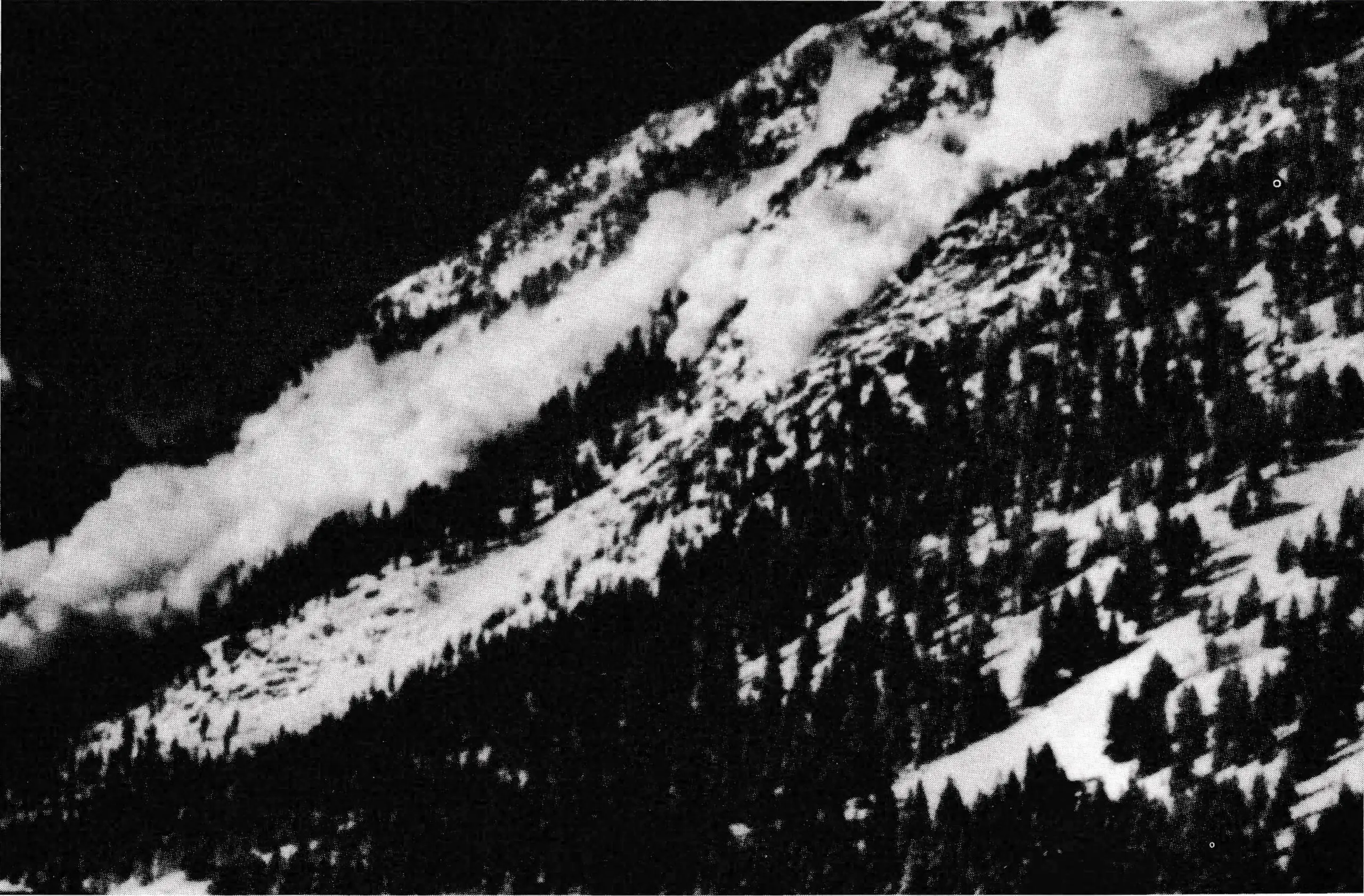

The Forest Service of the U.S. Department of Agriculture is collecting weather, snow and avalanche data at 42 locations in 12 western states as a step in the development of an avalanche-hazard rating index. The purpose of the index is to take the surprise element out of avalanches as the danger potential rises with growing numbers of people visiting the mountains to participate in Winter sports. Such a warning index, not now available, could be used to prepare advisories on the avalanche potential for specific back-country areas.
Forest Service snow rangers now regularly check national forest ski areas. Where slides are likely to occur, avalanches are carefully released as a safety precaution. The recent increase in snowmobiling and cross-country skiing, however, has resulted in throngs of people invading the back-country avalanche terrain where snow slides are not controlled.
Data for the development of avalanche-hazard rating index are being collected under the direction of Arthur Judson, associate meteorologist at the Rocky Mountain Forest and Range Experiment Station in Fort Collins, Colo. The data network represents a wide variety of weather, snow and avalanche conditions. Reporting stations cover 25 degrees of latitude and vary in elevation from near sea level in Alaska to 11,300 ft. in Colorado. Of the 42 locations under study for the index, 21 are considered to have serious avalanche problems. Avalanche specialists at these high-hazard areas make detailed observations of weather and snow conditions to determine when traffic restrictions and avalanche control are needed.
Snow and avalanche data collected by Forest Service personnel, state highway departments, ski areas and other land users are mailed to the Forest Service Snow and Avalanche Research Project in Fort Collins; monthly summaries are returned to the reporting stations. Computers will be used to analyze the data and establish relationships between weather and snow conditions and avalanche occurrence. Ultimately, Judson says, the avalanche-hazard rating index could be used as a basis of an avalanche warning service for the entire western United States.