


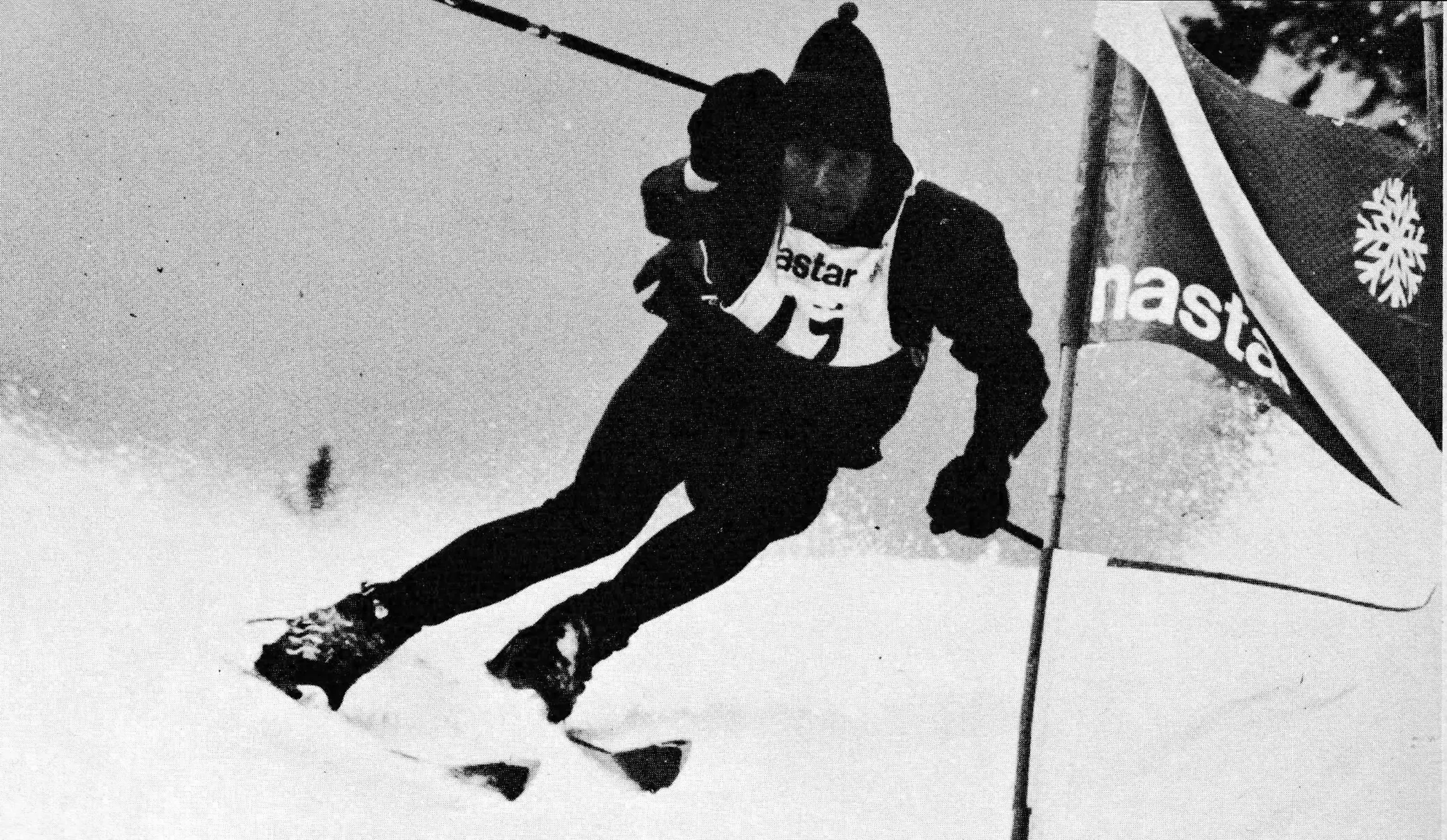
By the simple fact that most NASTAR programs are conducted by the ski school or at least with strong ski school involvement (the pacesetter is a member of the ski school), we have implied a recreational theme. Many ski areas, in fact, are now running “Learn to race NASTAR” ski classes.
Materials will be developed this season on the theme that a recreational skier can improve his skiing through racing. The handicap system alone lends itself to skier improvement. A skier can judge his own competence by the NASTAR handicap he turns in. And he can chart his progress over the season as his handicap improves.
This year, the new Doral-NASTAR Award Program can be used to encourage skier improvement. Under the program, an adult racer who shows the greatest improvement in his handicap will receive a special certificate.
The key to NASTAR, of course, is the simplicity of the program and the ease of the course. A new racer, or “participant,” has to know that he will be able to compete on a relatively easy course every time he enters a race.
Difficult courses, for that matter, are no longer even set for international ski competitions. Nearly 60 percent of the trails of the 1968 Olympic courses in Grenoble, France, in fact, weren’t any steeper than the intermediate terrain of a typical ski area.
As for the expert skier, he will be rewarded with a low handicap, a gold medal or a chance to participate in the NASTAR finals in April. Besides these incentives, just mention “race” to an expert and he’ll find the starting gate. In short, the hot-shot element to NASTAR is present without additional encouragement. What we all need to stress are the possibilities the program offers to the recreational skier.
The course is a key element in the program’s success. It should be located near the ski school meeting place or as close to the base lodge as possible. At the very least, it should be easy to find and not on an overcrowded trail. Many areas have designated a part of the ski area as the “NASTAR Center” or “NASTAR Trail.” Such a trail should not be too steep, and it should be suitable for the intermediate skier.

As important as the terrain is course preparation. A NASTAR course should be considerably wider than the gates themselves and groomed as smoothly as possible. A smooth course is a great confidence-builder; a ratty one, full of loose snow and bumps, will turn the participant off.
As for the setting of the course, approximately 25 gates are ideal, and they should be wide and simply set. Difficult combinations should be avoided and nearly all gates should be open. Allow ample room after each gate for the racer to catch his balance and still make the next gate.
The overall manner in which the race is conducted will go a long way toward attracting the recreational skier. Too often we in skiing become too casual in our approach to the participant. We fail to realize the racer’s anxieties. A friendly welcome, a well-defined sign-up area and clear instructions will add to his enjoyment.
How we market skiing will dictate more and more the future growth of our sport. NASTAR becomes a strong promotional vehicle in the overall marketing picture. But it must be remembered that success in developing recreational participation through NASTAR involves more than just setting a course and timing a race.