

The September 14-16 seminar, organized and conducted by National Ski Areas Association’s insurance plan managers Barringer & Williams, attracted over 40 registrants, including area operators, ski patrolmen, safety engineers and lift supervisors.
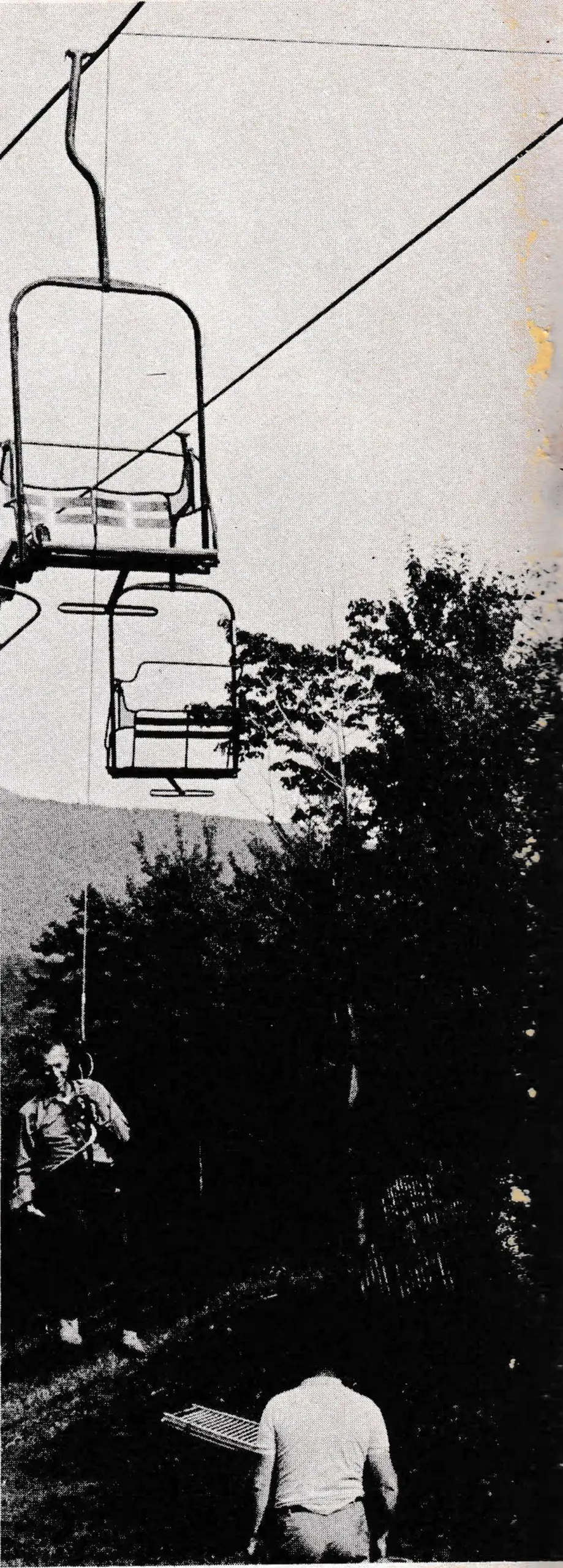
On-slope demonstrations and discussions were held at the Mt. Mansfield Riblet double chairlift and at the Chin area’s PHB-Hall gondola. Simulating breakdowns on the two lifts, registrants systematically went about evacuating passengers with equipment supplied the seminar by ski areas in New England and Vail, Colo.
Despite the warm, early-autumn weather, conditions of extreme cold, wind and icy snow surfaces were hypothesized as were the possibilities of passenger fear.
A five-man evaluation team, chosen through the combined efforts of the NSAA, National Ski Patrol and Barringer & Williams, was used to record, sift and evaluate findings collected at the meeting. Included on the panel were Harry Baxter of Sugarloaf ski area, Kingfield, Me.; Robert Miller, National Ski Patrol System; Robert Kinney of Kinney and Associates, Pennington, N.J.; Howard Kessler; American International Insurance Group, New York; and Chuck Dwyer of the U.S. Forest Service in Denver. Off the slopes, Frank Haas, technical committee chairman of the Cordage Institute, held a discussion on rope testing while Phil Gravnik of Peek ’n Peak ski area, Clymer, N.Y., presented a detailed outline of lift evacuation procedures.
Chairlift evacuation
Chairlift evacuation was performed by ladder and rope. In evacuating passengers by ladder, a lightweight, 35-foot aluminum extension ladder rigged with a metal hook on the top rungs was used. As demonstrated at the Mt. Mansfield chairlift, the hook fits over the up-haul rope just ahead of the chair and is moved down the rope to a position where the ladder base slopes under the chair and is securely positioned in the ground. Correct positioning, it was shown, will set the ladder 2 or 3 feet above the chair at seat level.
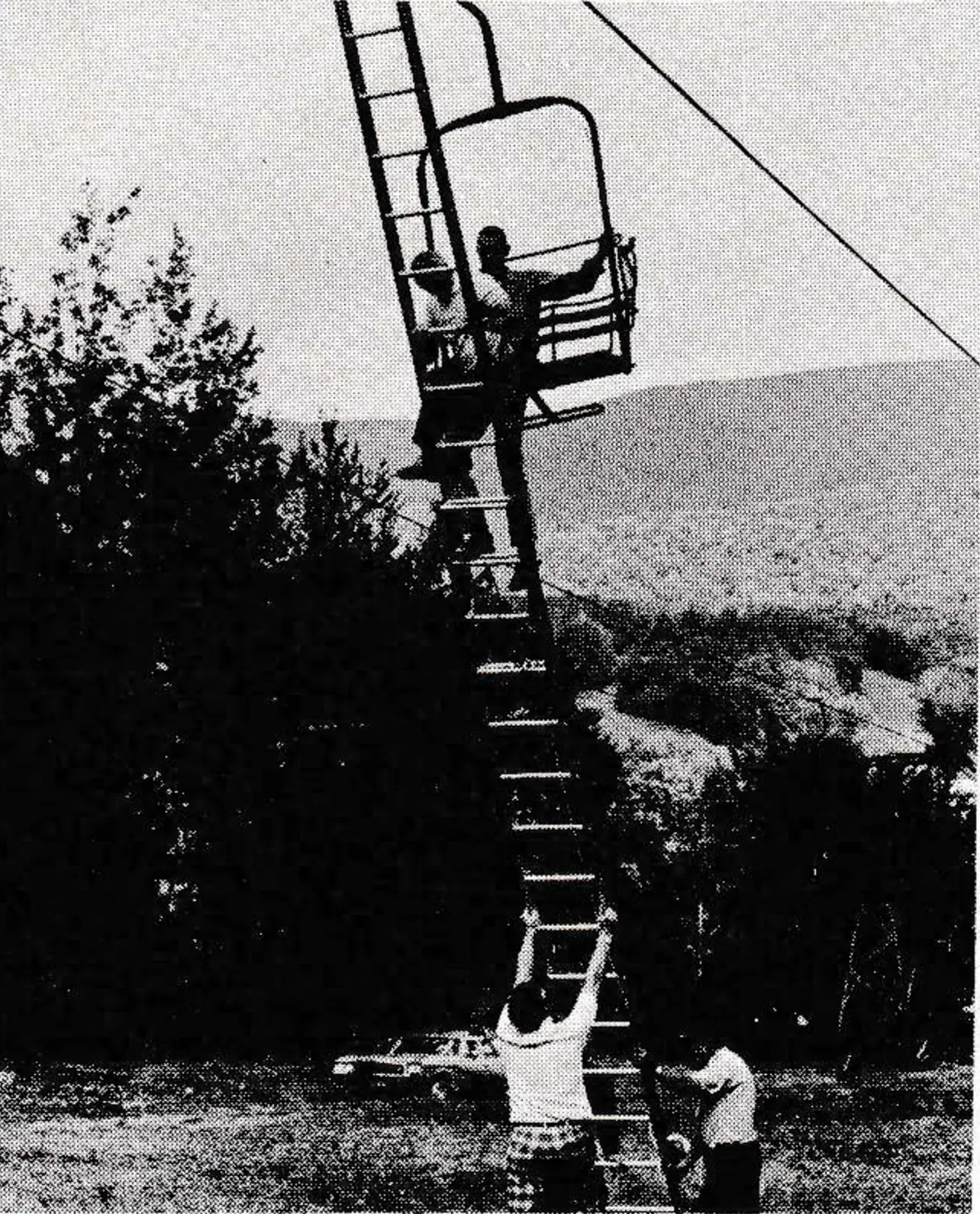
With a three-man evacuation team, one person ascends the ladder to remove skis and poles from the passengers while the two below steady the ladder base. Passengers then simply step forward onto the ladder, one at a time, to descend.
If skiing to the bottom is advisable, one member of the team helps passengers assemble their equipment as the other crew members unhook the ladder, move it downhill, rehook the ladder to the up-haul rope and slide it down to the next chair to repeat the procedure. A simple, fast and safe method, the panel found that evacuation using a 35-foot ladder was best restricted to haul rope heights of under 28 feet.
Other ladder evacuation procedures were also tried and though several methods appeared successful, their application was limited to specific lift configurations and terrain and therefore, the panel determined, were unsuitable for general use.
Rope evacuation experiments followed, with a number of procedures tried with a variety of devices and harnesses.
Use of a seat-type descent device with a rigid post and chain for securing the passenger around his chest proved most successful. Soft harnesses were also tested but their use proved too complicated, especially when passengers attempted to slide them under their legs between their body and the chair.

Stand-up stirrups presented fewer problems but did not offer the passenger as much security as the seat-type device and chain arrangement. A rigid post on the seat also proved superior to the flexible arrangement as the post offered clearance for the evacuee’s body. A strong chain combined with sturdy snaps offered a variety of adjustments to accommodate passengers of all sizes.
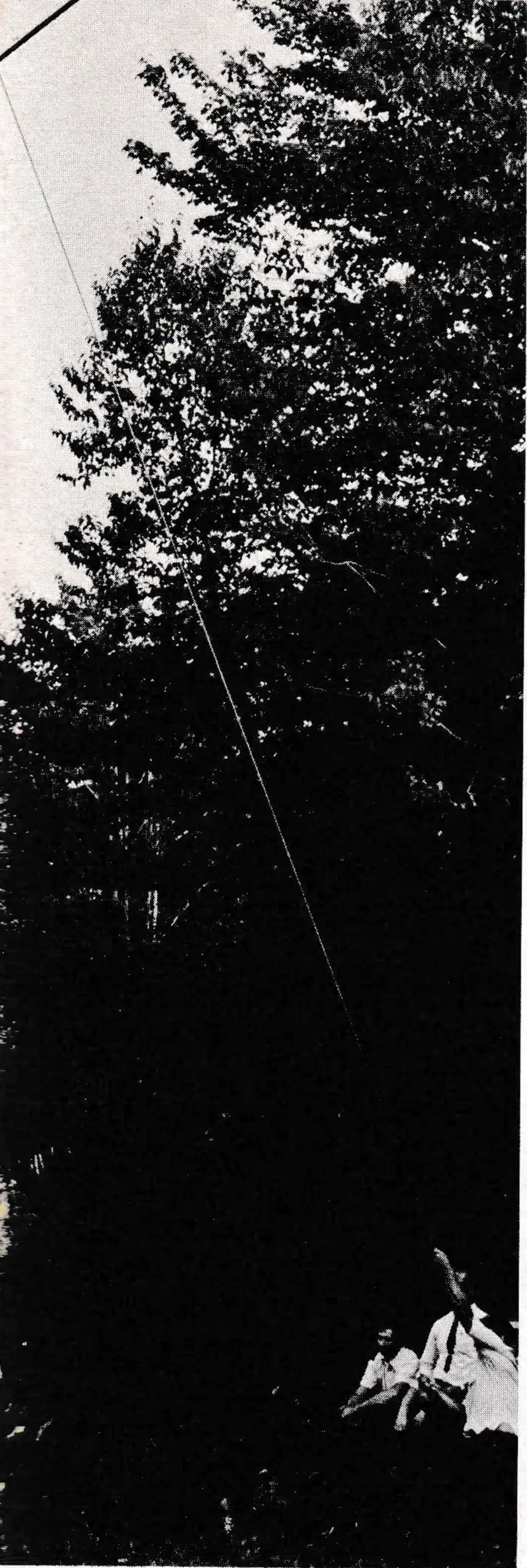
The descent rope, it was found, could be used in one of two ways—draped over the up-going haul rope or placed over both up-going and down-going haul ropes. The second arrangement was deemed the better of the two methods, for, in the absence of overhead safety and communication systems which might project above the sheave, it allowed rapid movement of the descent rope from one chair to the next.
The problems of heaving the descent rope over the haul rope were largely discounted by the evaluation team since it was felt that in most cases the evacuation crew could climb the lift tower to dispatch the lowering rope. One interesting technique that was demonstrated was Hall Ski Lift’s Safety Liner line thrower, a hand-held device that fires a nylon line up and over the haul rope.
Gondola evacuation
At the Chin area’s four-passenger gondola, rope evacuation methods were demonstrated with seat-type devices and harnesses. Initially, passengers were instructed to lower a handline from a plastic canister located inside the gondola. Ground crews attached a key to the line which was then reeled back up to the cabin. Passengers then opened the gondola door and returned the key and handline to the evacuation crew on the ground.
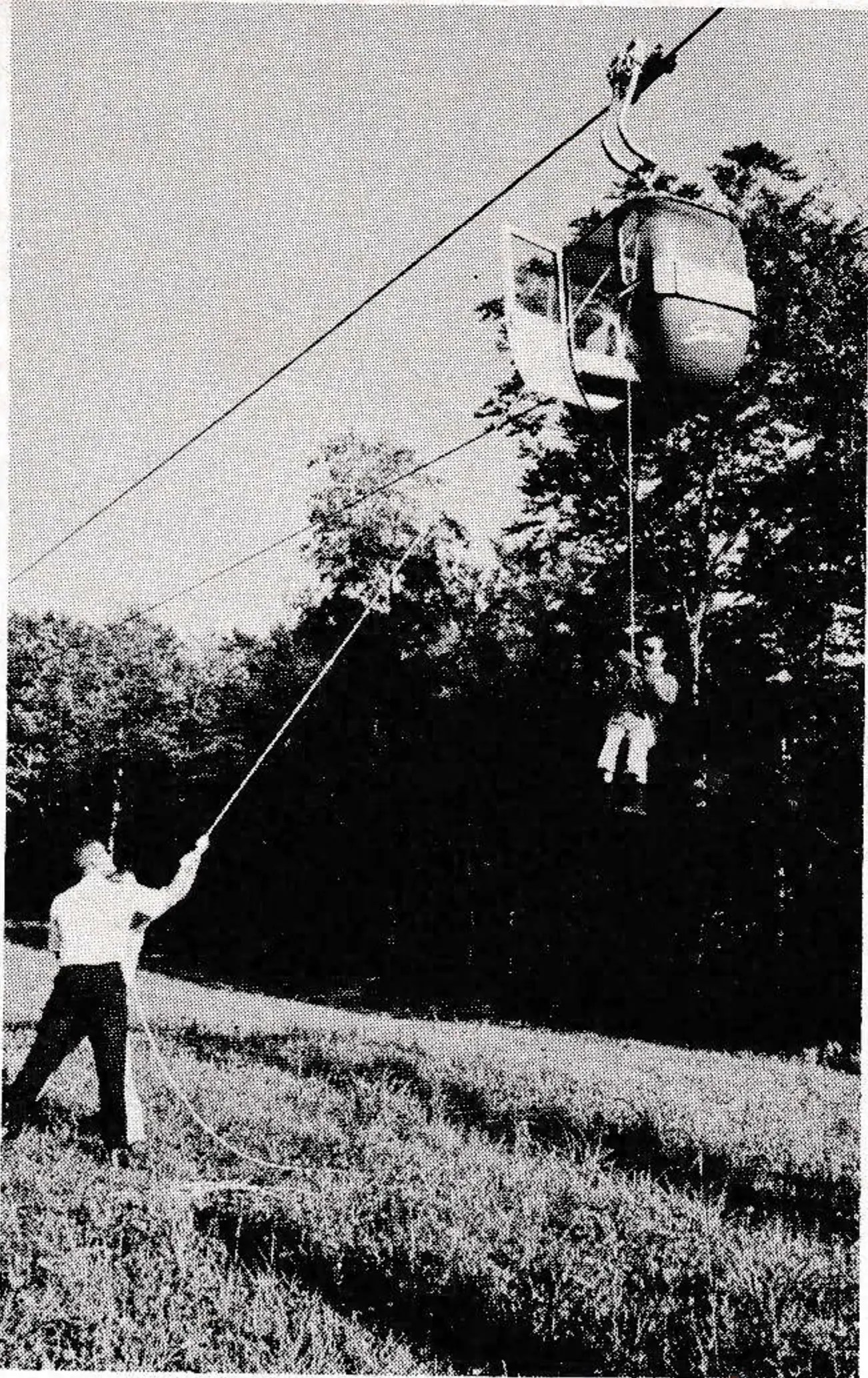
Once the door had been opened, ground crews attached the handline to the descent rope and instructed passengers to again pull the line up. Once the lines were at the gondola, they were separated and the descent rope was threaded through a descent-rope channel in the gondola roof. After threading, the descent rope was lowered to the ground and the seating device was pulled up to the cabin by the ground crew.
For all evacuation methods tested, it was recommended that a hard-lay nylon, dacron or other polyester rope with a minimum diameter of 7/16 inch and breaking strength of 5,000 pounds be used. Manila or other vegetable-fiber ropes were found unsuitable.
Evacuation organization
Area management, the panel concluded, must be responsible for procurement of evacuation equipment and the formulation of evacuation procedures. Actual evacuation was considered the joint responsibility of area management and the area’s ski patrol, with overall management of evacuation resting with the ski area manager and supervision of evacuation teams the responsibility of the ski patrol.
In a follow-up report to the meeting, the evacuation team recommended development of prototype ladder and descent stirrup arrangements for a series of demonstrations at the NSAA’s mid-winter meeting at Waterville Valley, N.H., and investigation of more efficient gondola evacuation methods. Current plans call for continued study of gondola evacuation procedures, rope-testing programs and the production of a film on lift evacuation procedures.