


BENEFITS
1. Ease of Loading:
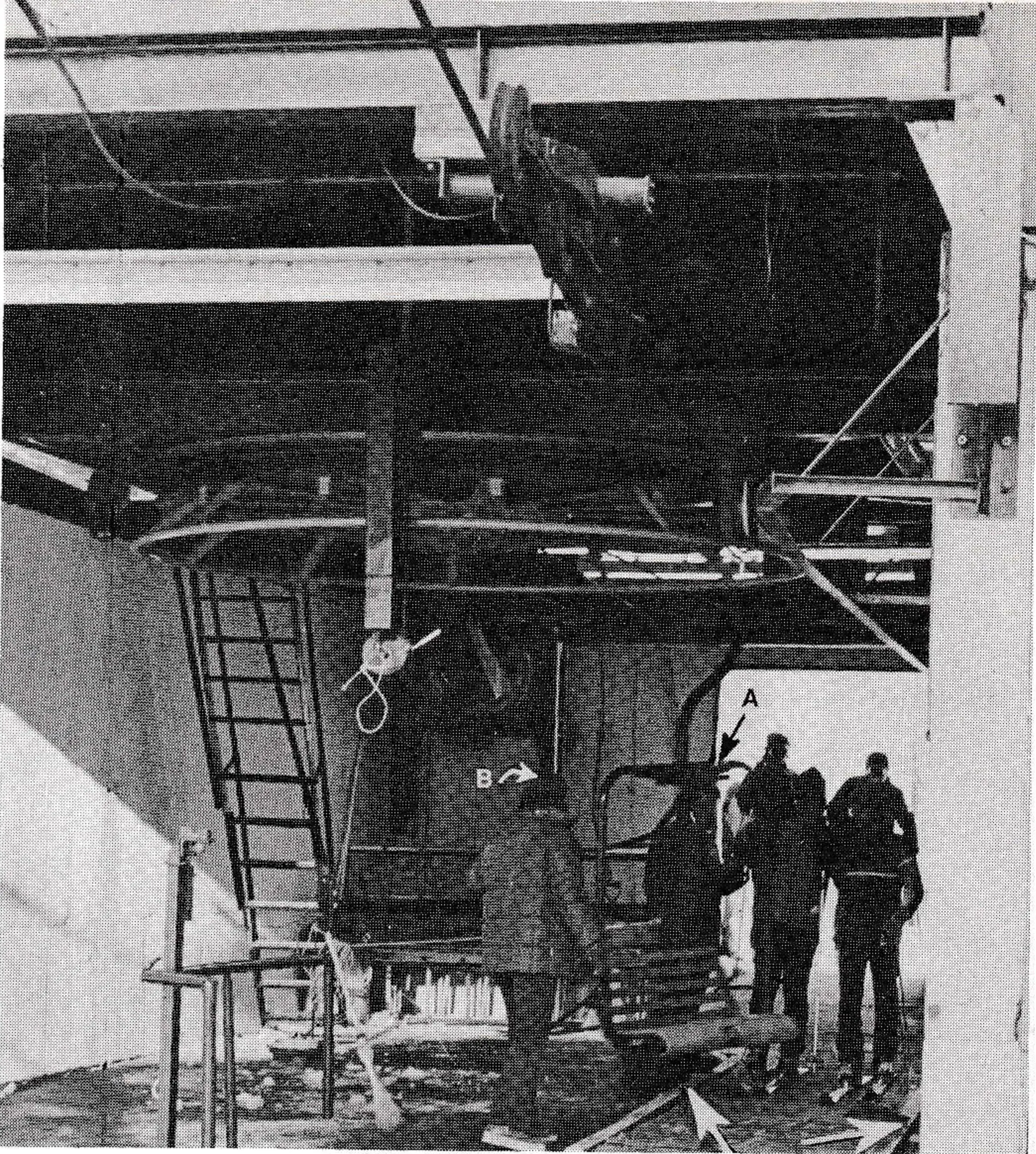
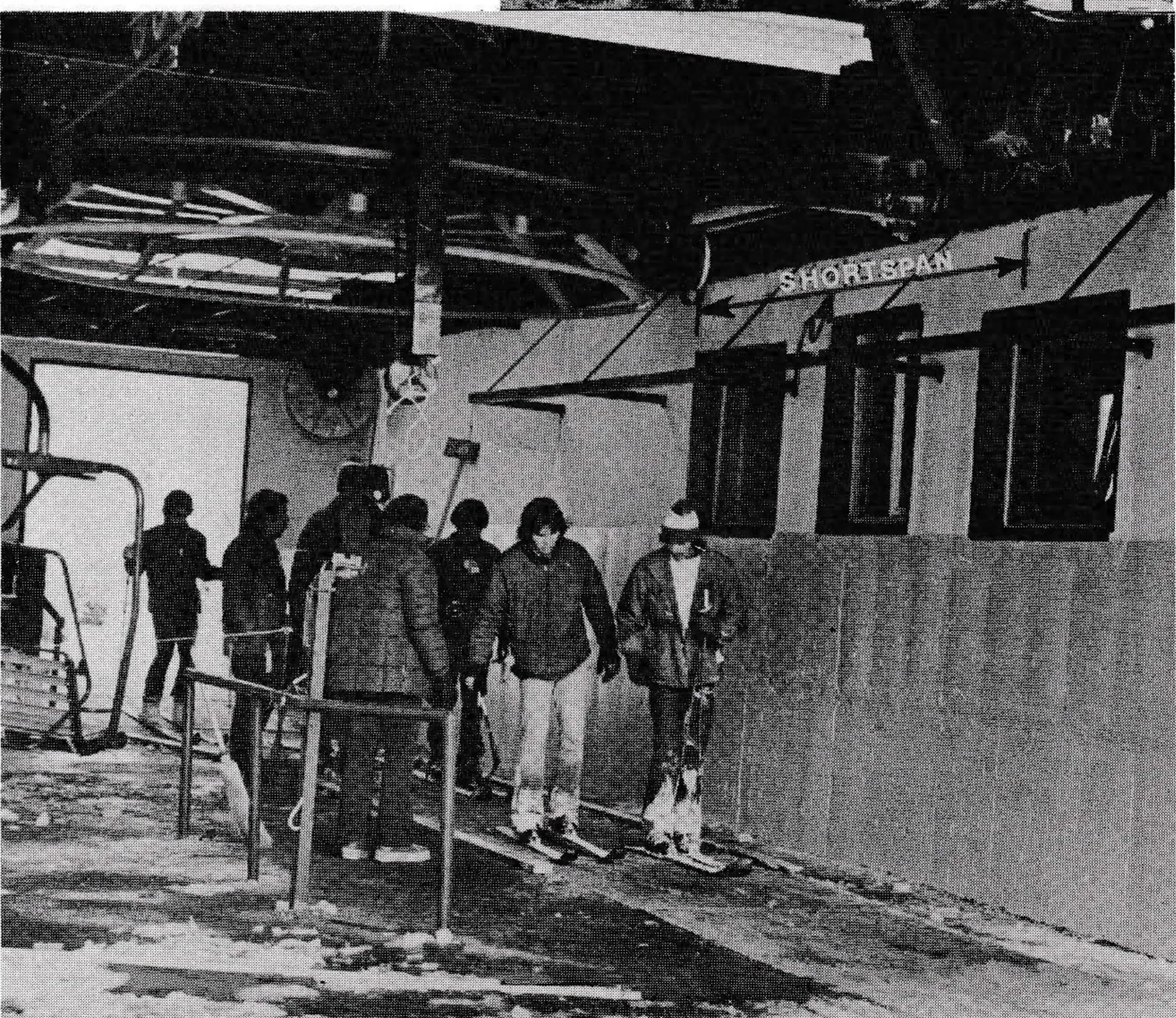
The first benefit is the ease and smoothness of loading. This is because the skier does not have to make any sharp turns to get to the loading area (1). Also, the cable and chair do not bounce, since the loading span between the bullwheel and first sheave train is relatively short (2). The 12 foot loading ramp is designed with a 2-inch pitch from the waiting area to the loading area. Thus the skier can easily slide his skis rather than have to walk with them. Interior lighting is accomplished by the use of six eight-foot, low-temperature fluorescent lights.
2. Increased Capacity:
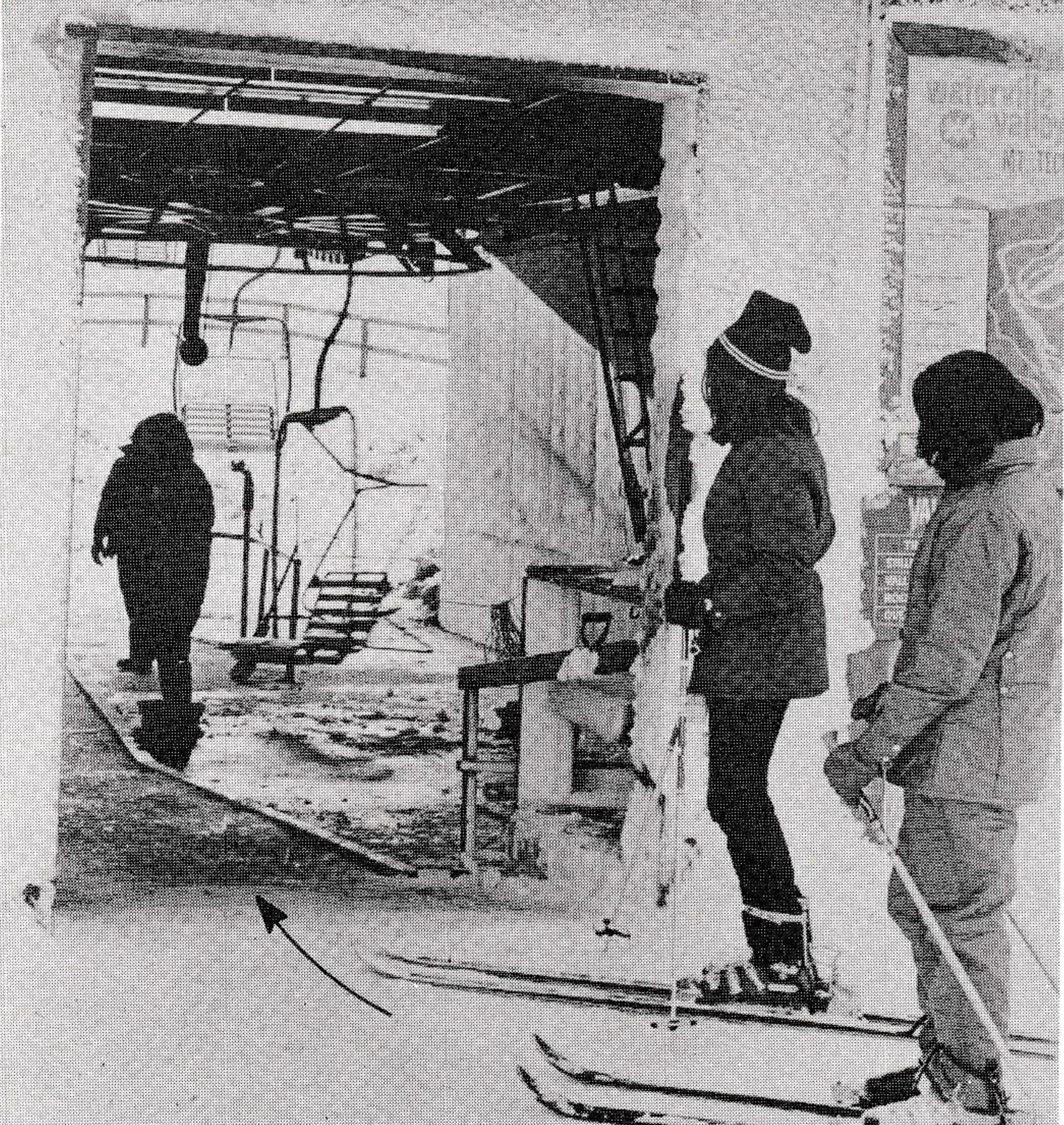
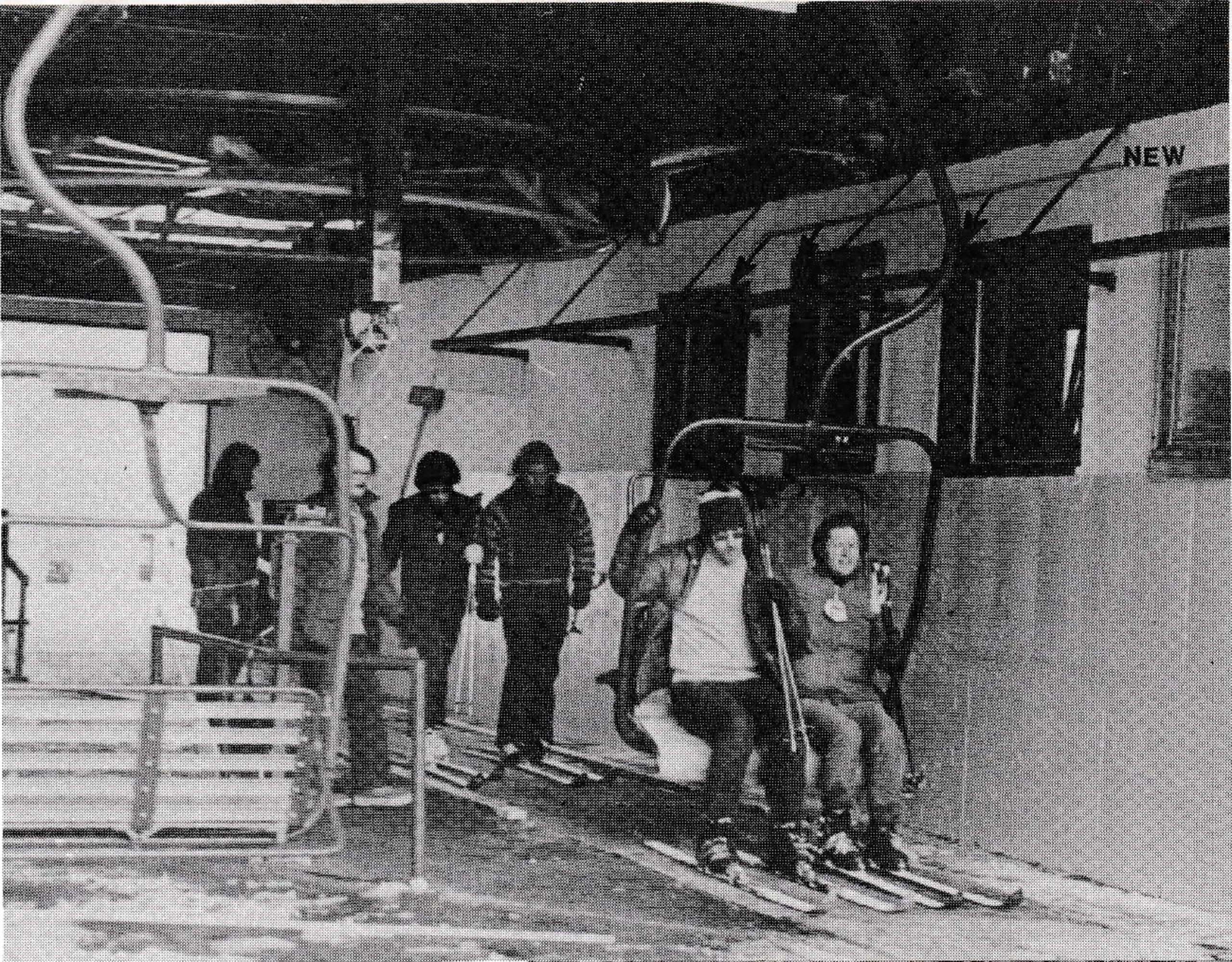
The second and greatest benefit derived from this type system is the increase in capacity due mainly to the control the operators can exercise over the skiers. From the time they enter the building and are loaded on the chair, they are in a controlled waiting pattern. The edges of the ramp are raised (3) all the way to the departure area so that skiers are continually directed forward. The attendant (A) tells the skier when to wait and when to go, and the operator (B) tells them where to stand and when the chair is coming. This is all done in an area 25′ long by 4′ wide (4).
In four days of operation we decreased our stops over the previous year by 20 per cent, and increased our capacity by 150 persons-per-hour. This was on an intermediate lift at 450′ per-minute with a design capacity of 1,200 skiers-per-hour. Prior to the modficiation, we were getting about 900 per-hour uphill capacity because of excessive stops due to loading problems. Now when people enter the building, they seem to pay way more attention to the mechanics of loading than previously.
COST
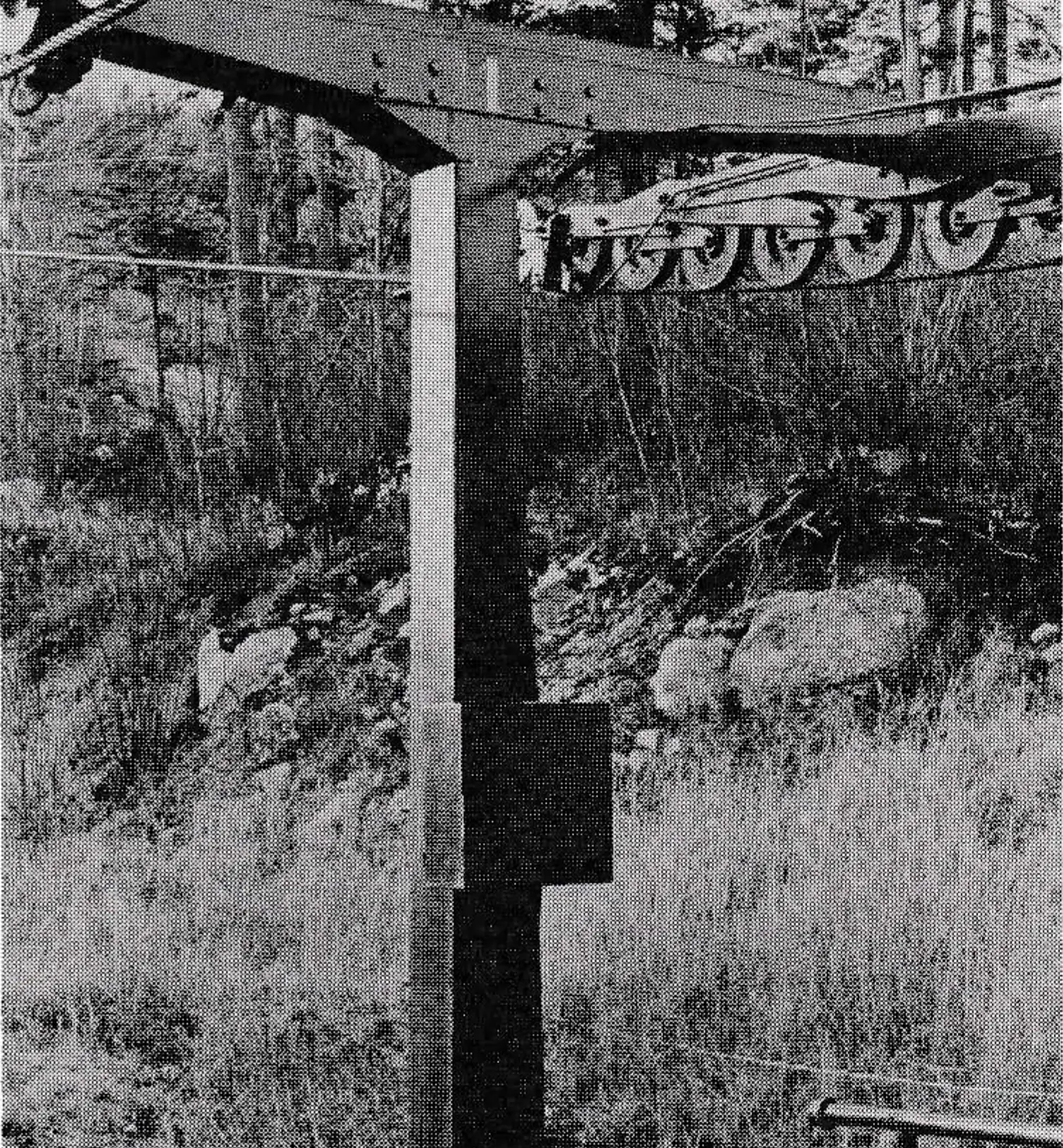
The cost of this conversion (using area labor for all construction), including fabrication of one tower and a 5′ splice in the second tower, was $3,700. This also included engineering by Kinney Associates, subletting the steel fabrication, and installing steel encased windows and door in the existing 12-inch concrete walls. The entire job was completed in 20 working days.
SUMMARY
We feel bullwheel loading is by far the most efficient and safest way to load a chairlift yet devised and the customers love it. No doubt there are a large number of chairlifts in this country that could increase uphill capacity merely by improving the efficiency of their loading operation. Bullwheel loading is the method we chose and now plan to erwork all our chair lift base terminals as time and funding permit.
Editor’s Note: Ed Ladd has been Lift Manager at Waterville Valley for five years and knows lift operation well. Does Ed still believe in bullwheel loading? “You bet,” he said recently. “We’ve logged over 500 hours on this lift and we’re convinced it’s the way to go.” The Sunday before Washington’s Birthday Ed had a half-hour line at this particular chair. Total time lost due to stops was eight minutes in eight hours, of which two were caused by dropped poles. Forest Service reaction was also favorable. Regional Skii Lift Engineer John Cochran said, “It looked good to us and we didn’t see any problems. We are giving it our blessing.” And Chuck Dwyer, Staff Engineer for the Forest Service, while pointing out that any modification must be tried under a measure of control, says, “We welcome any change that facilitates the loading and unloading process. I certainly endorse it.”
Photos by Laurie Morris