

The biggest equipment news is bound to be in the field of snowmaking. The dreadful realities of what can happen in the east has made believers out of everyone involved, especially the banks and other lending institutions. Because of this, the stakes are big, and there is a tremendous amount of innovative research going on.
Into the equation have gone such things as energy costs and energy availability. Also environmental considerations, noise abatement and public reaction. Especially and increasingly critical is the shortage of supplies. Pipe is in extremely short supply, and the time lag from order to delivery is so bad that snowmakers are making few, if any, promises.
In a fast-developing technology, it is hard to keep up with all the facts, let alone evaluate the claims. Really good, uniform testing procedures are still lacking, although some may now be around the corner. Below we present a wrap-up of what is new from some of the majors in the field.
Big Mark IV From Hedco
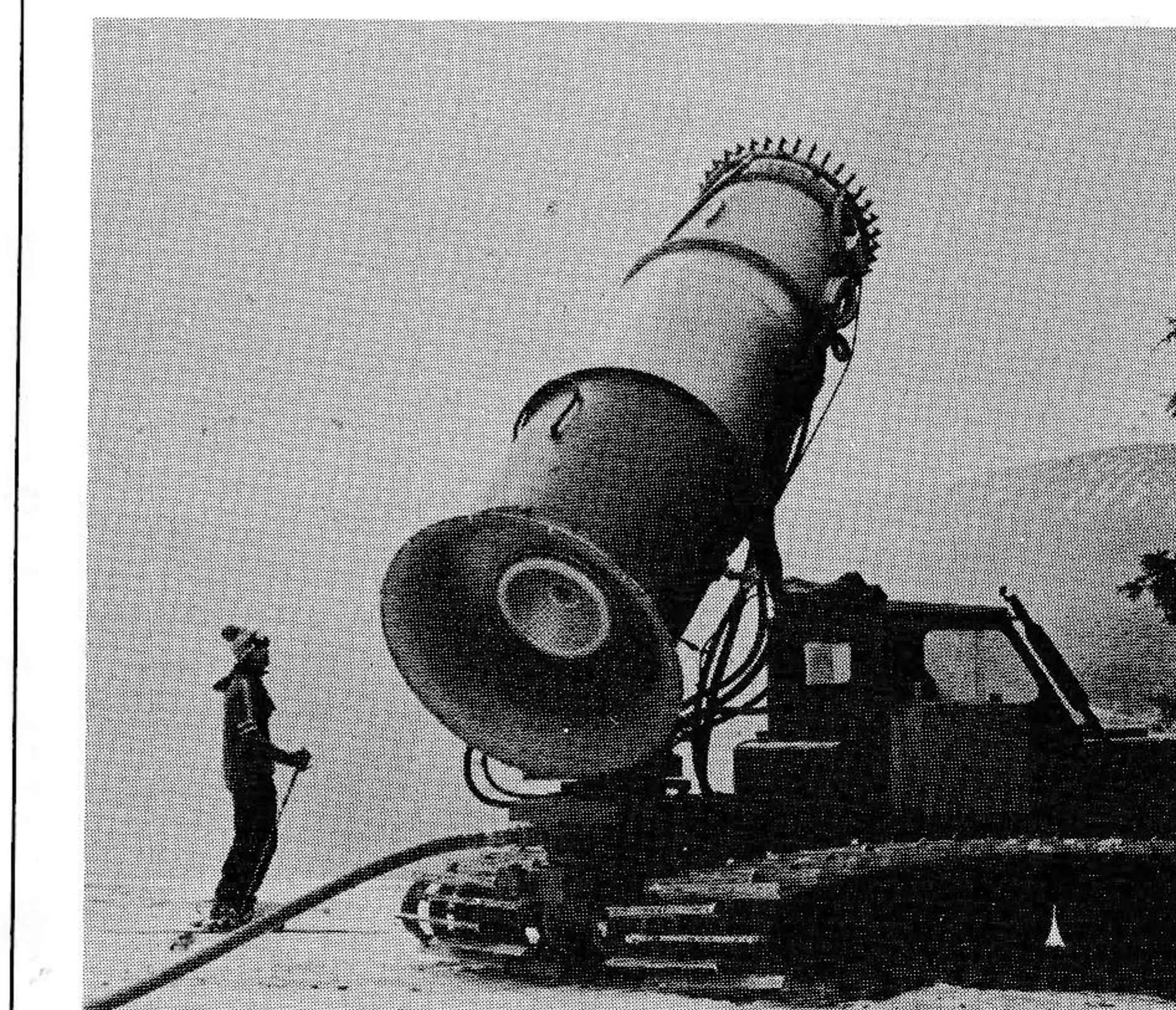
Hedco, of 11 Park Place, Paramus, N.J., 07652, points to its giant new Mark IV model as having successfully completed field tests and ready for production units for the 1974-75 season.
The Mark IV has 72 nozzles, and can cover an area up to 250 feet wide without movement or direction change, according to Larry Demarse, the man in charge of the Hedco division of Dewey Electronics.
The Mark IV is similar in its basic design to Hedco’s other machines, the H2d gas unit, the Mark II electric and Mark III gas.
The initial cost of the Mark IV is in the $60,000 range, but the manufacturer points to the fuel and dollar factor involved in its operation. “The Mark IV uses only six gallons of gas per hour. And equivalent production by existing air-water systems would consume 90 galls of diesel fuel an hour,” said a Hedco spokesman.
The Mark IV is powered by a 150 hp Ford Industrial engine. A conversion rate of 400 gpm is claimed at 20 degrees, and 1,000 gpm at 10 degrees.
Ratnik’s “Efficiency Increasers”
Ratnik Industries, of 367 Orchard St., Rochester, N.Y. 14606, announces two new products designed to increase efficiency in air-water snowmaking systems.
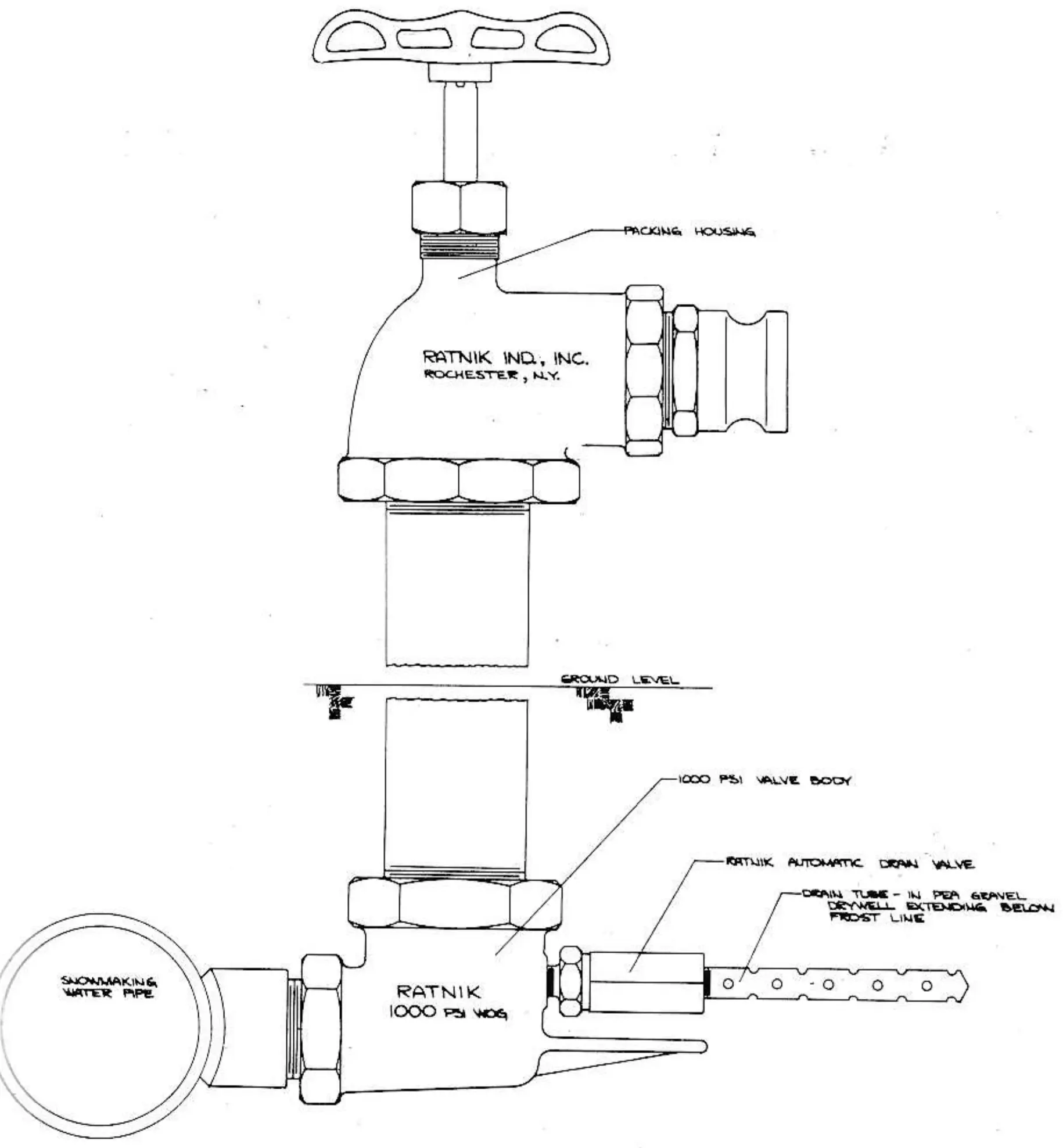
First is an automatically self-draining water hydrant which, according to the manufacturer, “is designed for shallow pipeline burial to eliminate freezing, costly, unsightly valve boxes, and broken or kinked hoses associated with valve boxes.”
The water flow adjustment is linear, with six full turns open-close at adjustment wheel. The packings are located above the ground for ease of adjustment and replacement.
All wearing seat parts are stainless steel and are replaceable from above the ground without digging. The pressure rating is 1,000 psi water pressure maximum, and flows of up to 450 gpm can be achieved.
“Considerable snowmaking labor saving will result with these hydrants,” claims Ron Ratnik, “and propane heat torches will no longer be needed by snowmakers.”

The second new Ratnik device, the Snow Orbiter II, is designed to save in labor and compressed air usage. These machines are installed on towers and can be remotely or automatically controlled. They can be rotated slowly 360 degrees, oscillated back and forth, or run in a stationary position and jogged remotely to compensate for wind shifts.
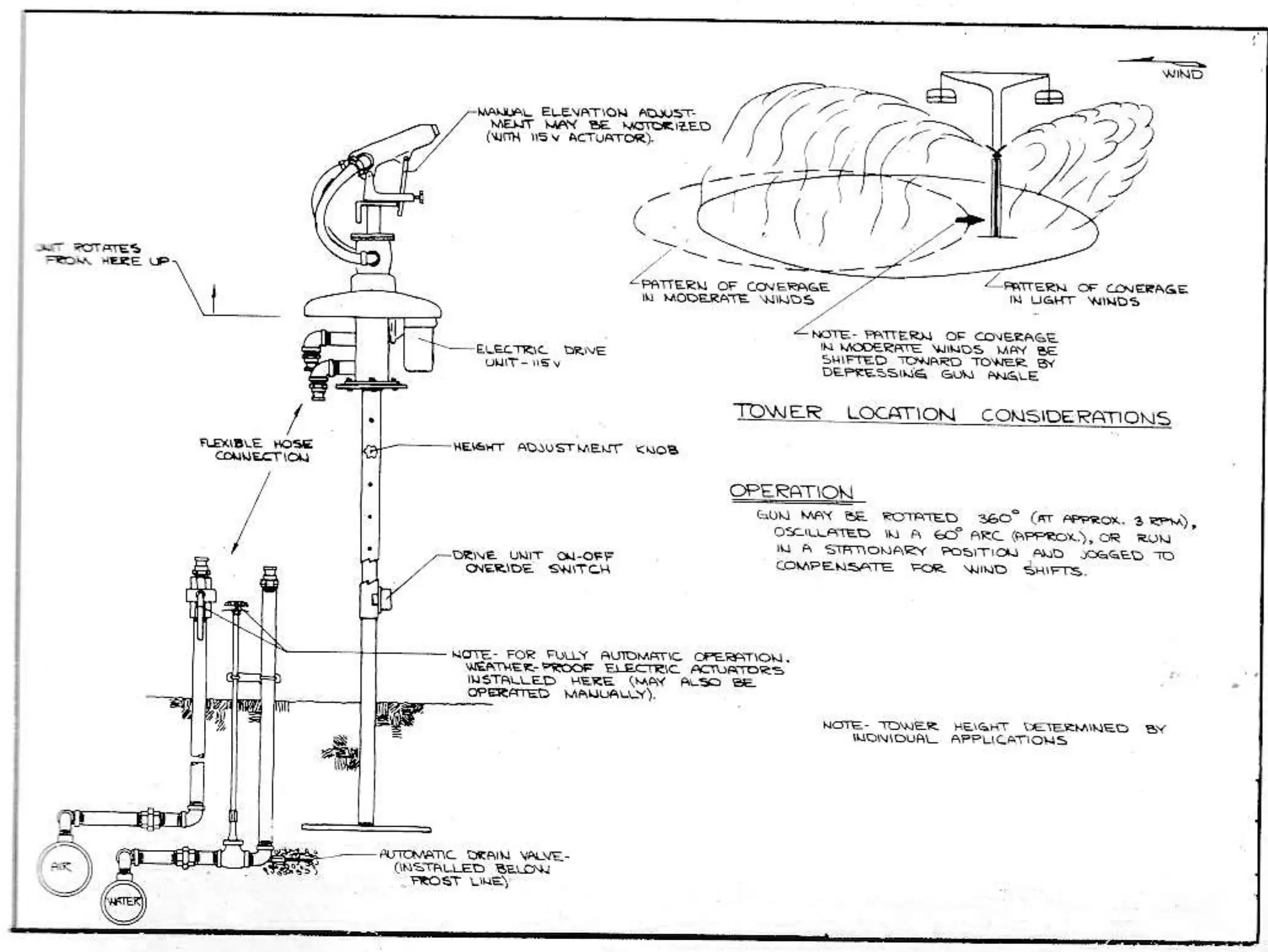
The Snow Orbiter II will convert up to 150 gpm into snow under favorable conditions, according to the manufacturer. Application engineering on the machines to new and existing snowmaking systems is available from Ratnik.
The New P.L.T. From Larchmont
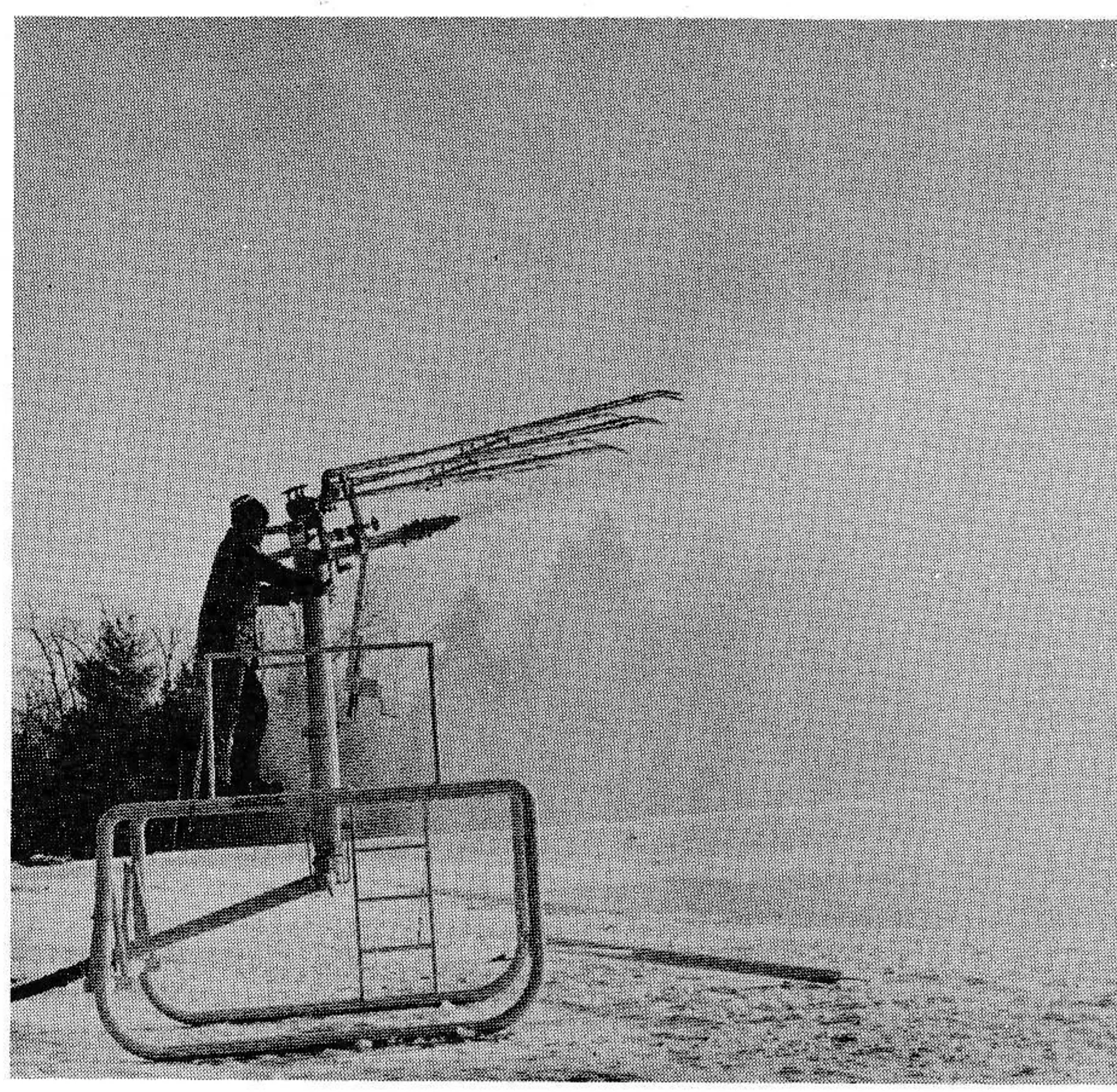
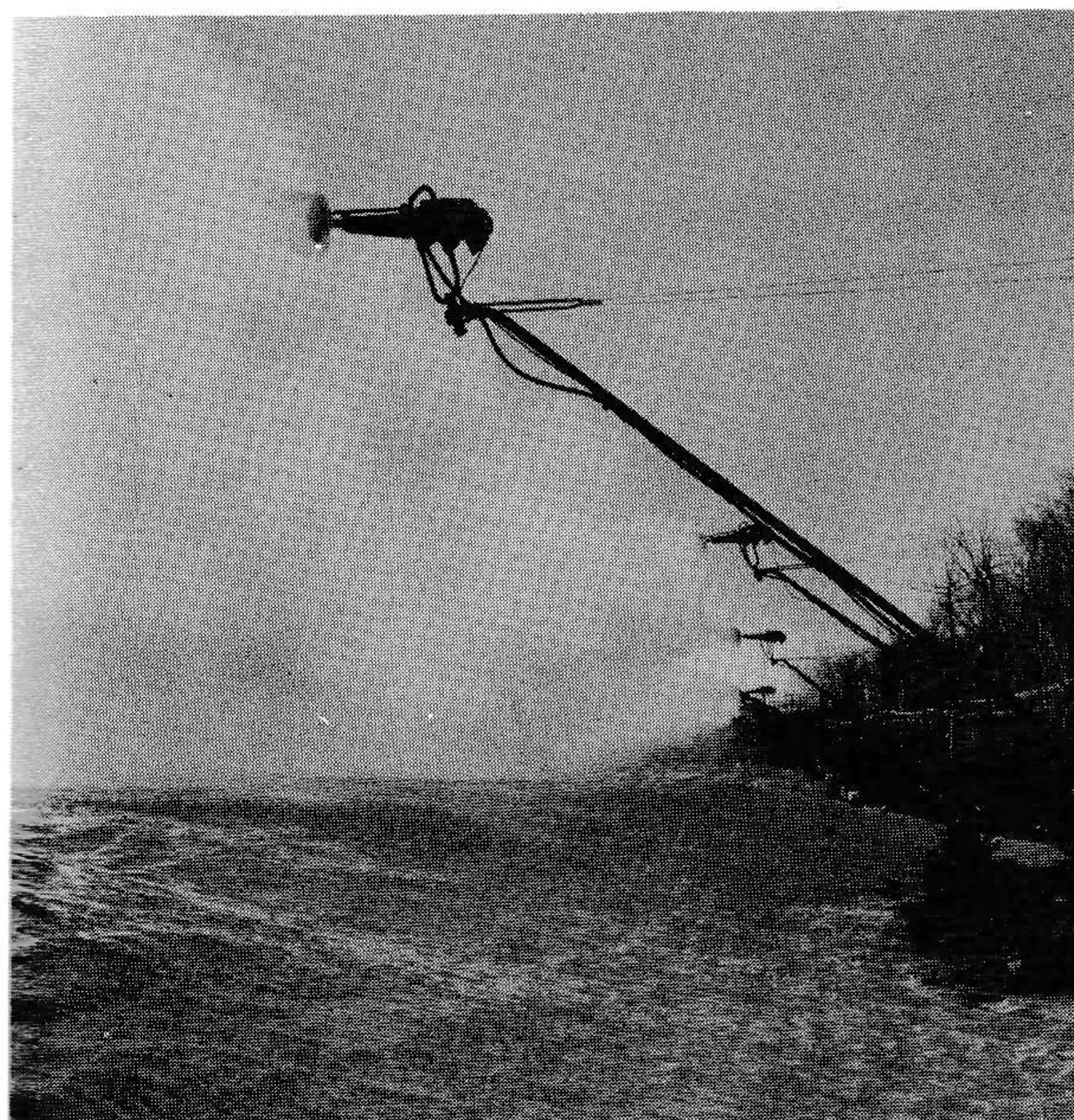
Larchmont Engineering, of 11 Larchmont Lane, Lexington, Mass., 02173, has announced its new P.L.T. snowmaker ready for the 1974-75 season. As seen in the photo, the new unit uses four air-and-water nozzles and twelve airless.
At the heart of the system is the expansion process of refrigeration as opposed to the evaporation process. A small amount of air is supplied from a small, heavy-duty, long-life compressor at the base of the mountain.
Among its advantages, according to the manufacturer, are its durability (other than valves, there are no moving parts to give problems under cold weather conditions) and portability it can go wherever a Thiokol Imp or equivalent can go, and in difficult terrain is part of a system that permits operation of light-weight guns that can be set up and moved by one man.
On performance, the Larchmont engineers said it has been exhaustively field-tested, and cite the following as an example of its performance in the critical range of 24 degrees and warmer: “At Stratton Mt. we made dry snow at 29 degrees with 40 gpm. The air and water performance was increased to the 75-80 gpm range and still another 72-75 gpm was added giving us a total of over 180 gpm, using under 500 cfm.”
SMI Develops SnowStream 320
Snow Machines International, of Kings Highway, Chester, N.Y. 10918, is introducing for the 1974-75 season its latest model of airless electric snowmaking equipment, the SnowStream 320.
According to SMI’s Hugh Knapp, the system has been extensively tested over the past two seasons at selected areas across the country, and the new 90 gpm unit develops approximately 30 percent more snow and distribution coverage than the previous model.
“It actually provides more snow for dollar invested than any of our prior units: something sorely needed in this age of inflation,” says Knapp.
Snow Machines also notes that a gasoline-powered prototype with full 90 gpm capacity has been developed, and is now being tested. Limited production is expected for next season.