


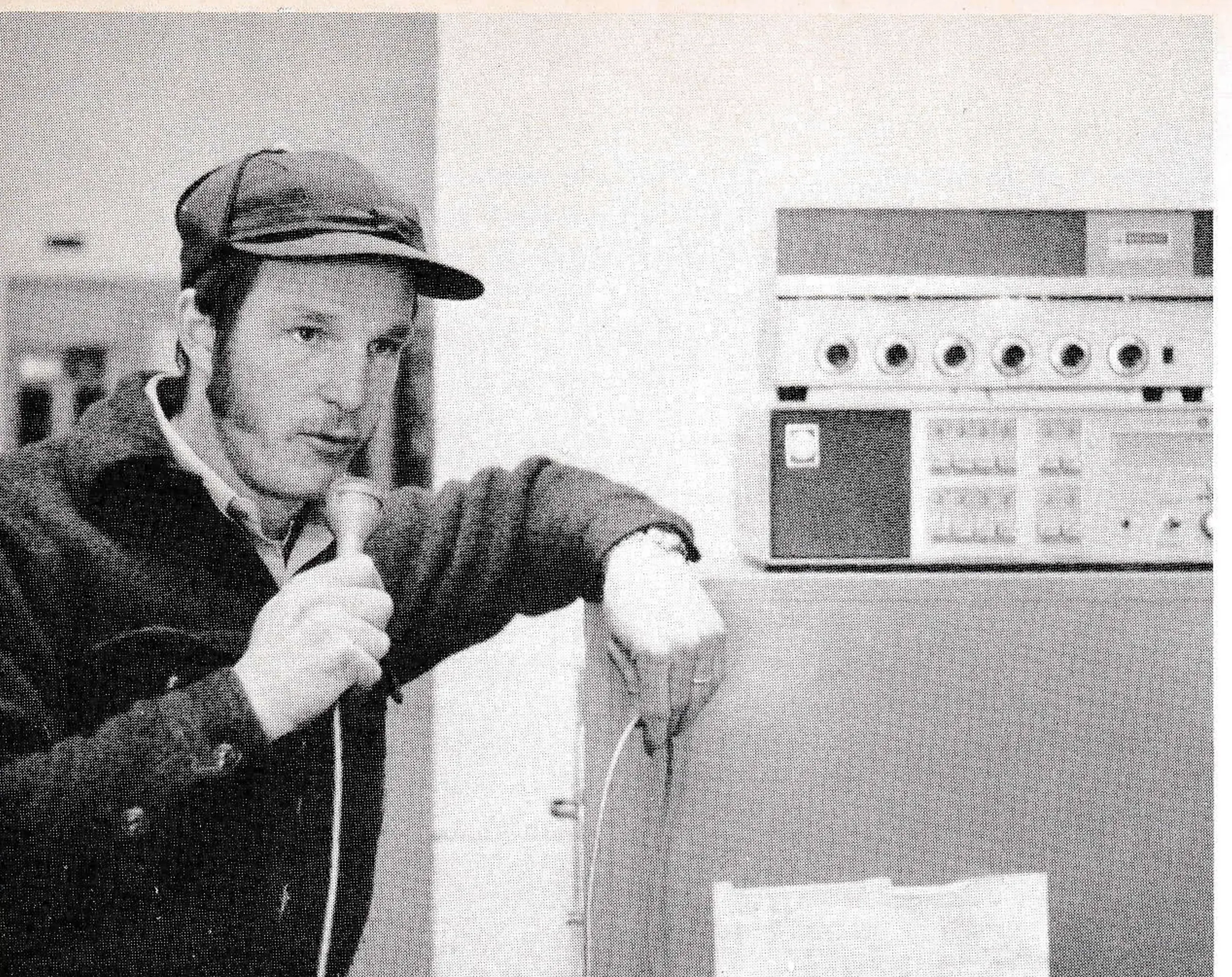
The larger the ski area, the more critical the need for the proper utilization of these tools of communication. Stowe, Vermont, has come up with a number of effective solutions to the problems of using communications systems, both old and new.
Stowe consists of two mountains -Spruce Peak and Mt. Mansfield-plus a separate area, Toll House, which is about two miles from Mt. Mansfield. Spruce Peak is located about one-fourth mile away, facing Mt. Mansfield.
Stowe uses its communication systems for a variety of purposes, but perhaps the most important applications of these systems are those involving the ski patrol.
Hal Wilhelm, director of Stowe’s ski patrol, explained that the patrol is responsible for at least 50 miles of ski trails and “morally obligated to patrol an additional 500 square miles” of terrain which varies from five degree to 42 degree incline. He estimated that, over the years, approximately 10,000 skiers have been aided by the ski patrol.
When the Stowe ski patrol was originally started in 1932, alerts of ski injuries were transmitted via word-of-mouth to the summit or base ski patrol shacks. Wilhelm said that the first communications improvement was initiated in 1943 when Army-surplus phones (battery operated) were installed on trees along Stowe’s slopes.
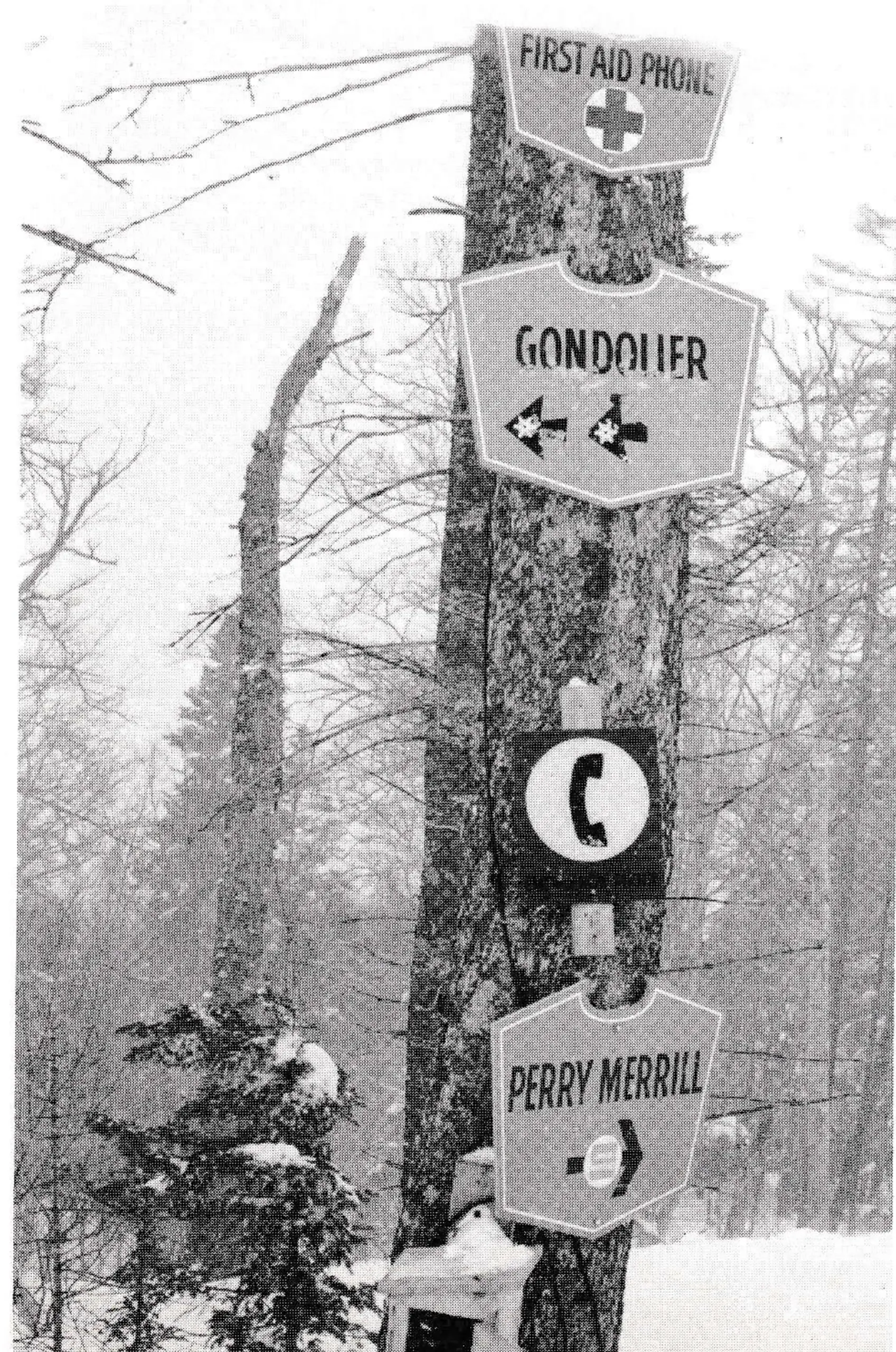
Stowe eventually replaced these with phones from the Bell System. Wilhelm said that the phones were changed because the older version had a butterfly knob which had to be switched on to talk. “Invariably, people would get so excited that they would forget to push the knob and the base station couldn’t understand what the talker was trying to say. “Wilhelm added that the batteries on the older version would occasionally freeze and become inoperable. Today Stowe has over 30 field phones.
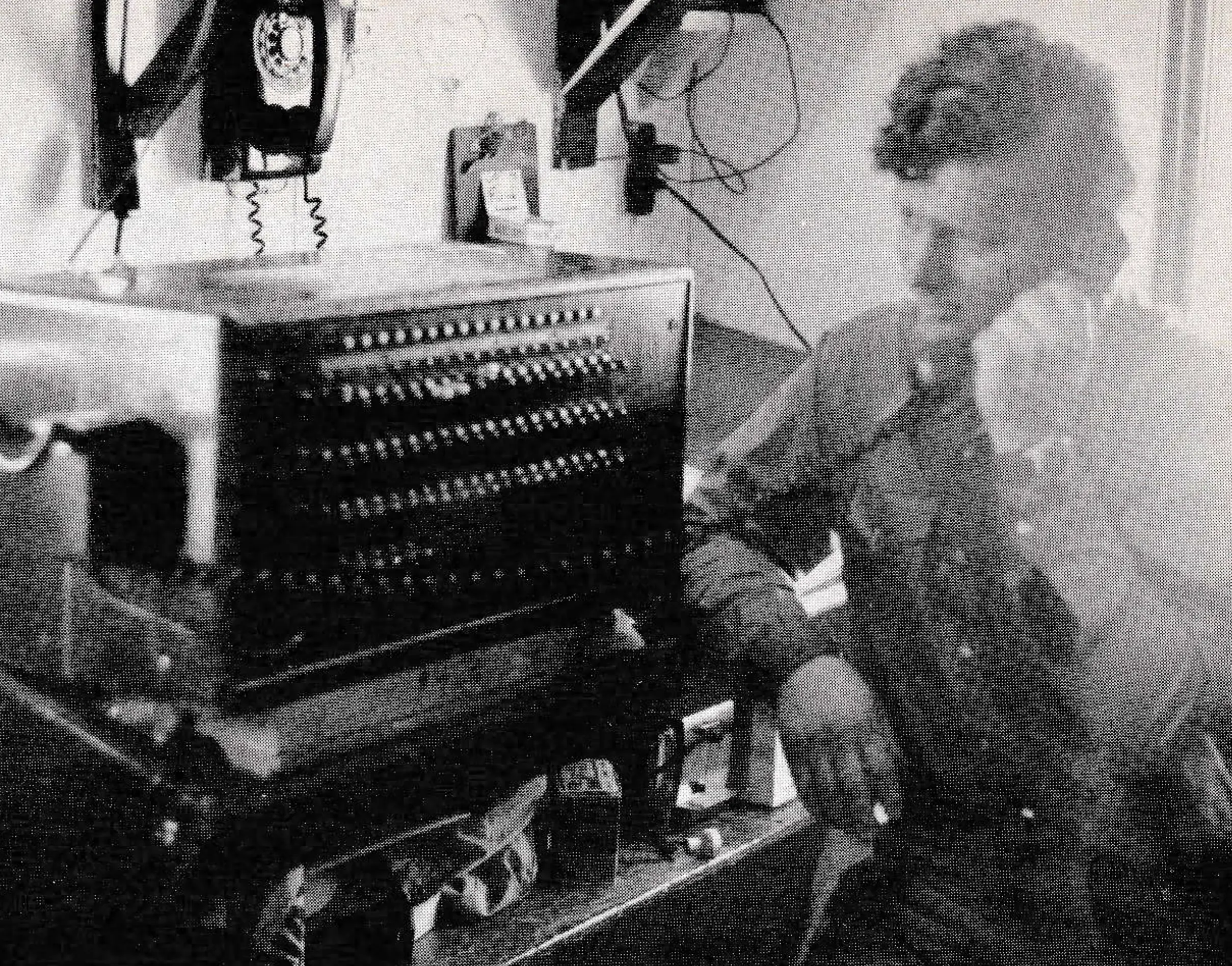
When an accident occurs, a skier can pick up one of the slope phones which automatically rings to the particular Stowe area ski patrol shack. A patrolman on duty at the switchboard answers the call, determines the specific location and sends a toboggan down to the site. Injuries are also reported by two-way radios and patrolmen who free-ski Stowe’s maze of trails to locate unreported accidents.
Public address is used widely in Stowe—for restaurant and lodge announcements, ski school calls, lift line reports, race results and to aid in lift attendant operations. Perhaps the most unusual application of public address is the last, in which the system provides lift attendants with hands-free paging to transmit instructions from the summit to the base of the slope.
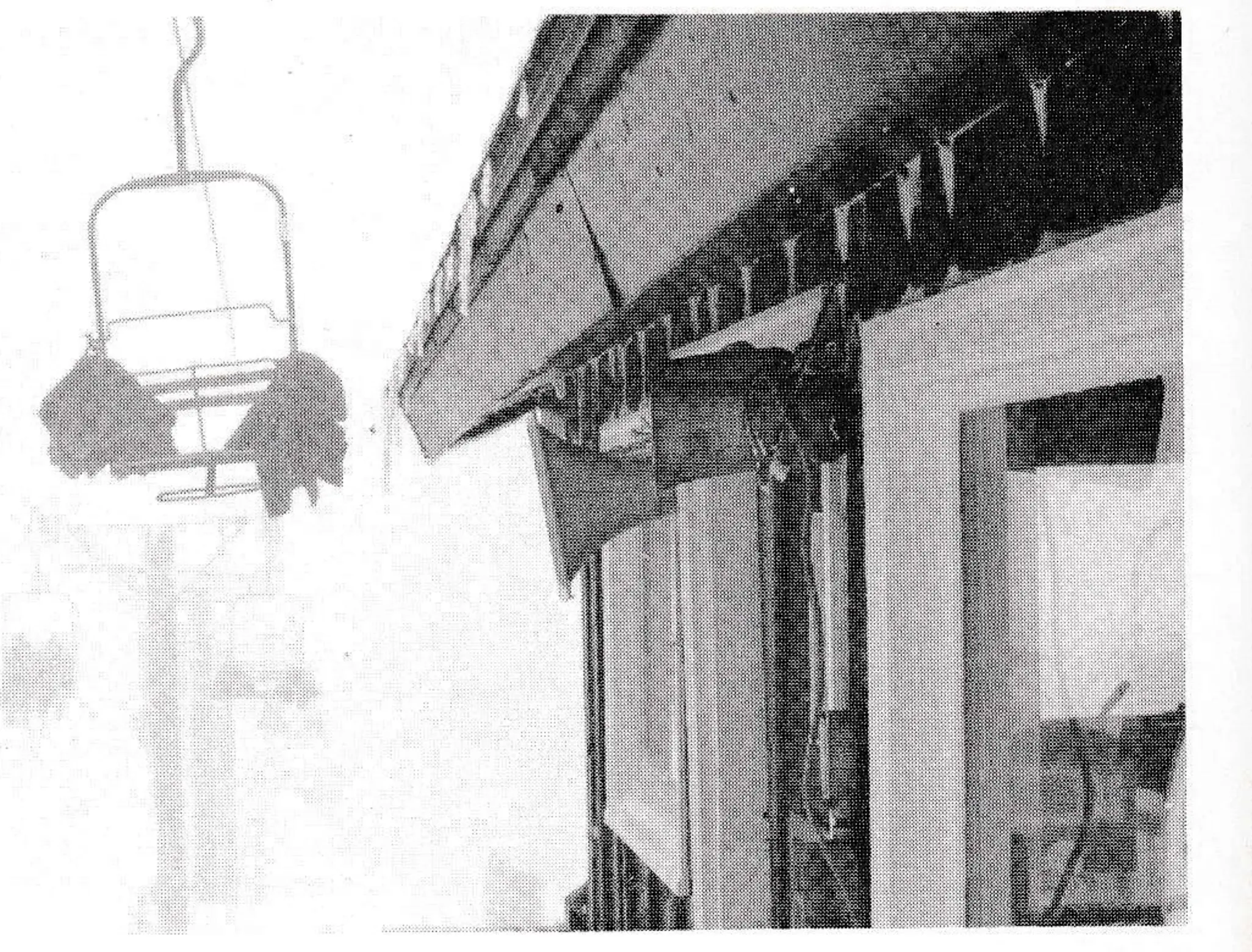
Stowe’s service electrician, Robert Coffin of Coffin T.V. and Appliance, explained how this system operates. It consists of tube-type Bogen CHB-50 50-watt amplifiers, speakers, transformers and microphones. Coffin said that the lift line attendants can call from the top of the mountain (i.e. Mt. Mansfield with a 6,300 ft. chair) to stop the chair from the bottom because of a sudden gust of wind or a skier who has fallen while getting off the chair. The operators can transmit “Stop the chair!” without taking their eyes or their hands off the chairs.

The system was installed by connecting a horn speaker at the summit to act like a microphone, hooked into the summit amplifier, which in turn drives the speaker at the base. The attendant calls into the speaker (located behind him and without turning around). To reply, the operator at the base utilizes a microphone.
Public address is also used in the restaurants, ski schools, and summit and base lodges. Bogen CHB-50 amplifiers are used throughout, along with microphones and horn and column type speakers. Coffin explained that the rugged Bogen amplifiers were selected because these amplifiers were frequently moved to other locations with little damage to the equipment.
Two types of speakers are used at Stowe — horn and column types. The horns range in size from 6″-12″ and may be seen on lift lines, stanchions, the racing slope at Little Spruce and outside lift attendant buildings. Speaker columns (regular and mini) may be found at the Spruce Peak area (used outside to announce ski school meetings), and the Gondola Summit Lodge. Columns direct sound very effectively into a given area and equalize the volume throughout a certain area. Some of the speaker horns and sound columns are all-weather and all use a 70-volt line for simplicity of installation. The smaller speakers cover a range of 50 feet while the larger speakers may cover an area as great as 50 yards (such as the speaker on the race slope). All the speakers are unidirectional and are directed at one specific area. Approximately 50 speakers are used at Stowe.
The Little Spruce area utilizes the public address system in the dining room, to announce race results, for ground floor and balcony meetings and for presentations. This area uses many microphone inputs, and a Bogen mixer-preamplifier was installed to economically add more inputs to the public address system without the unnecessary expense of another amplifier.
Portable public address systems are used for communications for longer race courses such as giant slaloms. These systems consist of d.c. portable amplifiers, that may run on a 12-volt car battery or a 12-volt battery pack. Twelve portable public address systems are in use.
Bell System one-and two-way phones, General Electric two-way radios round out Stowe’s communications package. Two-way radios are found in the area managers’ cars, snow cats and Thiokols, company cars and ambulances. Over 50 radios are in use.
All this variety of communication equipment serves very effectively to tie this large ski area together. Without ability to send verbal messages, Mt. Mansfield would be just another mountain: isolated and distant.