

Yet, every ski area manager has come to realize that the seat-of-the-pants days of the ma and pa operation are over. The ski school director with a college degree (in any subject) turns a better profit than the Austrian mountain boy with the dimpled smile and charming accent. The mountain manager who understands hydraulics and surveying produces more and better snow than the off-season construction worker. Certainly the guy behind the desk who can write a meaningful sentence and operate a calculator has a better chance of attracting and bringing skiers back than the guy who threw a rope tow up on the back forty of his pig farm.
As the ski area business grows more sophisticated and more competitive, education counts in geometric proportions. The question is, what kind of education and how specific should it be?
In recent years, colleges and universities across the country have been asking that same question and a few have begun to experiment with studies programs to answer it. The courses offered range from specific four-year degrees in ski area management to two-years of study in recreation with emphasis on skiing. This is not to mention the numerous non-credit crash courses that involve the ski business and the growing number of professional development seminars offered by universities and by ski areas for personnel already employed in the ski business.
Ski Area Management surveyed colleges across the country to determine what was being offered in this field. The results are listed in the directory elsewhere, but more significant were the college administrators who replied by asking us what the state of the art was and how they could get a piece of the action.
Obviously college ski management programs are going to be an increasingly important source for management personnel. Do these programs turn out good people? How much do ski areas participate in the curriculums? Do the areas benefit from student workers? How do the programs work? The answers to same of these questions may be found in the two accompanying reports.
A Four-Year Specialty
Sno-engineering, Burke Mountain and Lyndon State combine to develop ski generalists
by John Hitchcock
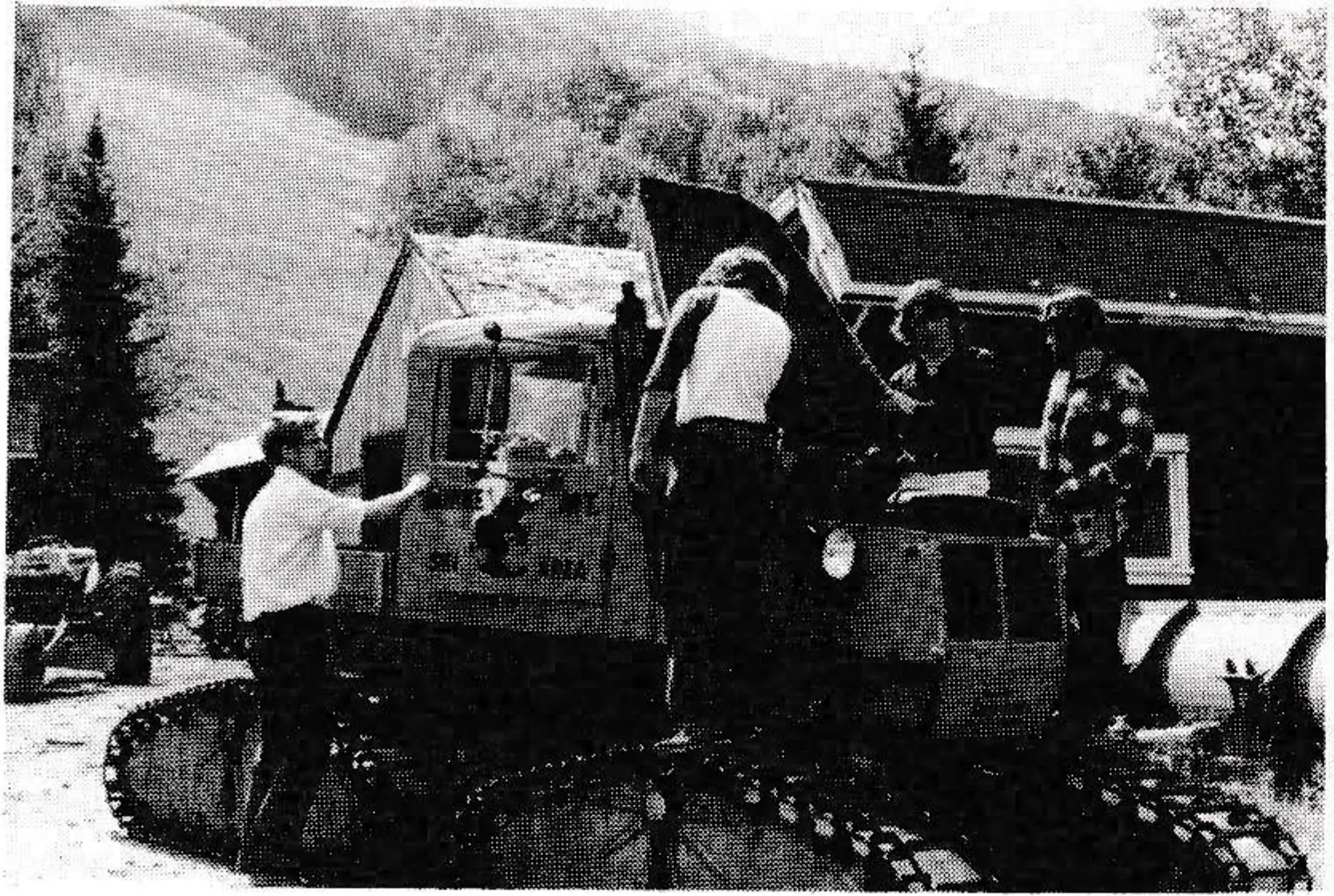
Entering its fourth year at Lyndon State College, the ski area management program is one of five outdoor recreation specialties offered under the college’s Park and Recreation Services Administration.
Located at the southern threshold of Vermont’s beautiful Northeast Kingdom, some 10 miles north of St. Johnsbury, Lyndon State is a natural location for such studies. The program, which numbers some 75 students, is operated in conjunction with the Burke Mountain Ski Area, six miles from the campus, and the two-year Vermont Technical College in Randolph, 75 miles to the southwest. Sno-engineering Inc. of Franconia, N.H., about 75 miles to the southeast, provides its staff for weekly lectures and field trips.
The major prepares students for virtually every position in the ski industry, and although there will be no graduates until June, 1976, Lyndon has already received many inquiries from potential employers.
The ski area recreation program was put into operation in September, 1972, by Dean Richard W. Wagner. The basic format has been modified slightly each year, but has always required the students to spend either their sophomore or junior years at Vermont Technical College.

Sno-engineering President Jim Branch and his staff began their participation in September each year, but this year Recreation Manager Lou Dean of Burke Mountain went to the campus at the start of the program to give the introductory lectures, followed by field trips to Burke. “This way, every student will have a firm conception of one actual ski area operation before the Sno-engineering staff presents its much more sweeping and comprehensive approach to the ski industry,” Dean said. The Sno-engineering introductory lecture covers the planning process, design criteria, skier market and total resort planning. Later in the program, Sno-engineering staffers also lead one-day trips to areas like Waterville Valley, Bretton Woods and Cannon Mountain.
“If a student does not have at least one ski area operation firmly in mind, he cannot always grasp the entire content of the Sno-engineering lectures,” continued Dean, who was a history major not too long ago at Lyndon.
The students spend the second semester of their junior year actually working at Burke, if they have spent the sophomore year at Vermont Technical. The students taking their junior year at the technical college work at Burke as sophomores. All students also spend two weeks in the summer in the field, after the sophomore school year ends. Many of the ski area majors, however, work whenever they can at Burke, either in ski teaching or scattered throughout the staff.
“Some of my best workers are from the Lyndon program,” Dean stated. During the regular winter practicum at Burke, Dean will have about 20 students under the school program. They will be working for credits, not cash. “This gives Burke a real economic benefit,” observed Dean.
A special incentive is also being offered this year. Dean Wagner and Professor James McCarthy, head of the Park and Recreation Services Administration, are offering the top two or three students a chance to do their winter work at a major Western ski area.
Most, but not all, of the students have been involved in skiing for most of their lives. Senior Bruce McKnight of Holden, Mass., for instance, taught skiing at Mt. Wachusetts in the Bay State for several winters and works at every chance with architects, contractors and carpenters. Charles Mitter of North Berwick, Maine, also a senior, is another veteran skier who is eager to get in the job market and put his studies at Lyndon and Burke to work.
Oddly, Lou Dean estimates that only about 20 per cent of the Lyndon students are regular skiers, a situation he hopes to change. With the Lyndon ski area management project, more and more students will be finding their way to Burke.
Yet, the Lyndon Ski Area Recreation program is no pushover, with courses limited to snow packing and ticket stapling. Before entering the VTC courses, a student must have successfully completed one year of pre-calculus math, one year of introductory college physics and physical geology. Among the courses required for the ski area management degree are philosophy of recreation, environmental design, human anatomy and physiology and social psychology.