


Yeah, so simple. And the more he thought about it, that was exactly what troubled Hugh Knapp: if it’s so simple, so logical, so basic–so easy!–how come no one’s done it before now?
He shook his head and couldn’t find an answer. So he went to others in the industry, and the more he spoke with industry folks, the more he became encouraged because they couldn’t figure out why it hadn’t been done before, either.
So, Knapp Associates (KA) was formed to replace the mythical Grapevine Associates, that phantom word-of-mouth network which had been used for years to help move used equipment from one area to another. Grapevine out, KA in.
“It came to me during the national (NSAA) convention in 1975 at Seven Springs,” says Knapp, who was then eastern regional sales director for Snow Machines Inc. (SMI), which was in the process of being relocated from New York to Michigan. Knapp, living in Lakeville, Connecticut, had been sales manager for the company and when Bill Gilbert sold the outfit to Jim VanderKelen, the executive offices were moved to Michigan and Knapp was retitled eastern sales chief.
“Things were going well with SMI,” Knapp says, “but it came to me, literally, like a flash of light: there was a way you could make money brokering machinery. But nobody had ever done it. At least I didn’t know of anyone, which troubled me. Why hadn’t anyone done it?
“So, I lay awake one night at Seven Springs, just completely going through the whole process of putting together the business in my mind. The next day I went to Dave Rowan and told him my idea. He didn’t say anything, he listened…thought about it…then said I was crazy not to do it. I went to Channing Murdock of Butternut Basin–he was the president of the Eastern Ski Area Association–and he said ‘go do it…and here’s some stuff I want you to sell for me.’ So I did it.”
To make a long story semi-short, Knapp–New Jersey-born but Vermont-bred–resigned from SMI and started KA on August 1, 1975. He published a newsletter and plugged a nationwide toll-free phone number.
Today, Knapp Associates — still basically Hugh Knapp and his magic 800-number — is located in Shelburne, Vermont, and continues to grow each year. In 3½ years, he estimates he has dealt with over 500 ski areas, large and small, and has visited upwards of 300 areas. KA also has found itself pulled into the cross-country skiing field, amusement parks and even snowmobile industry over the past two years.
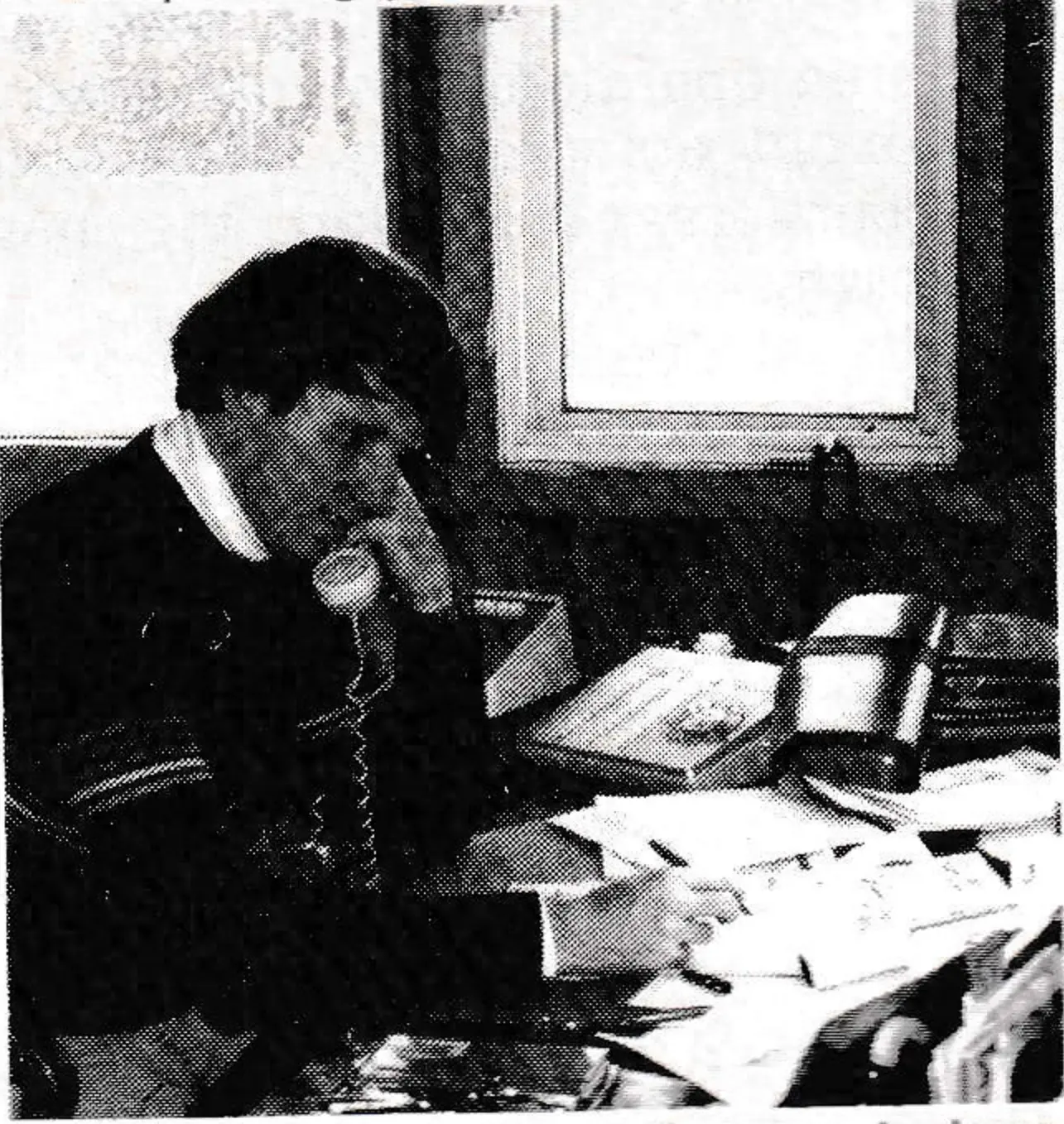
The original brokerage business is surprisingly close to a 12-month operation, he says, thanks to the recent trend of ski areas becoming summertime recreation sites, plus the evolution of several subsidiary activities which have cropped up to keep Knapp scrambling but never very far from a phone. He considers it a bad day when he doesn’t speak with someone from over 20 areas; keeping an eye on costs, he calls most western areas after 5 p.m. (EST).
KA now includes financial services, consulting, key-man insurance, appraisals, “expert” court testimony (he helped determine landmark tax rulings in New York and Colorado), and collaboration with Jim Branch of Sno-engineering–and now Tom Murray, formerly of NSAA–in a “total package” concept called Resort Service International (RSI). Murray became president of RSI as of March 1.
Knapp’s first brokerage bulletin board went out in October 1975 “and people went crazy,” he says with a wide grin. “People called to say they’d never seen anything like it. They loved it. It was like turning on a huge faucet, with all that built-up demand and product for sale,” as area operators suddenly discovered there was a marketplace where they might unload all that equipment getting rusty out behind the maintenance shed.
Hugh Knapp, it turned out, had come up with a better mousetrap. He hauled Grapevine Associates into the 20th Century. And renamed
At the same time, he concedes he was helped by circumstances. A combination of poor snow and poorly conceived ski areas led to a number of bankruptcies just as KA made its debut. When bankers, Small Business Administration officials and bankruptcy referees found out about KA, they started dialing that toll-free line.
“We liquidated 14 ski areas that first year,” he says. Stage Coach in Colorado, with a main chair over a mile long and a complex which never was completed, was the biggest area KA handled.
The liquidations not only gave Knapp a lot of “instant product” to peddle but also helped establish a track record for transactions. It had one other major benefit: he made valuable contacts with government and financial officers across the country.
“We were established pretty much as the source to move this kind–and amount of equipment. Of course that (bankruptcy) business dried up pretty quickly but by the end of ’77, when that dry-up occurred, we were working on other business. There’s no real pattern to this, though; you never know what’s going to be hot although if it’s a bad year, you can be pretty sure people will want used equipment and if it’s a good year, there will be a lot of trade-ins as areas go for new items,” he says.
Today, about 3½ years later, KA continues to attract “two or three” new clients each week. The major thrust of late has come from XC touring centers, snowmobile clubs and even corporations outside the ski field.
“There’s still that ‘ripple effect’ within the ski area industry, but we sold five tractors in the first part of January and only one of ’em went to a ski area; a chemical corporation, two snowmobile clubs and a cross-country ski center bought the other four,” according to Knapp.
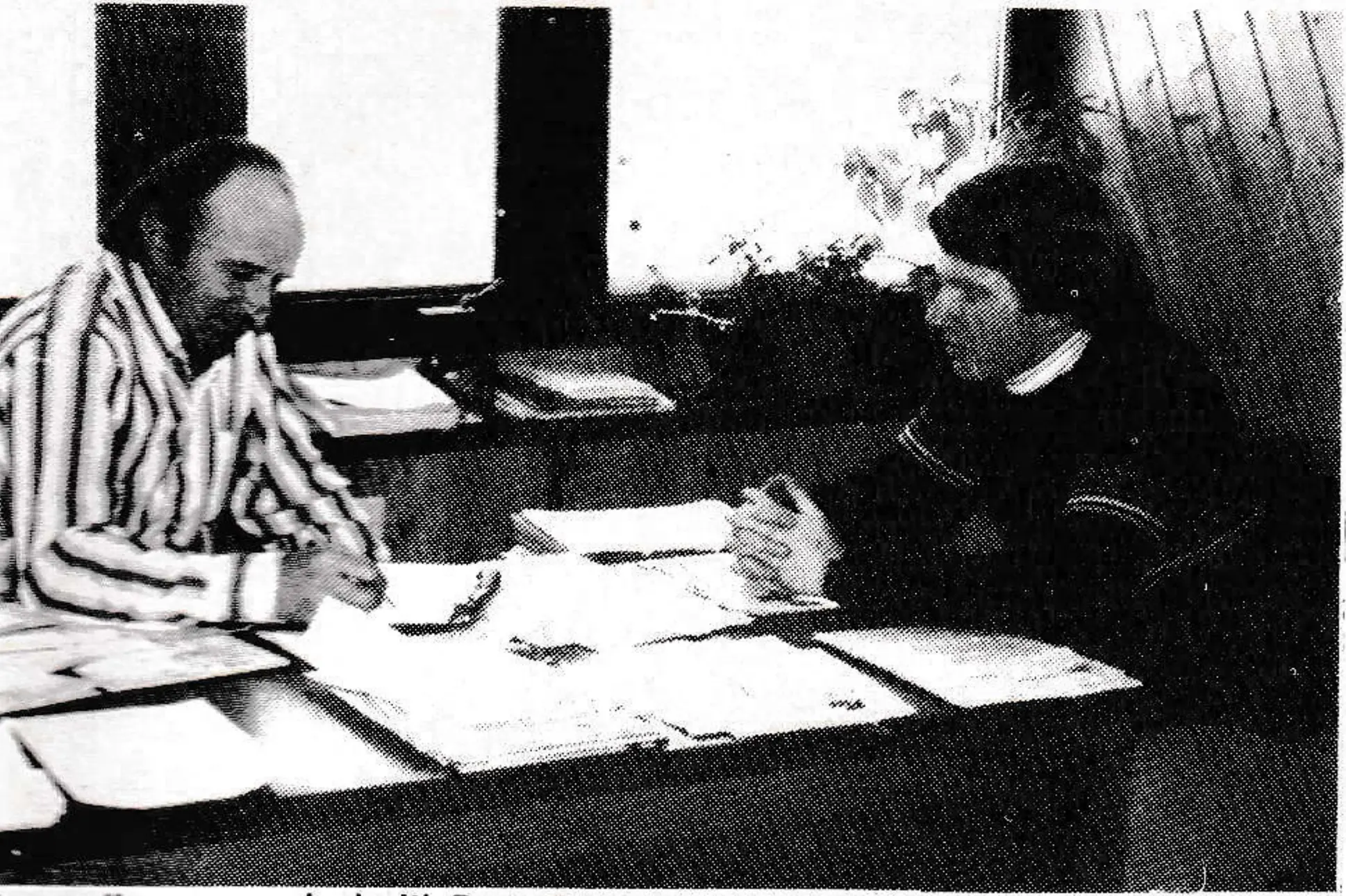
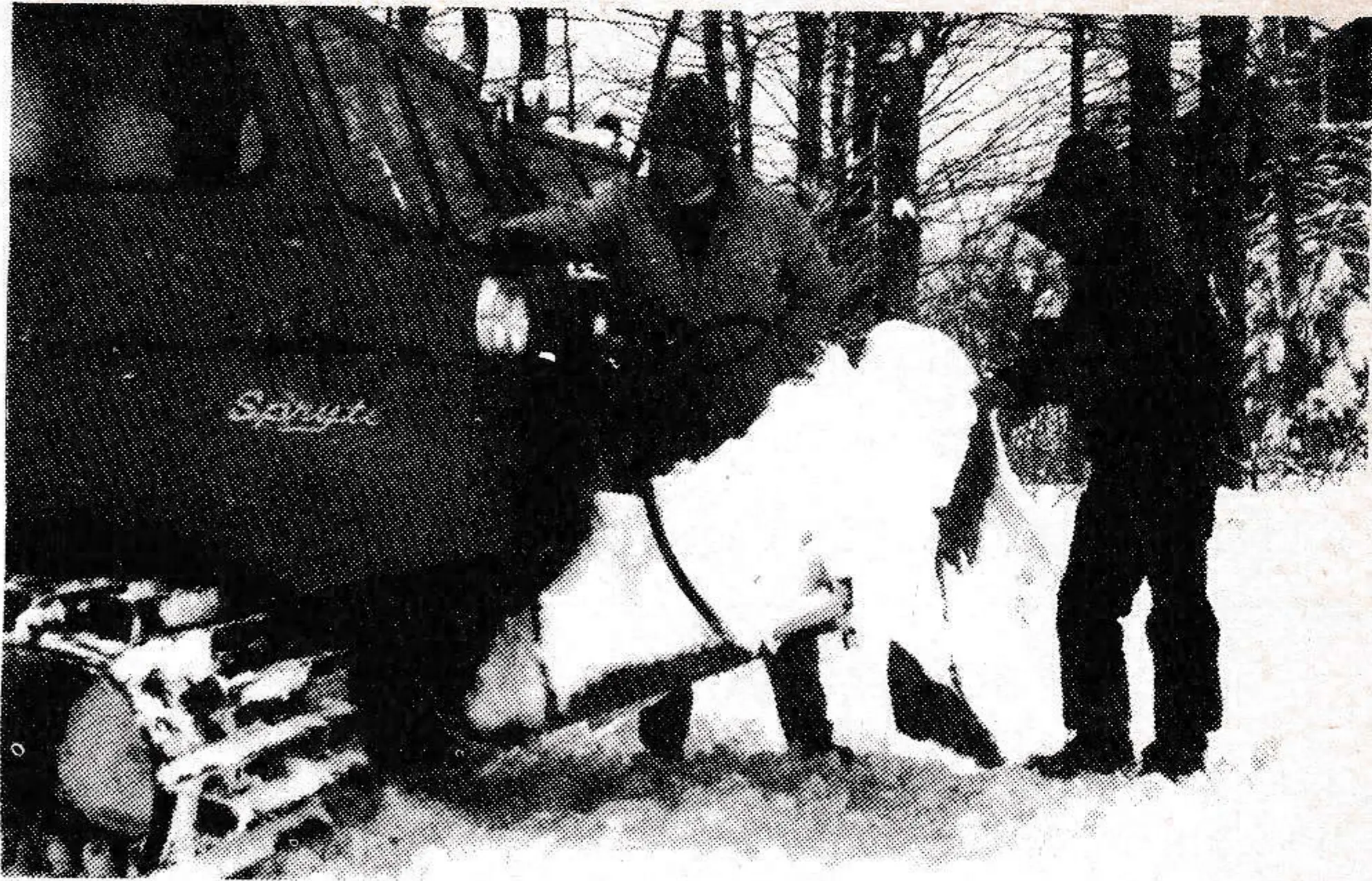
Between negotiations, finder’s fees and even helping out on shipping costs, KA nets less than the customary 10% commission. His annual phone bill runs close to $20,000.
“I’ve had some operators tell me I made a thousand dollars on just one phone call. That could be true,” he goes on, “but it’s the old pitch: I knew where to make that one call. We’ve had $100,000 chairlifts come in and go back out inside of 24 hours and that’s a very nice way to make a dollar but it doesn’t happen very often. I’ve had a deal go 25 phone calls just negotiating; they go back and forth, back and forth. And then I might spend 10 more calls helping set up transportation–and we don’t get any finder’s fees on the freight. We booked about $80,000 in freight last year, but that’s part of our service and there’s never a charge for something like that.”
“He drives a hard bargain,” says Nils Ericksen. “He puts in incredible hours, but he doesn’t waste any time.”
Knapp is most pleased with his latest side trip from the brokerage activity: financial services. “Two years ago, if you went to a leasing corporation and said you had a client who wants to lease a chairlift, they’d laugh in your face,” according to Knapp. “They’d say, ‘Who are you kidding? We’re not going to touch that paper with a 10-foot pole.’
Put them all together and it represents more than a million dollars worth of business last year. Knapp, 31, whose acolyte good looks shield a razor sharp business mind, estimates KA is involved in more than 60% of the used equipment sales in the U.S. and handles more vehicle sales than any manufacturer.
Bruce Belden, president of Pico Peak, also indicates Knapp may be indirectly connected with even more transactions. “We’ve bought stuff through Hugh and he’s sold equipment for us,” Belden says, “but we also use him as a barometer of prices in the marketplace, the price per square foot or per unit, or whatever. He has an excellent grasp of the situation.”
“Carny operators will trade equipment every year because of taxation,” he says, “but this is where you have to specialize because you buy a piece of machinery, write it off in six or seven years, take a tax inventory credit, depreciate it out and then go trade with another operator. At the same price, you ‘wash’ it, get a new piece, you start to depreciate that one out. It works for carny operators and can work for ski area operators; they can take a 6-year-old compressor, trade it to another area and start the new writeoffs.
“It’s all legal; you just have to know how to do it, how to buy, when to buy right and when to sell right for taxation.”
Knapp says he’ll “go anywhere for one or two days for the price of the air fare and expenses” to help advise new areas, or new management, on equipment purchases or other aspects of their operations. His experience in dealing with areas across the country and in Canada has given him a background in management beyond just equipment purchasing.
“The guy is unique,” says Nils Ericksen, a professional engineer (certified in Vermont, Colorado and Virginia) who used KA when he managed Okemo Mountain and who has worked with Knapp on several projects since he formed his own engineering and consulting firm in Ludlow, Vermont a year ago.

“How many of us in the industry looked for so long at all the junk piling up at a ski area and thought nothing about it? Hugh carried it one step further: he saw the junk and said, ‘I bet I can sell it.’ And he has. But, besides that,” says Ericksen, “he’s also become an economist of the first order.”
Ericksen has visited Knapp at his Shelburne office/home, studied his operation and marveled at the setup, he concedes. “His strongest point is his organization. He’s got meticulous files and he follows every lead. His track record is excellent and he obviously provides a worthwhile service.”
Gordon Hine, vehicle sales manager for Thiokol Corporation, echoes Ericksen. “Hugh covers the market well. He follows up well and seems to gather everything together–and he’s an independent source. Some people feel that buying through a supplier means there could be a little bias but by going through Hugh they may feel they’re not being influenced in making their decision.”
At the same time, Hine notes one weak point in KA: a lack of renovation on some equipment. KA, as strictly a broker, does not have the facilities to pull maintenance or handle any renovation work; it merely deals with whatever product is presented.
“We completely recondition any equipment which we resell, spending at least $2-3,000 to rebuild everything–sometimes as much as $7-8,000,” says the Thiokol executive. “It is something the customer expects from a manufacturer.” Still, Hine notes, Thiokol also lists items with KA. Knapp notes, the condition of all equipment is explained to any potential buyer, so there is no misunderstanding about buying hard-driven vehicles, for instance, instead of lightly used machinery. “I generally know the maintenance ability of an area and how well they may have kept the machinery, and I may know if the price is negotiable, so I can give guidelines.
“With lifts, vehicles, larger pieces of snowmaking equipment, I strongly urge a client to go look at it or at least send a suitable representative. I don’t like selling pigs in a poke. We’ve had one or two problems but nothing we couldn’t work out; sometimes definitions of condition, for instance, don’t mesh but most of the time it does,” Knapp says.
“It’s taken me two years of working with a couple of companies to make them believe us, to make them understand where this industry financially is at — that there are ski areas and owners who are worth credit risks. Actually, they’re not risks at all. They’re solid, creditworthy year-round corporations.”
Lease money is now coming through, according to Knapp. He estimates KA did about $500,000 in equipment leasing business during 1978.
Financial assistance, he feels, could be KA’s most important contribution to ski areas. He wants to become a source for operators seeking advice or counsel on purchases, equipment sales and other moves.
“There definitely is a right way and a wrong way, tax-wise, to buy and sell equipment,” he says. “The big areas know what they’re up to — the Aspens, the Killingtons — but many of the small areas don’t.”
Ruidoso Ski and Recreation Area, a small new-this-winter complex in New Mexico, took up Knapp on his “expenses-only” offer and flew him in for a couple of days. Paul Southwick, president, says the move began paying dividends from Day One.
“Without Hugh, we wouldn’t be here today. It may be a couple of years before we know whether that’s good or bad,” he adds with a chuckle, “But we’re here because of him.”
KA impact, he says, meant “taking an area that would have been virtually impossible for us to build by ourselves. He’s given us people — contacts — which I don’t think we could have found without him. We worked with Hugh on getting prices for property, machinery and almost everything,” Southwick says.
“He gave us ideas for trails, talked us out of our original sites — which, it turns out, would have been bad, like Hugh said — and did more than try to sell equipment. None of his information was misleading.”
Among the most satisfying moments in his admittedly brief reign as brokermeister, Knapp pinpoints his court testimony which helped determine that ski lifts are personal property, not real estate for tax purposes. The cases involved Stage Coach in Colorado and West Mountain in New York.
“We’ve done a lot of appraisals in court for various bankruptcies. A New York ski area was being taxed three times more than it should have been, so they wanted a true valuation. A number of states have tried to tax ski lifts as real estate but lifts are, in fact, personal property because you give me any lift in the country and three weeks from now that lift won’t be there. Any lift can be moved and I can show there’s a viable market, ready to buy any lift.”
KA has been asked many times to publish a “blue book” on used ski area equipment but Knapp doubts it will happen because, in the final analysis, there are so few pieces of equipment–compared with thousands of automobiles of a particular model–and each has so many options and variables.
“And there’s really no need to,” he says, “because anyone can always call me on that toll-free line and just check on the value of a piece of equipment, anyway.”
If running KA and its expanding reach of activities isn’t enough to keep Knapp away from his wife Lois and their two youngsters, he also is involved with a couple of non-ski industry businesses. One company, for instance, uses an infrared scanning device to “read” heat loss from a building and another small firm provides portable, computerized bookkeeping and accounting services for businesses in the Shelburne area.
“I guess I’m an innovator, an entrepreneur. I like inventing businesses; if you will, it’s my hobby.” Different strokes for different folks, somebody said, but it’s not too surprising when you consider Knapp has said he hopes to be a millionaire by the time he’s 40. Nobody is betting against him. Or KA.
KA Wants List
Knapp says he has very simple advice for area executives who wonder about subscribing to his newsletter or how they should deal with him if they’re not a subscriber: “If someone has something to sell, or they’re thinking about buying something, call us. There’s absolutely no obligation, no expense because it’s toll-free (unless they’re in Vermont)…and you never know what we can do for them.”
KA keeps a “want list” of what areas might be seeking–“whether it’s a Sprite, a chairlift or maybe 500 pairs of bindings,” he says–“and we keep it active for a year unless they call to say they found it. There’s no fee, no expense for that; we make our fee from the seller after everything is completed. On our ‘want list’ right now, for instance, I know of 70 ski areas looking for used chairlifts in the 12-1800-foot range.”