
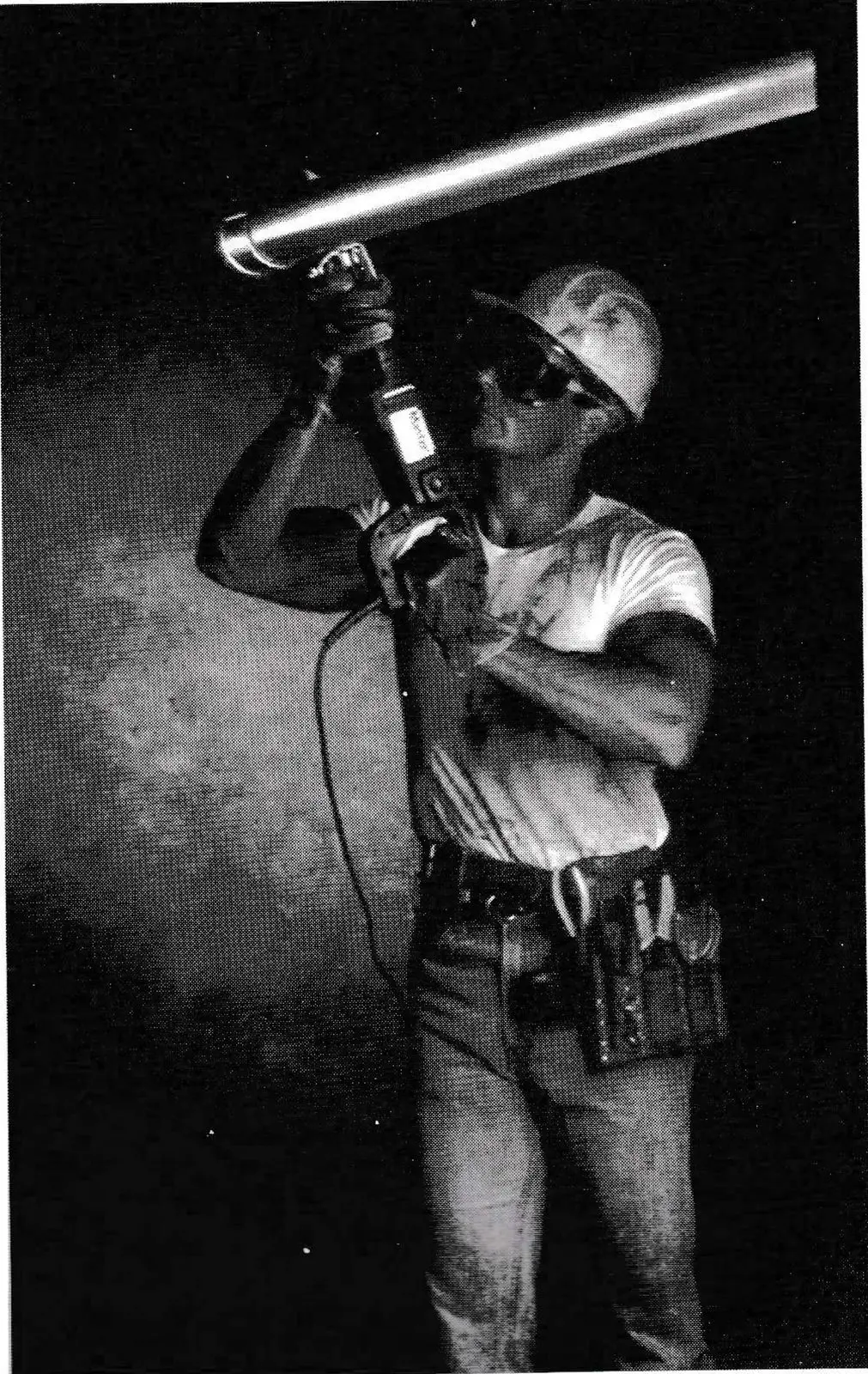
When testing the units listed here, we evaluated the line items that make or break a good reciprocating saw: power-to-weight ratio, balance, maneuverability, durability, speed and accuracy of cut and vibration.
Beyond those features, however, a saw will only do as well as its blade permits. At last count, there were about 90 different blade sizes, configurations and base metal types available. Most applications at a ski area would be in metal cutting situations, so our tests were run using bi-metal blades that incorporate a tooth strip of rigid tool steel welded onto a more flexible blade body. The weld is accomplished via an electron-beam welder so the seam is not visible to the naked eye. The end result is a blade that is flexible enough to bend during the cut and has a resilient set of cutting teeth.
As far as maintenance goes, the reciprocating saw is a straight shot. Because the tool is run by a 1/2″ drill-type motor in most instances, all that is required is a brush check and change every once in a while. If the front shoe moves, as it does on most models, then a spritz of WD-40 every few months will keep it protected and mobile.
One piece of advice concerns the blade mechanisms common to this tool type. Buy and keep a spare blade clamp in your shop, because nothing is more discouraging than having one break in mid-use or losing one to deep snow. A few extra dollars spent can save lots of aggravation.
| 1-10 Rating | Manufacturer | Model | Cutting Stroke | Speed Range | Weight | Orbital | AMPS | List Price |
|---|---|---|---|---|---|---|---|---|
| 8 | AEG | SSPE800 | 1-3/16″ | 500-2500 | 7.25# | Yes | 8 | $245 |
| 7 | Black & Decker | 5321 | 1-1/8″ | 1700/2400 | 7.3# | No | 8 | $231 |
| 8.5 | Bosch | 1632VSK | 1-3/16″ | 0-2400 | 7.9# | Yes | 8.4 | $247 |
| 7.5 | Hitachi | CR12V | 1-3/16″ | 800-2500 | 8# | No | 6.5 | $214 |
| 6.5 | Makita | JR3000V | 1-3/16″ | 0-2300 | 6.4# | No | 6 | $235 |
| 8 | Metabo | R5900 | 1-1/8″ | 1900/2800 | 8.75# | Yes | 8 | $278 |
| 9 | Milwaukee | 6527 | 1-1/4″ | 0-2000/0-2800 | 8.75# | No | 8/6.5 | $299 |
| 9 | Porter-Cable | 9637 | 1-1/8″ | 0-2600 | 9# | yes | 8 | $250 |
| 7 | Ryobi | RJ-100V/K | 1″ | 0-2300 | 6.6# | No | 6 | $236 |
| 6 | Sears | 171020 | 1″ | 0-2500 | 6.5# | No | 6 | $130 |
| 7 | Skil | 474 | 1″ | 0-2400 | 7.25# | No | 5.5 | $232 |
| 5 | Wen | 1600 | 1″ | 2200/3000 | 5# | No | 4 | $78 |
AEG—Model SSPE 800
This tool is light, powerful and compact. It features an auxiliary front handle that works for right or left hand operators, and screws into place for tight control.
The speed control on the tool is the unit’s best friend and worst enemy. Speeds are constantly maintained thanks to a sophisticated electronic feedback circuit that can boost power under loads, but unlike many other saws, AEG put the mechanism that controls the electronics into a dial instead of a trigger. This means the operator must turn off the saw for safe speed changes. This handicap is common to all dial-controlled speed regulators.
The front shoe suffers from lack of flexibility, because it is a fixed, two-position solid cast unit which offers no latitude under punch or pocket-cut conditions. This forces the operator to bend where the front shoe should be doing the negotiating and that increases the potential for safety problems. This unit also lacks the front rubber boot common to reciprocating saws in general that acts as a shock absorber for the impact typically received on the saw’s nose.
On the plus side, AEG incorporated orbital cutting abilities into this tool and, while it won’t help much in metal cutting operations, it does come in handy when slicing softer materials.
Black & Decker—Model 5321
In many ways, this saw is similar to the AEG unit because it’s light and offers extremely high power. Unfortunately, it shares the dial-speed control that is less than adequate in the AEG model. Start-cuts require a different rate of reciprocation than follow-through and, though Black & Decker utilizes trigger controls on many of their tool lines, they haven’t applied that technology on this saw.
The saw lacks orbital abilities and the front shoe cannot be adjusted. We think the unit will last because it has a rubber boot and a nicely-machined housing and power-train system. Vibration on the tool was nominal and, like all other manufacturers, Black & Decker designed a counter-balance configuration into the tool.
Bosch—Model 1632 VSK
This unit has the advantage of a die-cast gear housing for added durability. It also features the highest amp motor of all units tested, but in general it is on even par with the rest of the high-powered tools. Speed is controlled by a trigger and a built-in dial that is set into the trigger that does not allow an operator to overcompensate on blade speed. The dial works by restricting trigger movement to a maximum speed preset prior to the cut, so even if the user is jostled, the speed range won’t become erratic.
Four orbital positions can be set for different degrees of aggressiveness during the cut. The tool wrench storage makes blade-change operations easy to handle and the front nose pivots up to 45 degrees for plunge and start cuts.
Hitachi—Model CR 12V
We chose the CR 12V instead of Hitachi’s other model (the CR 10V) because it offers a cutting stroke length that is in keeping with most of the units tested. In all fairness to the manufacturer, however, the other machine offers the orbital abilities that this tool lacks. If the two separate designs could somehow merge together, then Hitachi would have a top-notch unit.
The CR 12V offers electronic speed control, but it does so by way of the dreaded dial. Although this doesn’t have a top power-to-weight ratio, it offers automatic lift-off brushes that could save the motor and the cost of a new saw. The tool is a fairly compact, no-frills saw that maintains consistent cutting speeds.

We liked the front shoe that not only bevels, but also allows limited extension to save blade life by enabling the user to utilize more of the cutting surface. Hitachi makes a nice cutting guide accessory for this saw that helps make straight cuts on pipe up to 6 inches in width.
Makita—Model JR3000V
This tool resembles the Hitachi unit, except that it weighs approximately 1.5 pounds less. The speed is trigger controlled and like the Bosch saw, the Makita has a built-in dial limiter. There is no orbital action available with this saw, but it is one of the lightest tools made and that can be a big plus when using it for long intervals.
The front shoe on the tool pivots and slides for better accuracy, but beyond that, this tool is bare bones. Makita makes the tool so that it competes with every other unit in terms of price; we only wish that it was more of a heavy-duty machine.
Metabo—Model RS 900
In general terms, this is a two-speed saw that lacks the versatility of variable speed units. Plunge cuts are extremely difficult and start-ups on metals can become jumpy. The saw does have orbital abilities and automatic lift-off for worn brushes but it loses favor because of added weight and limited control due to speed issues.
Milwaukee—Model 6527
This is the newest saw on the market and it comes from the company that made reciprocating saws what they are today. Not only has Milwaukee boosted the power rating as the original Sawzall, but the company redesigned the tool for better vibration control. The counterweighting technology found in this tool leaves all others far behind. The lower rate of nose vibration energy translates into higher accuracy, less operator fatigue and longer tool life.
The unit has the longest cutting stroke of all tools tested and, by offering this, it allows the operator to spend less time making the same type of cut. The speed control is trigger operated and the saw has a high and low variable speed range for a very smooth cut. The manufacturer incorporated a unique power cord feature called Quik-Lok that allows the entire cord assembly to be replaced with just a simple twist.
The front shoe is unique requiring no tool to unlock it and move it back and forth. For blade changes, an on-the-tool storage compartment for the wrench also saves time. The only thing that kept this saw from a perfect score was that it lacks orbital action.
Porter-Cable—Model 9637
This saw is identical to the Metabo unit except for its color and speed controls. The model 9637 offers variable speed coupled with nice balance and a two-position orbital control. Both Porter- Cable and Milwaukee set industry standards for years and this reputation is maintained by offering the only tool that truly competes with the beefiness of Milwaukee.
The front nose on this machine doesn’t slide, but it does pivot making most plunge-cut applications possible. The blade clamp accepts standard sizes and styles, but it sets the blade at a seven degree rake angle to offset the typical operator’s wrist position. The end result is greater comfort when in use and straighter cuts.
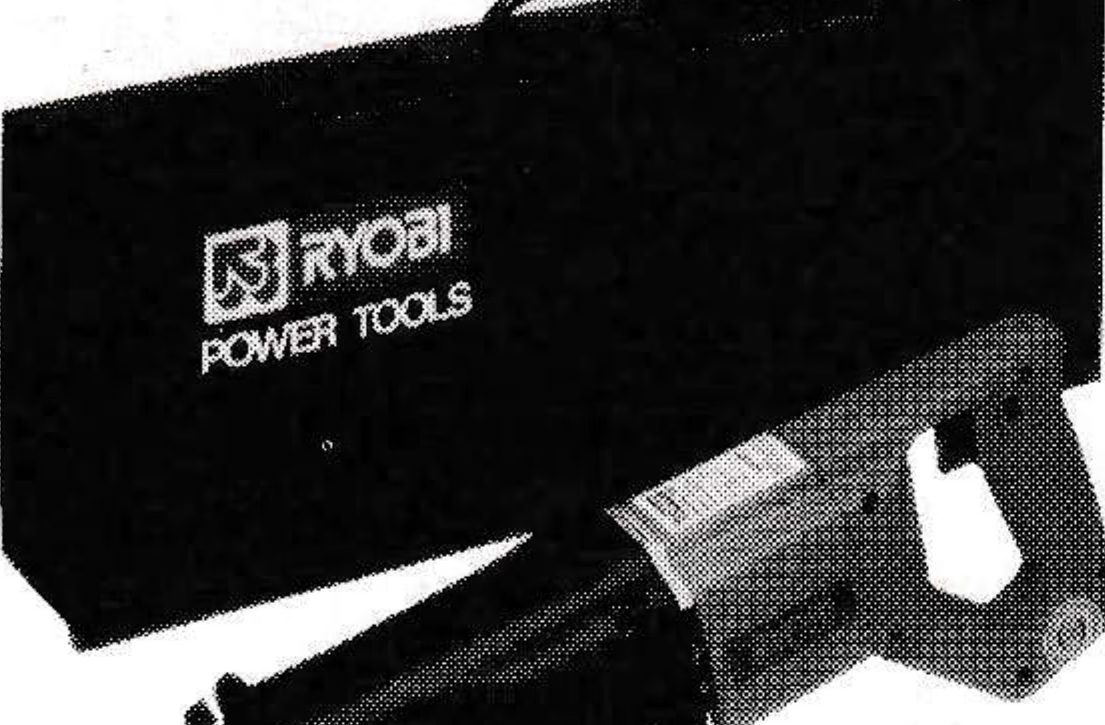
Ryobi—Model RJ-100V/K
This saw offers electronics and variable speeds via a trigger control with a built-in limiter. Unfortunately, for all of that control, the cutting stroke is limited to only one inch and that means more time spent …