


If faced with the chore of cutting a particular pattern of steel stock from a large sheet, the mechanic has several options. The first way might be to “torch it out” via oxy/acetylene or plasma cutter. The second cutting route would involve using a shear. The third method would be the use of a nibbler.
The torch idea works well, but suffers from dangers such as fumes and potential burns. Using a shear is a good alternative, but sheet metal shears are harder to control and lack maneuverability in turning tight radii. The nibbler, however, offers control and cutting accuracy with the least amount of worker hazard.
Because different manufacturers offer nibblers that vary in cutting capacity, we had to test a range of tools that differed widely in performance and design. Rather than compare apples to tomatoes, we chose not to rank nibblers in the chart, but rather judge them on their own merits. We looked for user comfort, durability, ruggedness, all-out capacity, maneuverability, special features, benefits and quality of cut.
| Manufacturer | Model | Speed-RPM (No Load) | Gauge Capacity (B) | Weight | Minimum Cutting Radius | List Price |
|---|---|---|---|---|---|---|
| AEG | KNS2 | 1200 | 14 | 4.0 | 5/32″ | $539 |
| Black & Decker | 3255 | 1000 | 8 | 15.75 | 3-3/8″ | $1,300 |
| Bosch | 1533 | 1000 | 10 | 8.25 | 2-1/2″ | $1,059 |
| Hitachi | CN16 | 2000 | 16 | 3.8 | 1-5/8″ | $390 |
| Makita | JN3200 | 1300 | 10 | 7.5 | 4-3/4″ | $879 |
| Milwaukee | 6890 | 1900 | 16 | 4.75 | 1-3/4″ | $568 |
| Trumpf | N200-0 | 1400 (A) | 14 | 4.0 | 5/32″ | $519 |
AEG — Model KNS2
This nibbler has a barrel grip housing that was the easiest to handle in terms of operator comfort for continuous work. The switch is located in the thumb position (for right handers) to facilitate easy on/off control. No auxiliary handle is offered, so the cut must be controlled with one hand.
All of the units tested have a metal nose where the planetary gearing and other important components reside. The balance of the housing on this unit is plastic composite that reduces net weight, but also reduces durability in shop settings where tools can fall from benches.
This unit is a medium-duty machine due to its 14 gauge capacity, but it can cut thicker stock of some materials. Aluminum, for example, allows this unit to cut up to 12 gauge, while stainless steel drops this capacity to 16 gauge.
Exclusive to the AEG and Trumpf (see below) nibblers is the round punch that rotates 360 degrees within the cut path, which translates into maneuverability that cannot be topped by any other units. Besides that punch and die combination, the unit is straight forward with no frills. When a nibbler produces waste, it does so in the form of tiny quarter-moons. We checked the quality of both the cutting stream pattern and the waste metal and could find no burrs. In the end, this tool is one of the finest made even though it has a limited capacity and cannot handle extremely thick stock.
Black & Decker — Model 3255
This machine has an oversized rear handle that contours to the grip of even the largest of hands. An additional fixed front T-handle grip provides extra control that a tool of this capacity requires. The beefy trigger is also conveniently located at the front of the rear handle for easy power-ups and control. There is, however, a down side to all this extra power and user comfort. This nibbler is the heaviest tested and at 15.75 pounds is almost double the weight of the closest competitor.
Long term durability for this machine cannot be topped by any of the competition. The housing is all metal and the 7 amp motor rides on 100 percent ball bearings. Even the die is carbide, assuring long life with minimal stock distortion.
For thickness capacity, the tool’s net weight is counterbalanced by the power that the machine offers. An operator can transverse mild steel in thickness up to 8 gauge (7 gauge if used intermittently). The maneuverability is limited, however, due to the capacity and rugged construction of the tool.
There are a couple of features in this unit that make it appealing for use in a resort shop. One is an automatic oiler with an easily-filled reservoir; the other is a machined base that accepts mounting directly to a bench or stand for fixed-control operations. The designers even incorporated an eyebolt hole on top of the casing for overhead suspension.
The quality of this unit’s cut is not an issue. The tool develops over 2 tons of press pressure to assure clean strokes through the toughest of metals. There was not even “slapping” on thinner stock. The Black & Decker is a definite go for dealing with thick cuts.
Bosch — Model 1533
This is a barrel grip unit with the added stability of an auxiliary handle that can be easily threaded into either side of the head. The switch is top-mounted on the barrel itself so regardless of what hand is used for the main grip, electrical control can be maintained with even results. The housing is a plastic composite, while the gear box is metal that extends back farther than on other machines of the plastic/metal design. The side handle is also made of plastic, which might warrant ordering a back-up spare just in case it breaks (part #1602025026).

While the Bosch can’t do what the Black & Decker can, it still boasts respectable cutting power. Since it is a 10-gauge unit, it offers a nice choice between the lighter units and the monsters. The head is adjustable to eliminate any slapping effect. As far as maneuverability goes, this unit is par for the course. It turns a tighter radius than bigger tools, but not nearly as tight as the lighter-gauge units. The barrel-grip handle aids in moving the machine into smaller spaces. Generally, the quality of cut on 10-gauge mild steel resembled the refined edge that only a laser could outdo.
Hitachi — Model CN 16
Another barrel-grip tool, but this one lacks an additional auxiliary grip. That’s okay here, though, because the unit is rated at 16 gauge and control for cutting sheet metal of that thickness can be readily manipulated with one hand. The switch is mounted on the top of the grip for ambidextrous electrical control and the unit’s light weight (3.8 pounds) is the leanest of the units tested.
The durability rating of the Hitachi is lower because most of the unit’s housing is made of composite plastic that may not be tough enough to meet shop standards. The tool is geared more towards sheet metal workers who deal with light-duty cuts. The machine’s die holder isn’t as flexible as that of the Trumpf or AEG units, but it can turn in 90 degree increments to the left or right. This unit seems satisfactory for most applications, but for tight inside corner cuts, it might be limited in terms of maneuverability.
Makita — Model JN3200
Like the Black & Decker, this unit incorporates a nicely-sized rear top handle. The unit lacks an auxiliary front grip, but due to its compact size, it may not need one. Both the handle grip and the majority of the housing are plastic composite, but the front portion of the tool compensates by being sturdier than expected. The all metal construction of the gear housing extends past the front of the handle giving extra stability to the front half of the handle itself.
The switch is mounted for forefinger ambidextrous accessibility, and the unit can slice through 10-gauge stock as well as the Bosch can. Makita reduces the overall quality of the tool by using needle bearings in construction. Other manufacturers could take a lesson from the Makita, however, which has two simple notches that act as thickness gauges. Makita is the only nibbler that comes standard with a case.
Milwaukee — Model 6890
Milwaukee chose to send its second toughest unit for testing instead of the 10-gauge tool because the company sells an awful lot that size units. One of the major pluses for this nibbler is the electrical control that is an easily-gripped, oversized paddle switch mounted on the bottom of the machine’s barrel grip. While the unit is rated for 16 gauge light-duty work, curve cutting is a simple task because the die can rotate eight positions within the 360 degree circle. The operator can control the indexing of the die with a knurl knob conveniently located on top of the gear housing.
That aluminum gear housing is mounted onto a plastic composite barrel, but not before metal takes most of the potential impact hazard out of probable range. This nibbler is extremely compact and easy to handle in spite of the indexing head, the machine gets beaten by other 16 gauge tools in terms of being able to provide a tighter radius. Still, this tool is well built and would fare well in a shop environment.
Trumpf — Model N200-0
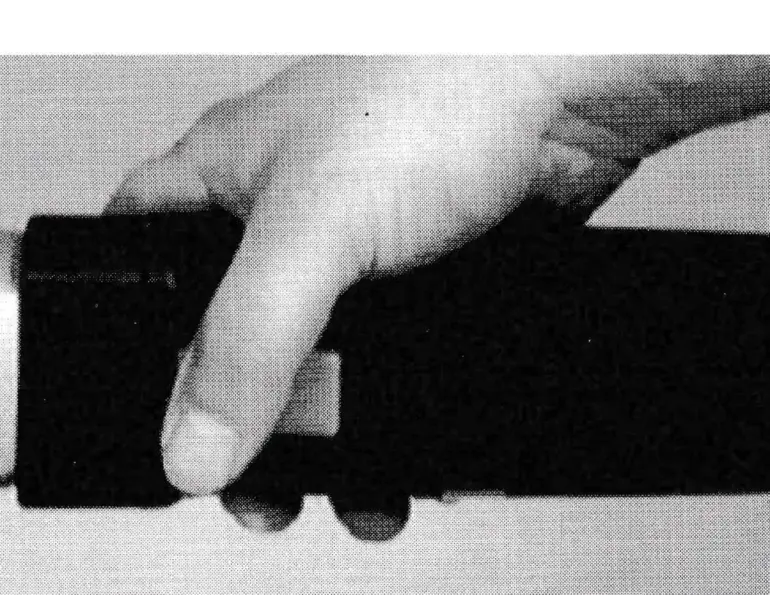
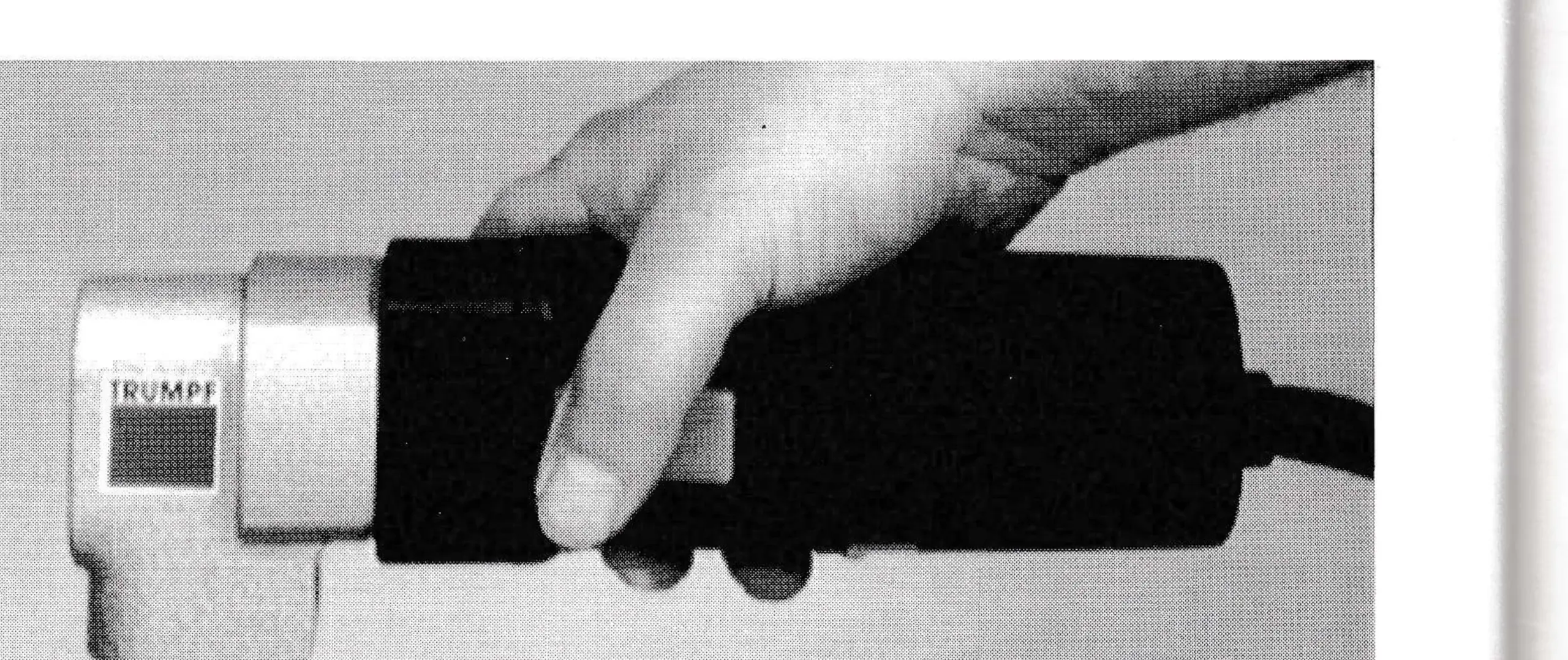
This Swiss-based manufacturer specializes in nibblers, seamers and shears. The manufacturer offers the widest selection of nibblers found in this country and also supplies many fabricators with gear housing and die/die holder assemblies. This machine has a 360-degree swivel head like in the AEG head and also utilizes a similar right-hander thumb switch for electrical control.
Cutting capacity is 14 gauge and the cut was burr-free. Trumpf sent a case with the unit, but the tool does not come standard with it. According to the information supplied by both manufacturers, Trumpf operates at a faster speed than the AEG machine but there seemed to be little other differences between these two extremely fine tools.

