

When it comes to buying uniforms for employees, there’s one piece of advice ski area personnel and manufacturers agree on: start the process early. Anywhere from a year to two years in advance, say experienced insiders, is needed for research. This allows time to see the products of potential suppliers, assess the area’s needs, wear-test some garments and ultimately invite bids.
The other main message from the experts is: the uniforms selected won’t be just for keeping employees warm, dry and happy; they’ll also be creating an image for the ski resort.
John Kirschner, a consultant who advises ski areas on uniform programs, said he’s found many resort executives regard uniform-buying as a hassle and relegate the task to a purchasing agent “who’s good at buying snowcats and hardware, but may not know anything about skiwear.”
Kirschner, who was involved in starting the ski and uniform division for The North Face (TNF), said, “It’s more complex than most areas realize. When I was at The North Face, I can’t tell you how many ski areas would call in June, July or August and want uniforms in November. It’s a physical impossibility. It can’t be done.”
Advance planning, according to Kirschner, can help avert the “two worst things” that can happen: late deliveries and product failures.
Stu Campbell, the man behind the uniform program at Heavenly Valley, Calif., agrees that the process is a time-consuming one. He said before his company selected a supplier of almost 1,000 new garments “we tried out lots of clothes in lots of weather with lots of people.
“The process seems relatively easy if you buy a garment that’s already in a line. But that’s difficult to do. You basically need to design a garment yourself,” Campbell said. In Heavenly’s case, embroidery, customized stripes, special pockets and climate modifications were required on TNF products.
Campbell advises uniform buyers to consider replacement costs when negotiating. “You’ve got to think down the road,” he said. “Ask ‘What will you do for us six years from now when we say we need X number of additional garments?’”
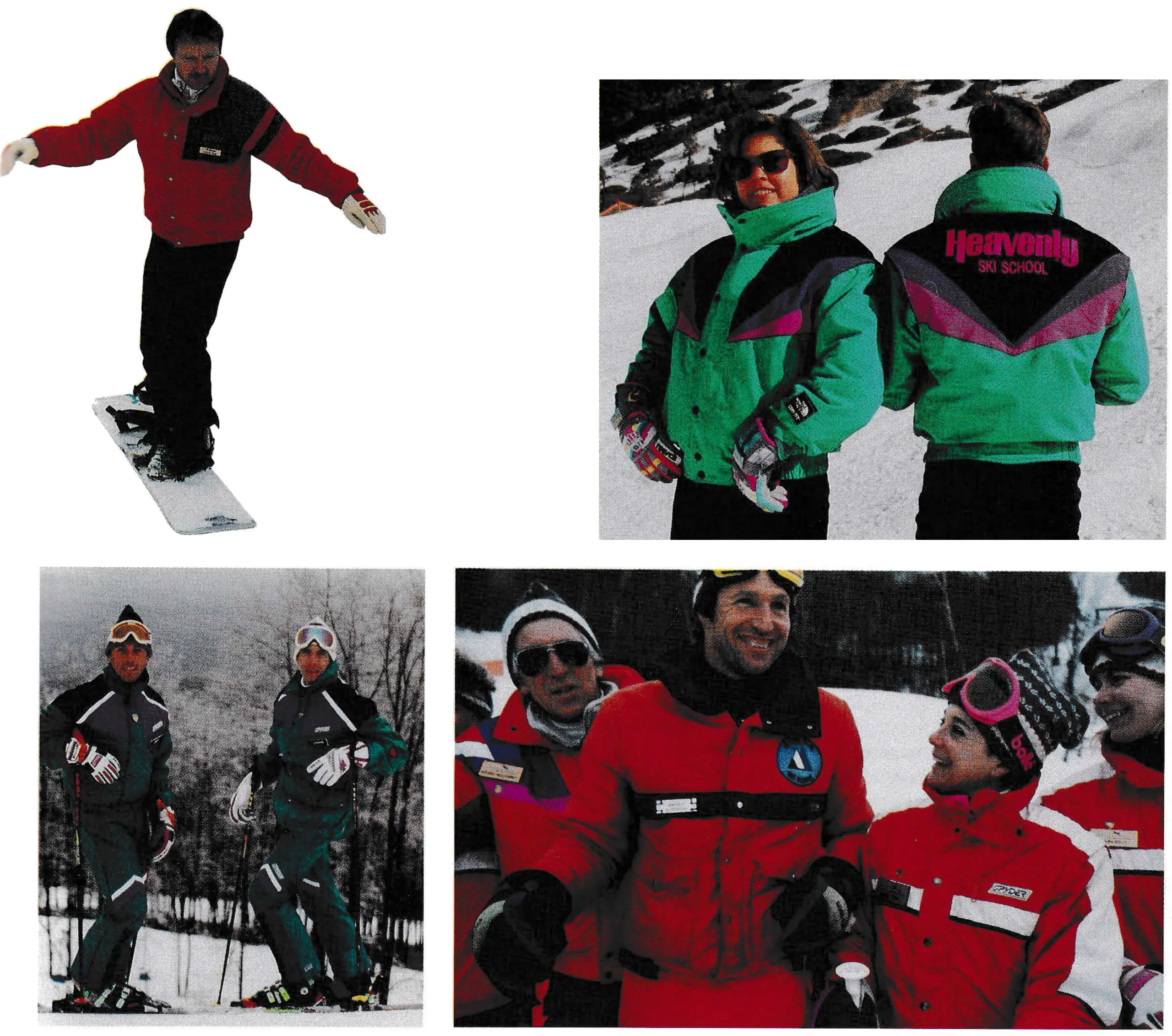
Laurie Mason, plant services supervisor at Winter Park, Colo., began the uniform-buying process a year and a half in advance of ordering 1,200 pieces in five color groups. Jacket backs were custom-embroidered with “Colorado’s favorite ski resort” and pants in the program went from gray to black.
“We use a lot of bright colors (scarlet/purple/black and purple/jade/black) and it’s helped morale,” she said. “Winter Park’s new high-tech Hard Corps outfits make employees feel good and give us a more professional look. They pay off in a lot of ways.”
Among the things Mason said she learned in the buying process was to order outerwear and accessories together to insure color coordination and also to have one color that is used in all the jackets. Another piece of advice is to avoid fluorescent colors, which are notorious for fading.
Skip King of Sunday River, Me., said they consider employees’ exposure to grease, grime, blood or whatever when selecting department colors. Mountain crews, for instance, will get darker shades. “Having an integrated approach in style helps the public,” said King, who noted that all the area’s garments have a stylized logo.
At Killington, Vt., each of the resort’s four divisions dresses employees in different color combinations. The ski school is in teal and purple, skiing services (patrol) is in black with yellow stripes, mountain operations uses teal and black and the information staff wears red with gray. “The North Face will design what we want because we buy in such large quantities,” said Laura Wittern, communications director for the area.
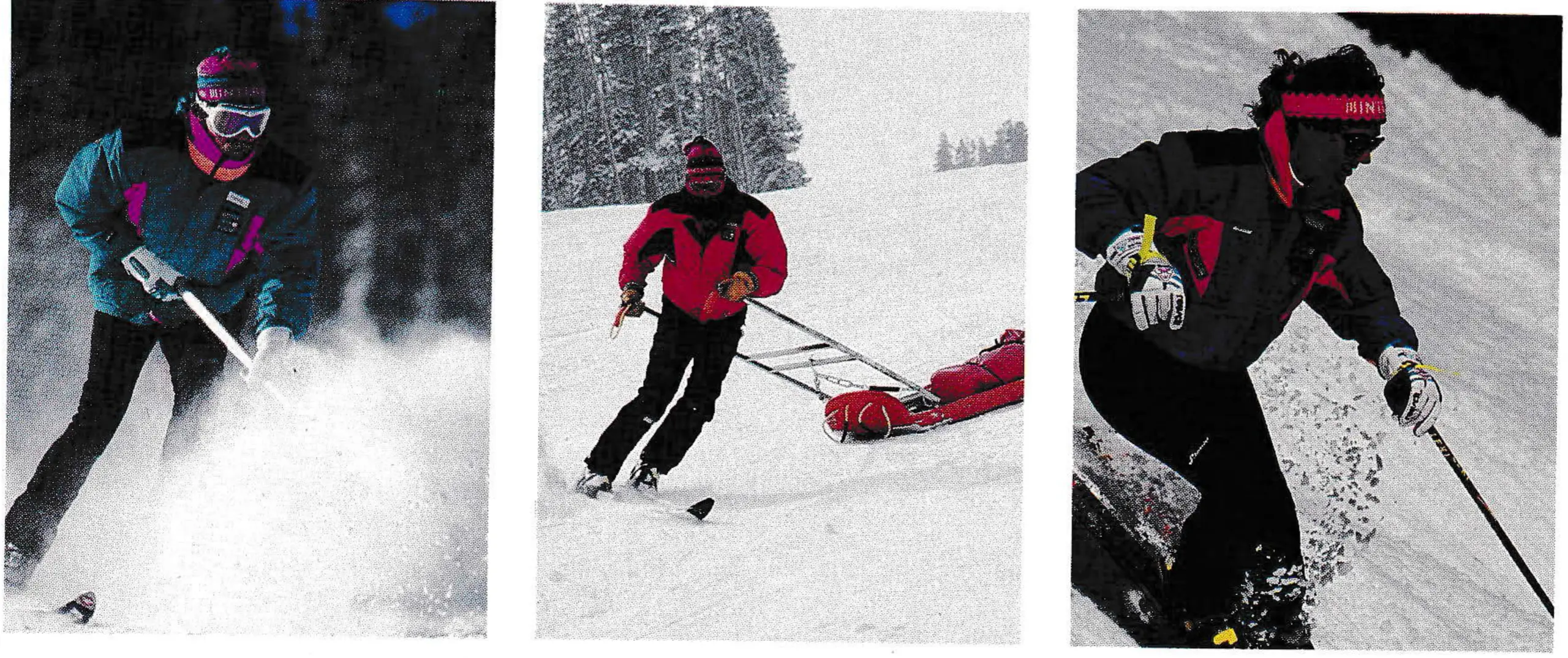
Smaller areas may not have that luxury, or budget. Manufacturer closeouts can be one money-saving approach. At Mohawk Mountain, Conn., the ski school, which is a concession, has purchsed that way for several years. As for the rest of the staff, Mohawk president Carol Lugar said her selection is made on the basis of styles and colors she felt will be appropriate for a multi-year span and the fact she is guaranteed availability of the jacket in the same colors for three years.
One uniform guideline at Mohawk is to be sure they are compatible from department to department and readily identifiable. “Find out what the people who have to wear them think. Find out what features they want,” is Lugar’s advice to uniform buyers. She said the 50 Hard Corps jackets Mohawk purchased came equipped with radio pockets because in the course of a day, a fourth to a third of the employees wearing them carry radios.
An innovative approach was tried at Jiminy Peak, Mass., a few years ago when management decided to let ski instructors wear the jackets of their choice, as long as they were red. The result has been a variety of styles, unified by name tags and ski area patches.
“We had a contest in the bar one night and came up with 21 variations of red parkas on our ski instructors,” said Paul Maloney, vice president/general manager of operations at Jiminy. “They still look sharp,” he added.

On the manufacturers’ side, uniform programs provide a good testing ground and potential for exposure that can be worth megabucks.
“Ski instructors and patrollers are influential,” said TNF’s Betsy Leggat, who coordinates the company’s uniform program. “If people see TNF all over the mountain, they’ll ask for it in the stores.” Bill Werlin, TNF’s president, added that when a skier asks an instructor or lift operator — the employees he or she is most likely to come in contact with — how they like a parka and the response is a rave review “we’ve done better than a billion dollars of advertising in a ski magazine.”
For manufacturers, providing skiwear that can stand up to intensive use by area employees is a challenge, but one they are anxious to meet. TNF, Spyder Active Sports and Sun Ice are among the companies pushing to attract more ski areas as clients.
“We’re going to get aggressive in this area again. It’s great exposure,” said Dave Rucklos of Sun Ice.
This season Spyder, whose clients include a number of ski schools, initiated a loan program allowing a ski area employee to ski in outfits for the season. According to uniform program manager Julie Lee, employees at about 50 areas are taking Spyder up on this offer.
TNF’s Werlin said the feedback from mountain employees is invaluable when it comes to creating future products. He added that ski areas should think in terms of buying the best because uniforms are a long-term investment. “It’s like buying a piece of machinery,” he said. “You can buy a good one to last or one that falls apart quickly.”
Uniform Options
Betsy Leggat of TNF recommends ski areas outfit employees as follows: ski school in a Gore-Tex shell with zip-in fleece lining. Each piece can be worn separately depending on weather conditions and there’s plenty of room for layering underneath. Pair this with a Gore-Tex shell or insulated pants. (Most areas opt for a shell pant, she said.) A Gore-Tex hip-length shell with fleece zip-in lining is recommended for mountain operations staff members. And a slightly shorter Gore-Tex shell with zip-in fleece lining — with crosses on both pieces — works well for ski patrol, Leggat said.
Old Uniforms/New Uses
Recycling took on new meaning for Winter Park last December when the area donated nearly 900 mountain uniforms to homeless persons at the Denver Rescue Mission. Three ski patrollers gave a presentation on hypothermia while other patrollers distributed jackets and bib overalls.
The area, which goes through 1,600 to 1,700 pieces of clothing a season, also donates hundreds of garments to a native American reservation in South Dakota. — H.A.J.
New Suit for Snowmakers
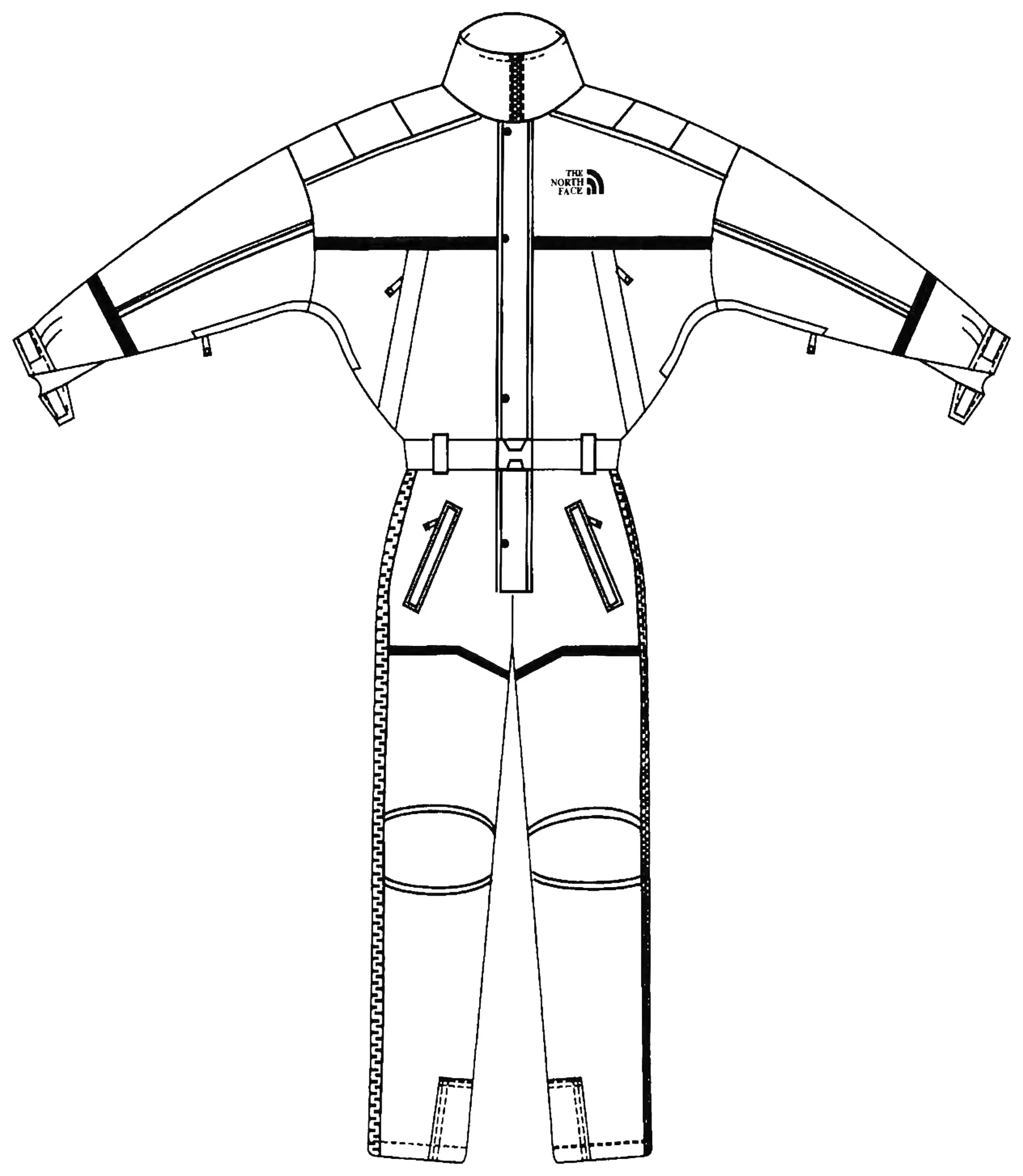
There’s a hole in the skiwear uniform market that’s about to be filled. According to Betsy Leggat, uniform coordinator for The North Face, many people have asked about uniforms especially designed for snowmakers.
“Bill Werlin (TNF president) used to make snow at Loveland, Colo., so he understood the problem and really jumped on the idea,” she said. “He had plenty of ideas for a suit from his own experience.
TNF snowmaker’s suit illustrated has a fully-taped Gore-Tex shell with abrasion-resistant overlays on high-wear areas at shoulders, thigh and seat. It has a double-front draft flap, full side zippers on the legs, “pitzips” for ventilation, Velcro cuff straps, two front hand pockets and two chest pockets, inside radio pocket with exterior access and reflective tape on the body and limbs. Price is $250.
Photos by Byron Hetzler, Helen Jankoski, Tom Lippert and Carl Scofield.