

A half-dozen innovations over the past 20 years have changed nordic skiing dramatically. Grooming enhances efficient movement, fiberglass skis live long and glide fast, fishscale bases eliminate waxing complexities, boot/binding systems improve equipment stability and responsiveness, skating is swift and photogenic and lycra adds style. A new shorter ski is likely to be as important as any of these innovations. The ski has been pioneered by Austrian manufacturer Fischer, but is being emulated by companies including Rossignol, Jarviner and Peltonen.
Fischer, which produces a 147 cm one-size-fits-all short ski called the Revolution, offers a huge advantage over other suppliers, none of whom had a short ski on the market this past winter. The Revolution is available in a two-way, classic model, using the Crown base, as well as a skating version, which can also be kick-waxed.
The Revolution is just as its name implies — a cut-down full-size ski. The result of collaboration between John Slouber of Royal Gorge Cross Country Resort, Calif., Fischer United States product manager Dan Simoneau and Fischer engineer Hans Hubinger, the Revolution was built from scratch, then tested and rebuilt over an 18-month period. It’s designed to be versatile and user friendly, combating cross country’s stigma as too much work. The $179 price is amiable too. Other suppliers expect to have skis comparably priced next winter.
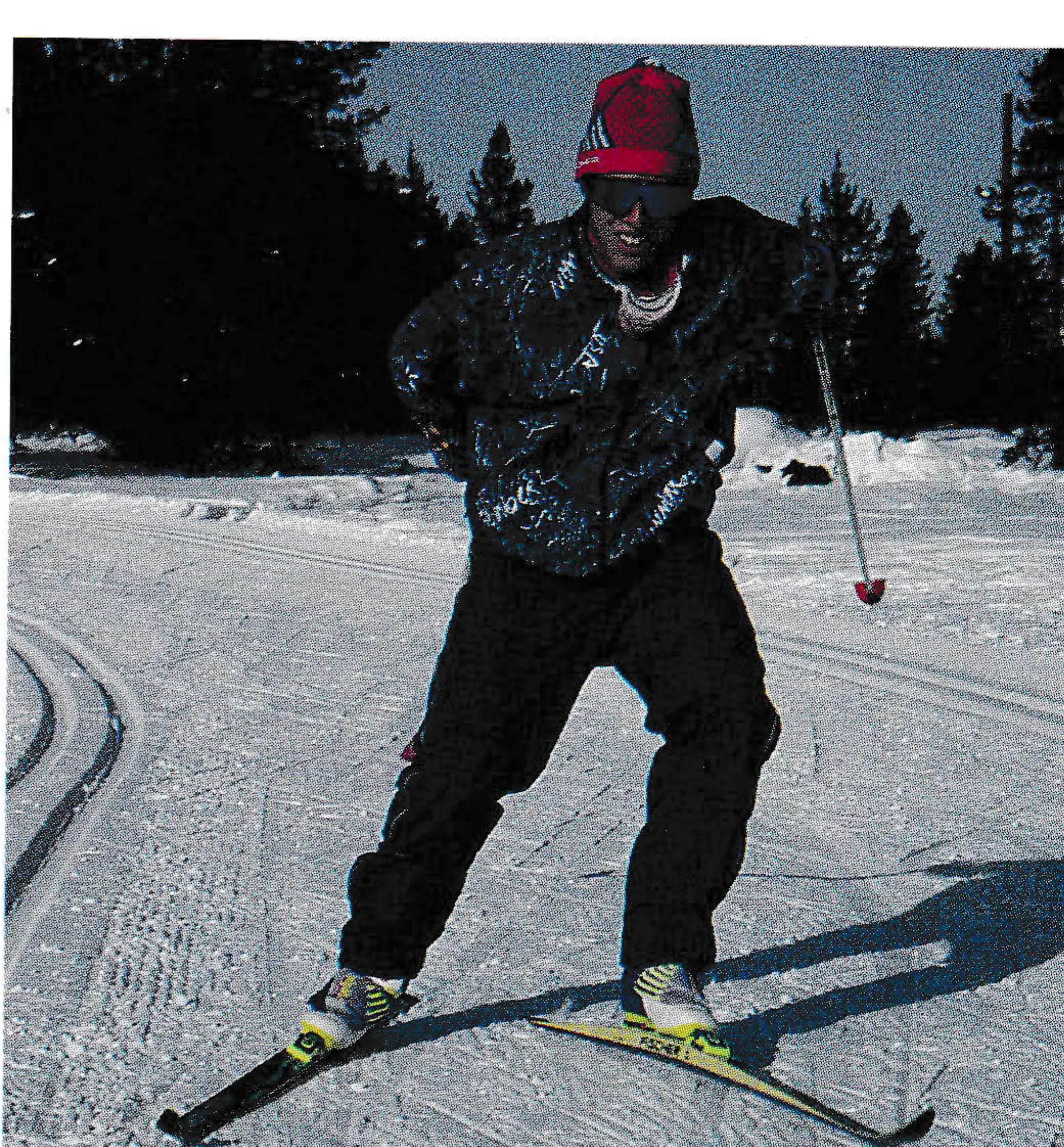
Thus far the Fischer, Peltonen and Rossignol short skis have proven light, fast, lively, maneuverable and surprisingly stable. The Revolution skaters take corners tighter than long skis, even at high speed. They stay close to one’s feet so movement can be extremely precise, facilitating both step and skate turns, and their short stroke makes climbing hills less tiring.
Greg Caracciolo, manager of the Northern Lights shop in Bozeman, Mont., says, “They climb and corner like a four-wheel-drive vehicle with a short wheel base.” Northern Lights’ Doug Davis, a former instructor, says the Revolution is the first skate-ski suited to short people.
Cross country skiing has been difficult to teach beginners because improvement isn’t highly visible in one lesson. The Crown model is a superb learning ski. Above all, it’s easy to turn — even the gliding wedge is simple — and tips and tails seldom cross so many falls are eliminated. Sidestepping, herringbone and the contortion of a kick turn is simple with shorter skis. Getting up is no longer clumsy, because the ski acts almost as an extension of one’s foot rather than a long unnatural appendage. Grip is excellent for skiers who weigh more than 130 pounds and glide is remarkable for non-wax base for people up to around 220 pounds.
From the recreational skier’s perspective, the Revolution’s limitations are being reduced in an expanded line and in competitors’ models. The most serious objection is that lighter people have to exaggerate kick to get good grips. Fischer is introducing a softer camber Crown Lite version next year. Due to lack of surface area, the shorter skis sink in unconsolidated snow, so Jarvinen is concentrating on longer, wider touring models to overcome this problem. Short skis also require a torsionally stiff boot and several operators cited the Salomon 811 as exemplifying the minimum stiffness necessary. The Revolution isn’t long enough for International Ski Federation sanctioned high-level racing, adding to the problem that experienced skiers find it hard to take seriously a ski that’s shorter than their poles.
Some operators and retailers have more subtle reservations about the Revolutions. Paul Mikalauskas, shop manager at Waterville Valley, N.H., says the non-wax model “lends itself very well to beginners, but the skating model is very quick” so he recommends it for more athletic people. Lou Awodey, cross country director at Boyne Nordic, Mich., prefers giving beginner lessons on longer non-wax skis. He’s concerned that timid skiers will sit back, and won’t have a long tail for stability and then fall backwards. He agrees with Mikalauskas that the skating version reacts too swiftly for beginners, especially on crust. On the other hand, Awodey notes that downhill skiers love the skaters, quickly learning to telemark and parallel on them.

Kenny Stannard, owner of Tahoe Donner cross country center, Calif., likes the idea of shorter skis, but says, “They’re not going to take the industry by storm.” He feels the Revolution is too squirrely for first-time skaters, and the Crown version slips on crusty snow, but adds that high-level skaters have been reluctant to try them.
Other informed opinions contrast with these criticisms. Troy Ballard of Sun Valley, Idaho, retailer at The Elephant’s Perch, has found the Revolutions work well in most conditions. Ballard recognizes that the Crown requires good technique on ascents, but says this applies to any classic ski with medium or stiff camber. The skater (their best-renting ski) has been very well received by both neophytes and people struggling with uphill and downhill corners. He concedes short skis “are not a wonder drug that will make you an Olympic competitor,” but believes the skating model is not a ski people will outgrow. (Sun Valley’s Boulder Mountain Tour, one of the Great American Ski Chase marathon series, was almost won on a pair of Revolution skate skis.)
Operator Gene Dayton of Breckenridge, Colo., likes the short skis’ broad range, saying the 147 cm skaters are as stable as 170 cm models, and has committed $70,000 to upgrading to Fischer skis and Salomon boots. He finds the skating model very good in cold snow, less so in soft conditions and concludes that “these skis will get people who never dreamed of skiing into the sport.” All of Breckenridge’s beginning lessons are taught on Revolutions.
Royal Gorge has made the most massive commitment to shorter skis, with 350 pair of Crowns and 50 skaters. John Slouber finds ease in ordering, transport, storage and renting are positive factors, plus the public reaction, is “99 percent extremely positive.” Instructors are “over the moon” about micros, with people learning to slow down, turn and hockey-stop in their first hour on skis. “The short ski movement is here to stay, though it’s going to evolve,” he says. “They’re fun, they’re fast and they remove ‘fear of flying downhill.’ I think area operators are more conservative than the public, who are asking for the Revolutions by name.”
Recreational skiers who have tried the Revolutions are almost universally receptive. Novices comment that short skis remove most of the awkwardness and fatigue from learning. Based on experience to date, over the next few years a genuine problem for rental and retail shops may be to explain why they still carry long skis.