


Associations
Ski area supplier organization formed
In discussing the new organization, Phil Savage, President of Hall Ski-Lift Company stressed its service role. “We feel we can serve our customers better—especially the medium-to-small ones—by providing a market place that is suited to their needs.” Savage stressed that the lift and mountain managers wanted the greatest possible exposure to new technological developments in ski area equipment, and that SASA would attempt to solve this problem. Veteran snow-maker, Joe Tropeano, President of Larchmont Engineering, echoed this thought and cited the agriculture industry as having the same problem of serving customers in remote rural areas. “The big farm machinery manufacturers just couldn’t afford to rely solely on one big trade show. Nor can we in the ski field.”
Joe Avery, of West Mountain Sales, added that the whole industry would benefit from the same sort of standardization of parts that the agricultural trade associations had achieved. “We could save ourselves, to say nothing of our customers, a lot of money and grief by agreeing on some standards for the height of pintle hitches on various towing vehicles. And that’s just a beginning.”
All of the organizers of SASA stressed that the new association would complement the activities of National Ski Areas Association. “That’s an association of our customers,” said Richard Crighton, Marketing Director of Bombardier, “and you can be sure we will be making our association as responsive as possible to their needs.”
In discussing the immediate future, Acting Executive Director, Ann Hasper, said that the first steps would be communications and organizational ones. “A mail survey convinced the ad hoc committee that there was more than enough support to go ahead, so now we must give the association a working organization and get all the lines of communication going.” Ms Hasper said that she expects to be in close touch with all the regional, state and provincial ski area associations to get their input on trade show scheduling and format. “I feel that my four years with NSAA will be useful background in helping our new association to provide maximum service to the industry,” Ms. Hasper added.
It is planned that SASA will be a non-profit organization owned by its membership. Its temporary address is Box 500, North Salem, N.Y., 10560. Telephone: (914) 669-5066.
Aerial tramway engineers form new society
The first annual meeting of the Society of Aerial Tramway Engineers (SATE) was held May 14 at Great Gorge, N.J. First order of the day was organization, and a constitution and bylaws were adopted, officers were elected and committee chairmen were appointed.
The names of officers are familiar ones in the ski field: Robert E. Kinney, president; David E. Fleming, vice president; LeRoy W. Schulz, secretary-treasurer. Equally familiar are committee chairmen Samuel G. Bonasso (constitution and by laws), Victor E. Hall (membership) and Charles F. Dwyer (publicity).
The professional society is technically oriented and non-profit. The objective of the society is “to promote the arts, sciences, standards and engineering practices connected with the design, construction and utilization of aerial tramways and related equipment.”
North American chapter for OITAF
The Rome-based International Organization for Transportation by Rope (OITAF is based on the official Italian name) has never had a full-fledged North American section, though Chuck Dwyer has long been its representative here. This has now changed with the formation of the North American Continental Section (NACS-OITAF), complete with constitution, bylaws and officers. President is Charles F. Dwyer, vice president is Samuel G. Bonasso and Robert Heron is secretary-treasurer.
ARTA holds its annual meeting
The Association of Recreational Tramways Authorities held its annual meeting at Great Gorge, N.J. on May 14.
Thirty-two members and guest attended the day-long meeting, which featured prepared presentations and panel discussions. Topics included lift evacuation, federal-state joint jurisdiction of recreational tramways and accident investigation and reporting.
The Association passed a resolution endorsing use of the current ANSI Code as a guideline for state and federal authorities exercising jurisdiction in the recreational tramway industry.
Lift maintenance seminar in Colorado
The subject was lifts when 108 persons from 35 areas (including representatives from all 32 Colorado areas) met at Vail May 24-25 to hear presentations on bearings, SCR drives, wire rope, lubricants etc.
At the first such sessions in 1972, registration was 42 from 6 areas, according to Jon Phillippi of Vail. “It was a great success,” Phillippi said, “and the presentations were really excellent.
Among those presenting papers were Dave Fleming, Chuck Dwyer and Aubrey Knight. Several lift manufacturers attended, as did experts from gear, bearing and lubricants companies.
Slope maintenance demos planned for Sugarloaf meeting
Plans for the NSAA mid-winter meeting at Sugarloaf, Maine, January 14-17, were laid in June by a committee chaired by Ed Lougee, mountain manager of Waterville Valley, N.H. Extensive snowmaking and tracked vehicle demonstrations will form the core of the meeting.
Vehicle demonstrations will take place on the Buckboard trail, which ends at a condominium complex where each vehicle manufacturer will probably have a ground-floor headquarters.
Plans call for seminars during the first part of the morning, with vehicle demonstration by appointment during the rest of the day. The evaluation cards used at last year’s Snowbird meeting will be discontinued.
Snowmaking will probably be done at night at the beginner’s slope immediately in front of the base lodge. Each manufacturer will have approximately one acre on which to make snow. There will not be a competition with “official results.” Rather, each manufacturer will demonstrate his equipment as he sees fit. The location and the demonstration time for each will be drawn by lot.
The seminars are being planned by and for “nuts-and-bolts” men: the mountain managers and key supervisors. Furthermore, they are being geared to be of special value to the smaller ski areas.
The probable schedule will call for the slope maintenance activities to dominate the first three days, with the NSAA general meeting taking place on the fourth day, Thursday.
Correction
In our coverage of the new ANSI Tramway Code (Spring issue, Page 82) a seriously incorrect “not” got into one paragraph. We re-state the whole paragraph correctly:
3.4.2 Wire Rope Inspection. The former requirement of an annual inspection of the wire ropes by a special inspector has been deleted. Such an inspection will be required following any accident affecting the possible integrity of the rope or upon request of the general inspector. Annual general inspections are still required.
Area Roundup
Colorado areas announce expansion
Broad expansion plans were announced by almost all Colorado resorts. An abbreviated list includes: Crested Butte revamping entire base area, plus constructing 1,000 new condominium units . . . Wolf Creek, recently purchased by Ben Pinnell Investments of Dallas, Texas, announced long-range plans to move base area 1½ miles east, and construct nine double chairs, the first slated for 1974 . . . Sunlight, located near Glenwood Springs, will add a third double chair this summer . . . Copper Mt. will add two new chairs and six new trails. Over $20 million in building will be done this summer in the base area . . . Keystone adding major new trail to connect Schoolmarm and Paymaster; also extending snowmaking . . . Telluride adding 15 new trails, including one called “My God” which they claim will be one of the steepest in the country.
Expansion plans for Utah ski resorts
Under construction at Park City, Utah, this summer are 132 new condominium units along the main road leading to the entrance of the resort. Completion is expected by the end of the year.
In addition, a triple chair with bullwheel loading plus two pomas are scheduled for summer construction.
The triple chair, Utah’s second, will open up new terrain below the Prospector lifts in Thaynes canyon. The lift is 4,960 feet in length, and rises 1,245 feet.
Alta plans to replace its Collins chair, a venerable single chair, with a double chair that will be one-third longer, and which will stretch 4,240 feet up to a ridge between Aggies Alley and Main Street.
Summer ski camps have snow troubles
Poor snow caused quite a bit of trouble for some summer ski camps. The Jackson Hole camp, for instance, was moved to Mammoth, and the camp at Targhee in Idaho cancelled its second section because of snow conditions. Summer snow in Montana was the poorest in years, but the Red Lodge and Cook City camps both operated successfully.
Colorado areas in deep powder finale
Most Colorado ski areas closed out the season in the third week of April with record amounts of snow that ranged from 145 inches at Wolf Creek to “only” 71 at Winter Park.
Of the fourteen ski areas open two days before closing, all listed powder conditions in their reports. Never, in recent history, has a season ended with such superb snow conditions.
Many area operators admitted that they could have remained open until June, but that a fast-dwindling number of skiers after April 1 didn’t justify it.
In a related incident, a Gunnison, Colo. man filed suit seeking an injunction to keep Crested Butte operating until April 22, a week after its closing. He claimed, on behalf of all season ticket holders, he wasn’t getting full benefit from their tickets. He asked for damages in the amount of $49. The court denied the injunction.
Marketing
Big Sky makes Watergate scene
The ski area industry finally make the Watergate inquiry. John Dean testified that when Chet Huntley was in disfavor with the administration, word went out to the Interior Department to make things difficult for the Big Sky project. Later, when Huntley was back in favor, Interior was allegedly given the signal to help Big Sky.
Area groups plan fall marketing
The Ski The High Sierra Association—composed of Squaw Valley, Alpine Meadows, Northstar, Ski Incline, Heavenly Valley and Kirkwood—will be featured jointly with the Ski the Rockies group at consumer ski shows this fall. United Airlines plans a booth near the middle of each show, with adjoining booths for the Sierra and Rockies groups. Utah resorts will be included with the Rockies this year.
NASTAR enjoys biggest year
Despite poor snow conditions in many parts of the country, nearly 80,000 runs were logged on NASTAR courses by the 81 participating areas.
Aspen Highlands led the pack with 3,337 racers, but equally impressive was the fact that 20 areas topped the 1,000 mark. Indianhead, Michigan, which had earlier hosted the first midwest pace-setting trials, boasted the greatest number of races held—51.
A spirited competition developed also between the first-year NASTAR areas as to which would win the Doral incentive award for that class. It was a fight to the end, with the top five all in the 1,000 class. Keystone eventually won, but without the early closing to which runner-up Loon was forced, it might have been closer. In any case, Loon’s Larry Cox treated himself to a trip to the finals anyway to give his Keystone rivals a personal handshake.
Area management studies in Ontario
A new graduate program in ski area management has been announced by Humber College, Rexdale, Ont. The program is designed for graduates of two years of previous study in recreation, or persons with three years of experience in the ski industry.
Developed in cooperation with, and endorsed by, the Ontario Ski Resorts Association, the program will train graduates for ski area management positions.
“In the next five years it is expected that some 200 positions will be available as Ontario ski areas develop into year-round operations,” noted Gordon Wragg, president of Humber.
Areas bidding for 1978 Championships
Heavenly Valley will make a presentation at a September meeting of the U.S. Ski Association board in its bid to be named the official U.S. candidate for the 1778 FIS World Alpine Ski Championships, according to that resort’s president, Hugh Killebrew.
Jackson Hole, Wyo., previously had been selected by the USSA’s executive committee, and is still in the running for the events. A sharp exchange between Heavenly Valley’s Hugh Killebrew and Paul McCollister, of Jackson Hole, at the NSAA convention suggests there will be plenty of competition for the championships.
Meetings
New direction for U.S. Ski Team
As predicted in Spring SAM, the U.S. Ski Association Board of Directors voted to turn over direction of the U.S. Ski Team to the U.S. Ski Educational Foundation. The significance of the vote was to place amangement and control over both Alpine and Nordic “A” “B” ski teams into the hands of a special purpose group of trustees interested only in the progress of the ski team, and not with the varied functions of USSA.
An affirmative vote of 21-7 to transfer management to USSEF came after almost a full day of debate. Chief architect of the shift was former USSA President, Charles Gibson. Support for the proposal was expressed by Bradford Briggs, President of USSEF and Publisher of Skiing Magazine and by former skiing great Tom Corcoran, President of Waterville Valley.
Composition of the 25-member USSEF Board of Trustees incorporates a 60-40 ratio of “insiders” (USSA-oriented) to “outsiders” (representatives of fund raisers and ski industry groups).
Named to the Board during the convention was Bill Janss of Sun Valley. This means no less than four area operators are trustees: Pete Seibert, Gus Raaum, Tom Corcoran and Janss. In addition, Corcoran was appointed to serve as chairman of the International Alpine Committee.

The proposed budget for 1974 submitted by USSEF at the end of the four-day USSA convention set expenses and income at $775,900—an increase of about 11 per cent over last year’s figure. Alpine and Nordic expenditures reflect a continuation of the 60-40 split of the budget.
The largest source of income in the USSEF budget—supporting committee contributions estimated at $277,000—reflects an increase of over $50,000. Said J. Negley Cooke, USSEF Trustee and chairman of the powerful New York committee, “the surface hasn’t been scratched.”
Funding pushed for ski team training center
In a related move, a million-dollar rund raising effort by the National Ski Education Center, Inc. was launched in June to raise money for the U.S. Ski Team National Training Center located at Park City Resort, Utah. The National Ski Education Center, Inc. (NSEC) is the governing body for the training center.
Overall though we can begin operations with less, we are going to have to raise in cash or in kind, something in the neighborhood of a million dollars,” said Edgar Stern, Board Chairman of Park City Resort. “We are asking for furniture, kitchen equipment and photographic equipment in kind. But we also need cash.”
According to Jack Brandon, project coordinator, promises and gifts have already been received. Thiokol pledged an over-snow vehicle, John Deere offered four vehicles for cross-country trail packing and other purposes and Johns-Manville is contributing salaries for NSEC president Willie Scheffler and Jack Brandon.
Among those on the NSEC Board are Edgar Stern; Johns-Manville president, Dick Goodwin; Lehman Brothers president, Warren Hellman and several prominent figures like Lowell Thomas, Jesse Owens, Robert Redford and Missy Chandler. “I believe the training center is gonig to mean a tremendous amout to the ski team,” says Stern. “It’s amazing that they have produced the results they have in spite of the way these kids have had to kick around the country.”
Designed to house over 100 racers, coaches and staff when completed, the center will also have gym facilities, equipment rooms with work benches, audio-visual equipment and office space. Plans also call for construction of ski jumps, lift-serviced slalom and GS runs as well as a network of cross-country trails.
The training site is expected to operate on a year-round basis, with regional and divisional ski teams taking over when the U.S. Ski Team is travelling. Ski industry groups will be invited to conduct meetings and seminars at the site as well.
to the regional office in San Francisco and became his agency’s liaison officer to the Organizing Committee. Subsequently, the Forest Service established its first Regional Division of Recreation and put Davis in charge, a position he has held ever since.
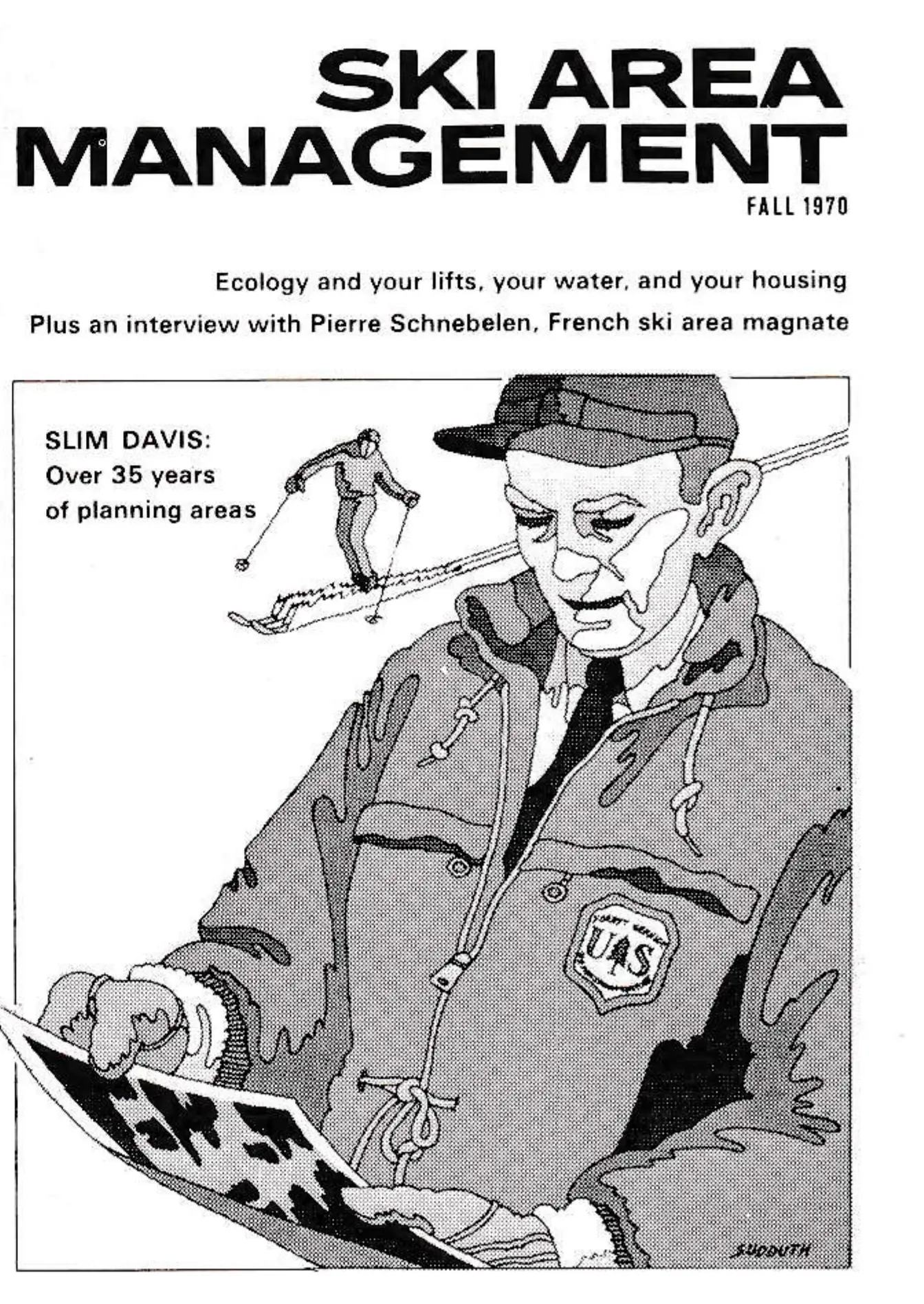
“My career spans a period in which ski area development in the U.S. blossomed out rapidly, and gave me an opportunity to play a part in it,” says Davis. “Loveland and Arapahoe were among the first; Kirkwood in California was the last. There are many in-between. It was just a matter of time until these self-supporting public recreation areas would see the light of day anyway, but one of the rewards of my years in the Forest Service came from being able to get the wheels turning.”
OSRA elects new president
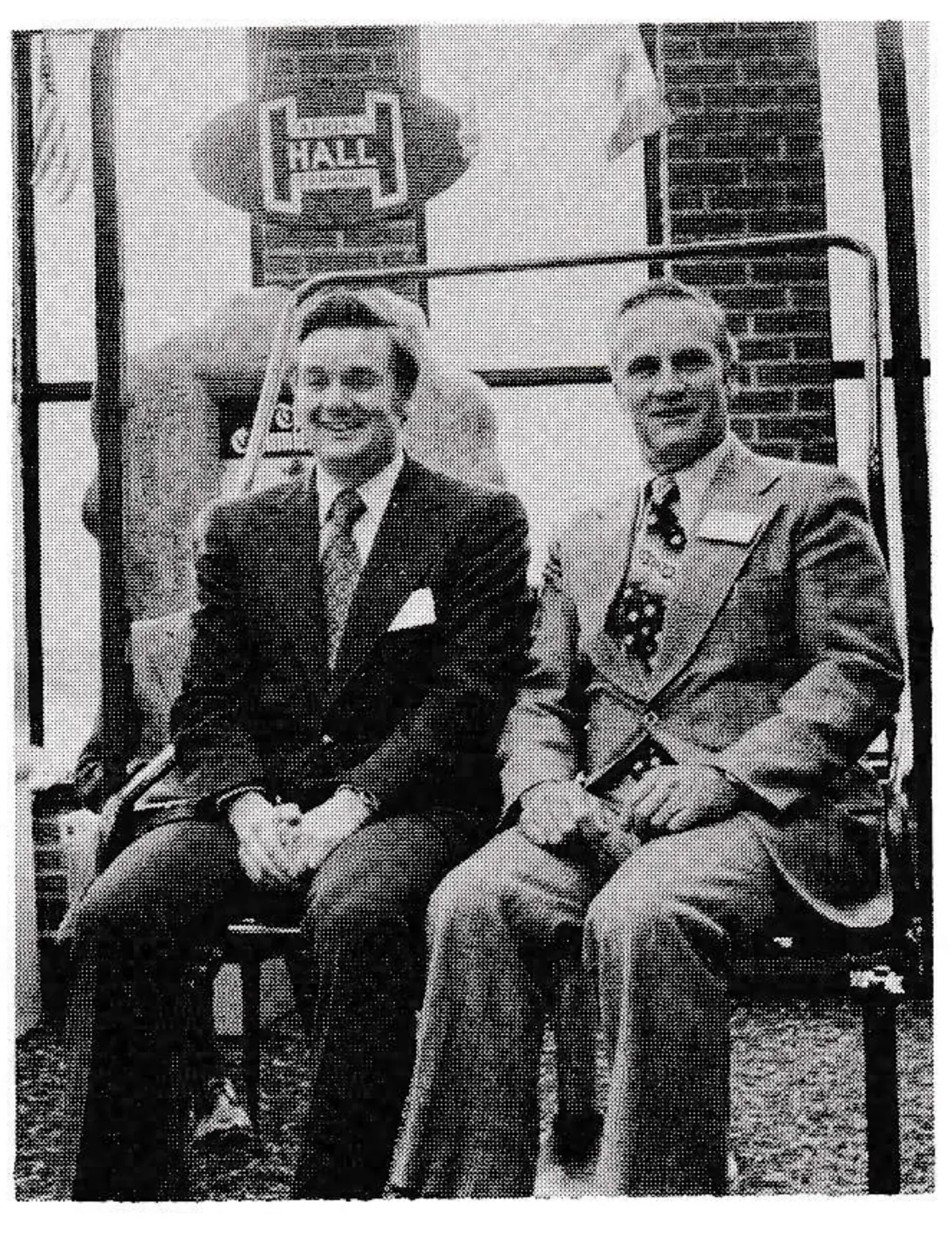
“Seven years ago, when I attended an OSRA meeting for the first time, they nearly threw stones at me,” the new president said, reflecting the not unfamiliar feeling toward municipally and federally owned ski areas. His high-volume, skier-making area now is a valued member of this lively organization consisting of 79 areas and 30 associate members.
At what appeared to be a 48-hour non-stop meeting, OSRA established an insurance program for its members, launched into several consumer-oriented ski promotions, gave lengthy time and direction to the Ontario government in its skilift inspection and recreation development and tourism activities.
The association also gave full time to amateur ski organizations — usually prefacing these introductions with a good-natured, “How much money do you need?”
Past president, Lloyd Edwards, of Valley Schuss, was designated OSRA board member to represent the interests of the associate (supplier) members.
Calvin Gunn, of Slide Mt., Nev., has been elected president of Sierra Ski Areas Association, succeeding Jay Price . . . P. J. “Jim” Moore has been made vice president and general manager of Jay Peak, Vt. . . . Steve Knowlton has resigned his position with Colorado Ski Country USA to become marketing director of AIRCOA Resort Inns . . . Joe Kohler appointed assistant to president at Windham, N.Y. . . . Ed Schenck, general manager of The Big Mountain, Whitefish, Mont., received a special Certificate of Merit in June from Governor Judge honoring his services to Montana skiing . . . Doug Shelton appointed operations manager at Winter Park, Colo., and Jack Buchheister named mountain manager. Winter Park’s business manager, Morris Long, also becomes comptroller.
Marketing
How to get a PR break
Usually a very limited budget need not prevent an area from getting a lot of press. A little imagination and public relations can often result in an amazing amount of advertising with little or no cost. So says From Instructor to Instructor, a lively newsletter put out by the Rocky Mountain Ski Instructors Associations.
They illustrated their point by citing how Jim Isham of Copper Mountain, Colo., handled things.
It seems that Copper had a grand opening this past season, and that Colorado Governor Love graced the affair with his presence. The Governor looked over a GS course that Isham had set, and having refined his technique under RMSIA auspices, felt no hesitation about running the course. The Governor broke his ankle.
“The cost to Jim Isham was minimal,” deadpans the instructors’ newsletter; “and the publicity was excellent. See what you can do with a little imagination?”
Telephone count measures growth
An item in the Colorado Economic Review points to the impact of a major ski area on the economy of what otherwise was just another picturesque county in western Colorado.
“A good indicator of changes in economic activity is the number of main telephone customers,” the report stated. “In November 1971 Routt County had 4,100 customers; a year later it had 5,025—close to a 23 per cent increase in one year.
“Similarly, for the town of Steamboat Springs, November 1971 customers numbered 3,029, and by November 1972 they totaled 3,854.
“A study conducted by the Federal Reserve Bank of Kansas City covering the economic impact of the Steamboat Springs Ski Area on Routt County indicated that there were about 150,000 ski visits made to the area by non-county residents in the 1971-72 season. Adjusting for total costs and profits, Routt County received some $360,000 in community incomes from lift tickets alone. When extras such as meals, equipment rental and clothing are added, the researchers estimate than an additional $4 million accrues to the Routt County income per year.”
Skier travel by air is on the upswing
Approximately 2,500 persons are arriving in Aspen via the Aspen airport on busy weekends during the ski season, according to figures released by Aspen Airways and Rocky Mountain Airways.
Aspen Airways reported that on a good Saturday in February, 1,573 skiers flew from Denver to Aspen. About the same number flew back to Denver the next day. Rocky Mountain Airways reported about 200 persons flying into Aspen from Denver on a busy Saturday. According to an airport spokesman, an additional 200 to 300 people fly into Aspen on private planes each Saturday.
United Airlines reported “fantastic” success for its Snowbird flights, which take skiers from East and West coast cities to Grand Junction, Colo., where they can board buses for Aspen or Vail.
The airline reported 4,249 skiers used the flights in December 1972 compared to 3,102 for the same period in 1971. The figures for February showed 6,279 in 1973 compared to 5,349 in 1972.
Ontario sets study for future ski area growth
A massive research project on Ontario skiing has been launched by the Ontario Ministry of Natural Resources. The study is being conducted by the engineering firm of Marshall Macklin Monaghan Ltd. of Toronto.
“What we’re doing, in effect, is taking a complete inventory of skiing,” says Bill Longden, project co-ordinator.
Phase 1 of the two-phase study will study Ontario skiing as it exists today, and how it grew to that point. The second phase will study future growth potential, and an evaluation of the 215 sites that the department has designated as potential ski areas. Most are on land owned by the province.
“It isn’t the government’s intention to get into the skiing business in direct competition with private skiing organizations,” said Resources Minister Leo Bernier, “but rather to determine what guidelines should be adopted for the future development of the skiing industry.”
Supplier News
Thiokol names Olson GM of Logan Div.
Owen B. Olson has been named general manager of the Logan Division of Thiokol Chemical Corporation, J.S. Jorczak, group vice president, announced today. His assignment is effective immediately. Thiokol’s Logan Division, located in Logan, Utah, is a manufacturer of tracked vehicles and ski lifts, and potato harvesting equipment.
Mr. Olson has a broad background in all aspects of plant management and control. For the past ten years he has been with Mack Trucks, Inc., Hagerstown, Maryland, where he served as manager of manufacturing engineering, executive assistant to the plant manager, and manager of production and material control. Earlier management positions in his career have been with Chrysler Corporation, Ford Motor Company, and General Motors.
Kissling service announced for east
Trisearch, of Montreal and Waitsfield, Vt., have announced an authorized service arrangement for eastern North America with L. Kissling AG, of Zurich, Switzerland, manufacturers of Kissling gears. Trisearch will offer factory-trained servicemen for field work and preventive maintenance, and guaranteed repairs with factory parts will be done in their new factory, according to a Trisearch spokesman.
Sno-engineering moves to environmental studies
Sno-engineering, the New Hampshire and Colorado-based ski resort planning firm, has recently moved into the field of environmental studies, according to James R. Branch, president.
Headed by geochemist Joseph Cabaup, the environmental staff focuses on the three interrelated fields of hydrology, geology and soils, and biotic ecology. S-e’s new in-house laboratory in Franconia is supplemented by a portable field lab capable of being moved to remote locations.
Our field work consumes far less time with the advent of our portable lab,” says Branch, “and most analysis work can be reported back to the client in about two weeks time.”