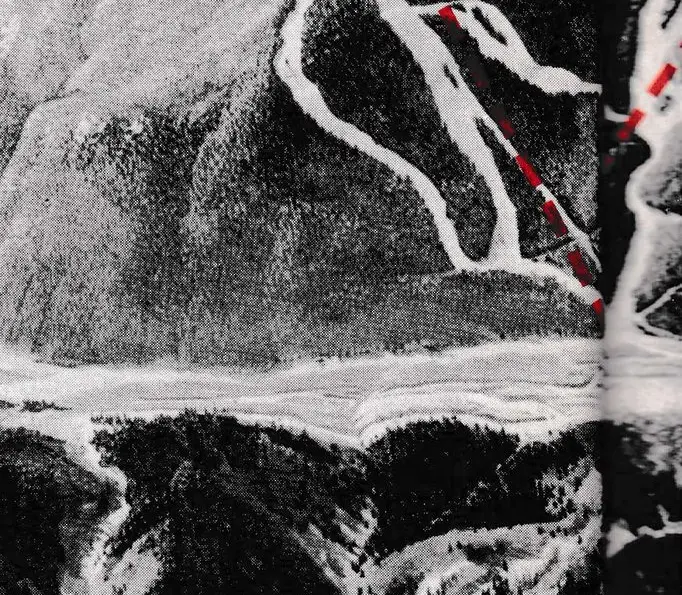
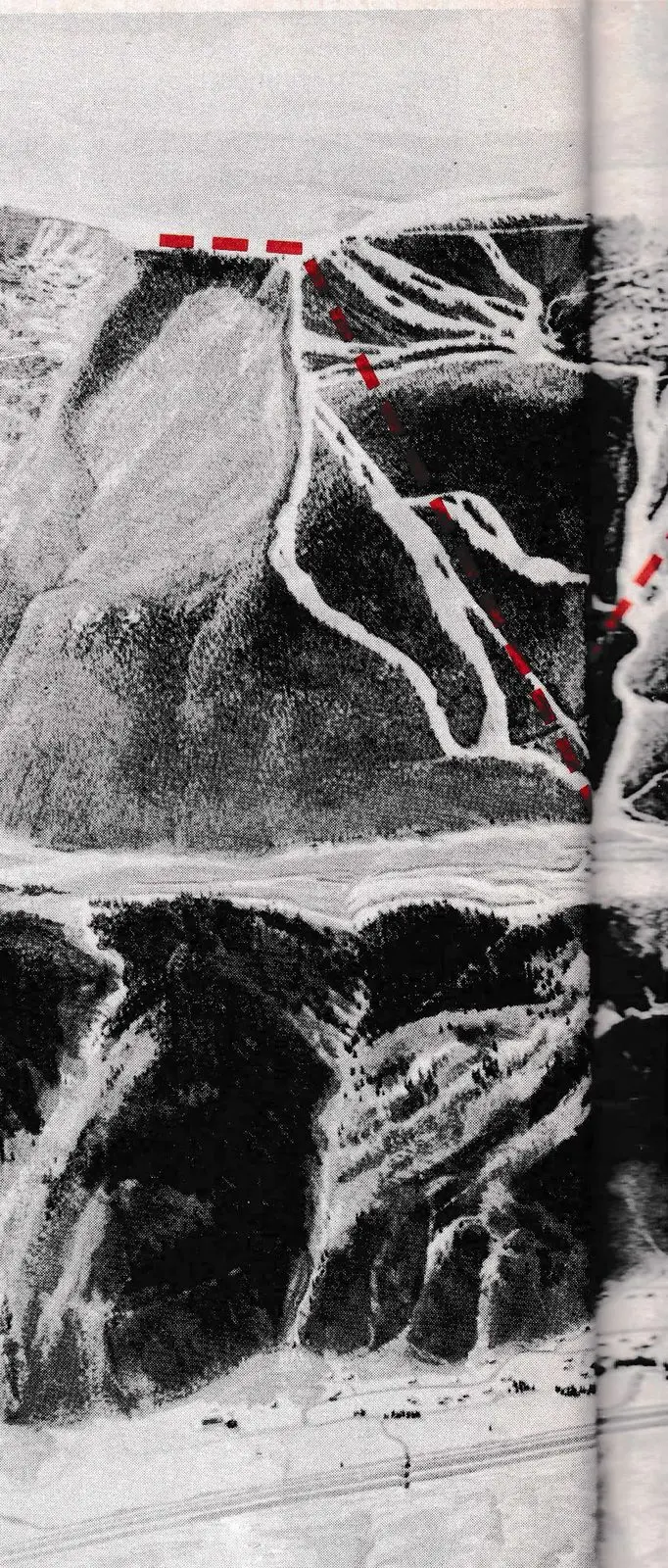
The cynical rejoinder from some of Vail’s seasoned mountain managers might have been: “with a big crystal ball and a lotta dart throwin!” But in actuality, behind Vail’s apparent $40 million gamble, was a carefully orchestrated planning process, the basic elements of which can be used by any ski resort manager to plan the renovation, upgrading or expansion of facilities.
What was the Process that led to Vail’s $40 million decision? It followed five distinct steps.
Step One: Self-Examination
It is a rare ski area manager or management group who take sufficient time to carefully define their goals and objectives before launching into the next project or the next operating year. Yet, this is where one should start if an expansion or renovation program is to fulfill its purpose.
A good way to structure this Process is to gather your key managers in an informal, free-wheeling, two-day session, in a not-to-be-disturbed environment. They should ask each other challenging questions about where your resort is headed and what it can accomplish with an expansion program. Here are some of the kinds of questions we asked at Vail:
What kind of product do we want to offer the public within a given set of financial parameters? What should our product look like after the proposed expansion? The answers to these questions should take the form of a series of project goals addressing a variety of issues including anticipated return on investment, customer service levels, product image, market position, quality, capacity and equipment-replacement criteria, customer and employee safety, community support services, summer mountain utilization and so on. You may be surprised at the levels of consensus managers reach as you begin to set project goals.
Having established some broad goals, are there specific, measurable criteria we can set as objectives towards implementing these goals? For example, lift line waits of a certain duration, slope skier densities, accidents per thousand skiers, down-time Per hours of lift operation, revenue per skier, restaurant seats per skier, etc., all measureable factors.
Against the goals and objectives established in our session, what are the obvious and immediately-apparent deficiencies in our plant and operation? Different departments will have differing ideas about deficiencies. Don’t try for a consensus here, just collect the raw data as input for the research phase to come.
What are our customers and employees saying about the resort? At this point, we’re talking about informal feedback, not research. But surely you and your managers have a Pretty good feeling for the local “scuttlebutt,” even if you don’t like what You are hearing.
What’s our competition doing to expand facilities, increase capacity or enhance quality? In other words, are we going to have to “keep up with the Joneses,” in order to stay competitive?
What is our current ability to make some changes and solve some problems? What can we afford to do? Having asked these tough questions (and presumably received some equally tough answers), the prudent manager will want to validate his findings with a broader audience before initiating any extensive improvements. At Vail, we launched a two-pronged external and internal research effort, designed to elicit specific feedback on issues that had been identified in the initial self-examination Phase.
Step Two: Customer Research
In Vail’s case, the research program was assigned to an experienced Colorado recreation research firm, Rosall Remmen Cares of Boulder. But resorts whose budgets are more limited can do equally valid research, literally on a shoestring, if they follow the suggestions outlined later in this section. The important point here is that it is well within any resort’s capabilities to conduct meaningful customer research, so long as they have clearly defined goals and developed the right set of questions to ask customers.
At Vail, Step One had identified several problem areas that cried for attention. So our research questions were structured to focus on these areas. For example, we asked the respondent to:
- Rank the importance of six potential generic improvements (i.e., reduce lift line waits, expand terrain)
- Rank the importance of 10 potential specific improvements (i.e., new mountain restaurant, increase out-of-valley lift capacity)
- Choose between alternative courses of action (i.e., build a new gondola or build two new chairlifts)
Rosall Remmen Cares incorporated these questions into a questionnaire which was administered on the ski slopes to 750 skiers. Another was distributed to (and a high Percentage completed by) Vail Associates personnel, Town of Vail officials and staff and a broad spectrum of residents.
Still another research direction was taken with a series of focus-group interviews conducted among both local and regional residents. This provided a double-check on the survey findings through face-to-face questioning with a knowledgeable Public.
The value of this kind of in-depth research effort cannot be overestimated. Vail discovered that its customers and employees had clear-cut ideas about every aspect of its operations, strong feelings about safety and quality issues and a host of specific suggestions on correcting a variety of perceived operational shortcomings.
But is this kind of research really possible for resorts with limited budgets? There are several avenues to explore in order to get such research.
One is a cooperative effort with a nearby college, university, business or technical school. Faculty members who teach marketing or other statistical research methods frequently welcome an opportunity to assign a real-life research problem to students. And, your ski tickets can provide an attractive, low-cost compensation for student researchers and faculty alike (valid, of course, only after the research is completed).
Or, the resort manager may discover that he already has research-trained people on his staff. Many marketing or business graduates filling ski area positions have the know-how to structure a simple survey, conduct a random liftline sampling or orchestrate a focus group interview. All it takes is identification of such resources and the time and money to accomplish the task.
Another potential lies with the resort’s advertising agency. A manager should be able to convince his account person as to the value of customer research and how it can enhance the agency’s own ability to market his products. The cost of such a project should reflect the cost benefits that will accrue to the agency, as well as to the resort.
What can a resort expect to learn from such a research program? In Vail’s case, some of the results were startling:
- The public’s prioritization of needed improvements was sometimes markedly different from that established by staff. Customer opinion actually helped to swing a $4 million versus a $2 million decision. Their comments indicated a preference for a less costly detachable quad with a Plastic shield over a more expensive gondola!
- The public’s wants and needs in the food and restaurant area proved to be simpler and less expensive than Vail personnel had assumed.
- Research results identified substantial problems outside the bailiwick of the ski company, which were communicated to the appropriate municipal or commercial entities.
- Customer confirmation of staff concerns was decisive in presenting a case for needed improvements to corporate ownership.
- Employee and local participation in the research produced an unexpected dividend in the form of improved employee morale and enthusiasm in the community.
- The fundamentally subjective findings from the focus interviews, essentially corroborated objective survey results, but the added dimensions of emotion and personal conviction expressed by the interviewees brought dramatically home to staff persons the importance to the customers of some of the product quality issues uncovered in our research.
Step Three: Research in the Field
One extremely valuable step we took at Vail proved crucial in the final decision making process. The planning and management group took trips to other ski areas and visited manufacturers to become fully acquainted with state-of-the-art lift, restaurant, ticket-sales and other types of equipment. The group discovered that there is nothing quite as effective as actually seeing the latest equipment in action to jar one’s thinking out of traditional patterns.
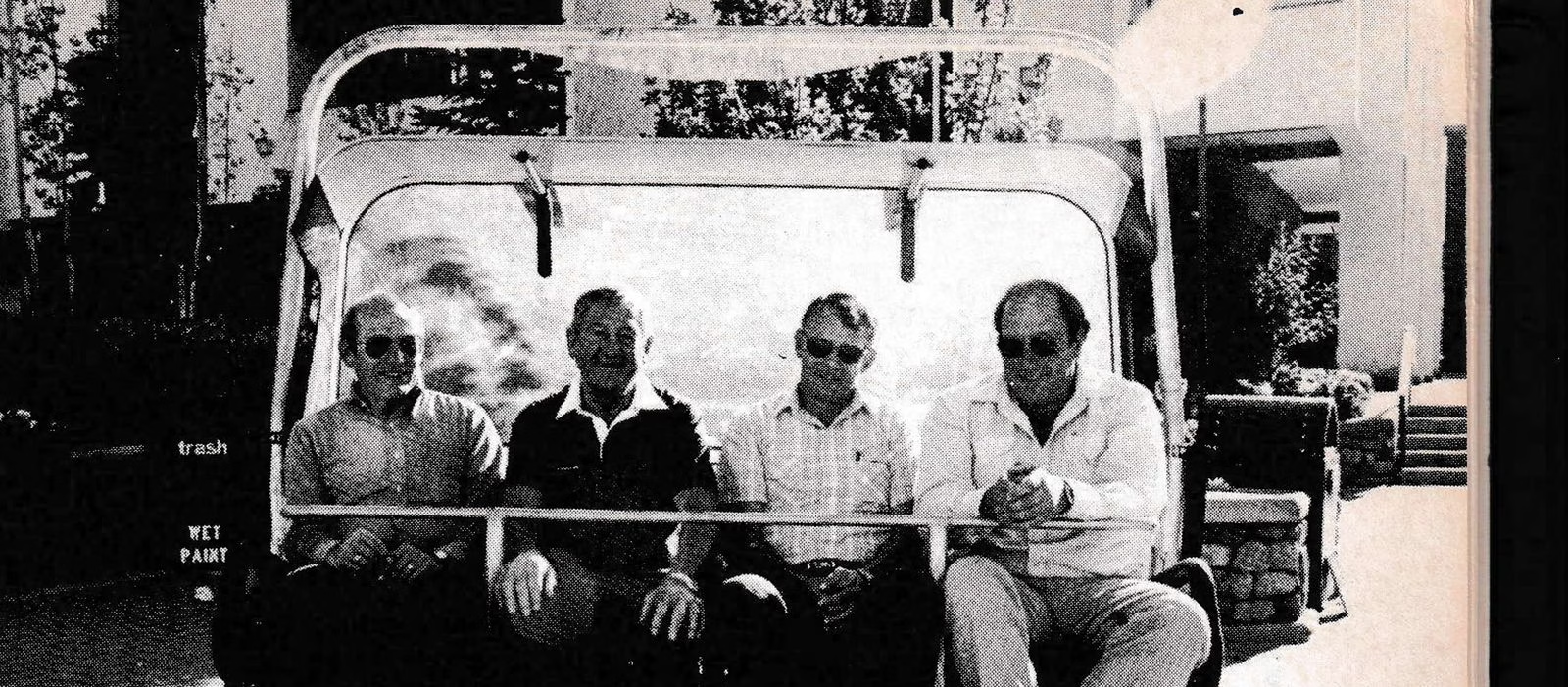
The results of Vail’s excursion into the field were extremely educational and significant. For example, compared to what we were used to in the U.S., the new European lift technology has reached a surprising level of maturity in both design and operation. We observed new types of equipment, such as the plastic domed quadchair Vista Bahn which proved to exactly fit our requirements. We obtained a myriad of operational insights in automatic ticket systems, restaurant equipment and design, automatic signs and information systems and other facets of the business. We were surprised and impressed by the extent of capital improvements being made by competing resorts. And, perhaps most important, the experience proved an eye-opening, preconception-shattering one for members of our management team.
Though the Vail group went to Europe, few resorts can afford that luxury. Fortunately, there are several resorts in the United States where new generation equipment is installed and operating. Some lift suppliers organize low-cost trips to show operators the machinery in action. And, of course, national and regional NSAA shows provide convenient and concentrated showcases for new equipment.
The importance of field research is that most of us in the ski resort business, who are tied to our mountains seven days a week, 50 weeks a year, tend to become myopic about new concepts in deisgn, equipment and operations.
Step Four: Mountain Planning
Planning for an expansion may or may not involve major changes in a mountain master plan. In Vail’s case, we decided to take a fresh look at the whole plan and as a result found ourselves adopting a set of radically new planning assumptions for the Mountain. These new assumptions came in part from what we had learned from our research about our customer’s changing attitudes and in part from the availability of a new generation of lift equipment.
The procedure followed in updating the master plan, short of making the final decision, included the following steps:
- Scoping the regulatory requirements with the Forest Service.
- Preparing a statement of goals and objectives utilizing input from the self-examination phase. This included a tentative list of quantifiable quality, capacity and other criteria.
- Developing an as-built inventory of all facilities on the mountain, with their capacities and utilization rates.
- Updating existing mapping (based on facility inventory), utilizing 400 scale maps with 25 foot contours for maximum accuracy.
- Identifying product deficiencies and then establishing tentative priorities for dealing with them. (Utilizing input from the research phase.)
- Developing draft new-development scenarios and preparing map overlays describing these scenarios. (Utilizing equipment input from the field research.)
- Developing financial models relating to the various development scenarios.
- Reviewing and critiquing draft development and financial models with Forest Service, community, county and state officials, mountain staff and management.
What were the significant elements of this process that helped Vail make a $40 million decision with a reasonable degree of certitude?
Initially, the statement of goals and objectives proved extremely valuable as a yardstick against which each development scenario could be measured. If a proposed design did not meet quality, capacity, safety or reliability criteria, it never reached the development scenario stage.
The capacity and utilization rate inventories allowed planners to accurately pinpoint deficiencies that had been identified subjectively by customer and employee research.
The updated mapping Provided a dependable data base with which to plan new facilities.
The various scenarios presented as map overlays, with accompanying capacity and operational data, proved to be extremely flexible, understandable and tangible tools for the management group decision-makers who were not professional planners.
Finally, the community review Process provided corroboration for the planning steps taken by the company and positive publicity for the final development decisions.
Step Five: Summary and Synthesis
As each of the preceding four steps is completed, you will have accumulated an impressive mass of data. Your next task will be to summarize the results of each segment, then consolidate these summaries into a recommendation report to management or into the summary forward to the Master Plan (if you are involved in updating your plan).

At Vail, we developed several summary documents that proved very useful in the final report. Among these were charts which displayed how our various respondent groups ranked proposed improvements, and the percentage of the total sample choosing each rank. This provided at a glance the results of the scientific survey process displaying, in effect, “the people’s choice” with respect to each proposed improvement. We compiled selected relevant verbatim comments from respondents to the focus group interviews in order to help management understand the depth of human emotion and conviction behind our customers’ ideas about our facilities.
Other charts ranked Vail’s services with those of other ski resorts. These gave a cogent reminder to management that the competition was doing some things better than Vail.
Spread sheets compared the technical specifications, capacities and costs of various equipment alternatives. Budget projections compared several development scenarios, providing management an opportunity to play financial checkers with the various proposed alternatives. Map overlays depicted proposed alternatives with charts describing lift, slope and restaurant capacities represented by each alternative. Slides and video tapes from field trips provided “live” depictions of various equipment in action.
Step Six: Decision Making
Development decisions of any financial or physical magnitude are never easy. But the foregoing process makes it substantially easier for a resort manager to arrive at expansion or renovation decisions.
Through self-examination you have involved managers in the decision-making process. This should result in an internal consensus regarding the final decision or, at least, the employee’s understanding and tacit support if the decision doesn’t go his way. Through research, you have utilized your customers as a planning resource and elicited information about your products, strengths and deficiencies.
By venturing into the field you have, momentarily at least, taken off your business-as-usual blinders and infused your thinking with new ideas and methods relating to the problems facing your resort. Through revising your master plan, you have developed a detailed data base, a more accurate understanding of your product and an array of viable alternatives to help in the final decision.
Through summarizing and synthesizing the results of the preceding steps, you can simplify decision-making by marshalling all the pertinent facts and arguments into a brief but cogent document. This presents all the viable options available, given your current financial and operational posture.
Now that you’ve reached this point in the process, the decision is up to you and your owners. It should be a better decision, because you’ve given it your best shot.
By the way, you can throw away those darts.
Short-Term/Long-Term Planning
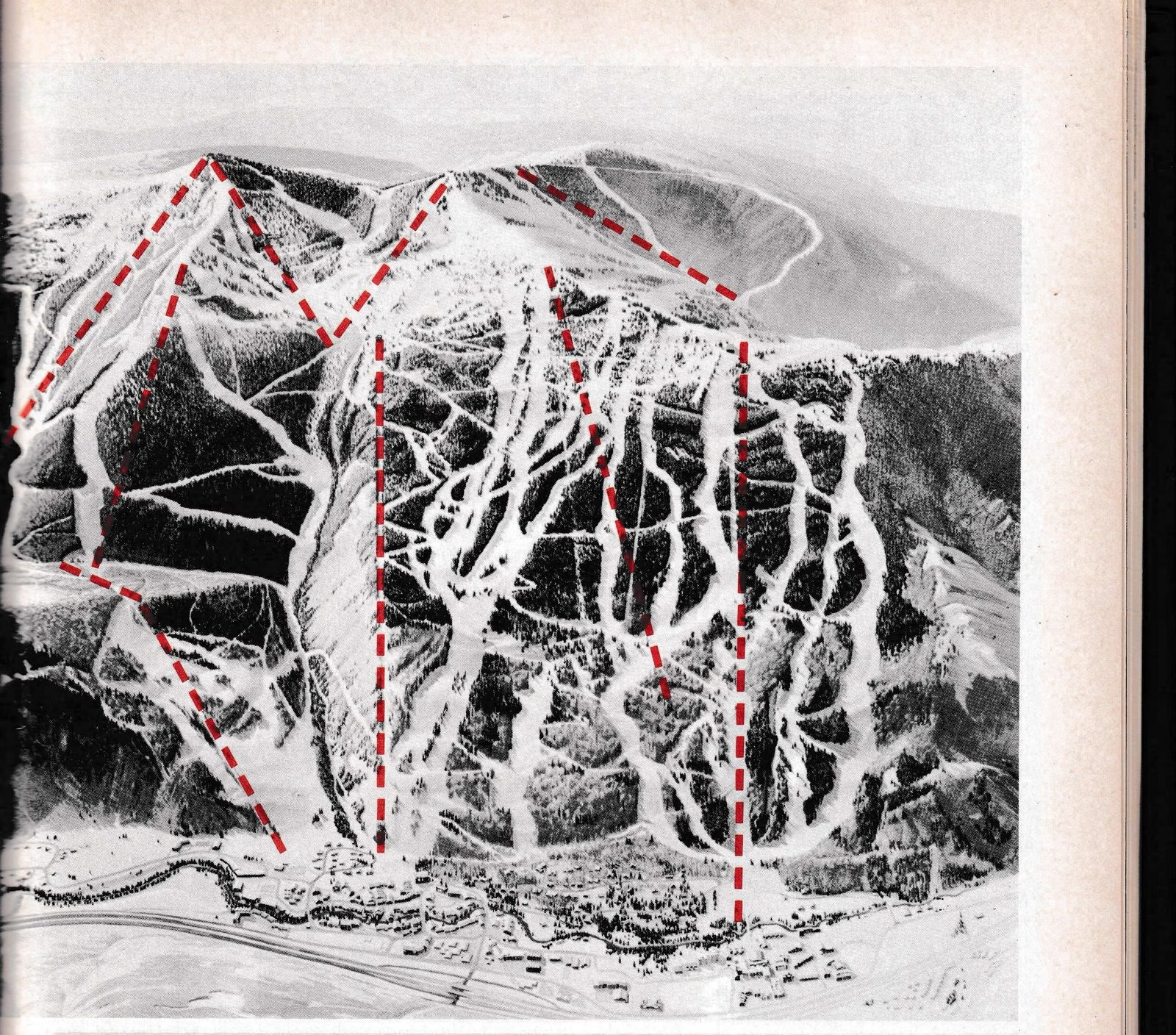
The massive Vail expansion program bringing in nine new detachable quadruple chairlifts over five to seven years and increasing the uphill capacity by 75 percent surprised many people. The cost alone — some $40 million — could be questioned in this giant overhaul. Couldn’t triples have done the job as well, many asked.
“This state-of-the-art equipment solves near-term and long-term problems, so it is a better investment,” said Bob Parker, author of this article and senior vice president of Vail Associates. “It’s the kind of investment that the U.S. steel industry should have made 25 years ago — before the Japanese and other countries built the most modern plants and beat them in their own business.”
Parker explained that the reasoning behind Vail’s critical decision was based on these factors:
1) Something dramatic had to be done immediately to address the most negative factor on Vail Mountain: the long lift lines. Additional lifts — two running side-by-side — would not work in some of the restricted space at the base of the mountain or at Mid-Vail, so one high-capacity was better.
2) While the main mountain still has potential for expansion, even more important is the concept of moving a giant step beyond the current terrain. Beyond the Back Bowls at Vail there is China Bowl and Two-Elk Creek which, when developed, could add 40 percent more ski terrain to the mountain. Presently it would take 1½ hours to get to these remote slopes. Using high capacity, fast quads out of the base area, skiing down the back side and then taking another speedy lift up, skiers can be poised to ski these sections in 40 minutes or less. A quad at Golden Peak would open China Bowl in a similar manner.
“The skiing public is going to be more demanding all the time and won’t put up with waits and inconveniences,” added Parker. “We need to look at these kinds of things differently.” — J.N.
A New Look at Mountain Capacity
The new detachable quad chairlifts have opened the eyes of mountain planners everywhere, because of the way they address traditional assumptions about the potential capacity of a given mountain or section of mountain (pod).
With greater uphill capacity, faster loading and shorter uphill rides, the new lifts allow radical increases in pod capacity. This is effective as long as slope capacity can be increased commensurate with lift capacity.
The following is an example of how a single mountain or pod’s capacity can be impacted:
Capacity Formula
Capacity of Pod = Theoretical Capacity of Lift ÷ 60 minutes × Lift Efficiency in % × (Maze Wait Time + Lift Ride Time + Ski Down Time.)
Example A: One double chairlift 5,000 feet long, serving 80 trail acres.
1,200 skiers per hour ÷ 60 minutes × 85% × (15 minutes + 10 minutes + 20 minutes) = Capacity of 765 skiers.
Example B: Same pod with one detachable quad lift.
2,400 skiers per hour ÷ 60 minutes × 95% × (7 minutes + 6 minutes + 20 minutes) = Capacity of 1,254 skiers.
Example A yields a skier density of 765 ÷ 80 acres = 9.5 skiers per acre.
Example B yields a skier density of 1,254 ÷ 80 acres = 15.6 skiers per acre.
In this case, due to a dramatic increase in capacity and efficiency and an equally marked decrease in wait time and ride time, the detachable quad creates a whole new lift capacity horizon. At the same time it creates a potential slope crowding situation that can only be addressed by expanding trail space or accepting 64 percent higher skier densities. — R.W.P.