Would you believe that a ski area food service could practice the principles of classical gourmet cookery? Would you believe that it could do so while cutting its costs by 20 percent, increasing its sales by 22 percent, and lowering cafeteria waiting-line from 10 minutes to 90 seconds? Bristol Mountain did it, and is doing it now. It is possible to serve pure, delicious, nutritious food and to do it economically, efficiently and fast.
To do this there are three steps you must take, though they all boil down to getting back to basics. You must believe that the principles of classical cuisine are worth putting into effect, you must make use of the Ready Food System and you must involve your food service staff in the new philosophy. If you do these three things you will transform your food service, increase your profits and delight your guests. Let me tell you how we did it at Bristol Mountain.
Classical Principles
The principles of classical cookery, especially those set forth by the French master, Escoffier, and taught in classrooms around the world by the instructor at Cornell University’s School of Hotel Administration, Prof. Matthew Bernatsky, are founded on the idea that the greatest art is based on simplicity with variety. In classical cuisine, the meal should include a variety of flavors, colors, shapes, textures and temperatures, and should involve a variety of preparation processes. The ingredients should start out raw, be fresh and of highest quality. And virtually all of each food should be used; almost no part of a plant or animal should be thrown away.
When your chefs and staff understand how to cook with these basic principles, you will be surprised at how easily American regional cookery fits into the framework of classical cuisine. Using the whole food and using fresh food give dishes high nutritional value. And the delicious result of quality ingredients and variety in preparation will be a wonderful surprise for your skier-patrons. If management takes the attitude, “They didn’t come here to eat, they came here to ski,” you can be assured that the approach to food service as a necessary evil will show up in the quality of what you serve. We try to provide the best in all other aspects of the skiing experience; why should we stop when we enter the kitchen?
Ready Foods
But, you may ask, how can we afford the cost of high quality, raw ingredients, and where can our chefs find the time to prepare this wide variety of dishes from scratch? The answer lies in a process called “Ready Foods.” The Ready Foods System was created and developed by the Cornell University School of Hotel Administration in the 1960s. In the system, foods are cooked almost to completion, and then are placed, in single portions, in airtight boxes or plastic bags, and frozen in a blast freezer. Stored within a few degrees of zero Farenheit, Ready Foods will keep for months in perfect condition. When you are ready to use them, the foods can be defrosted and cooked to completion in from minutes to seconds in a number of ways: boil-in-bag, microwave oven and, in some cases, deep fat frying. Special facilities must be installed to accommodate the process, but they soon pay for themselves. Cornell provides information, demonstrations and consultation willingly to all who are interested.
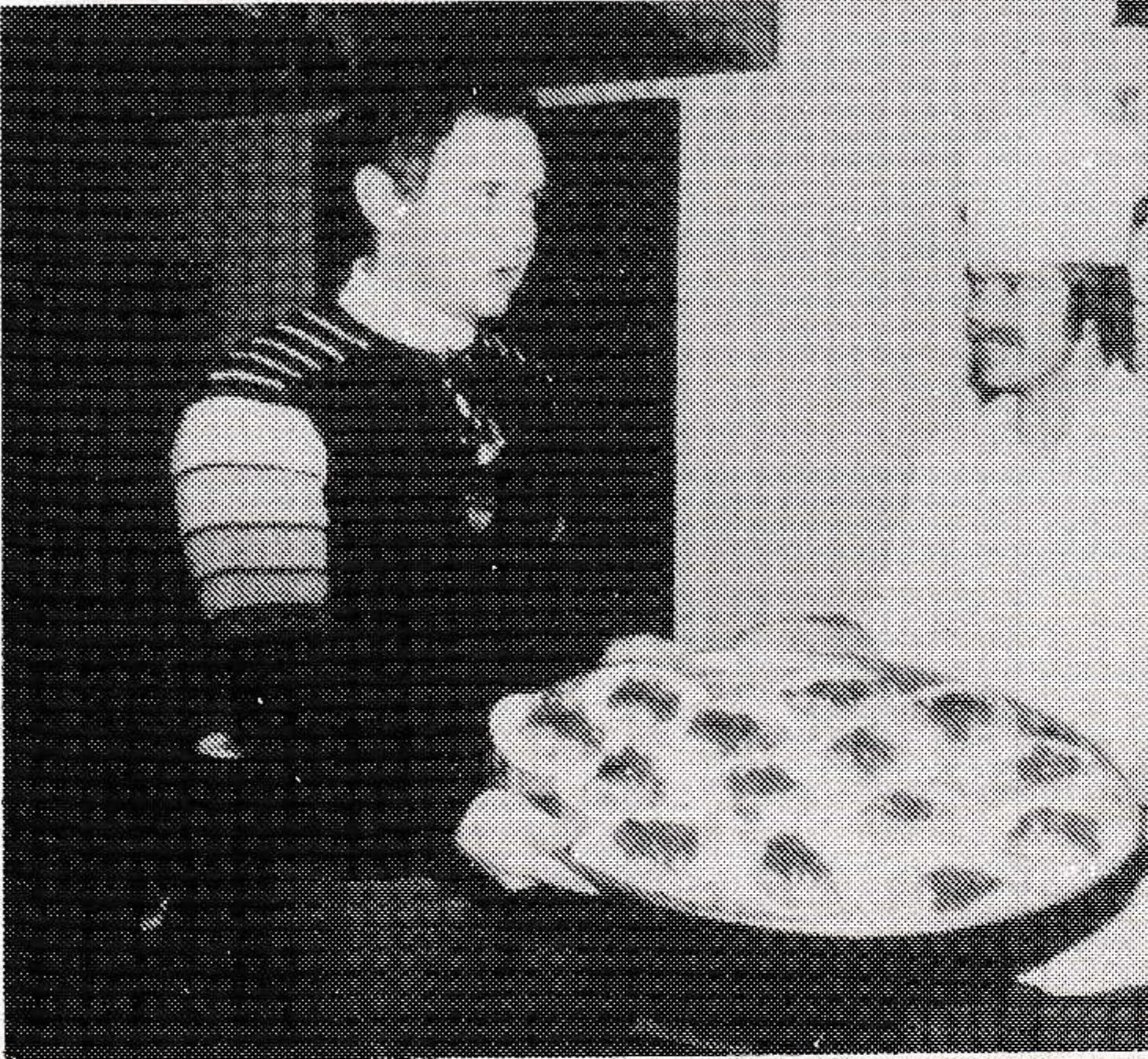
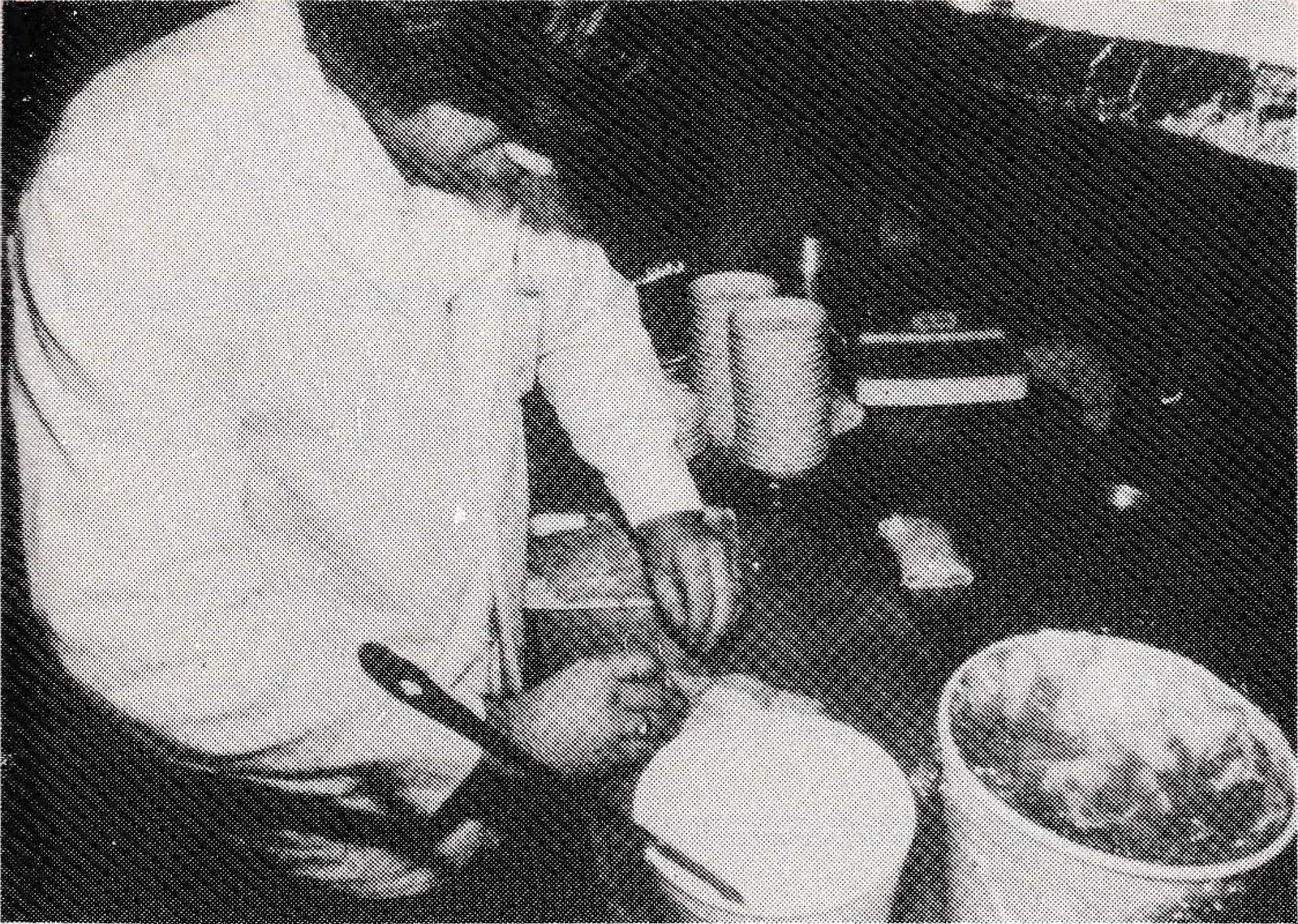
What makes Ready Foods such a useful process is that it eliminates the time problem involved in gourmet cooking. With it your chefs can, at convenient hours, prepare large quantities of an excellent dish, and have it available for months to come. You can buy large orders of fine, fresh ingredients at substantial savings. And you can always provide a wide variety of culinary delights for your guests to choose from. Food waste is eliminated. Most dishes can be refrozen without any decline in quality. Between the decrease in food costs due to the efficiency of the system and the increase in sales stimulated by the new appeal of our bill of fare, we turned a profit in spite of the worst weather Northeast ski centers had experienced in 30 years.
Convenience foods (foods prepared or processed outside your facility) are really taking profits right out of your soup kettle. You pay more for lower quality. We used to practice “can opener cookery.” Our new found ability to create gourmet cuisine, and to make nearly every entree, soup, salad and dessert in our own Bristol kitchens and bakery, created a revolution in our morale, our outlook, and our whole approach to our profession. The food service staff is proud to see me sample the daily menu, and part of my personal philosophy is that I consider every food service patron a guest at my own table.
Staff Attitudes
Lack of respect for the work of the food service staff causes low morale, which affects service. Food service workers have not been given the recognition at ski areas that goes to the ski patrol, instruction, lift maintenance and other skilled staffs. With the kind of cooking we are doing now, we have reason to take pride in our work, and reason to command respect. I involve the staff in the development of our philosophy and our plans for putting it into practice, and the effect has been measurable, both in good feeling and, ultimately, in profits.

The Scatter System Cafeteria
If you are transforming your food service area, you can’t forget the problem of long cafeteria lines. The most pleasing gourmet plates lose their flavor after 10 minutes of toe-tapping waiting to be served. And what skier doesn’t know the frustration of waiting interminably for a hot chocolate at peak skiing time, while the people in front of him order hamburgers, soup and grilled cheese?
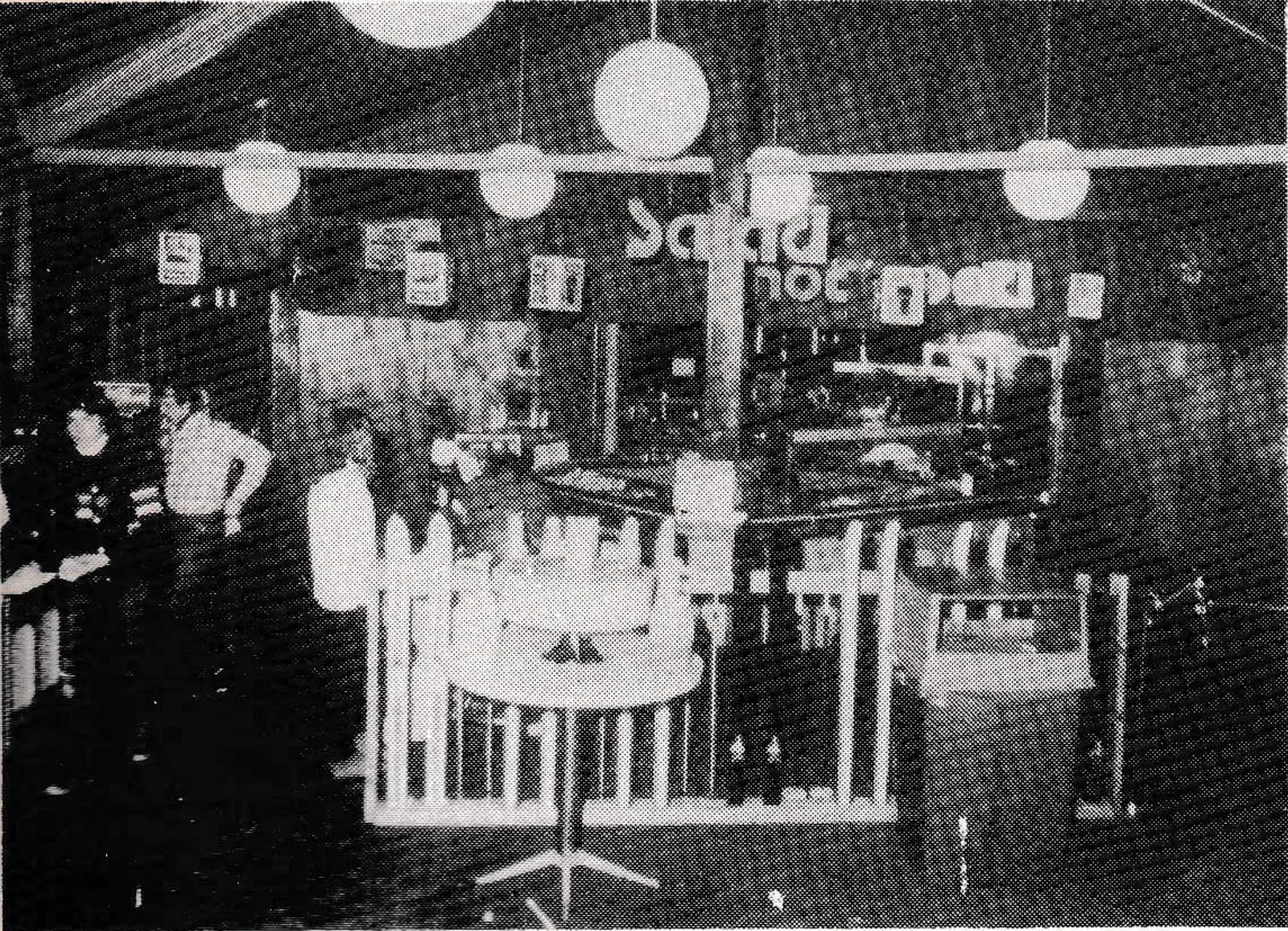
We addressed ourselves to this problem, and solved it with the scatter or scramble system cafeteria, designed by the Wear-Ever Corporation and installed by the Cable-Wiedemer, Inc. of Rochester, N.Y. This is a system made up of individual galley units, which can be hooked together or disconnected in 18 seconds. Entering at a single point the skier may go to any one of a number of “islands,” each of which serves a different type of food. The skier who wants a hamburger goes directly to the hot entree and grilled-to-order items, while another who wants only ice cream goes to the dairy bar. The system is attractive and flexible, able to serve for any kind of meal from speedy to elegant. And waiting time on busy days has dropped by more than two-thirds!
Ski area food service does not have to be a trial, a stopgap, a necessary evil. Your offerings need not be tasteless and lifeless. Food can be fast and also be fantastic! By going back to basics, with advancements in preparation techiques clearing the way, you can serve beautiful, flavorful, nutritionally superior nourishment to everyone in your ski area. We do. You can too.
Stews and Soups From Leftovers
A simple example of the use of the classical approach to modern ski area food service can be found in our soups. Starting from fresh beef or chicken stock, our chef uses “leavings” (such as vegetable ends, meat bones and trimmings which have been cooked down all day to make a consomme or stock pot) to create outstanding soups every day. Here is a recipe for “Burt’s Chunky Beef Stew” along with our popular “Split Pea Soup” that employs cooking principles Escoffier would not scoff at.
Burt’s Chunky Beef Stew
Cover meat with water and cook approximately an hour and one half (until meat is tender). Season with salt, black pepper, garlic powder and parsley flakes. Cut carrots into chunks (do not peel) and add first since they will take the longest time to cook. Next add peeled potatoes, again cut into chunks. Onions and peas added last. Cook until tender and thicken.
Split Pea Soup
Use 2 quarts of water of each 1 lb. of split peas and cook down approximately 3 hours. Add bacon pieces (or a hambone can be utilized), diced carrots, diced onions about 2 hours before done. Season with salt, black pepper, and a touch of garlic.