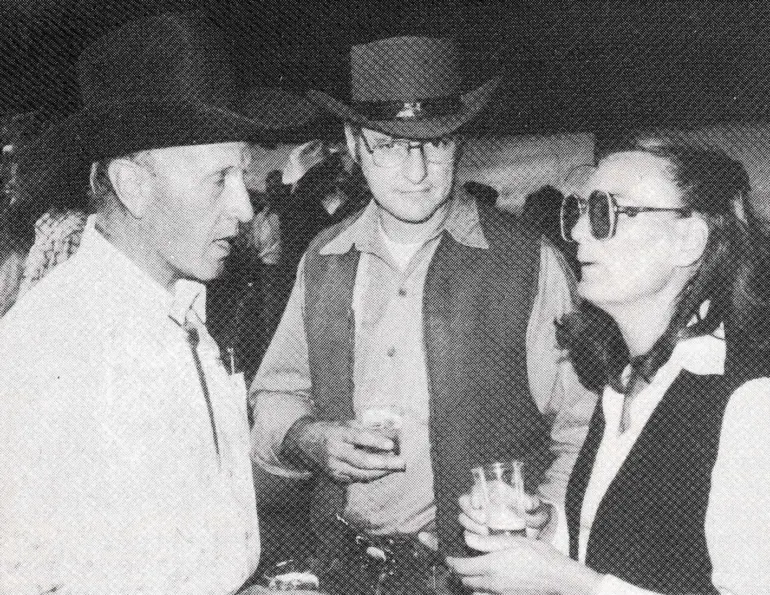
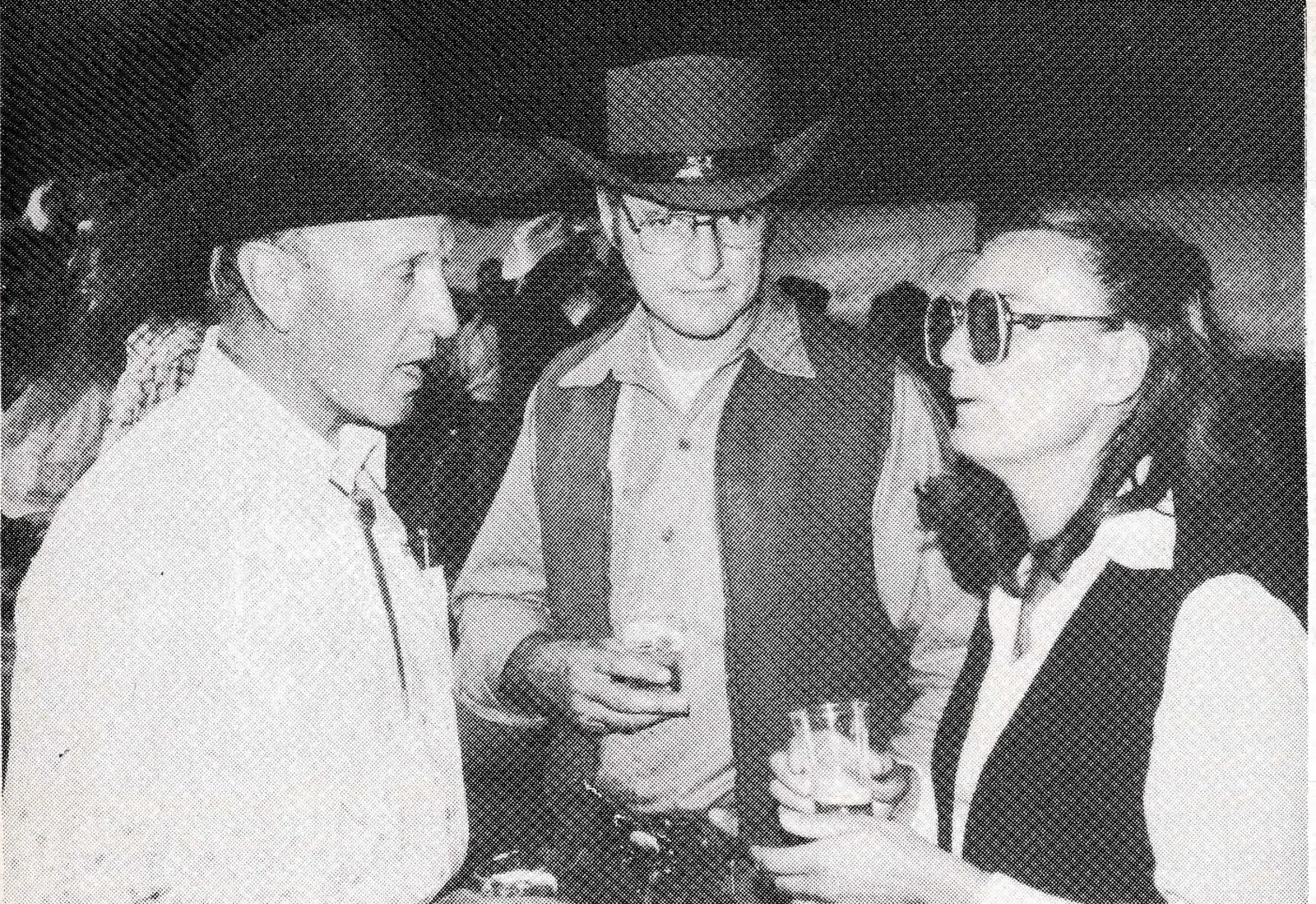
The symposium was attended by 75 people from nine countries. Over 15 papers were presented, covering a wide variety of topics from “Detachable Chairs” to “Trends in Industrial Ropeways” and from a “New Evacuation” demonstration to “Lightning.”
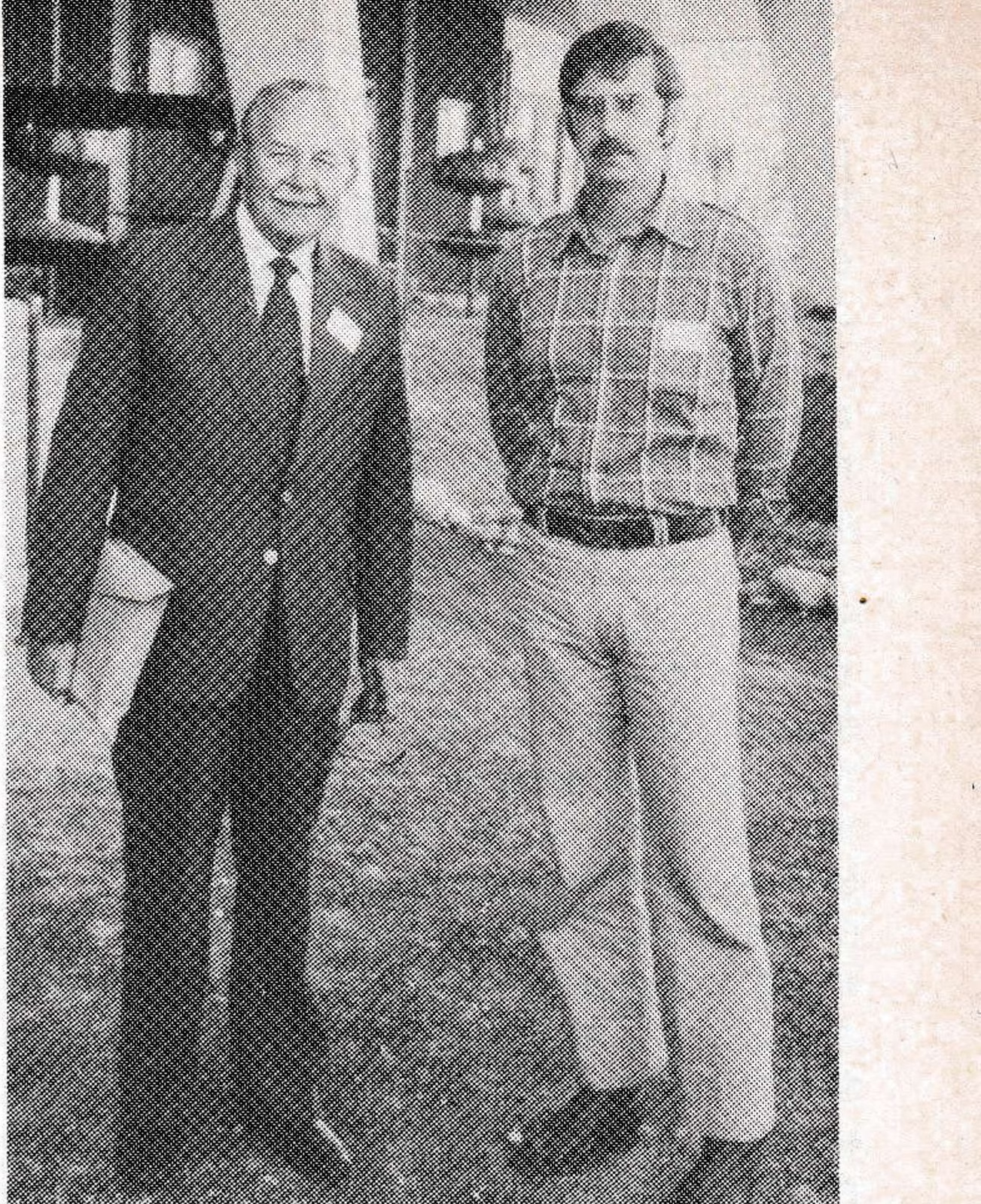
Starting below, and continuing in subsequent issues of SAM, a number of these important papers will be presented in synopsis format. Reflecting the great interest with which it was received, the paper by Phillip Morin on “Lightning” will be treated separately and in more detail in a later issue.
Wire Rope and Its Stretch
by Peter Schmidli, VP Fatzer Wire Ropes of Switzerland
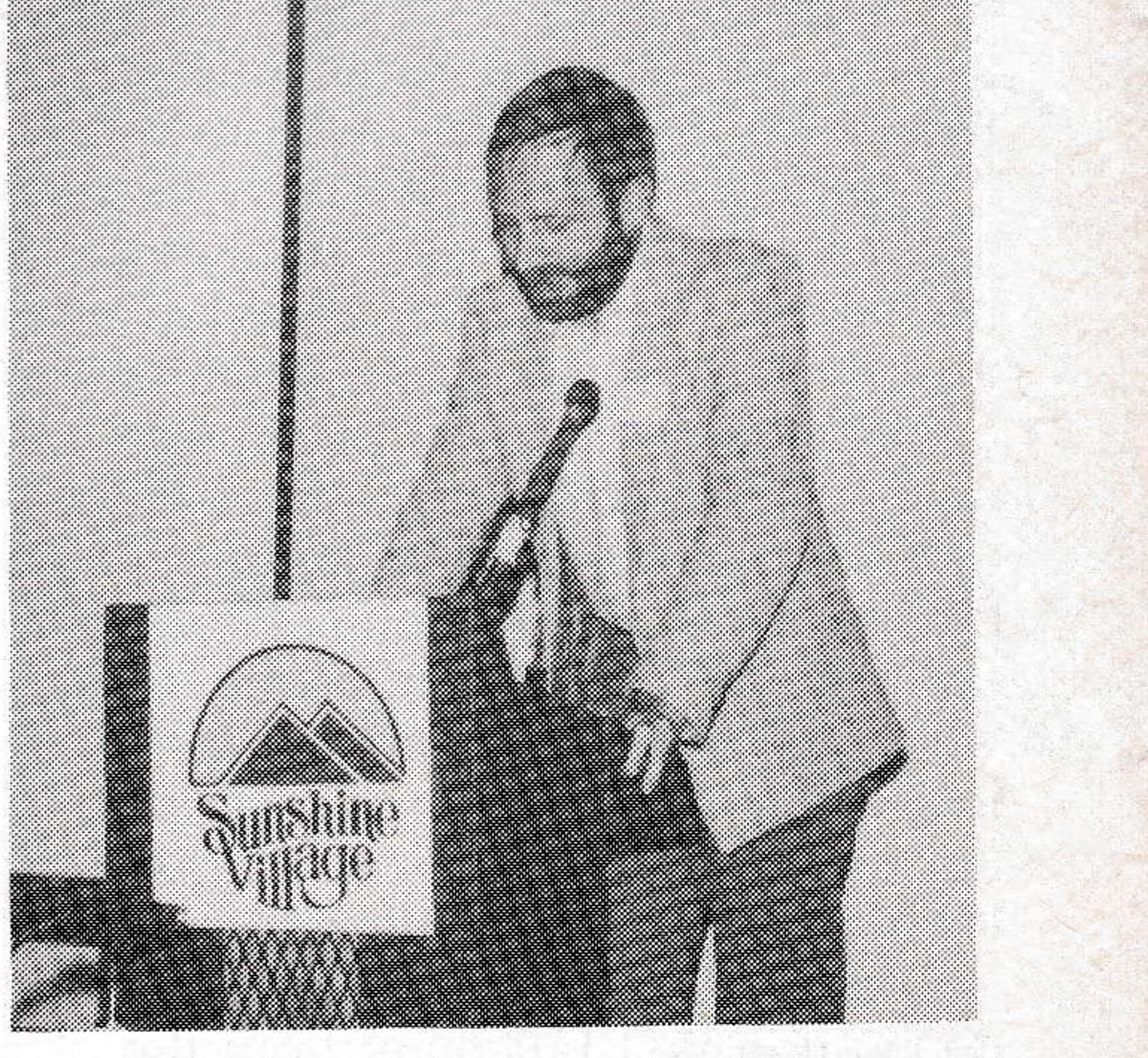
Fatzer Wire Rope Company has been in business since 1836. Based upon their long experience, they feel that wire rope in the transportation industry is more important than ever before. Among other factors, this is due to the increasing pressure from manufacturers and buyers to enlarge uphill capacities with more carriers and higher speeds. Also, the manufacturing process has been shortened, causing the wires to be manufactured at a faster rate than in the past which makes quality control a very serious business.
Perhaps the most interesting part of Mr. Schmidli’s talk on compact and heavy ropes was their experience with rope stretch after manufacture. This segment of lift construction and operation has been of constant concern to many people in the States since new lifts must quite often be respliced during the first season of operation. According to Mr. Schmidli, they never have this problem. He credits this advantage to various operations: 1. All of their ropes are pretensioned during manufacture to the design tension of the new lift; 2. They require a pre-splicing tension of 120% of the maximum design load for at least 48 hours; and lastly, 3. They require that “splicing hose” be used in place of tape or string prior to inserting the free end of a strand into the core space during splicing. The splicing hose is constructed on the same principle as the “Chinese finger trap” of yesteryear, and comes in various color-coded sizes for various strand diameters. (Further coverage in an early issue of SAM.)
Discussion: Comments were made by Bob Heron, P.E. concerning the use of regular lay and lang lay ropes for ski lifts. Apparently, there is no universal agreement about which is best for our industry. Jim Ellis asked for a clarification on the use of “swivel” while stringing new haul ropes. It was agreed that the haul rope should never be allowed to rotate during installation, although, as Bob Heron pointed out, the winching line may be allowed to rotate with a swivel but the haul rope must be held firm. It was pointed out that the unrestricted rotation of a haul rope duing installation loosens the outer wires and eventually transfers the load to the inner wires which causes premature breakage.
Question: Have synthetic cores been well received in Europe?
Answer: Although there is increasing use in European countries, there is still a preferance for hemp. The greatest problem is acquiring high quality hemp material. The combination core seems to unite the favorable quality of “poly” (uniformity of diameter) with that of hemp (reservoir of grease).
One final note. The speaker recommended that the new rope buyer request the “manufactured lay” from his supplier to use for comparison after installation.
History and Development of the ANSI B77.1
by Sam Bonasso, P.E.
The origin of our existing standard was traced back to the mid to late 50’s when the Eastern Ski Areas Association joined with the American Society of Mechanical Engineers to prepare some tramway guidelines following a serious accident which occurred in New England. In April of 1957 the first official organizational meeting was held and committees formed for the various disciplines to be treated. By 1959, the first draft was prepared and ready for adoption and in 1960 was adopted. In 1970, general revisions were made of the wire rope sections. Again in ’73, ’76, and ’78 additional revisions were made. The next and perhaps greatest change in content and format should be ready in early 1982. After many years as chairman of the B77 Code Committee, Bill Norton of Cannon Mountain, N.H., resigned and has been replaced by engineer/operator Stan Judge of Wildcat Mountain.
Currently, there are over 50 people on the various committees which will be, and have been, reviewing over 250 proposals for a consensus approval and inclusion in the new standard. The new wording for this revision should ready for vote at the NSAA Spring Meeting.
After discussing the 10-step revision process, Mr. Bonasso turned the meeting over to Chuck Dwyer, P.E. chairman of the detachable grip committee and OITAF-NACS ramrod. He discussed the new format which will be based upon the type of lift, and also noted that detachable grips will be treated separately. Nothing radically different is expected, but there will be more detail on line speeds, an overall emphasis on performance and less on design. There was discussion on the efforts being made to produce a standard that is compatible with that of Canada (Z98) and European countries where appropriate. Due to lack of English translations in some cases, this has been a difficult task.
Following the presentation there was a lively discussion relating to the use of restraining bars on chairlifts. While there is a move in the States to discourage their use, other places such as Alberta, are moving in the opposite direction, as pointed out by Bob McLellan.
Cabins for Gondolas and Trams
by Andre Frech, Executive Manager of CWA Constructions

CWA of Switzerland has long been a manufacturer of custom cabins for trams and gondolas. Their more recent high profile installations were the Cannon Mt. tram cars and the new 17,000 ft. gondola at Sunshine Village. The topic covered many technical and design aspects of larger tram cabins and problems associated with not only braking and wind forces but also the size and carrying capacity of the cabins. He pointed out that the forces due to braking are extreme and depend on many factors such as the type of brake and application rate, the smoothness of the rope, rope profile or inclination, the cabin load, the direction of travel, speed, and—what many people would not think of—the length of the hanger arm. CWA relies very strongly on practical testing, which they use to reach what they call “realistic design factors and values.”
Other considerations in the large cabins are the extensive use of aluminum alloys to reduce weight, which also reduces strength, so the best materials available must be used. Other considerations such as aerodynamics, vandalism, temperature variations, chemicals, and ease of maintenance, all influence the choice of materials and design.
In the area of gondolas, CWA offers six different models and points out that amusement park carriers are very different from those used for mountainous terrain. The suspension and frame work are different, and there is much more automation employed for the winter operation.
Slides where shown of full-sized models being tested in wind tunnels at an aircraft assembly plant in Europe. There is an additional challenge in providing a cabin that is not only aesthetically appealing, but also projects safety and quality to the passengers and a positive image for the owner of the area.
In tracing the history of the aerial tram—the “flagship” of the industry—just 25 years ago 40 passengers were considered the maximium; now 145 is not unusual. The upper limits are impossible to estimate at this time. However, loading is considered by Frech to be the main limiting factor on future capacity. In this area passenger control prior to loading is more important than the size of the door opening.
Materials of construction were discussed and pointed out that scratchproof glass, although desirable, is not practical due to its weight. Plexiglass is two-thirds lighter and its use is dictated by weight saving. However, if tinted glass is used throughout, scratches are not as visable as on clear plexiglass. Also, special ceiling materials absorb excess condensation which dries when doors are opened for loading and unloading.
In closing Mr. Frech pointed out that cabins and trams are not throw-away products, and that they must be designed to last 20 years or more. In the future he sees new patented systems on cabins providing greater than 2,000 people per hour.
On the lighter side some interesting discussion was prompted by the requirement for emergency toilets in cabins of greater than 80 passengers. Also, Austria now requires special rescue vehicles on each section of a gondola.
Chuck Dwyer asked about cabin heating for the trams. Mr. Frech pointed out that the energy storage is a problem but heat and air-conditioning is being provided with special automatic connections at docking sections to recharge batteries.
Question: Is the effect of wind greater or less when the carrier’s gondola cabins have skis stored on the outside?
Answer: The worst condition, believe it or not, is with empty holders, as was proven in the wind tunnel test.