As athletes ranging from weekend enthusiasts to world-class endurance fanatics have broadened the scope of the sports they play, the standard Saturday “fun run” has evolved into an adventure race ideally suited for many mountain resorts. More and more athletes seek backcountry experiences to add to their workouts and are combining those workouts with an ever-widening array of skills tests, all of which have given resorts another avenue for boosting summer revenue.
Adventure races are springing up around the country, due in no small part to the popularity of the international Eco-Challenge. The phenomenon is similar to the effect the Iron Man had on smaller, local triathlons. These new-school adventure races range from Saturday afternoon jaunts in the park to grueling multi-day affairs. The one consistent factor has been great turnout, as the sport is ballooning in popularity. The challenge now is defining adventure racing on the resort level and creating an event at the mountain that will grow in popularity and raise awareness of summer programs.
A standard adventure race includes a trail run, a mountain bike leg and a kayak or canoe section—and that’s where the “standard” ends. Events have also included segments involving orienteering (see separate story in this issue), trekking, rappelling, Tyrolean Traverses (crossing ravines on fixed cables), rope skills, knot-tying tests, archery, swimming and climbing or bouldering. Course layouts and information is usually only provided when it relates to specific gear or equipment that might be needed by participants and the specifics are generally kept secret until the day of the race. The creative use of terrain offers different combinations of activities, with each location determining what is and what is not feasible.
Hosts of such races have found that participants overwhelmingly respond consistently when asked about the different activities or special tests in a race: the more, the better. At most races, the participants must be self-sufficient, with water and re-supply provided by a racer’s support crew available only at specific transition checkpoints. Some events stress individual competition, while others focus on teamwork.
Will Newcomer is a promoter who approached Durango Mountain Resort, Colo., with the idea of hosting a race in his AdventureXtreme Series. Management agreed and last summer Durango held a race after the series passed through Moab, Utah, and Vail. The races were meant to appeal to world-class endurance athletes and first-time adventure racers alike. Newcomer’s mission statement explains the races are meant to “provide participants with an exciting and safe venue to experience the thrill of challenging mind and body while at the same time enjoying and protecting the beauty of the great outdoors.”
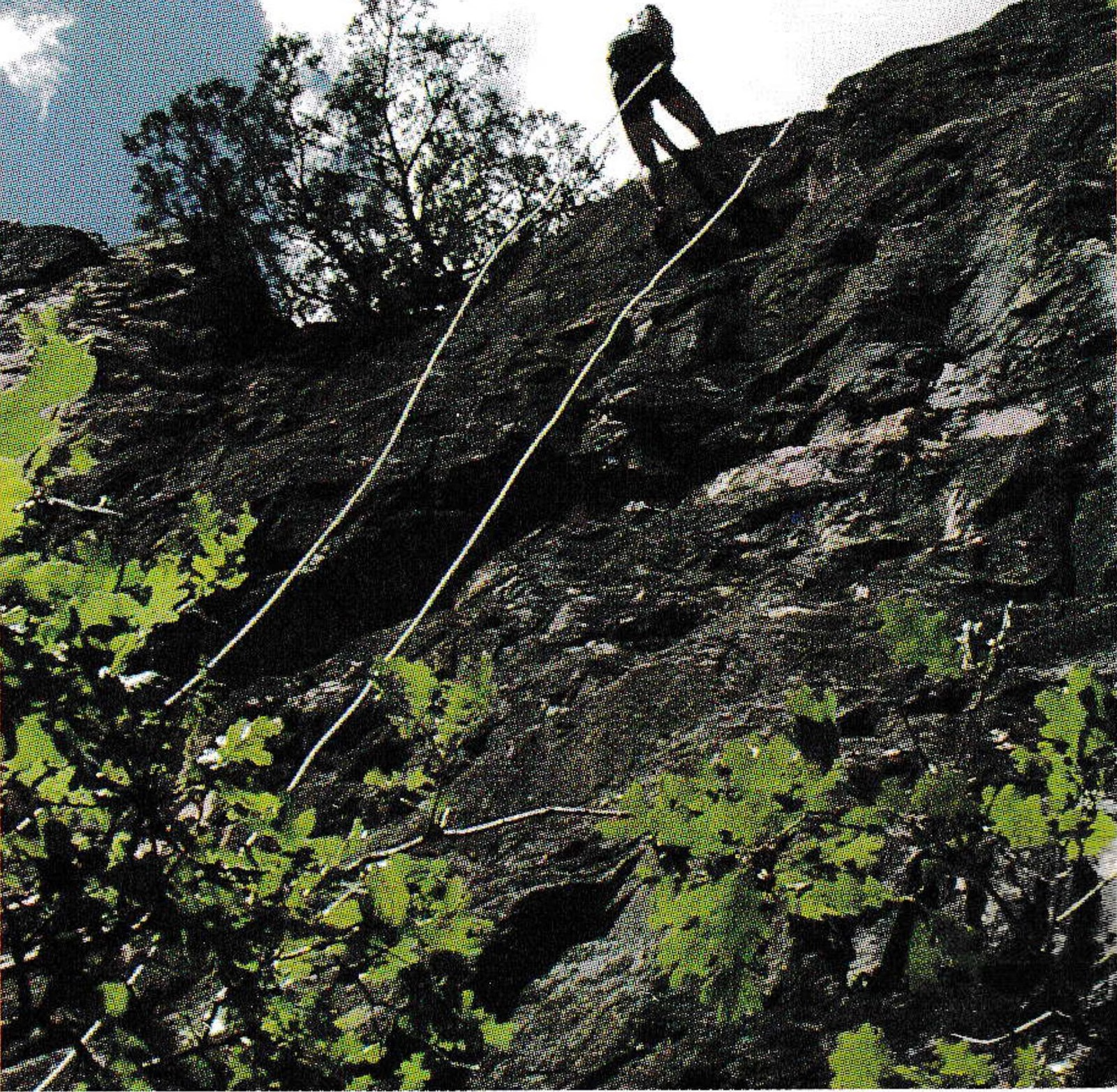
Racers, both in teams and as individuals, started at the resort base, ran 7 miles to the top of the mountain, switched to mountain bikes for a plunge down the Hermosa Creek Trail singletrack, rappelled down a cliff and got back on their bikes before switching to open-seat kayaks and paddling down the Animas River to the finish in downtown Durango. The entire circuit covered more than 60 miles. Series winner and reigning Eco-Challenge champion Mike Kloser finished the course in 6 hours, with the bulk of the competitors coming in 3 to 6 hours behind.
Depending on the type of activities included, a well-designed course can cover a total 20 miles to more than 75. And, if designers think creatively, different classes can cover different distances, opening the realm of adventure racing to a wide variety of participants.
“We tried to position this race ‘in-between’ as difficulty goes,” says Newcomer. “Still a single-day race, but not something you’d want to come out for without training. You don’t necessarily have to be super-skilled in mountaineering or paddling for example, but you need to be prepared and in shape.”
Where the Profits Are
For the AdventureXtreme series, an average 40 percent of registrants flew to each of the races. As a result, the resort’s lodging for that weekend saw an increase in occupancy numbers up 10 percent from the previous weekend and up nearly 50 percent from the comparable weekend the summer before.
Food and beverage departments, which already operate in the summer, more than doubled their numbers from surrounding nights. That was a result of both racers and a healthy crowd of onlookers who gathered at the resort base to see competitors off.
Picking the Route
“The largest part of the project was course selection and permitting,” Newcomer continues. “We wanted to put people in the backcountry, so we spent a lot of time poring over maps, looking at Forest Service plats, hiking the trails. The idea is to make each event unique to the countryside, to give the competitor a backcountry experience as opposed to your standard triathlon.”
The difficulty in course selection is more acute in a day-long adventure race because, whereas a world-class athlete might finish in 6 hours, many competitors might not cross the line for 10 to 12 hours, compounding safety factors. “We were definitely concerned with fastest-slowest issues,” says Newcomer. “We tried to give the best a solid workout and to test those trying it for the first time. Finding a good course, and finding a course that worked permit-wise was the most time-consuming element.”
As Newcomer’s series was new last year, the permit process alone took almost nine months. He submitted a Special Use Permit to the Recreation and Forestry Division of the San Juan National Forest and then attended a series of meetings to determine impacts and settle on an acceptable course to all parties.
“Each agency is a little different [USFS, BLM, private] as to what they require concerning impact, safety and insurance,” Newcomer says.
“The big advantage of having the course at the resort is that most of these studies have already been done under the existing use-permits,” says Mike McCormack, vice president of resort operations. Nancy Berry of the San Juan National Forest says that the bigger the event, the more environmental analysis is involved and that organizers should get their applications in at least six months ahead of time if public land is involved. One-time-a-year events like Newcomer’s are not a difficult proposition and now that Durango Mountain Resort and Newcomer have already been through the process once, it should be faster in the future.

As for ecological concerns, Newcomer enforced a “leave-no-trace” policy during the series: Any competitor caught leaving the specified trail or littering was automatically disqualified. Literature was distributed with race packets to familiarize competitors with each ecosystem and explain that the goals of the race were to “promote and contribute to land and water preservation efforts” and “educate race participants and spectators about responsible outdoor ethics.”
According to McCormack, the impact on terrain and resources was minimal. “As far as hill impact, daily operations and manpower needs went,” he says, “the effects were negligible.”
Daily operations weren’t interrupted unless directly in the line of fire, and the vast majority of the course was outside resort boundaries, out of the way of other summer guests who participate in a number of other activities from disc golf to riding the alpine slide. “Even though the event had its start at the resort, physical setup, course management, crowd control, safety and logistics are minimal when compared to events like the NORBA mountain bike races,” he adds.
The Details
McCormack also stresses the need for having an emergency rescue plan in place in case of a mishap in an odd or difficult-to-reach location. He also cites preparation for inclement weather and says organizers need to be “ready to respond.”
Bob Mattice, who directs special events and programs during the summer, adds that, “Newcomer’s race was one of the easiest we’ve done. Even if we had organized in-house, the logistics are fairly straightforward and resource needs nominal. I see this as a growing phenomenon and a good event for the resort. It helps push their summer activity and occupancy.”
Newcomer’s race series is insured through the United States Adventure Racing Association (USARA). The $300 per-race premium provides $25,000 coverage per individual and $1 million overall for the race. Racers must also be licensed with the USARA. (A one-year license with subscription to Adventure World Magazine costs $35 and a single event license is $8, purchased at the event.) Newcomer hires EMTs and ambulances for checkpoints and specific locations—15 to 20 along the course.
Transportation and parking were a concern during the planning process. Although racers are self-sufficient, Newcomer says a shuttle service for transporting equipment to and from checkpoints before and after the race is a must. Parking at the start and finish is generally not a problem, but space is tight at checkpoints so the shuttle means racers and their support crews can move boats, bikes and other assorted gear without clogging access routes or the checkpoints themselves. Durango used existing shuttles and labor during the race.
Designing the Format
So what about the racers? Newcomer tried to include entrance options for everyone’s needs from individuals to relay teams. Lesson learned: The relay is a difficult proposal in an adventure race and Newcomer will stick with individual and team divisions (all team members must finish together) next year.
The one element series champ Kloser criticized was the nearly prohibitive entrance fee of $150 to $175 per race. He also lamented the lack of prize money (winners received DEAN titanium bike frames), especially for professionals trying to stay afloat in the burgeoning sport. The buzz around town also pointed to the entrance fee and the consensus was that, had the fee been lower, many more locals would have participated. Newcomer’s reason for the steep fees was the fact the Forest Service permitted only 200 participants at the Durango race. Plus, besides race costs, each permitting agency takes a percentage of entry fees.
Higher entrance fees also work as a deterrent for those less serious about the competition and in the case of an adventure race, it might make sense because the more serious athletes are less likely to hurt themselves.
One avenue to defray the costs and possibly raise prize money is sponsorship. Products are much easier to come by than cash in the world of outdoor gear, but with the potential growth of this sport, Newcomer has been shopping around for a title sponsor. From an industry perspective, Durango Mountain Resort has considered the idea of enlisting a title sponsor for their entire summer lineup of events, concerts and competitions, which would benefit an adventure race.
With Americans winning the last two Eco-Challenges, adventure racing is becoming a popular competition. And mountain resorts provide perfect venues, with a combination of facilities, existing recreation permits and the variety of terrain. On top of that, our winter guests, and especially the younger ones, are always looking to try something new. After all, it’s in their nature.